What should you eat in Japan this month? Start with the ingredients advertised as 旬, shun, literally “in season,” because they are expected to be especially flavorful, abundant or suitable for the moment.
That is the short answer. The longer answer is that seasonal food in Japan includes three different things: ingredients at a genuine biological peak, dishes attached to annual observances, and commercial campaigns repeated so successfully that they now feel traditional.
A bowl of winter cod hot pot follows the catch. Ehomaki in February follows the calendar. Fried chicken at Christmas follows an advertising campaign. This guide keeps those categories separate.
What does shun actually mean in Japanese food?
旬, shun, means the period when an ingredient is considered at its best. That may refer to flavor, fat content, tenderness, harvest volume or the point when the ingredient traditionally reaches a market.
It does not necessarily mean that the food is unavailable outside that window. Greenhouses, refrigeration, aquaculture, imported produce and nationwide distribution keep many ingredients on shelves throughout the year.
A tomato sold in January is still a tomato. A restaurant calling its early-summer tomato dish shun is making a stronger claim: that this is the moment when the ingredient deserves your attention.
Three ideas sit behind the word:
- 走り, hashiri, “the early run”: the first arrivals, prized for novelty and often expensive.
- 旬, shun, “the season”: the central period of quality and supply.
- 名残, nagori, “the remains”: the last appearance before the ingredient disappears.
Japanese seasonality is not only about eating an ingredient at its sweetest. It is also about noticing its arrival and accepting its departure.
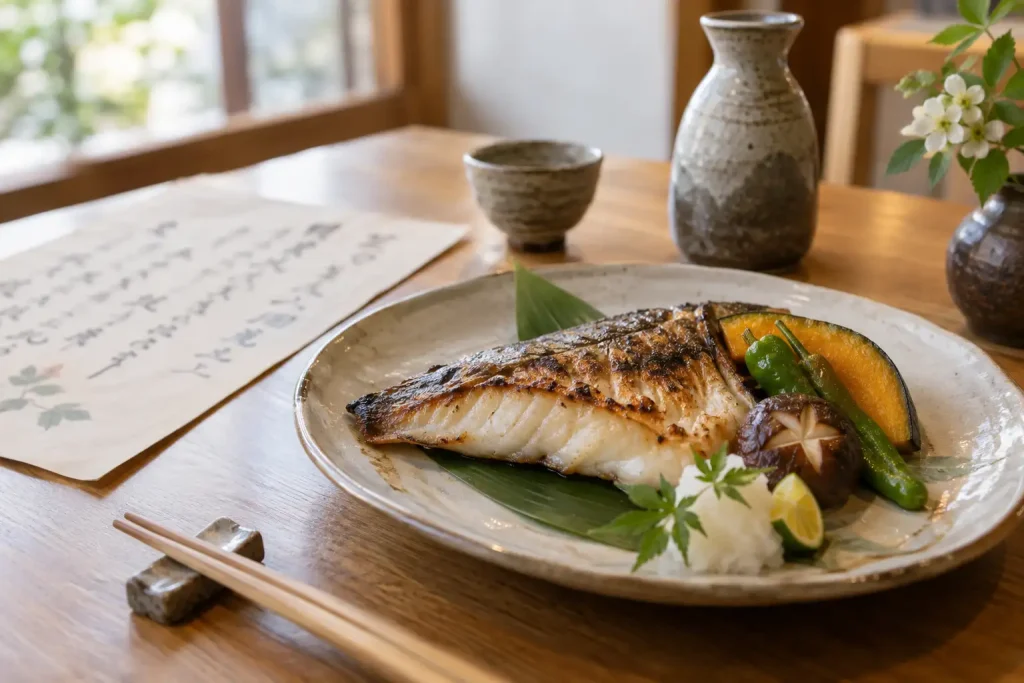
Is the same food in season everywhere in Japan?
No. Japan stretches across climates ranging from snowy Hokkaido to subtropical Okinawa, so a single national calendar can only be approximate.
Bamboo shoots may appear in southern markets before they reach colder regions. Cherry-related foods move north with the blossoms, while the timing of fish depends on migration, water temperature, fishing grounds and local regulations.
Even the meaning of “best” can change. 初鰹, hatsugatsuo, “first bonito,” is valued in spring for its lean, clean taste. 戻り鰹, modorigatsuo, “returning bonito,” comes back in fall with more fat; neither is simply the superior version.
The calendar below is therefore a practical guide for travelers, not a claim that every Japanese prefecture harvests the same crop on the same day. If a restaurant names the producer, port or prefecture, that local information is more useful than a generic national list.
What seasonal food in Japan should I try each month?
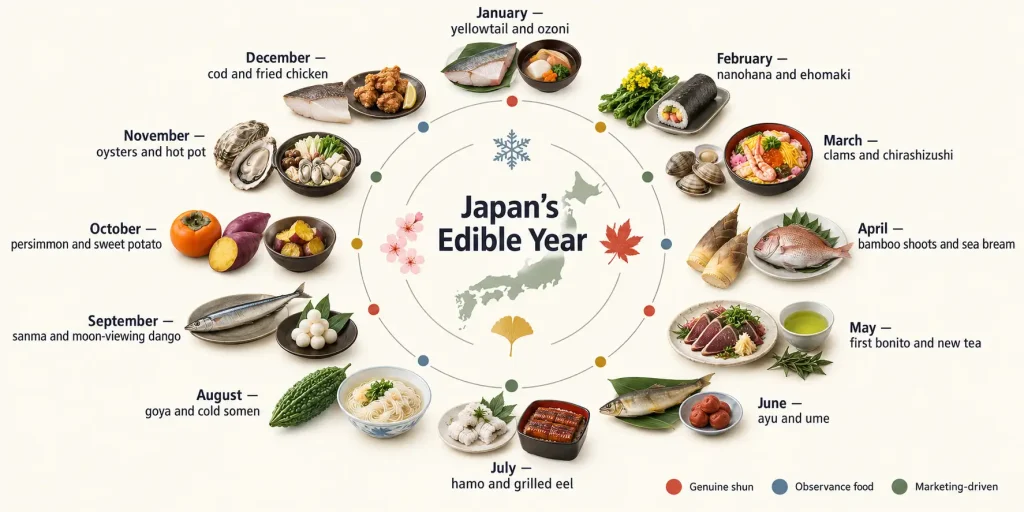
The most reliable approach is to look for a combination of produce, seafood and a dish that makes sense for the weather. The “status” column separates a biological season from a calendar custom or a retail-created season.
| Month | Produce and seafood to watch for | Dish or preparation | Status |
|---|---|---|---|
| January | Daikon, napa cabbage, long onion, mikan, yellowtail | Buri-daikon, nabe, ozoni | Genuine winter shun; ozoni is a New Year custom |
| February | Nanohana greens, fuki shoots, oysters, greenhouse strawberries | Oyster dishes, nanohana with mustard, ehomaki | Mixed: real late-winter produce; ehomaki is a retail-amplified custom |
| March | Clams, Spanish mackerel, early bamboo shoots, strawberries | Clam soup, chirashizushi | Mostly genuine spring transition; festival presentation also matters |
| April | Bamboo shoots, sansai, sea bream, clams | Takenoko rice, sansai tempura, tai dishes | Strong genuine spring shun |
| May | New tea, broad beans, peas, first bonito | Katsuo tataki, mame-gohan | Genuine late-spring season |
| June | Ayu, ume, biwa, young ginger | Grilled ayu, ume syrup, early hamo dishes | Genuine rainy-season and early-summer foods |
| July | Edamame, corn, eggplant, hamo | Chilled noodles, hamo cuisine, grilled eel | Produce and hamo are genuine; midsummer eel is calendar-driven |
| August | Goya, myoga, peaches, eggplant | Goya champuru, cold somen | Genuine summer produce; cold-noodle campaigns are weather-led |
| September | Sanma, grapes, chestnuts, pears, mushrooms | Grilled sanma, chestnut rice, moon-viewing dango | Genuine early-fall shun plus an observance food |
| October | Persimmons, sweet potatoes, mushrooms, returning bonito | Mushroom rice, roasted sweet potato, katsuo | Strong genuine fall season |
| November | Daikon, lotus root, napa cabbage, oysters, regional crab | Oden, hot pot, crab dishes | Genuine cold-weather season, with regional fishery timing |
| December | Yellowtail, cod, daikon, napa cabbage, yuzu | Buri dishes, cod hot pot, toshikoshi soba | Genuine winter foods; soba is a year-end custom |
Treat the table as a first question to ask, not as a shopping commandment. Weather can advance or delay crops, and a poor catch can leave a supposedly seasonal fish expensive or scarce.
For the wider restaurant context, Japanese Food for Beginners: How to Read a Menu explains the cooking characters and restaurant formats rather than repeating this calendar.
Which Japanese dishes change most clearly with the seasons?
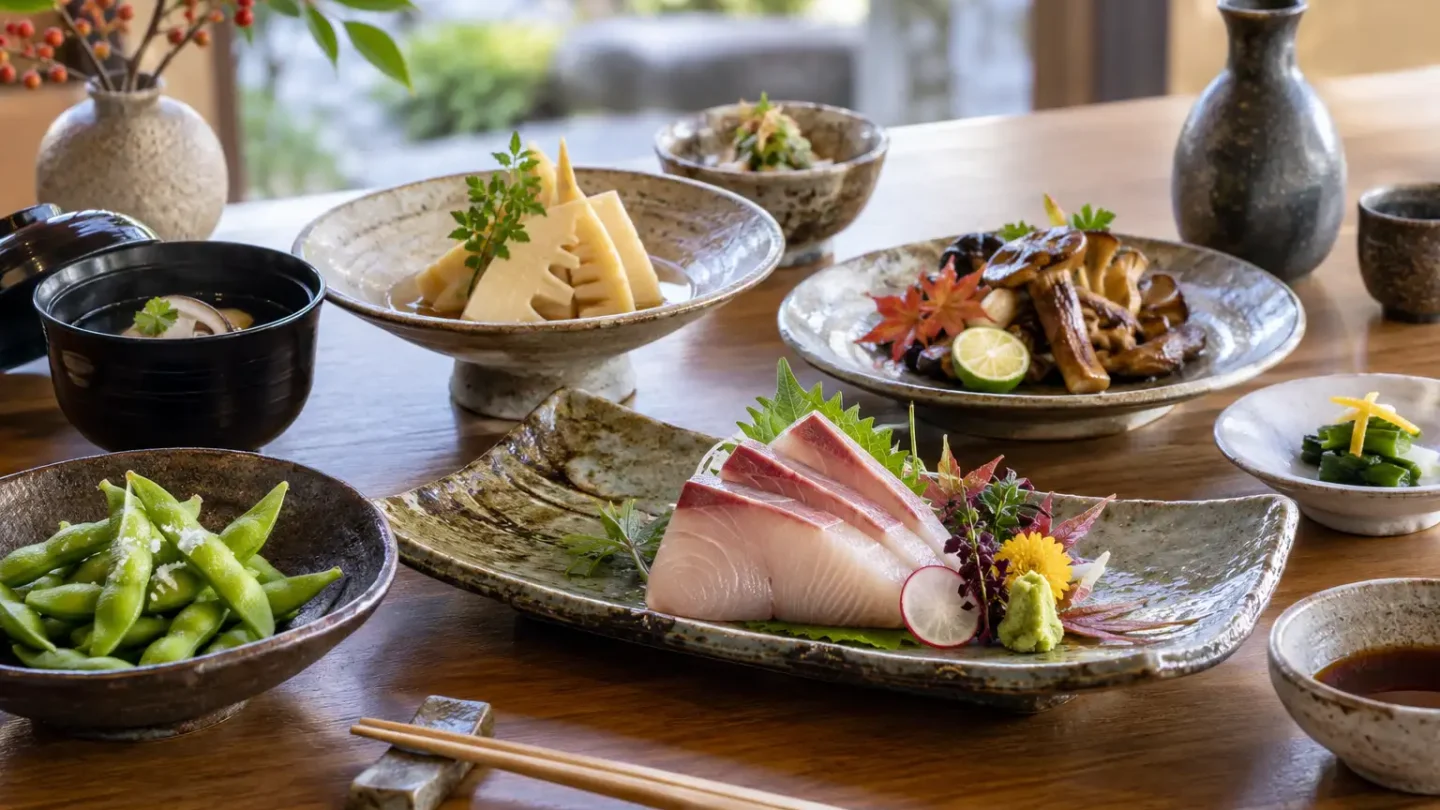
Kaiseki, traditional inns and serious independent restaurants show seasonality most clearly because the menu can change with short supply windows. A course may signal the month through its ingredient, serving vessel, garnish and cooking temperature.
春, haru, “spring,” favors bamboo shoots, mountain vegetables, clams, sea bream and first bonito. Takenoko rice tastes of spring because the bamboo shoot itself is newly available; a pink packaged sweet merely labeled “sakura” may be seasonal in design rather than ingredients.
夏, natsu, “summer,” brings edamame, eggplant, cucumber, corn, ayu and hamo. Cold somen and chilled tofu answer the temperature, while Kyoto’s elaborate hamo preparation also reflects the fish’s seasonal place in Kansai food culture.
秋, aki, “fall,” is the easiest season to recognize: sanma, chestnuts, mushrooms, persimmons, sweet potatoes and new rice. The phrase 食欲の秋, shokuyoku no aki, “autumn appetite,” is not difficult to understand when all of those appear together.
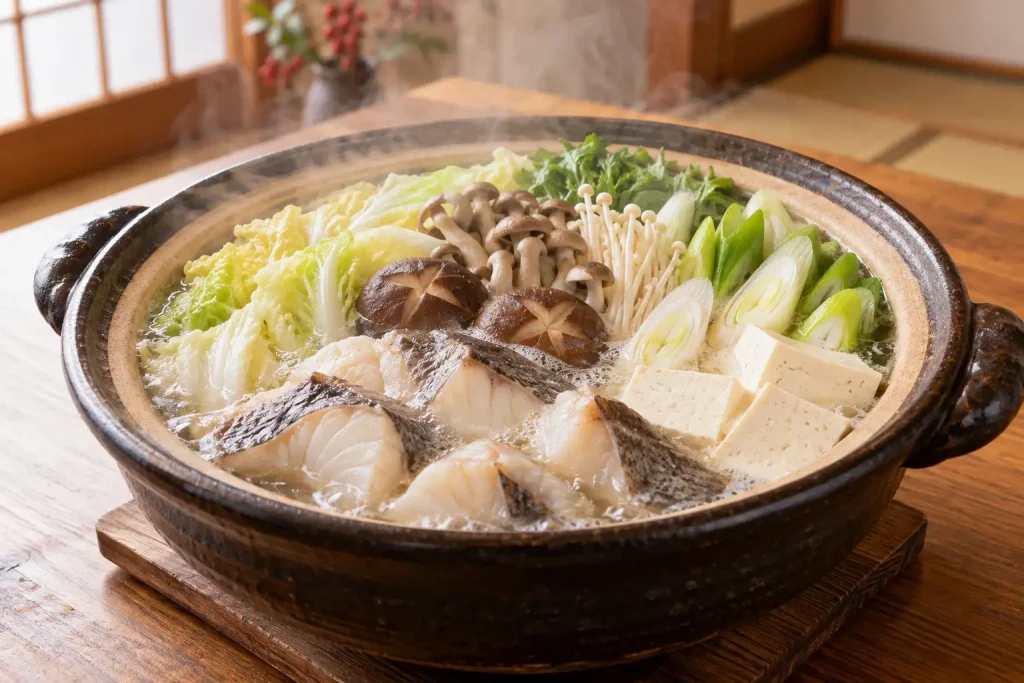
冬, fuyu, “winter,” is the season of yellowtail, cod, oysters, daikon, napa cabbage and long onions. These ingredients converge naturally in Japanese winter food such as nabe, oden and buri-daikon.
“Cod is, exactly as its snow-containing kanji suggests, a fish of winter.” — Tokyo Metropolitan Central Wholesale Market
Which “seasonal traditions” were created by marketing?
Some are not shun at all. They are event foods with a purchase date.
The clearest example is Christmas fried chicken. KFC’s first nationwide Christmas campaign in Japan began in 1974, so this is a documented commercial tradition rather than an old Japanese response to winter agriculture.
Ehomaki requires a more careful answer. Thick sushi rolls had regional associations with Setsubun, but convenience stores and supermarkets expanded the practice nationally through promotion and preorders. The ingredients do not reach a shared peak in February; the roll is seasonal because the selling occasion is seasonal.
Summer eel is older but still exposes the distinction. Eating grilled eel on 土用の丑の日, Doyō no Ushi no Hi, “the Ox Day of the seasonal transition,” is associated with an Edo-period promotion traditionally attributed to Hiraga Gennai. Official Japanese food-culture material notes that wild eel’s natural peak is in the colder part of the year, not midsummer.
Christmas strawberries occupy the middle ground. They are real fruit, but their winter prominence depends on protected and forced cultivation as well as the demand for strawberry-topped Christmas cake. Calling December their “natural” outdoor season would be misleading.
| Seasonal claim | What sets the date? | Honest classification |
|---|---|---|
| Winter yellowtail | Fat and migration pattern | Genuine shun |
| Spring bamboo shoots | New growth and harvest | Genuine shun |
| Summer eel | Calendar custom and promotion | Custom, not the natural wild peak |
| February ehomaki | Setsubun and nationwide retail campaigns | Regional custom amplified by marketing |
| December fried chicken | National advertising campaign launched in 1974 | Marketing-created season |
| Christmas strawberries | Controlled cultivation plus cake demand | Agricultural technology and marketing |
| Moon-viewing dango | Annual observance | Ceremonial season, not ingredient shun |
This does not make the invented seasons fake experiences. People genuinely enjoy them, families repeat them, and businesses plan around them. It only means that “Japanese people eat this in December” and “this ingredient is naturally best in December” are different statements.
How can I recognize real shun on a Japanese menu?
Look for an ingredient, origin and temporary preparation rather than generic seasonal decoration. A chalkboard naming the morning’s port, a prefecture and a fish is stronger evidence than a laminated menu covered in maple leaves.
Useful menu signals include:
- 旬, shun — in season.
- 季節限定, kisetsu gentei — limited to the season.
- 新物, shinamono — the new season’s crop or production.
- 初物, hatsumono — the first of the season.
- 秋限定, aki gentei — fall only.
- 本日のおすすめ, honjitsu no osusume — today’s recommendation.
- ○○県産, —ken-san — produced in the named prefecture.
“Limited” does not prove natural seasonality. A chain can release a limited sweet because its packaging is orange in October. Ask what the seasonal ingredient actually is.
If you need help saying that, the Japanese phrasebook — 337 phrases, including ordering and allergies is more useful than memorizing a speech. A simple question is 「今の旬は何ですか」, ima no shun wa nan desu ka, literally “What is in season now?”
Does sushi have its own seasonal calendar?
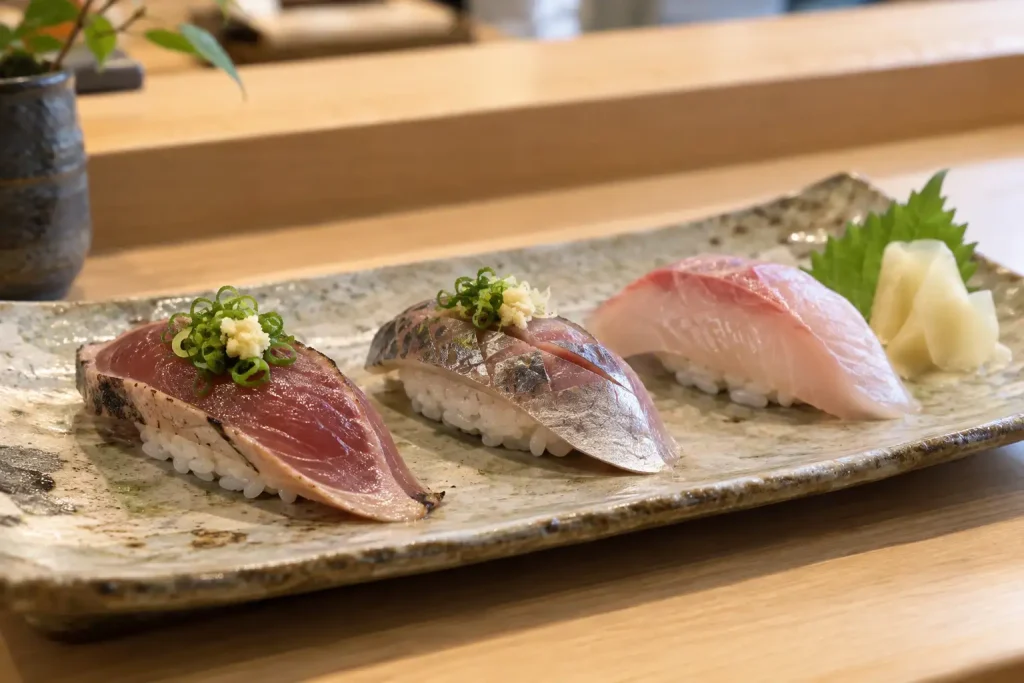
Yes, because many sushi toppings change with migration, spawning cycles, water temperature and fat content. A good counter does not treat the fish case as a fixed checklist.
Spring may bring sayori and first bonito; summer favors horse mackerel and sea bass; fall is associated with sanma and returning bonito; winter brings richer yellowtail and cold-season seafood. These are broad patterns, not guarantees for every port.
The important distinction is that the season describes the topping, not the category. Sushi remains sushi because of its vinegared rice, as Sushi vs Sashimi: The Difference Is the Rice explains in detail.
At an omakase counter, you can simply ask for the chef’s seasonal choices. At conveyor-belt restaurants, promotional screens and table cards usually announce limited catches. Neither format requires you to know the whole Japanese seafood calendar before sitting down.
What is the question travelers do not know to ask yet?
Did the ingredient reach its peak, or did the supply chain learn how to imitate one?
Modern Japanese agriculture can produce strawberries in winter, tomatoes across much of the year and highly consistent vegetables far from their old harvest windows. Aquaculture and freezing similarly loosen the connection between a fish and the month printed on a menu.
That does not make cultivated or frozen food inferior. Farmed fish may be excellent, and careful freezing can preserve seafood better than a long trip under refrigeration. The point is that availability no longer proves shun.
Climate change adds another complication. Warmer water can shift fish distribution, while extreme heat and rainfall can change harvest timing, volume and price. A calendar remains useful, but the restaurant’s current supplier information may be more accurate than a fixed guide.
This is why the best menus name both time and place. “Fall mushrooms” is mood; “matsutake from Iwate” is a claim you can evaluate.
What if I am vegetarian, vegan or managing allergies?
Seasonal vegetables do not automatically make a dish vegetarian. Bamboo shoots may be simmered in fish stock, greens may be dressed with bonito flakes, and mushroom rice may contain dashi made from fish.
For practical restrictions, read Eating by Religious Rules in a Pork-Dashi Country before assuming that a vegetable-centered seasonal menu is suitable. The Only Reliably Vegan Meal in Japan explains why shojin ryori is a more dependable starting point.
The broader guide to Vegetarian, Vegan and Allergies in Japan covers labeling and the problem of hidden stock. Seasonality changes the ingredient list, but it does not remove cross-contact or undeclared restaurant ingredients.
For Japanese seasonal dishes, ask about the broth, sauce and garnish, not only the item named in the title.
Where should I start if I can eat only one seasonal meal?
Choose a small restaurant that writes daily recommendations on a board, then order one vegetable, one fish and one rice or soup dish described as seasonal. This gives you a better reading of the month than buying every limited-edition snack at a convenience store.
Use this rule:
- Look for an ingredient linked to the current harvest or catch.
- Check whether the menu names a region or port.
- Prefer a simple preparation that lets the ingredient remain recognizable.
- Treat festival foods as cultural experiences, not proof of agricultural season.
- Ask what arrived recently rather than what is famous year-round.
If you are new to restaurant categories, start next with Japanese Food for Beginners: How to Read a Menu. Once you can identify the cooking method, the seasonal ingredient becomes much easier to choose.
Is shun always more expensive?
No. The early hashiri stage can command a premium, while the middle of a productive harvest may bring better supply and lower prices.
Scarce prestige ingredients such as matsutake can remain expensive even in season. “Seasonal” should never be read as a promise of value.
Can convenience-store food be seasonal?
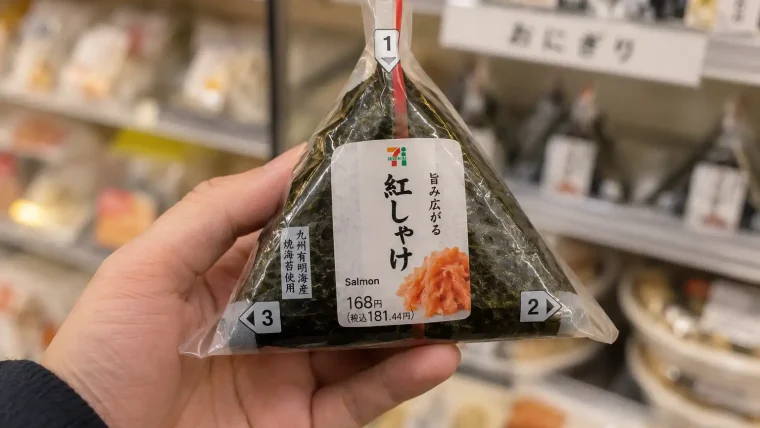
Yes, but it is usually a product-release season rather than agricultural shun. Chestnut sweets in fall may use a seasonal flavor even when the processed filling was manufactured much earlier.
For what convenience stores do well beyond temporary packaging, see Japanese Convenience Store Food: What to Buy.
Is ramen a seasonal food?
Ramen shops may offer cold noodles in summer or rich miso bowls in winter, but ramen’s core identities are primarily regional and structural. Regional Ramen Styles, and the Four Variables explains how soup, seasoning, noodles and toppings combine.
A seasonal topping does not create a new regional style. It creates a temporary version of an existing bowl.