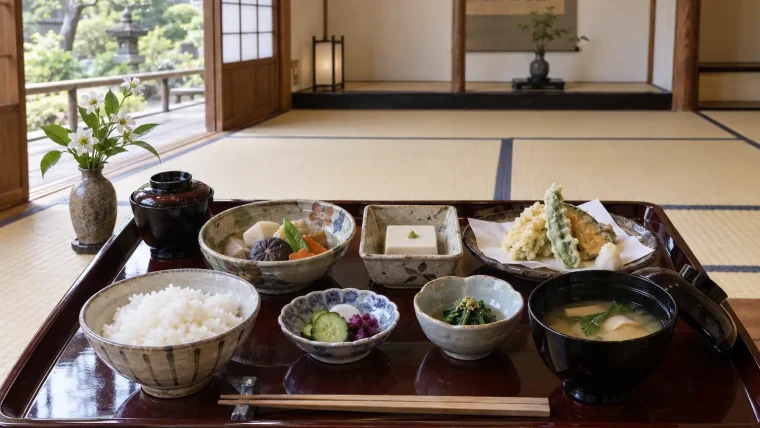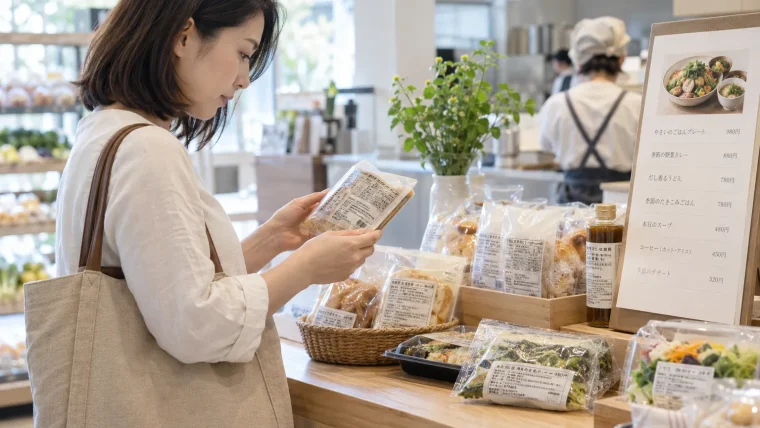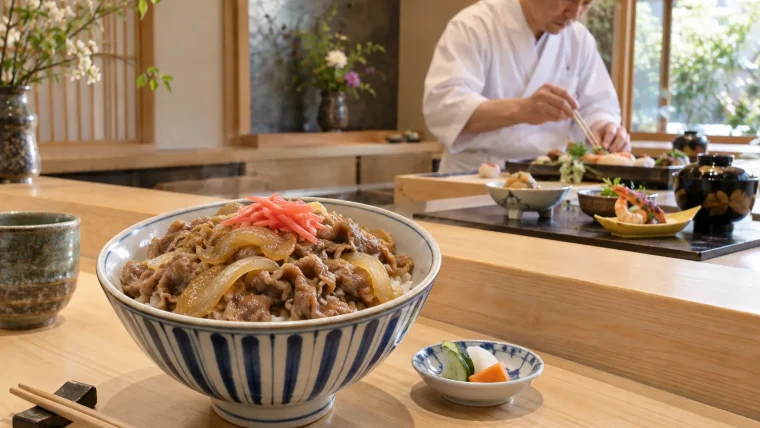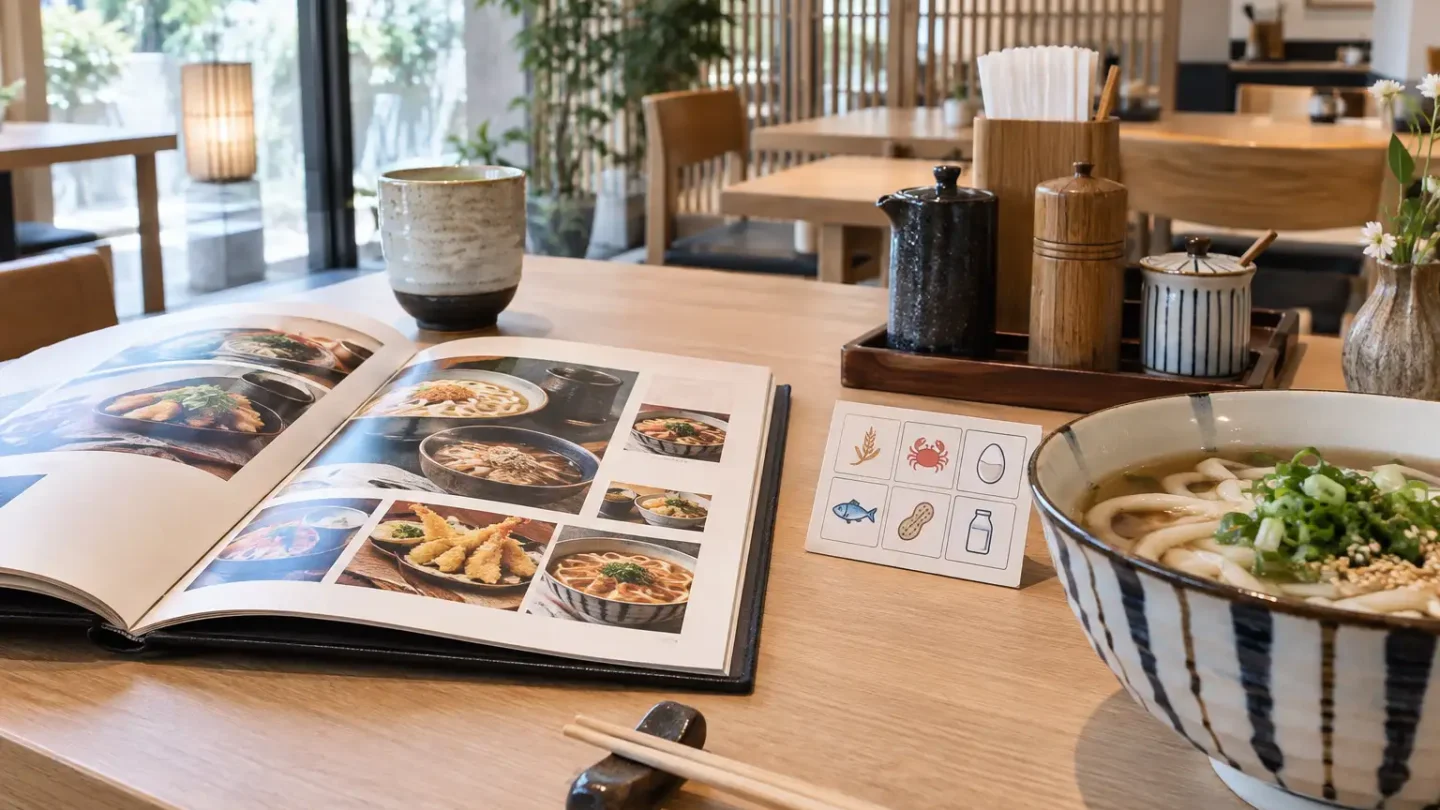
You are standing at a restaurant entrance while the line forms behind you. The menu shows grilled fish, vegetable noodles, and rice bowls, but none of those photographs tells you whether the sauce contains mirin, the soup contains pork, or the kitchen uses separate utensils.
Finding halal food in Japan is possible, especially in major tourist cities. Eating according to a strict halal or kosher standard, however, requires more than pointing to a dish that appears free of pork.
The central problem is not translation. It is that the ingredients you need to know about are often prepared before the restaurant opens.
Before approaching the menu, read Ordering, Paying and the Rules Nobody States. Some restaurants expect you to buy a meal ticket before speaking to anyone, so you must ask about ingredients before paying.
First decide what level of assurance you need
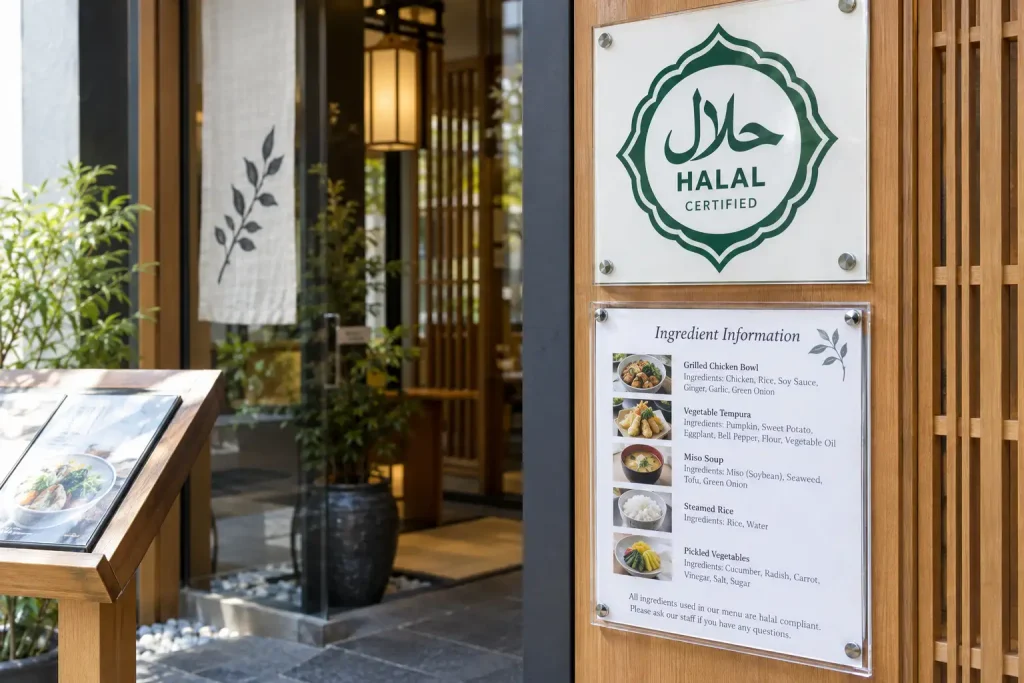
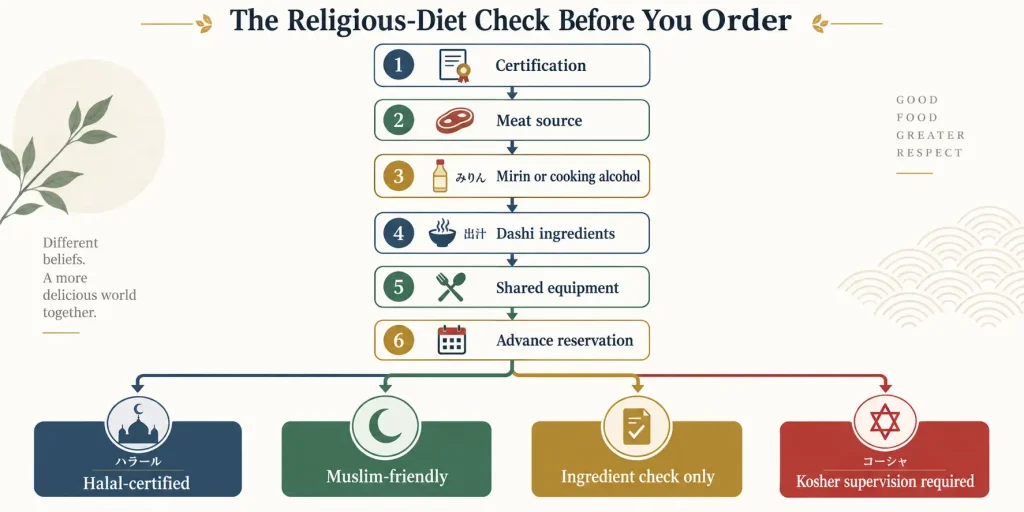
The words “halal,” “Muslim-friendly,” and “no pork” do not promise the same thing. Japan has no single central agency responsible for all halal accreditation, and independent certifying organizations may apply different standards.
A halal-certified restaurant should be able to identify its certifying body and explain what the certification covers. It may apply to the entire establishment, a particular kitchen, or selected products, so look beyond the logo.
A restaurant described as Muslim-friendly may offer useful accommodations without being certified. Depending on its policy, it might use halal meat while continuing to serve alcohol or cook other dishes with non-halal ingredients.
“No pork” answers one ingredient question. It does not answer how the stock, sauce, meat, or utensils were handled.
For kosher travelers, the gap is wider. A dish does not become kosher merely because it contains no pork or shellfish. The meat, dairy separation, equipment, preparation, ingredients, and supervision all matter.
| Restaurant description | What it may establish | What you still need to ask |
|---|---|---|
| Halal-certified | Certification has been issued under a named standard | Whether it covers the whole premises and remains current |
| Muslim-friendly | The restaurant offers some accommodations | Meat source, alcohol, stock, utensils, and shared cooking surfaces |
| No pork | Pork is not intentionally included in the stated dish | Broth, gelatin, shortening, sauces, and cross-contact |
| Vegetarian | Meat may be absent from the visible ingredients | Fish stock, animal-derived seasoning, alcohol, and shared equipment |
| Kosher-supervised | Food is prepared under stated kosher supervision | Who supervises it and whether advance booking is required |
How to ask before the order enters the kitchen
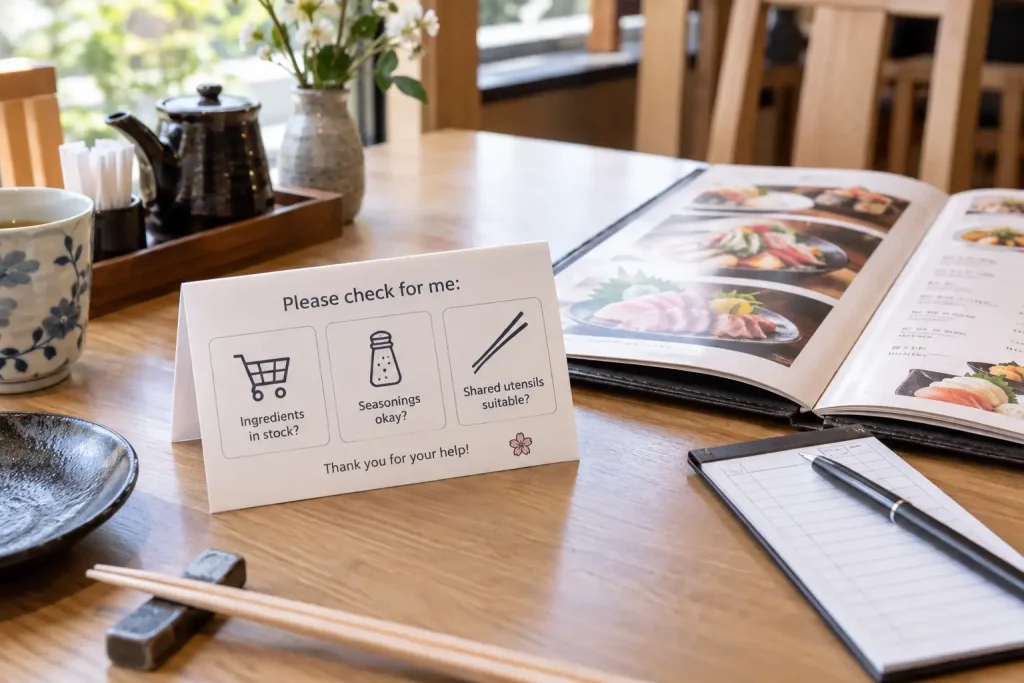
Begin with the restriction, not with a long account of your travel plans. A short, specific question is easier for staff to take to the kitchen.
ハラール認証はありますか。
Harāru ninshō wa arimasu ka.
Literal: “Is there halal certification?”
In practice: You are asking whether the business has certification, not whether a staff member considers the food generally suitable.
If the answer is no, move from broad labels to ingredients:
豚肉は使っていますか。
Butaniku wa tsukatte imasu ka.
Literal: “Do you use pork?”
In practice: Ask staff to include the soup, sauce, and cooking fat in their check.
みりんや料理酒は入っていますか。
Mirin ya ryōrishu wa haitte imasu ka.
Literal: “Does it contain mirin or cooking sake?”
In practice: This directs attention to seasonings that may not appear in the English dish name.
出汁は何から作っていますか。
Dashi wa nani kara tsukutte imasu ka.
Literal: “What is the dashi made from?”
In practice: You are not asking whether stock exists; you are asking for its ingredients.
The site’s phrasebook — 337 phrases, including ordering and allergies is useful for showing a prepared request instead of improvising it at a busy counter.
The three ingredients that defeat visual inspection
Mirin is not simply sweet seasoning
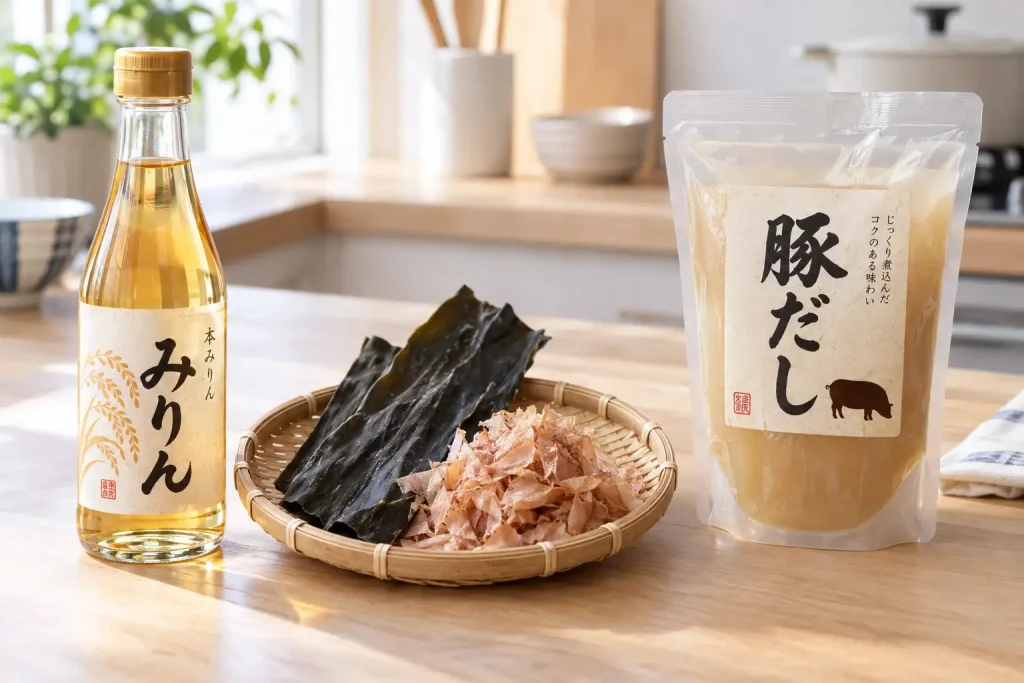
味醂/みりん, mirin, literally “mirin,” is a sweet rice-based alcoholic seasoning. It appears in glazes, simmered dishes, noodle sauces, sushi rice preparations, and dipping sauces.
Some kitchens use 本みりん/hon mirin, “true mirin,” while others use products formulated as mirin-style seasoning. Their ingredients and alcohol content differ. If your rule excludes alcohol, “the alcohol probably cooked off” is not an adequate restaurant answer.
Dashi may be under everything else
出汁/だし, dashi, literally “stock,” is the foundation beneath many apparently simple dishes. It may be prepared with 鰹節/katsuobushi, “dried bonito flakes,” 昆布/kombu, “kelp,” dried sardines, mushrooms, or a blended commercial seasoning.
Vegetable toppings do not prove vegetable stock. Noodle broth, steamed egg, simmered tofu, dipping sauce, and even a vegetable side dish may contain fish-based dashi.
The broader Japanese Food for Beginners: How to Read a Menu explains common menu formats. Here, the important point is narrower: reading 野菜/yasai, “vegetables,” does not reveal the cooking liquid.
Pork is often in the liquid, not on the plate
豚骨/とんこつ, tonkotsu, literally “pork bones,” clearly identifies a pork-based ramen soup. Other broths may combine pork or animal fat with chicken, seafood, vegetables, and seasonings without advertising every component in the English name.
This makes halal ramen a poor place for assumptions. At a ticket-machine shop, use the advice in Paying Before You Sit Down and confirm the broth before purchasing the ticket.
Halal food in Japan is easiest where demand is visible
JNTO says facilities for Muslim visitors are found mainly in major cities. In practice, your strongest choices are purpose-built restaurants around heavily visited urban districts, international hotels, airports, university areas, and neighborhoods near mosques.
Tokyo, Kyoto, Osaka, and Kobe have established Muslim-traveler information and restaurant resources. That does not mean every branch of a familiar restaurant chain follows the same policy.
Use this sequence:
- Search for halal restaurants in Tokyo or in the city where you will actually stay.
- Open the restaurant’s own current website or social account.
- Identify the certifying organization, if certification is claimed.
- Confirm whether alcohol is served and whether non-halal food shares the kitchen.
- Contact the restaurant shortly before your visit.
- Save a backup meal near your hotel rather than across the city.
A logo shown in an old review is not enough. Certification can expire, menus can change, and restaurants can close or move.
What the staff member is really deciding
When you ask “Is this halal?” an employee may not know whether you mean no pork, halal-slaughtered meat, no alcohol, separate utensils, or full certification. A cautious “I do not know” can therefore be more useful than an eager “probably.”
You can make the request answerable:
豚肉とアルコールを使わない料理はありますか。
Butaniku to arukōru o tsukawanai ryōri wa arimasu ka.
Literal: “Are there dishes that do not use pork and alcohol?”
In practice: This is an ingredient request, not a claim that the kitchen is halal.
調理器具は共用ですか。
Chōri kigu wa kyōyō desu ka.
Literal: “Are the cooking utensils shared?”
In practice: You are asking about cross-contact and equipment.
Staff may need to check a package, ask the cook, or refuse the request. Let them. At a small restaurant, the person taking orders may not have access to a complete supplier specification.
Politeness cannot turn uncertain ingredients into confirmed ingredients.
The moment a harmless-looking order goes wrong
Suppose you order plain udon after hearing that it contains no meat. The noodles arrive in bonito stock seasoned with soy sauce and mirin. The employee answered your question correctly—the bowl contains no visible meat—but the question was too narrow.
The repair sentence is:
すみません。出汁と調味料も確認していただけますか。
Sumimasen. Dashi to chōmiryō mo kakunin shite itadakemasu ka.
Literal: “Excuse me. Could you also check the stock and seasonings?”
In practice: You are asking for a second check without accusing the employee of misleading you.
At an izakaya, an automatic appetizer may arrive before the kitchen discusses your restrictions. The Small Dish You Never Ordered and Must Pay For explains this system. Ask about the appetizer before eating it; do not assume it follows the restrictions attached to your main order.
| What you see | Hidden question | Safer request |
|---|---|---|
| Vegetable noodle soup | Is the stock made from fish, chicken, or pork? | Ask what the dashi contains |
| Grilled fish | Is the glaze made with mirin or cooking sake? | Ask about sauce and marinade |
| Plain rice ball | Does the filling contain fish, alcohol seasoning, or animal extract? | Check the original package or filling label |
| Curry without visible meat | Does the roux contain animal fat, stock, or gelatin? | Ask to check the packaged roux |
| Fried vegetables | Is the fryer shared with pork, meat, or seafood? | Ask whether the oil is shared |
| Ramen labeled chicken or seafood | Is pork fat or blended stock also used? | Ask about the complete broth base |
Kosher food requires a different plan
Kosher food in Japan cannot be assessed through a halal logo, a vegetarian icon, or a promise that the restaurant avoids pork. Kosher meat requires its own slaughter and supervision rules, and meat and dairy preparation must remain separate.
Historically, Chabad in Tokyo has provided supervised kosher meals and operated a kosher restaurant service. Chabad communities have also supported Jewish travelers elsewhere, including Kyoto. Availability, meal schedules, reservations, and holiday arrangements must be confirmed directly before travel.
The practical strategy is to organize your itinerary around the provider, not to expect a conventional restaurant search to produce suitable options:
- Contact Chabad or another recognized kosher provider before arrival.
- State your dates, destination, and required level of observance.
- Ask whether meals are dine-in, pickup, delivered, frozen, or limited to particular days.
- Reserve Shabbat and holiday meals in advance.
- Confirm what your hotel permits you to store, heat, or receive.
- Carry sealed certified food for journeys outside the main service area.
Finding kosher meals in Tokyo may be possible with planning. Expecting a rural restaurant to create a kosher meal from ordinary ingredients and equipment is not realistic.
Why the American version of the conversation feels different
In the United States, restaurant staff may recognize “halal” or “kosher” as a complete customer category. A certification mark may also be familiar enough that the customer and employee start with roughly the same definition.
In Japan, staff may understand your request primarily as an allergy-style ingredient exclusion. That can be helpful, but it can also reduce a religious standard to “remove the pork” or “leave out the sauce.”
There is another complication: kitchens often prepare stock, tare, curry roux, and marinades in batches. The cook may be unable to remove mirin or pork from a finished base even when they understand your request perfectly.
The uncomfortable answer is sometimes “this restaurant cannot serve you safely.” That is not failed hospitality. A clear refusal protects you better than a confident guess from someone who does not control the supply chain.
Build a meal plan before building the sightseeing plan
For strict requirements, mark dependable meals on the map first. Then add attractions around them.
A workable plan includes:
- A verified restaurant and a backup in each overnight city
- Screenshots of current certification or restaurant policy
- A Japanese dietary card that states ingredients and equipment concerns
- Sealed emergency food for late arrivals and long rail journeys
- Accommodation with useful food-storage or preparation facilities
- Advance arrangements for kosher, Shabbat, or holiday meals
Do not treat convenience-store seafood, vegetarian sushi, or plain-looking rice dishes as automatically safe. The difference between sushi and raw fish is covered in Sushi vs Sashimi: The Difference Is the Rice; neither category alone establishes halal or kosher preparation.
Among Muslim-friendly restaurants, policies vary enough that the business’s own explanation matters more than a third-party category. Ask exactly what you need to know and accept that your standard may be stricter than the restaurant’s.
The two phrases worth carrying
If you remember only two questions, make them these:
出汁と調味料も確認していただけますか。
Dashi to chōmiryō mo kakunin shite itadakemasu ka.
“Could you also check the stock and seasonings?”
調理器具は共用ですか。
Chōri kigu wa kyōyō desu ka.
“Are the cooking utensils shared?”
The first exposes ingredients hidden beneath the menu description. The second tells you whether an apparently suitable dish shares its preparation space with food you avoid.
FAQ
Does “Muslim-friendly” mean halal-certified?
No. It generally means the restaurant offers certain accommodations for Muslim guests. Ask what those accommodations include and whether an independent organization certified the restaurant.
Is vegetarian food automatically halal or kosher?
No. Vegetarian dishes can contain mirin, cooking alcohol, fish stock, or ingredients made on shared equipment. Kosher status also depends on preparation and supervision, not only on the absence of meat.
Can I find halal Japanese food outside Tokyo?
Yes, especially in major tourist cities, but choices become less predictable away from large urban areas. Verify each restaurant and keep a backup meal.
Can an ordinary Japanese restaurant prepare a kosher meal?
Usually not to a strict kosher standard because ingredients are only one part of the rules. Equipment, meat sourcing, separation, and supervision also matter, so arrange meals through a recognized provider.