The plastic wrapper around a convenience store onigiri Japan sells you is built to keep two things apart that would otherwise ruin each other on contact: the dry seaweed sheet and the moist rice. That’s the whole trick, and it’s why the wrapper looks more complicated than it needs to be.
How the Wrapper Actually Works
Rice holds water. Seaweed, called 海苔 (nori, “dried seaweed sheet”), is meant to be dry and a little brittle — that’s what gives it a clean snap when you bite through it. Put the two in contact for more than a few minutes and the nori pulls moisture straight out of the rice, going soft and rubbery in the process. That’s fine if you’re eating right away. It’s a problem if the onigiri needs to sit on a store shelf for hours before someone buys it.
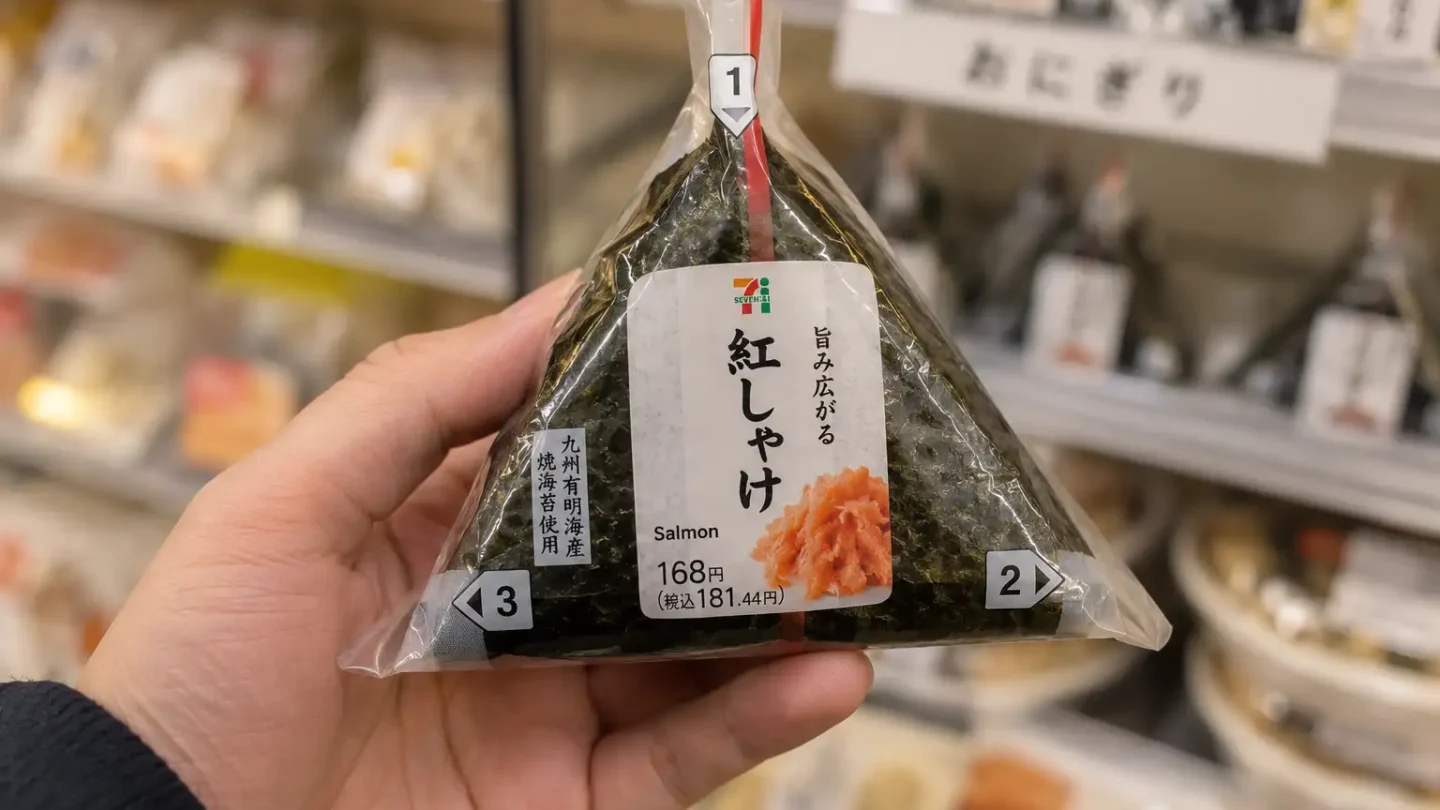
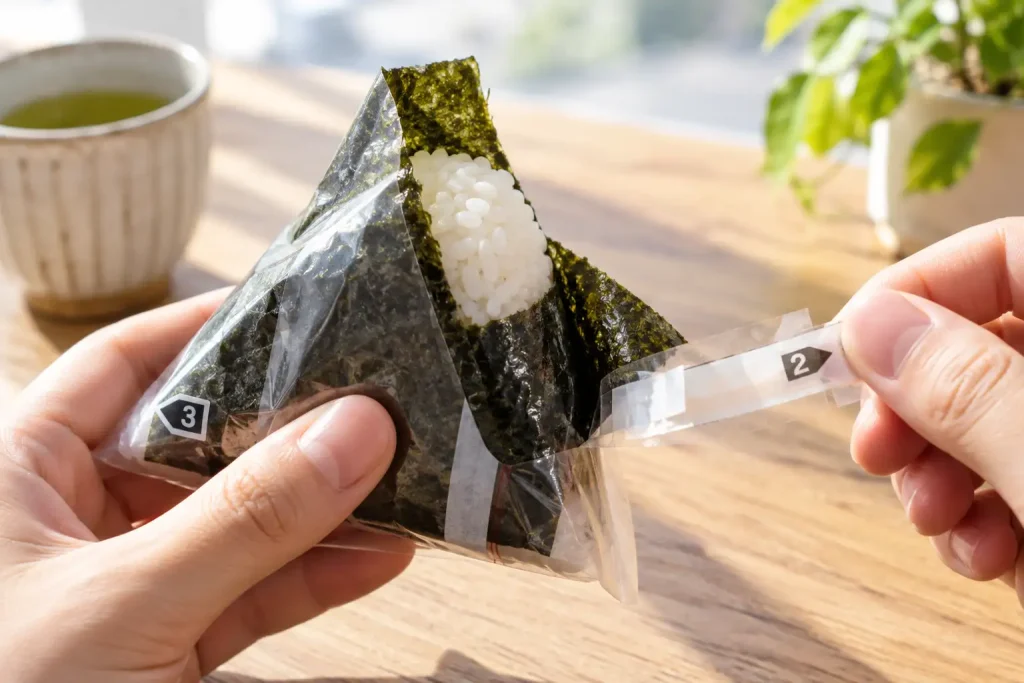
The wrapper solves this by keeping the nori and the rice in the same package without letting them touch. A folded onigiri sits in the center, wrapped in a layer of plastic film. A separate sheet of nori sits folded around the outside of that plastic, touching only plastic, not rice. When you pull the tabs in order, the plastic slides out from between the two layers, and the nori drops into direct contact with the rice for the first time — right as you’re about to eat it, not hours earlier at the factory.
It’s a genuinely clever piece of packaging engineering built around a very ordinary kitchen problem: sushi chefs have always known that nori goes soft fast, and they wrap it at the very last second for exactly this reason. The convenience store version just automates that last-second wrap so it happens in your hands instead of a chef’s.
The Numbered Tabs
Three small tabs, usually printed with the numbers 1, 2, and 3, tell you exactly which order to pull. This isn’t decoration — pulling them out of order can tear the wrapper or leave the nori stuck to the plastic instead of the rice.
- Pull tab 1, usually at the top, to loosen the first fold.
- Pull tab 2, on one side, sliding a strip of plastic out and letting the nori drop against the top edge of the rice.
- Pull tab 3, on the other side, freeing the rest of the plastic completely so the nori wraps fully around the rice.
The detail almost everyone gets wrong the first time: you keep holding the onigiri together with your other hand while you pull. The plastic is doing structural work, not just hygiene work, until step three — let go too early and the rice ball can fall apart in your palm.
The Sticker
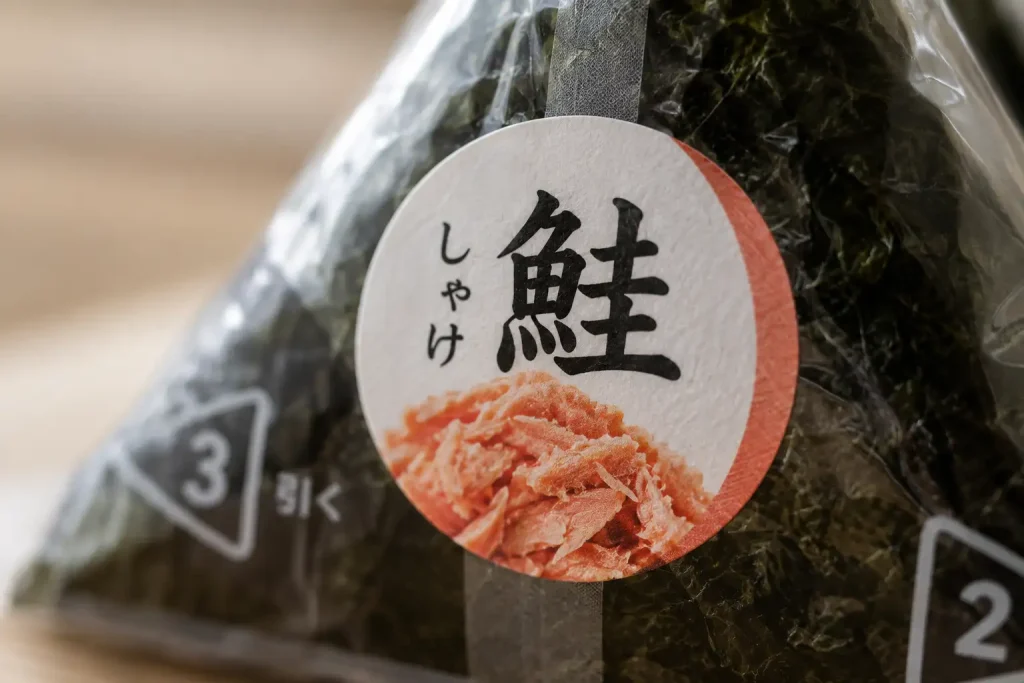
A small paper sticker seals the folded plastic shut, and it’s also where the filling name is printed — this is the part worth actually reading before you buy, not after. Fillings are usually printed in kanji or hiragana with no picture, so a name that sounds unfamiliar in English can be doing real work to tell you what’s inside.
This matters most with roe. たらこ (tarako, “salted cod roe”) and 明太子 (mentaiko, “spicy marinated pollock roe”) are two of the most common konbini fillings, and neither name announces “fish eggs” the way an English label would. If roe isn’t something you want to eat by surprise, those two names are worth memorizing on sight, not decoding at the register. The same caution applies to any packaged Japanese food where a name doesn’t map directly onto an ingredient — Vegetarian, Vegan and Allergies in Japan goes further into this exact problem for anyone eating around a restriction, not just a preference.
| Filling name on sticker | Japanese script | What it actually is |
|---|---|---|
| Tarako | たらこ | Salted, unspiced cod roe |
| Mentaiko | 明太子 | Spicy, marinated pollock roe |
| Ikura | いくら | Cured salmon roe |
| Umeboshi | 梅干し | Pickled sour plum (no roe) |
| Shake | 鮭 | Grilled or flaked salmon (no roe) |
What This Wrapper Actually Changes
A few things follow from this system that aren’t obvious until you’ve bought a few dozen onigiri and started noticing patterns.
First, the wrapper is why konbini onigiri can sit on a shelf all day and still taste freshly made when you open it — the freshness isn’t really about the rice at all, it’s specifically about timing the nori’s exposure to the very end.
Second, it’s why some chains skip the wrapper’s nori step entirely for certain products. 7-Eleven’s “Red Salmon & Salt” onigiri, for instance, doesn’t wrap the rice in seaweed at all — a genuine exception, not a manufacturing shortcut, since some fillings and rice styles are built to be eaten without nori from the start.
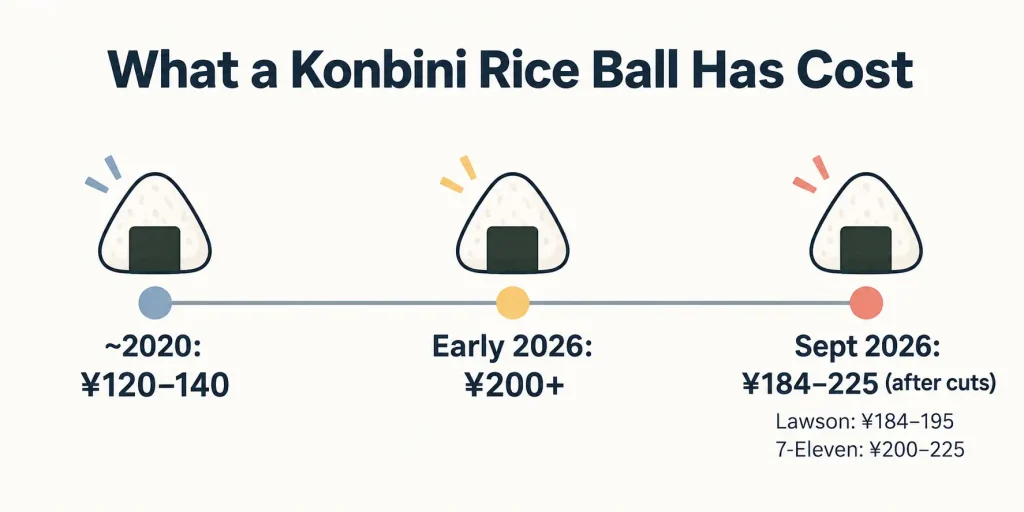
Third, this packaging is why onigiri prices swing with the price of rice itself in a way most snack foods don’t. Standard konbini onigiri sat around ¥120–140 for years, then roughly doubled toward ¥200-plus as Japan’s rice prices climbed through 2025. As one report on the shift put it:
“Chains such as 7-Eleven, Family Mart, and Lawson have approximately doubled their prices, with 200-yen-plus price tags becoming the new, and unwelcome, norm.”
— SoraNews24, February 2026
By September 2026, the three largest chains had begun quietly rolling some of that back — Lawson cut ¥10 off most of its rice balls, and 7-Eleven trimmed ¥19 off its salmon and mentaiko varieties, according to reporting from that month. None of this changes how the wrapper works; it just means the price on the sticker is worth a glance even for a longtime regular.
Fourth — and this is the one that surprises people who’ve only shopped at one chain — the exact same filling name doesn’t cost the same everywhere. Mentaiko onigiri ran ¥225 at Lawson after its September 2026 price cut, while a comparable spicy-roe onigiri at a different chain can land anywhere in a wider range depending on size and rice quality. There’s no single “correct” price to expect walking in.
When the Wrapper Isn’t Doing This at All
Not every onigiri you’ll find at a Japanese convenience store uses this system, and it’s worth knowing the exception on sight rather than assuming every triangle works the same way.
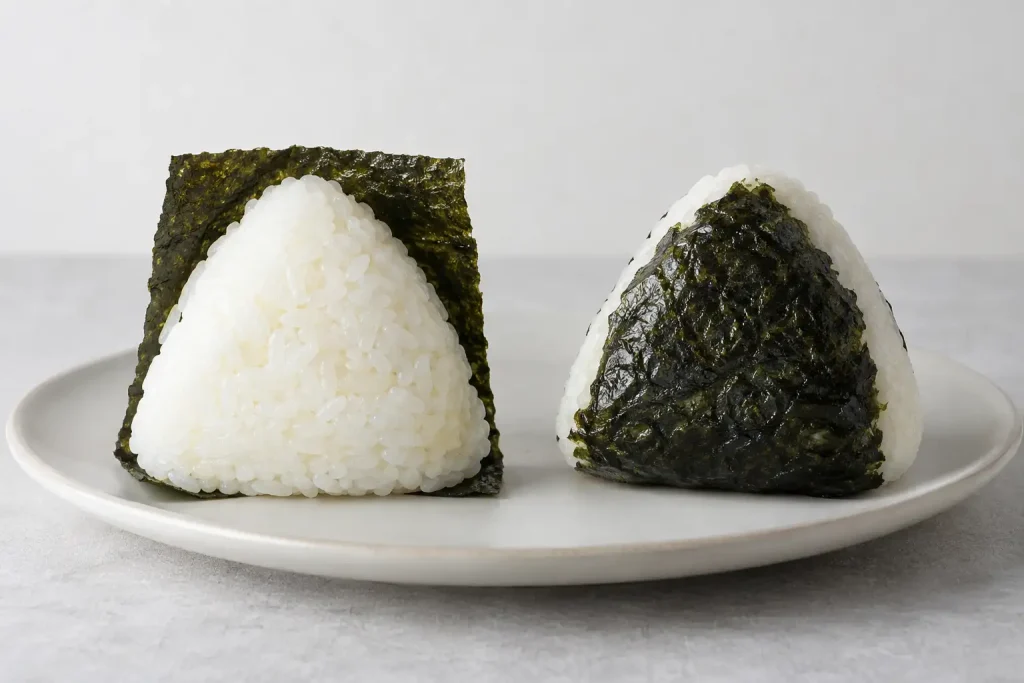
Look for the term 直巻き (jikamaki, “direct-wrapped”) on the packaging, or simply notice that the nori is already pressed flat against the rice through the wrapper, with no numbered tabs at all. This is a real, sold-alongside-the-other-kind product category, not a defect — some shoppers specifically prefer the softer, moister nori texture it produces, closer to what you’d get from a home-wrapped rice ball, and it’s typically cheaper to produce since it skips the two-layer plastic mechanism entirely. Traditional standalone onigiri shops, and some home cooking, lean the same direction on purpose — soft nori isn’t a failure state, it’s simply a different, older style that predates the pull-tab wrapper by decades.
The exact origin of the pull-tab wrapper itself is genuinely disputed rather than settled — some accounts trace it to a small delicatessen in Nagano Prefecture in the late 1970s, while others credit a convenience chain’s own product development team studying how sushi chefs handle nori. This piece can’t verify which came first from a single reliable source, so treat that origin story as an open question rather than a fact to repeat with confidence.
The One Sentence Worth Remembering
If the package has numbered tabs, the nori is dry and separate until you pull them in order; if it doesn’t, the nori is already touching the rice on purpose — and either way, the sticker is worth reading before the price is.
A Couple of Quick Questions
Do all three big chains use the same wrapper mechanism?
Yes, the pull-tab, nori-separate system is standard across 7-Eleven, Lawson, and FamilyMart, though the exact tab shape and fold pattern varies slightly by chain.
Is jikamaki always cheaper?
Not always, but it’s the more common reason when it is — skipping the plastic-separation mechanism removes a manufacturing step, though filling and rice quality still move the price more than the wrapper style does.
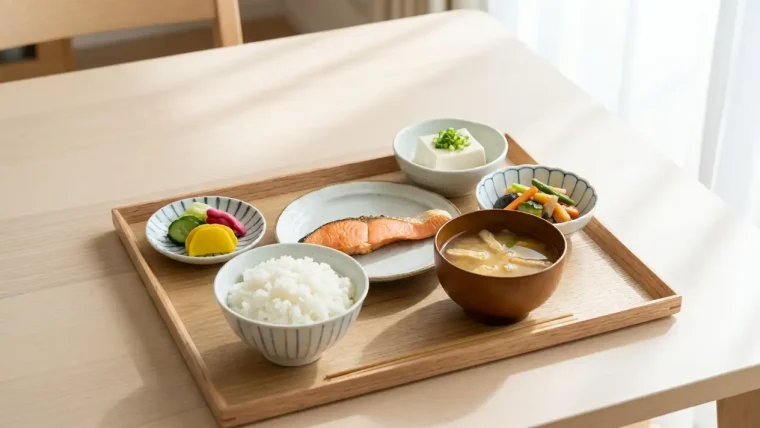
For anyone building a full plate around this — onigiri is often eaten as one part of a larger meal, and Rice, Soup and Fish Before Eight in the Morning covers where a rice ball actually fits into a traditional Japanese breakfast, rather than standing in for the whole thing. And if a sticker’s name is confusing enough to need a staff member’s help, the phrasebook has 337 phrases sorted by exactly this kind of situation, ordering and allergies included.
Confusing labeling isn’t unique to rice balls, either — The A Is Not a Quality Grade covers a much more expensive version of the same problem, where a label everyone assumes they understand doesn’t say what it looks like it says. And if reading any Japanese food label still feels like guesswork more broadly, Japanese Food for Beginners: How to Read a Menu is the wider version of this same skill.