Japan stopped changing its era name in response to disasters in 1868. Before then, a new fire, epidemic, war, comet, imperial accession, or calendrical milestone could bring a new name even while the same emperor remained on the throne. Since the Meiji reform, the system has followed a much simpler principle: one emperor, one era.
So, how many Japanese eras have there been? Reiwa, introduced in 2019, was the 248th era-name proclamation in the conventional official count beginning with Taika in 645. It was not, however, the 248th unique combination of kanji. Because several names were reused, Reiwa is the 232nd distinct era name. “About 250” is therefore a sound short answer, provided you explain which count you mean.
The number also needs historical context. Japan did not use era names continuously from 645 onward, and premodern eras did not correspond neatly to imperial reigns. The modern five-era sequence—Meiji, Taishō, Shōwa, Heisei, and Reiwa—is unusually orderly when placed beside the centuries that came before it.
Why the early count begins with Taika
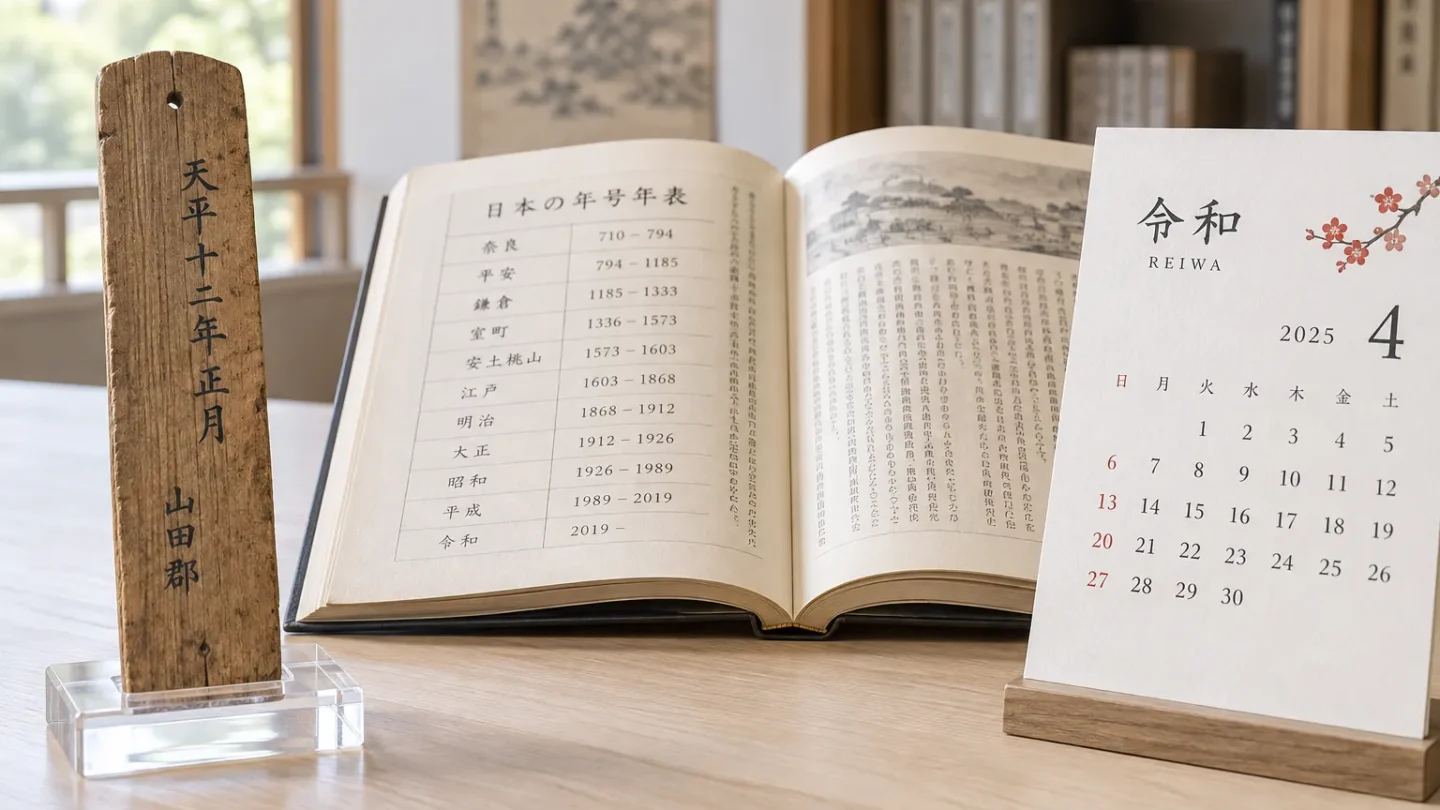
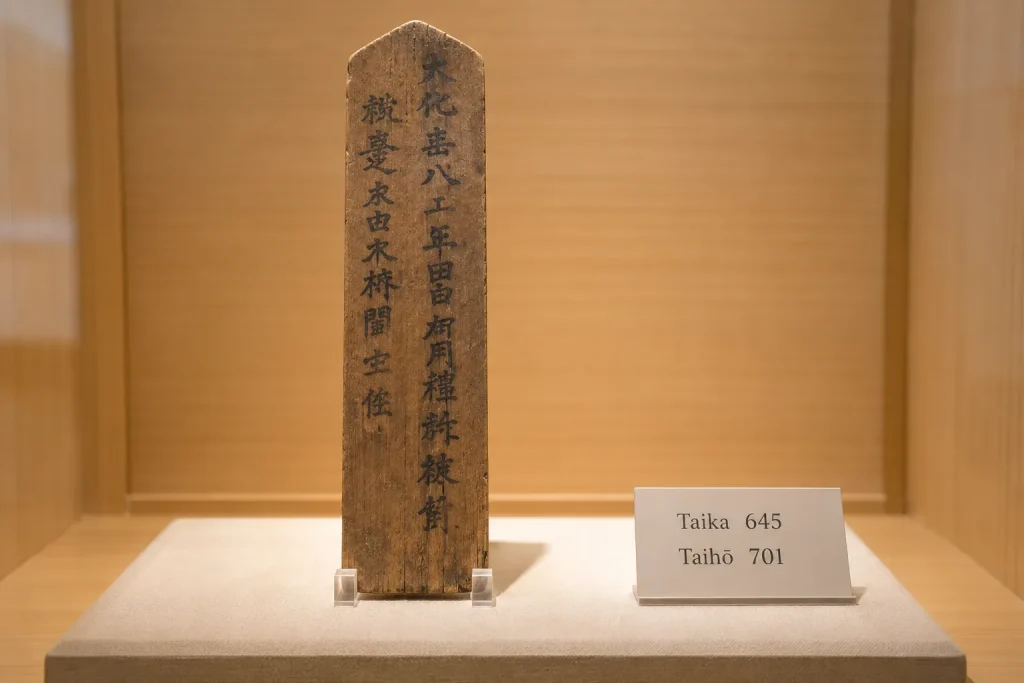
Japan’s first recognized era was 大化, Taika, literally “great transformation,” beginning in 645. The system had been adopted from Chinese governmental practice, in which named eras supplied a political and chronological framework for recording years. Taika was followed by 白雉, Hakuchi, literally “white pheasant,” in 650.
The early experiment did not immediately create an unbroken calendar. After Hakuchi ended in 654, Japan passed through decades in which no official era name was assigned. The brief 朱鳥, Shuchō, usually interpreted as “red bird,” appeared in 686 and lasted only a few months. Continuous use began with 大宝, Taihō, literally “great treasure,” in 701.
That interrupted beginning explains why subtracting 645 from the current year will not tell you how many eras existed. Nor can you divide the elapsed time by an average imperial reign. For most of the system’s history, Japanese era names changed for reasons that had little to do with the arrival of a new emperor.
For how scholars and officials select the two characters of a modern name, Choosing Two Kanji for the Next Thirty Years follows the process from proposed candidates to the cabinet order. The counting question here is different: it asks why nearly 250 proclamations accumulated across roughly 1,380 years.
How many Japanese eras came before the modern rule?
Premodern Japan treated a change of name as a possible change of political weather. An era might begin after an imperial accession, but accession was only one trigger. Officials also renamed eras following calamities or disturbances, in response to reported auspicious signs, and at years considered significant within the traditional sexagenary cycle.
The reasoning belonged to the politics and cosmology of its period, not to astronomy in the modern scientific sense. A comet did not mechanically “cause” a new era. Rather, court officials could interpret an unusual event as a reason to leave an inauspicious name or period behind. The same applied to destructive fires, earthquakes, epidemics, famine, and warfare.
Common historical reasons for a pre-1868 change included:
- the accession of an emperor;
- a major fire or other destructive event;
- an epidemic, famine, earthquake, or conflict;
- the appearance of a comet or another unusual celestial phenomenon;
- a reported auspicious sign;
- the arrival of a significant year in the sexagenary cycle.
The result was a calendar in which one reign could contain several era names. An era could last more than a decade, but it could also end within months. Conversely, a change of emperor did not always produce an era name on the exact day of succession.
| Period | Basic relationship between emperor and era | Other possible triggers | Practical result |
|---|---|---|---|
| 645–700 | Irregular and interrupted | Political reform, auspicious signs | Some years had no era name |
| 701–1868 | Continuous, but not one name per reign | Disasters, epidemics, fires, celestial events, cycle years | Several eras could occur within one reign |
| 1868–present | One era for each imperial reign | Imperial succession only under the current law | Five modern eras through Reiwa |
This is why a list of eras can look surprisingly dense in some periods. The 1860s alone contained Man’en, Bunkyū, Genji, Keiō, and Meiji. A reader accustomed to Shōwa or Heisei may expect an era to describe a generation. In earlier centuries, it could label only a narrow interval within the rule of the same sovereign.
The short eras were not counting mistakes
A name lasting less than a year is not an incomplete entry. It reflects the historical rules under which eras could be reset without waiting for an imperial succession. Shuchō in 686 is the clearest early example, lasting only about three months before the emperor’s death and the suspension of the era-name system.
Later short eras occurred within a continuous chronology. 暦仁, Ryakunin, conventionally understood as “calendar benevolence,” began in 1238 and was replaced in 1239. 元治, Genji, literally “origin of government,” ran from 1864 into 1865. Exact conversions require care because Japan used a lunisolar calendar before adopting the Gregorian calendar in 1873.
That calendar difference matters whenever a source makes an era appear to have lasted a certain number of Western months. Premodern Japanese dates should not be treated as though every named month aligned with a modern Gregorian month. The safest comparison uses documented start and end dates converted by a specialist chronology rather than subtracting printed year numbers.
“Short era” does not mean “short imperial reign.” Before 1868, the two timelines were separate and could change independently.
The reform that tied one name to one reign
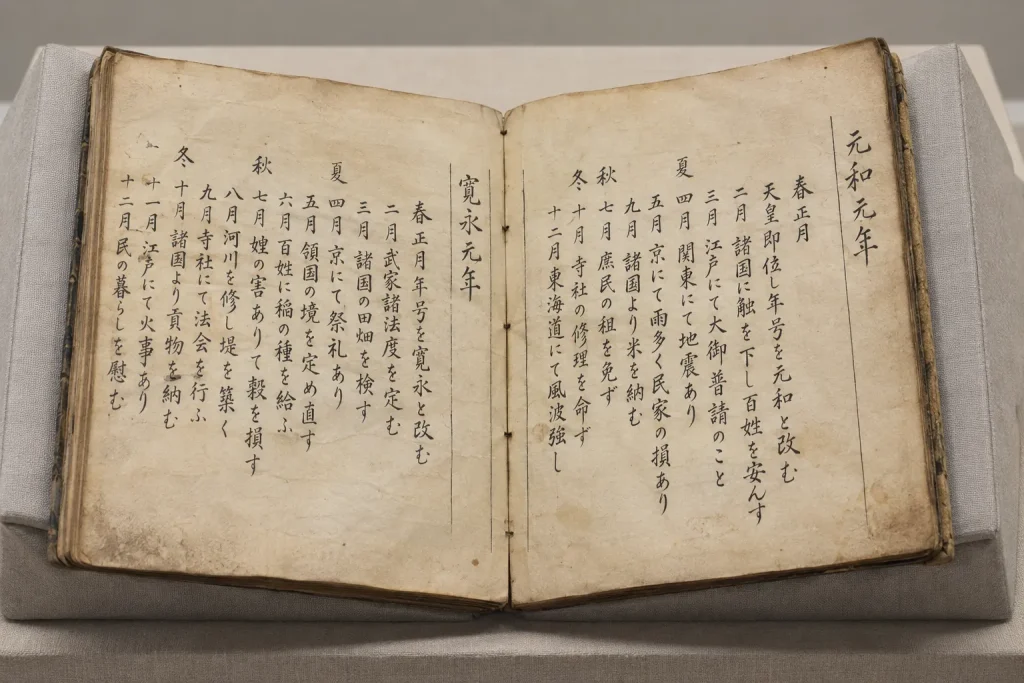
On October 23, 1868 in the Gregorian calendar—September 8 in Japan’s calendar at the time—the government renamed Keiō 4 as Meiji 1. The proclamation also established 一世一元, issei ichigen, literally “one reign, one era.” From that point, an emperor’s reign would have a single era name.
The change was retrospective within the Japanese year. Dates earlier in Keiō 4 were redesignated as dates in Meiji 1, rather than leaving 1868 permanently divided at the proclamation date. This detail is easy to miss if you apply the rules of the later transitions to the beginning of Meiji.
The system was incorporated into the Meiji-era imperial framework, but its legal history was not perfectly continuous after World War II. The postwar Imperial House Law did not itself preserve an era-name rule. Japan subsequently enacted the 元号法, Gengō-hō, literally “Era Name Act,” Law No. 43 of 1979.
The law is exceptionally short. It states that the era name is set by cabinet order and may be changed only when an imperial succession occurs. The uncomfortable practical point is that “one reign, one era” is not merely an unbroken ancient rule: it is a Meiji reform whose present statutory basis dates from 1979.
| Modern era | Civil start | Civil end | Highest era-year label | Approximate elapsed duration |
|---|---|---|---|---|
| Meiji | October 23, 1868 | July 30, 1912 | Meiji 45 | 43 years, 9 months |
| Taishō | July 30, 1912 | December 25, 1926 | Taishō 15 | 14 years, 5 months |
| Shōwa | December 25, 1926 | January 7, 1989 | Shōwa 64 | 62 years |
| Heisei | January 8, 1989 | April 30, 2019 | Heisei 31 | 30 years, 4 months |
| Reiwa | May 1, 2019 | Present | Reiwa 8 in 2026 | Ongoing |
The table exposes a common counting trap. Shōwa reached Shōwa 64, yet it did not last 64 complete years. Shōwa 1 consisted of the final days of 1926, while Shōwa 64 consisted of the first seven days of 1989. Measured from December 25, 1926 to January 7, 1989, the Shōwa era lasted just over 62 years and remains Japan’s longest imperial reign and longest era by elapsed time.
What the modern system means on a form
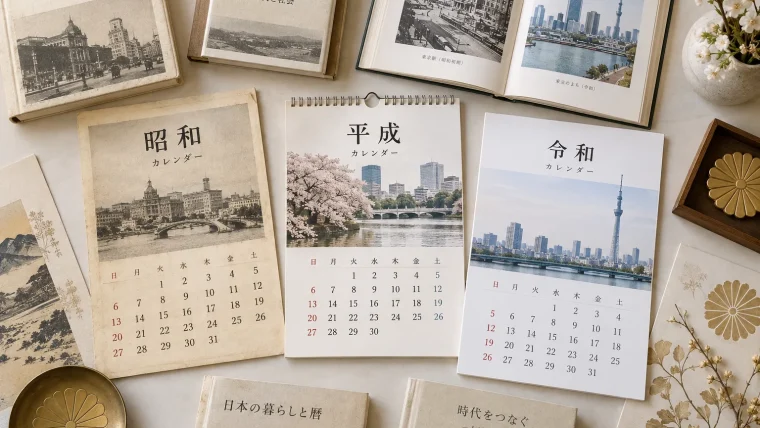
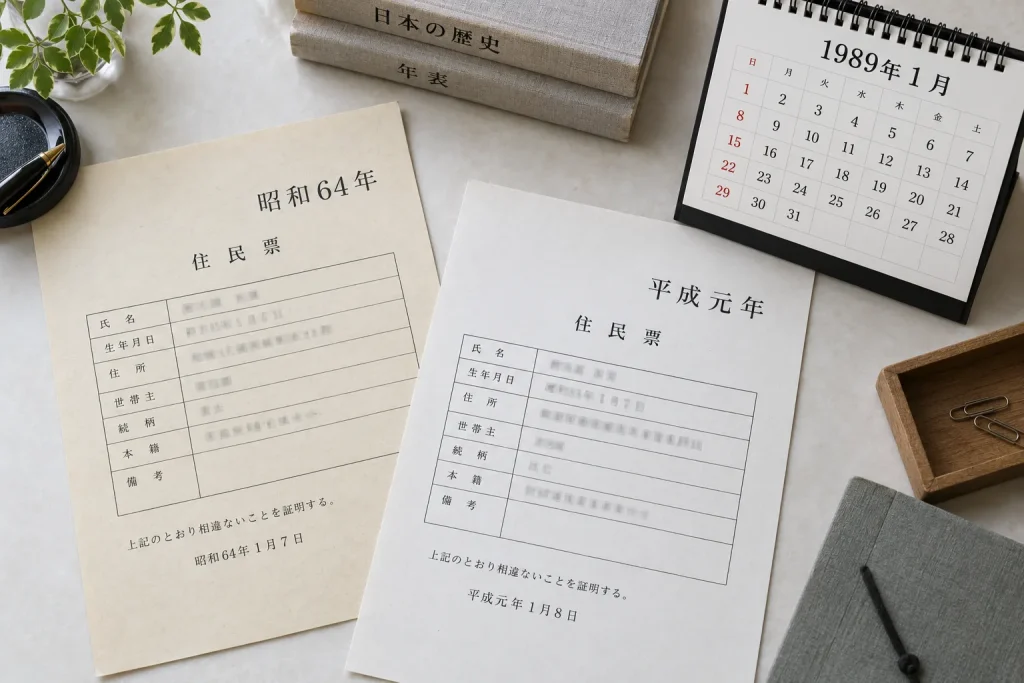
Today, an era year changes only with an imperial succession. A calendar year can nevertheless contain two era years because succession does not have to occur on January 1. This happened in 1912, 1926, 1989, and 2019.
For example, January 7, 1989 was Shōwa 64, while January 8 was Heisei 1. Merely knowing that a document comes from 1989 is therefore insufficient; you need its month and day. The Four Japanese Years That Belong to Two Eras gives the four boundaries without repeating them as a full conversion system here.
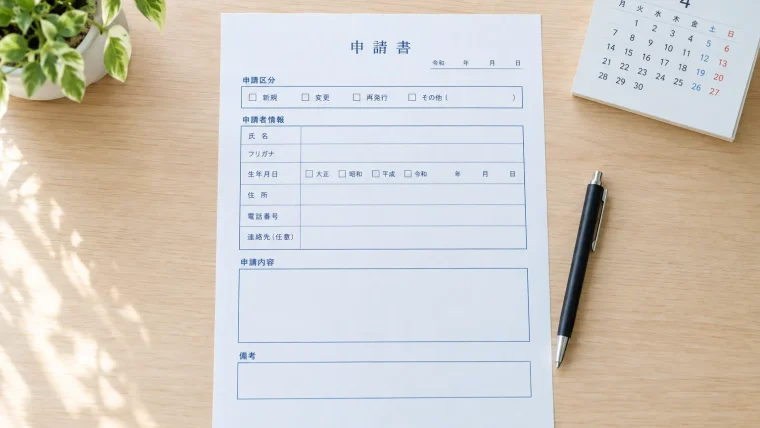
The first year of an era is normally written 元年, gannen, literally “origin year,” rather than as “year 1.” A date such as 令和元年, Reiwa gannen, therefore means Reiwa’s first year, not an undated ceremonial phrase. For document fields, character order, and abbreviations, How to Read a Date on a Japanese Document covers the practical reading task.
If you need a date rather than a history lesson, use the era converter covering every year from 1868 through 2050 and all five modern eras. It handles transition boundaries that a simple subtraction rule cannot resolve. Japanese Era Years: Meiji to Reiwa, Explained explains the conversion method, while Showa, Heisei and Reiwa Year Tables supplies tables designed for quick lookup.
What Reiwa changed—and what it did not
The government announced 令和, Reiwa, officially rendered in English as “beautiful harmony,” on April 1, 2019. The era itself began on May 1, when Emperor Naruhito acceded to the throne. The month between announcement and implementation gave public agencies, software providers, printers, and businesses time to prepare.
The announcement date did not create an additional era, and April 2019 did not become Reiwa 1. It remained Heisei 31 through April 30. 1 April 2019, and the Board Held Up explains the announcement sequence and the famous presentation of the calligraphy board.
Reiwa also did not replace the Gregorian calendar. Japanese government and business records use Western years as well as era years, depending on the document and system. Nor did the new name alter the statutory trigger: the Era Name Act still limits a change to imperial succession.
What was new was the cited literary source. The government presented Reiwa as the first Japanese era name drawn from Japanese classical literature, specifically a passage associated with plum blossoms in the Man’yōshū. The First Era Name Not Taken From China examines that source claim and its necessary qualifications.
Why the total can be given as 232 or 248
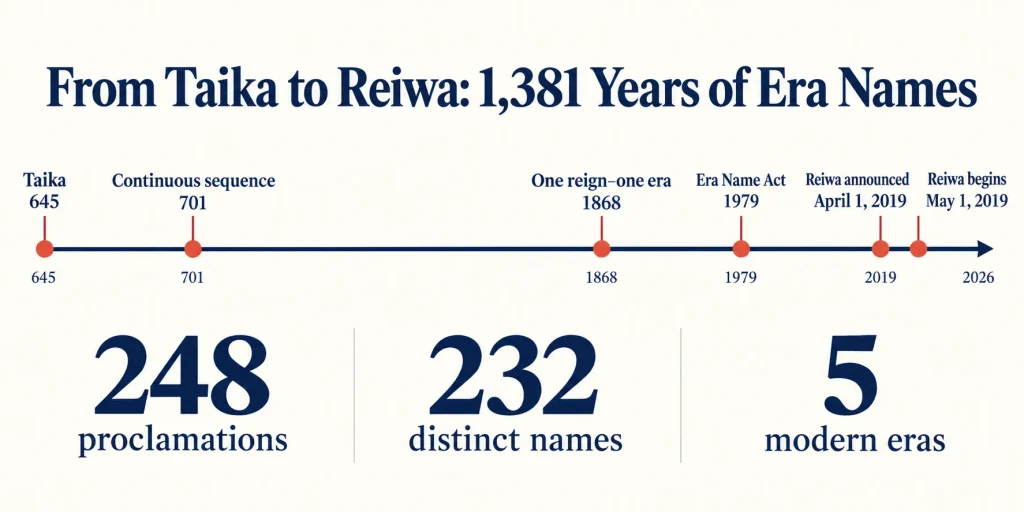
Both totals can be accurate, but they answer different questions. The figure 248 counts era-name designations in the conventional sequence from Taika through Reiwa, including occasions when the same two-character name appeared more than once. The figure 232 counts distinct written names.
For a general reader asking how many era names Japan has used, “about 250 since 645” is the clearest order-of-magnitude answer. For a database, quiz, or claim about unique names, 232 is the more precise figure. The distinction should always travel with the number because a bare total invites the wrong interpretation.
There is another qualification. Some historical lists count rival Southern and Northern Courts differently, and early gaps remain part of the chronology. That does not make the government’s 248th-designation description wrong; it means historical counting conventions must be stated rather than assumed.
The useful sequence is:
- Taika began the conventional count in 645.
- Continuous use began with Taihō in 701.
- Repeated renaming produced nearly 250 designations before and after imperial accessions.
- The 1868 Meiji proclamation imposed one era per reign.
- The 1979 Era Name Act supplied the present legal rule.
- Reiwa became the 248th designation and 232nd unique name in 2019.
What to verify before trusting an era date
Before relying on an era date, check whether the source means an era-year label or elapsed duration. Shōwa 64 is the decisive warning: the label reached 64 because Japanese era counting includes partial calendar years, while the era itself lasted a little over 62 years. The same problem affects every transition that occurred away from January 1.
For a modern date, confirm the complete day, not only the Gregorian year. For a date before 1873, confirm which calendar the source uses and whether its conversion has been performed by a reliable chronology. For a historical count, check whether repeated names and the rival courts are treated separately.
This article should be reviewed when Reiwa ends, when the government announces the next era name, or if Japanese law governing era names changes. Until one of those events occurs, the core answer remains stable: 248 proclamations from Taika through Reiwa, representing 232 unique names, with the modern one-name-per-reign system dating from 1868.