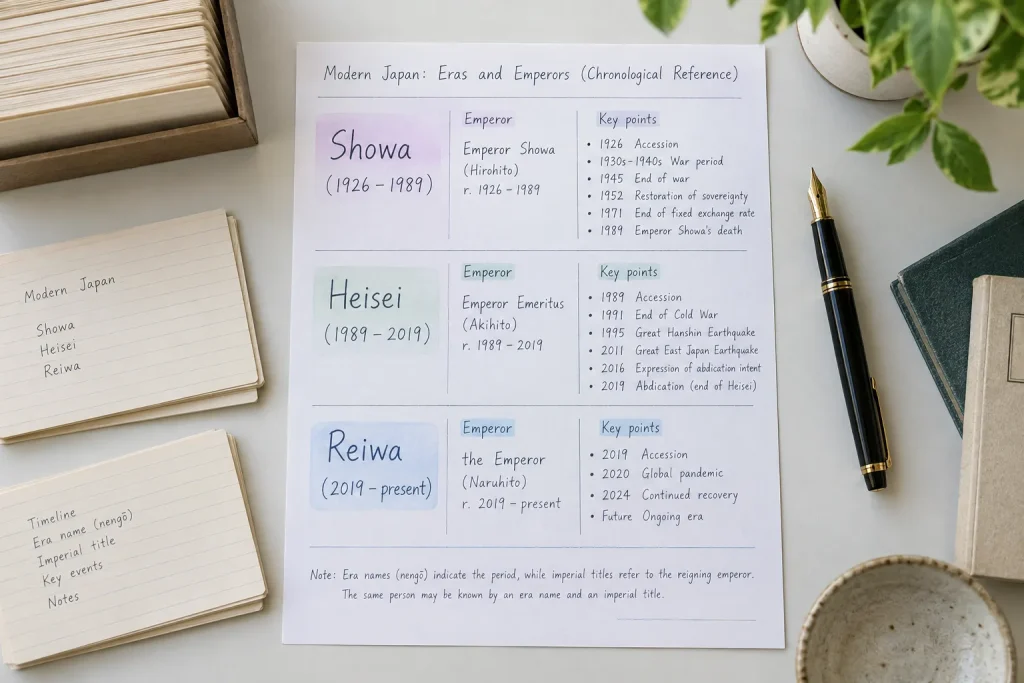
You must decide whether to write Hirohito, Emperor Showa, Naruhito, or Emperor Emeritus Akihito, and the wrong choice can make otherwise careful writing sound foreign to Japanese usage. The emperor showa vs hirohito question depends on three variables: whether the person is reigning, retired, or deceased; whether you are writing in Japanese or English; and whether historical recognition or Japanese official convention matters more. In contemporary Japan, the emperor who died in 1989 is 昭和天皇, Shōwa Tennō, literally “Emperor Showa,” not simply Hirohito. The reigning emperor is ordinarily called 天皇陛下, Tennō Heika, “His Majesty the Emperor,” rather than by his given name, Naruhito. His father Akihito, who abdicated in 2019, is now 上皇, Jōkō, “Emperor Emeritus.”
The common explanation that Japan “renames” an emperor after death is useful but incomplete. A reign’s era name becomes the basis of the late emperor’s posthumous title under the modern convention, but the change is not a casual nickname produced automatically by public habit. It is an official title used after death. The same word can consequently identify an era and the emperor associated with it, while the grammar tells you which is meant. For how an era name is created before it acquires that second function, read Choosing Two Kanji for the Next Thirty Years.
Use “the Emperor” for the reigning sovereign
While an emperor is reigning, the safest Japanese reference is 天皇陛下, Tennō Heika, “His Majesty the Emperor,” or 今上天皇, Kinjō Tennō, “the present reigning emperor,” where a distinction is necessary. Japanese official communication does not normally call the sovereign “Naruhito” in the way American reporting calls a president by surname. The Imperial Household Agency’s English pages use “His Majesty the Emperor” and “Their Majesties the Emperor and Empress.” Using the given name may identify the person clearly to an English-speaking audience, but it does not reproduce ordinary Japanese institutional usage. This option suits current reporting, formal descriptions, captions, and explanations of the Imperial Family.
The cost is possible ambiguity when several emperors appear in one paragraph. You can solve that by stating the identification once: “Emperor Naruhito, Japan’s reigning emperor,” followed by “the Emperor.” In Japanese-focused writing, explain that Naruhito is the personal name readers will see in international reference works, not the usual form of direct public reference in Japan. You should not convert the current era name into “Emperor Reiwa” while he is alive and reigning. 令和, Reiwa, literally interpreted officially through the source passage as “beautiful harmony,” is the era, not his current personal title.
| Person and status | Normal Japanese form | Useful English form | Form to avoid in Japanese-context prose |
|---|---|---|---|
| Reigning emperor | 天皇陛下, Tennō Heika | the Emperor; Emperor Naruhito on first identification | “Naruhito” used repeatedly as if it were the official title |
| Abdicated emperor | 上皇陛下, Jōkō Heika | His Majesty the Emperor Emeritus; Emperor Emeritus Akihito | Emperor Heisei |
| Deceased emperor of the Showa era | 昭和天皇, Shōwa Tennō | Emperor Showa; Hirohito where historical recognition requires it | 裕仁, Hirohito, as the normal Japanese posthumous reference |
| Deceased emperor of the Heisei era | Not applicable as of September 12, 2026 | No posthumous title yet | Treating Heisei as Akihito’s present title |
Use “Emperor Emeritus Akihito” after abdication
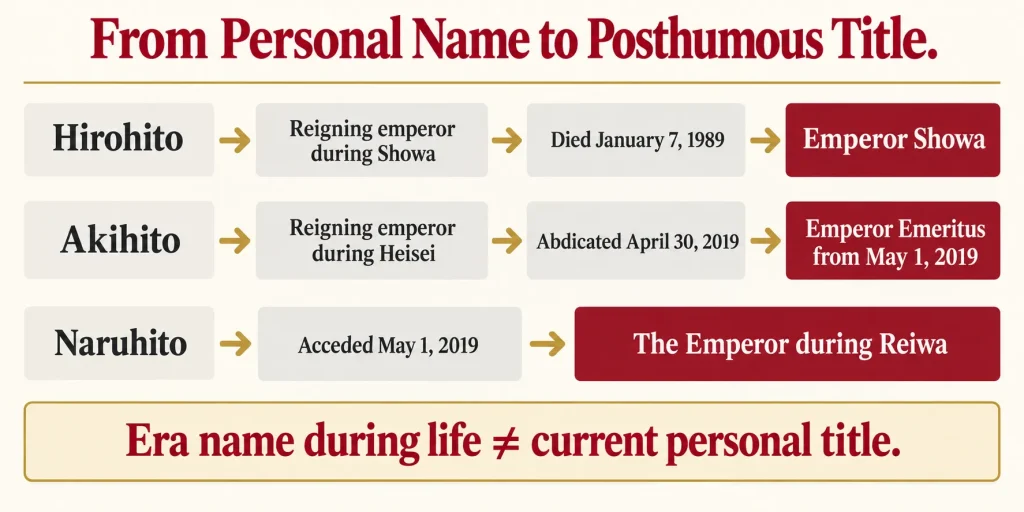
Akihito did not become Emperor Heisei when he left the throne. A special law enabled his abdication, which took effect on April 30, 2019, and the Imperial Household Agency now identifies him as 上皇陛下, Jōkō Heika, “His Majesty the Emperor Emeritus.” Naruhito acceded on May 1, 2019, when the Reiwa era began. The distinction is straightforward: retirement produces an emeritus title, while death is what brings the posthumous-era naming convention into play. This option suits writing about Akihito’s life and activities after abdication.
Calling him “former Emperor Akihito” will usually be understood in ordinary English, but it loses the official title created for his status. Calling him “Emperor Heisei” is premature and incorrect in present-tense Japanese usage. Heisei remains the era attached to his reign, while 上皇 identifies the living retired sovereign. The date transition itself is covered in 1 April 2019, and the Board Held Up, which explains why the new era name was announced before the accession. That page handles the announcement sequence, so it does not need to be repeated here.
Use “Emperor Showa” after death
The emperor born Hirohito reigned through the Showa era and died on January 7, 1989. In Japanese official and mainstream usage after his death, he is 昭和天皇, Shōwa Tennō, “Emperor Showa.” Hirohito remains his personal name and is still common in English-language history, particularly in works aimed at readers who may not recognize the posthumous title. Both labels point to the same person, but they do not carry the same relationship to Japanese convention. This option suits writing centered on Japan, the imperial institution, era names, or Japanese source material.
There is no need to pretend that “Hirohito” is factually false. It is a real personal name and a widely established English historical label. The correction is narrower: Japanese sources do not normally refer to the deceased emperor as 裕仁, Hirohito, and writers should not claim that this is Japan’s standard form. A clean first reference is “Emperor Showa, known in much English-language history by his personal name Hirohito.” Later references can use Emperor Showa if the article follows Japanese usage.
“Hirohito” identifies the man for many English readers; “Emperor Showa” identifies him according to Japan’s posthumous convention.
Emperor Showa vs Hirohito: what actually flips the answer?
The first deciding factor is life status. A reigning emperor takes the office-based title; an abdicated emperor takes the emeritus title; a deceased modern emperor is referred to by the established posthumous title. The second factor is language context. English historians may retain Hirohito for recognition, while a translation from Japanese should usually preserve Emperor Showa or explain both once.
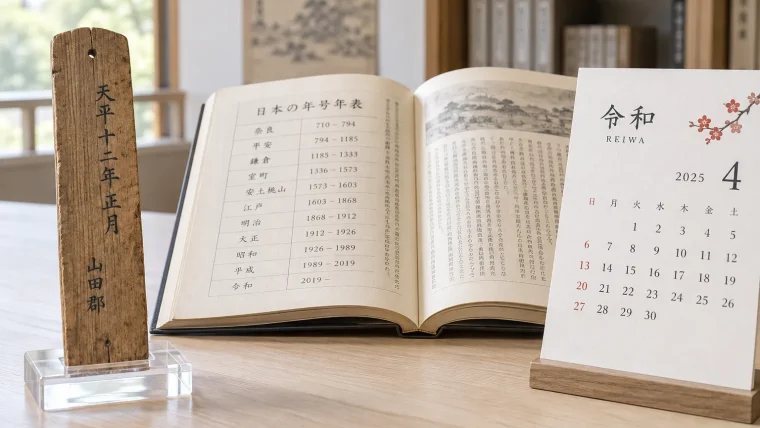
The third factor is whether you are naming a person or dating an event. 昭和, Shōwa, “enlightened peace,” can identify the era, while 昭和天皇 identifies the emperor. Reiwa can similarly date a current document, but “Emperor Reiwa” is not the reigning sovereign’s present title. If the actual task is converting a date rather than naming a person, use Japanese Era Years: Meiji to Reiwa, Explained or the era converter covering every year from 1868 through 2050 and all five modern eras. Those resources handle calendar arithmetic; this article handles human titles.
| If the text is about… | Correct starting form | Why |
|---|---|---|
| A current imperial duty | the Emperor or Emperor Naruhito on first reference | He is reigning |
| Akihito after April 30, 2019 | Emperor Emeritus Akihito | He abdicated and remains living |
| The sovereign who died on January 7, 1989 | Emperor Showa | This is the Japanese posthumous title |
| A familiar English historical search | Hirohito, clarified as Emperor Showa | Recognition may justify the personal name |
| A year such as Showa 45 | The era name plus year | This is a calendar expression, not a personal title |
Three worked examples with the naming arithmetic shown
Suppose an American museum label has space for one short identification of the wartime emperor. The choice is one person plus one primary label: Emperor Showa. If the museum expects visitors to search English-language sources afterward, it can add one recognition label in parentheses: Emperor Showa (Hirohito). The arithmetic is therefore one official-style title plus one explanatory personal name, not two different emperors. Reversing the order is defensible for a World War II exhibit aimed at a general US audience, but the label should still explain Japanese usage.
Now consider a news paragraph about an imperial event in 2026. It may contain two living men but requires two different titles: the Emperor for Naruhito and the Emperor Emeritus for Akihito. Writing “Naruhito and Emperor Akihito” makes the hierarchy uneven because one person receives a personal name and the other an outdated office. The clean calculation is two people plus two present statuses, producing two current forms. No era name needs to become a personal label.
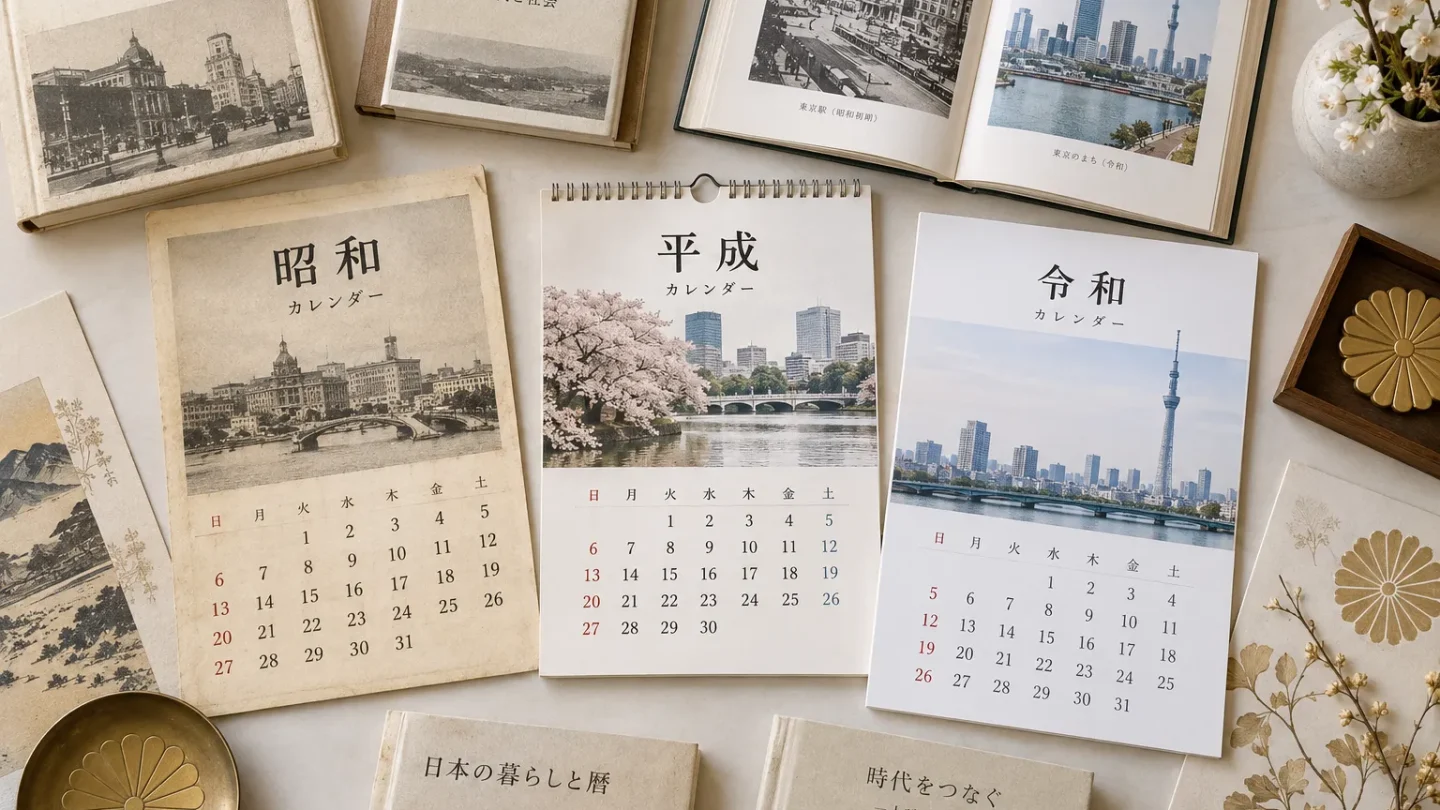
A third example is a family chronology containing Meiji, Taisho, Showa, Heisei, and Reiwa dates. Here you have five era labels but not five automatically usable names for living and deceased individuals. The Showa, Heisei and Reiwa Year Tables provide the year equivalents instead of forcing the reader to calculate them inside a naming article. For the people, use the title appropriate to their status at the date being described. The arithmetic is calendar labels on one side and personal titles on the other; they overlap only under the posthumous convention.
Why the era name and the emperor’s name overlap
Under the modern 一世一元, issei ichigen, literally “one reign, one era,” principle, each reign has one era name. The arrangement was established for the modern system in the Meiji period and later provided for in the Era Name Act. This makes the modern sequence easier to follow than earlier Japanese history, when an era could change without a new emperor. It also makes the posthumous naming pattern look automatic because the reign and era align so closely. Legally and ceremonially, however, an era name and a posthumous title remain distinct acts and categories.
The era name itself is chosen at the beginning of a reign, not after the emperor’s death. Reiwa was announced on April 1, 2019, before it took effect on May 1, 2019. Its source was identified from the 万葉集, Man’yōshū, literally “Collection of Ten Thousand Leaves,” rather than from a Chinese classic. The First Era Name Not Taken From China explains that source decision in detail. None of this made Naruhito “Emperor Reiwa” on accession day.
The defaults that make English copy sound wrong
The first mistake is copying “Hirohito” from an English encyclopedia into a sentence describing Japanese usage. The name is recognizable, but the sentence becomes wrong if it claims that Japanese people normally call the late emperor that. The second mistake is calling the reigning sovereign simply Naruhito throughout an article. That resembles a biographical catalog entry more than Japanese public usage.
The third mistake is calling Akihito Emperor Heisei while he is alive as Emperor Emeritus. The fourth is treating every era name as though it were immediately a regnal name in the European sense. Japanese era names date years, while the office and posthumous-title systems answer different questions. The fifth is using “former emperor” when the official emeritus title is relevant, then switching unpredictably between office, personal name, and era.
Use a small verification sequence before publication:
- Establish whether the person was reigning, retired, or deceased on the date described.
- Decide whether the article follows Japanese official usage or familiar English historical usage.
- Separate a calendar expression from a title referring to a person.
- Give both forms once if readers need recognition and Japanese accuracy.
- Check the Imperial Household Agency for the current English title before publishing.
The shortest rule for editors
If he is reigning, use “the Emperor”; if he has abdicated, use “Emperor Emeritus.”
If he is deceased, use the official posthumous title—Emperor Showa, not simply Hirohito, in Japanese-context copy.