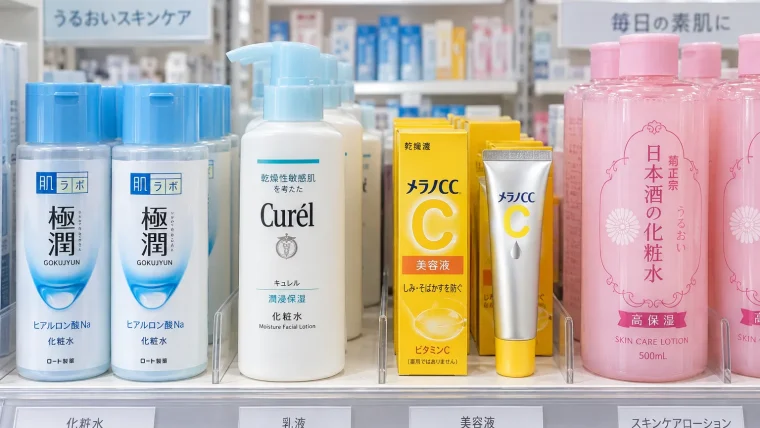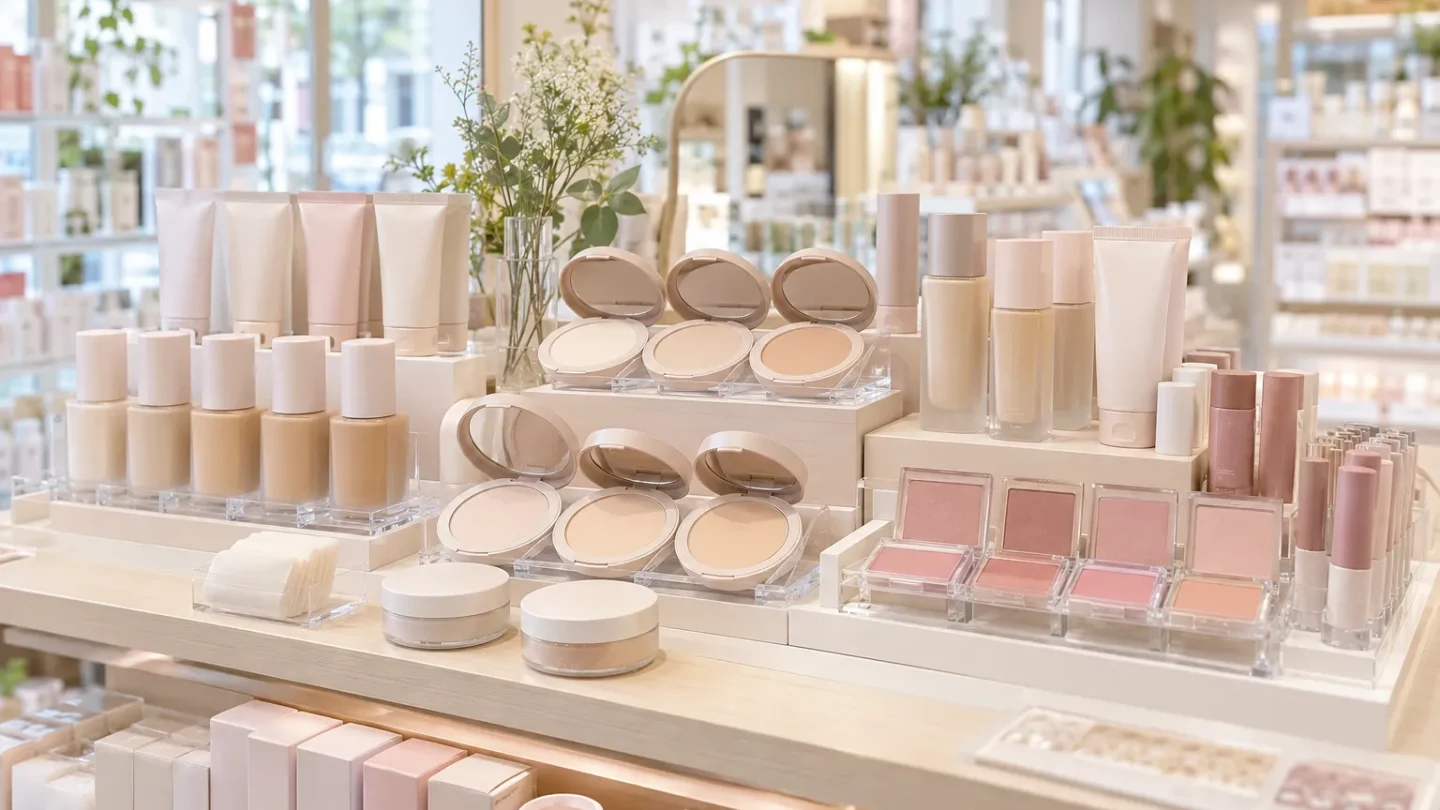
You are deciding where to spend your makeup budget, and the expensive mistake is buying an elaborate eye palette before deciding what the skin should look like. In the japanese makeup style, the answer usually depends on three things: how much shine you want, where you place color, and whether the finish must survive a long day. The “natural” effect is not the absence of makeup. It is a controlled base doing most of the visible work.
Japanese beauty counters contain dramatic eye colors, contour products, and false lashes, so this is not a claim that everyone in Japan wears the same face. It is a practical description of a widely marketed family of looks: even color, selective reflection, soft edges, and blush that reads before contour does. The related guide What J-Beauty Actually Does Differently covers the skincare category; here, the decision is strictly about visible makeup finish.
Option One: Put the Budget Into an Even, Quiet Base
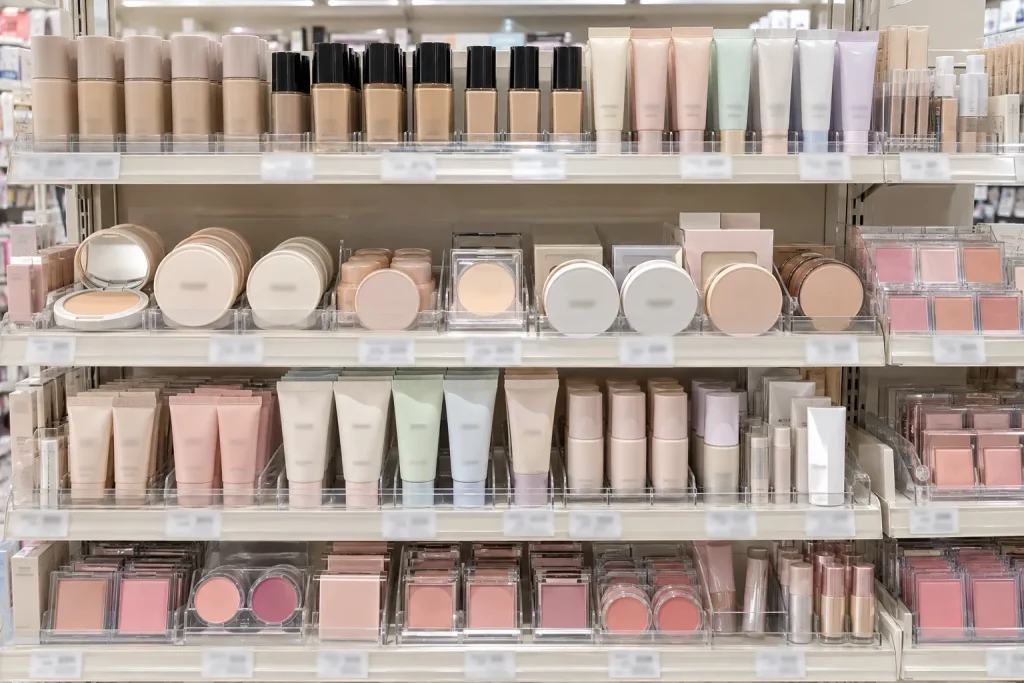
A base-led look suits you if you want your makeup to appear restrained at conversational distance. Instead of carving the cheeks with dark and light bands, you create a relatively even surface and control where it turns matte or reflective. That can mean primer alone, a thin foundation, powder applied only where needed, or some combination of those products.
The result is often described as Japanese natural makeup, but “natural” can hide a fair amount of technique. Uneven application becomes conspicuous when eye and lip color are deliberately quiet. The cost is also easy to underestimate because primer, foundation, concealer, and powder may all be sold as separate solutions to overlapping problems.
You do not automatically need all four. For example, Cezanne’s Glow Skin Base was listed at ¥748, approximately $4.86 at an illustrative rate of ¥154 to $1, when checked on September 12, 2026. Canmake’s Marshmallow Finish Powder was ¥1,034, approximately $6.71, on the same date. These are manufacturer prices, not promises that either formula will suit your skin.
The practical threshold is simple: if you prefer a low-reflection or satin finish, begin with one base product and add powder only where you want less shine. If visible reflection is the point of the look, a matte powder across the entire face works against your choice.
Option Two: Use Igari Blush as the Main Event
イガリメイク Igari meiku, “Igari makeup,” is named for makeup artist Shinobu Igari rather than for an ancient beauty custom. Its best-known feature is blush placed high on the cheeks, frequently close to or beneath the eyes, creating a warm flush sometimes compared with skin after a bath. The edge is usually diffused rather than drawn as a hard stripe.
That placement makes Igari makeup a color decision before it is a brand decision. If the blush reaches too far into the lower-eye area, the face may look irritated or tired instead of deliberately flushed. If it sits too low, it becomes ordinary cheek color and loses the recognizable placement.
This option suits you when you are comfortable letting blush remain visible. It costs less than rebuilding an entire base routine because an existing blush may be enough to test the placement. What it does not give you is automatic subtlety: “soft” and “barely visible” are not synonyms.
A flush can look effortless while still being precisely placed.
Choose this direction when cheek color is allowed to lead the face. Skip it when redness is something you prefer not to emphasize, or when your workplace requires very restrained color.
Option Three: Make Reflection Part of the Finish
水ツヤ mizu-tsuya, literally “water luster,” describes a fresh, wet-looking surface. You may also see ツヤ肌 tsuya-hada, “glossy skin,” used for luminous finishes more broadly. These are appearance terms, not medical descriptions of how hydrated or healthy the skin is.
The effect depends on reflection remaining selective. A luminous primer beneath a thin base can produce it, as can highlighter placed on a few raised areas. Applying shine indiscriminately can make the finish read as oil rather than controlled light, particularly around the center of the face.
Cezanne describes its ¥748 Glow Skin Base as producing a moist-looking, luminous finish through pearl effects. That is the manufacturer’s cosmetic claim about appearance; it is not clinical evidence that the product changes the condition of your skin. If you experience irritation, follow the product label, stop using it, and ask a pharmacist or medical professional rather than treating a cosmetic finish as skincare.
The cost rises when mizu-tsuya skin becomes an excuse to stack primer, foundation, serum, mist, and highlighter. The visual threshold is not the number of products. It is whether the light appears where you intended it.
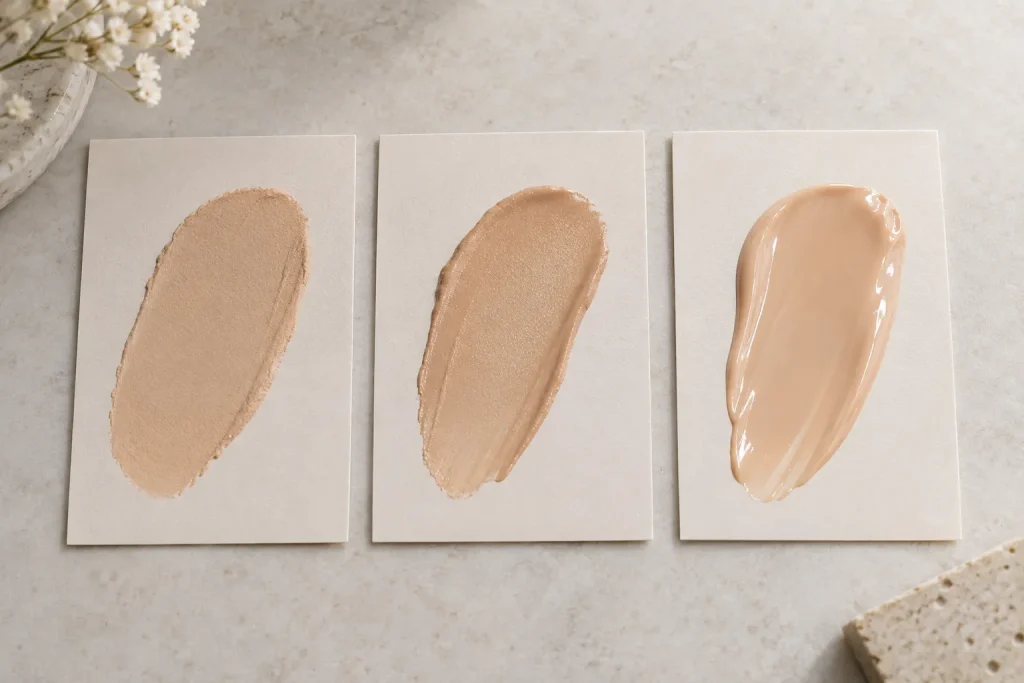
The Three Finishes Side by Side
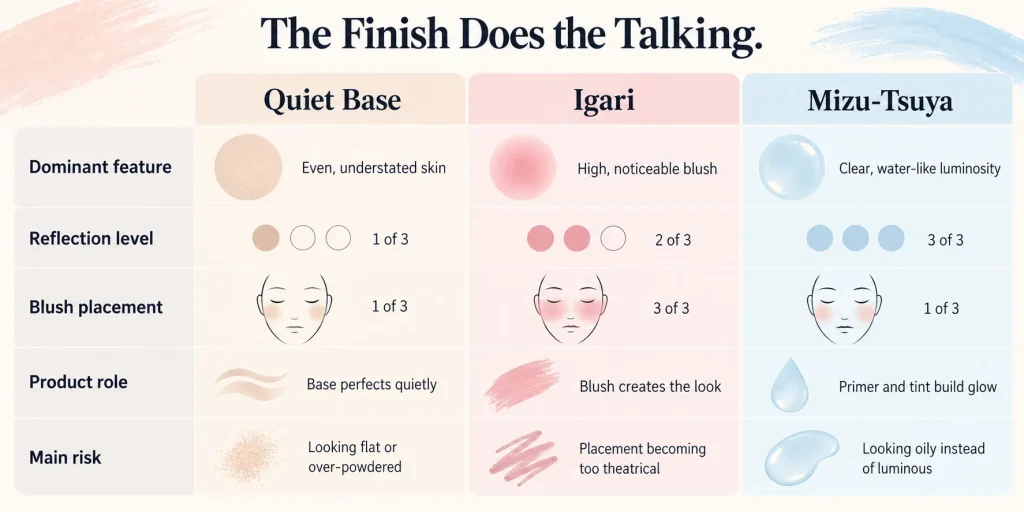
| Option | Main visual signal | Base finish | Color placement | Best fit | Main tradeoff |
|---|---|---|---|---|---|
| Quiet base | Even tone and softened texture | Matte to satin | Restrained | Work, travel, understated makeup | Extra layers can become heavy |
| Igari | High, diffused cheek flush | Usually natural or satin | Close to the eyes | Blush-led casual looks | Placement can resemble irritation |
| Mizu-tsuya | Deliberate reflected light | Luminous | Secondary to shine | Fresh, light-catching finishes | Excess reflection can look oily |
These categories overlap. You can wear a thin luminous base with Igari-style blush, or powder the center of the face while leaving the cheekbones reflective. The names tell you what should remain visually dominant; they do not impose a compulsory product sequence.
That distinction also explains why copying a product list is unreliable. A creator’s “natural” routine may be luminous, powdered, heavily concealed, or photographed under diffused lighting. Decide on the visible endpoint before copying the basket.
Which Japanese Makeup Style Fits Your Day?
Three variables actually change the answer: desired reflection, acceptable color, and wear environment. Texture comes first because it affects every later product. Blush placement comes second because it determines whether the cheeks or the base lead the look.
| Deciding factor | Choose quiet base when… | Choose Igari when… | Choose mizu-tsuya when… |
|---|---|---|---|
| Reflection | You want little or controlled shine | You want the flush to lead | You want light to lead |
| Color | Cheek color must stay restrained | Visible pink, peach, or red is welcome | Color is secondary |
| Environment | You need a conservative, adaptable finish | You can check the placement in daylight | You can manage shine during the day |
| Shopping limit | You want one multipurpose base | You already own a suitable blush | You already own a base and need only luminosity |
The uncomfortable part is that Japan’s drugstore shelves do not remove the usual problems of shade matching, sensitivity, or unsuitable formulas. A low price makes experimentation cheaper, but it does not make the purchase universally appropriate. Testers may also show texture more reliably than color because store lighting can distort both undertone and shine.
If you need help asking about a tester, shade, or unopened item, the site’s phrasebook with 337 phrases, including shopping is more useful than memorizing product slogans. Cosmetics vocabulary can identify a finish, but it cannot tell you whether the formula agrees with your skin.
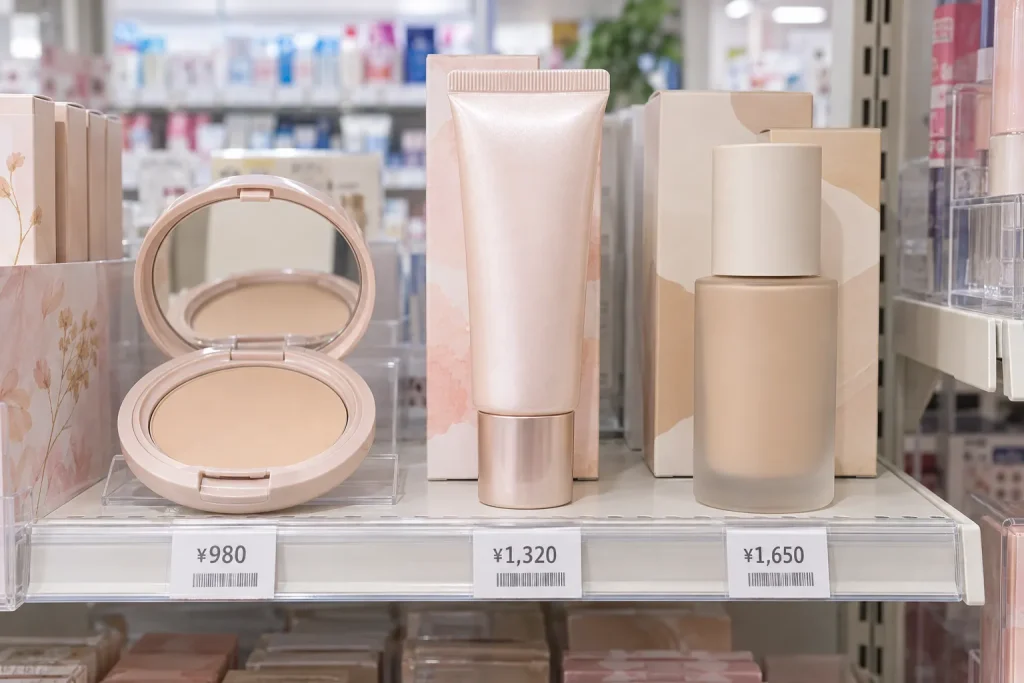
What Do the Three Drugstore Brands Actually Cost?
Canmake and Cezanne genuinely have products close to ¥1,000. Excel is frequently grouped with accessible drugstore brands, but the checked Excel foundation example cost almost twice that amount. Calling all three “thousand-yen brands” therefore hides a meaningful price difference.
| Brand and checked product | Listed price | Approximate US value | What the brand says it does |
|---|---|---|---|
| Cezanne Glow Skin Base, 20 g | ¥748 | $4.86 | Creates a luminous base with pearl effects |
| Canmake Marshmallow Finish Powder, 10 g | ¥1,034 | $6.71 | Creates a matte finish; listed with SPF 50 PA+++ |
| Excel Skin Tint Serum, 35 g | ¥1,980 | $12.86 | Creates a light-reflective, glossy foundation finish |
Prices and package sizes were checked on official Japanese brand pages on September 12, 2026. Dollar figures use ¥154 to $1 as a rounded editorial conversion and exclude card fees, sales promotions, and retailer differences. Check the shelf label before buying because the article is scheduled for October 10, 2026 and prices can change before publication.
Excel’s price is the correction that matters. It remains comparatively accessible beside luxury-counter makeup, but it is not approximately ¥1,000 in this example. Brand category and individual product price are not interchangeable.
Three Worked Budgets, With the Arithmetic Visible
Consider a first-time visitor who wants a compact base pair and already owns blush. The checked Cezanne base plus Canmake powder totals ¥748 + ¥1,034 = ¥1,782, or approximately $11.57 at the editorial exchange rate. The combination offers two finish controls: luminosity underneath and powder above. It does not mean both must cover the entire face.
Someone staying in one city and looking specifically for a foundation finish might choose the Excel Skin Tint Serum alone. That basket is ¥1,980, approximately $12.86. It costs ¥946 more than the Canmake powder and ¥1,232 more than the Cezanne base. The decision makes sense only if a tint is what the buyer wanted; paying more does not make it the objectively better product.
A shopper comparing all three would see ¥748 + ¥1,034 + ¥1,980 = ¥3,762, approximately $24.43. That total buys overlapping base functions, not three completed looks. Buying every recommendation is the expensive default because the products can compete rather than cooperate.
For Japanese drugstore makeup, the useful arithmetic is cost per role, not cost per viral product:
- Select the intended finish.
- Identify the missing role in your current bag.
- Price that role across brands.
- Buy one product before duplicating it.
What the “Natural” Label Quietly Hides
Japanese makeup is not defined by avoiding eye makeup. Brown liner, mascara, shimmer, colored contact lenses, and carefully arranged lashes can coexist with a base-led face. The difference is often balance: eyes may be detailed without being surrounded by forceful contour and opaque coverage.
Photography complicates the comparison. Soft frontal lighting reduces visible texture, while bright points of light exaggerate gloss. A finish that looks like dewy Japanese makeup in a campaign may appear much more reflective under train-station lighting or summer humidity. Product photographs should therefore be read as styling, not as neutral evidence.
The same caution applies to “after-bath” language around Igari blush. It describes a visual association, not a claim that the wearer has just bathed or that warm-looking cheeks indicate health. Cosmetic color can imitate a flush without saying anything reliable about the skin beneath it.
No one needs to reproduce every detail for the category to remain recognizable. A restrained base with ordinary blush is still a coherent look. The terminology is useful for sorting visual choices, not for passing an authenticity test.
Where the Shopping Plan Usually Fails
The first mistake is buying several products that perform the same role. A luminous primer, glossy foundation, liquid highlighter, and face mist can all increase reflection. Layering them because each package says “glow” may move the result past the finish you intended.
The second mistake is treating powder as a mandatory final curtain. Canmake’s powder is explicitly marketed as matte, while Cezanne and Excel describe luminous effects. Covering every luminous layer with a matte product can cancel the reason you bought it. Powdering selected areas is a finish choice, not a rule.
The third mistake is relying on makeup SPF as a complete sunscreen plan. Product pages list ratings under Japanese labeling, but the amount and uniformity of makeup you apply may differ from sunscreen test conditions. Different Filters, a Different Rulebook explains the regulatory and product-category distinction without turning a foundation label into medical advice.
The fourth mistake comes at removal. Long-wear or water-resistant products may require a different cleanser from a light, washable base, but the package instructions should decide that question. Oil First, Foam Second, and Why covers the two-stage method; it is not necessary to repeat that routine for every product automatically.
The Short Decision Rule
If reflection should lead, choose a thin luminous base and keep powder selective.
Otherwise, start with an even satin base and decide separately whether high blush belongs on it.
Short FAQ
Is Japanese makeup always natural-looking?
No. Japan has dramatic subcultures, editorial styles, and heavily detailed eye looks as well as restrained everyday makeup. “Natural” describes one large commercial aesthetic, not a national rule.
Is Igari makeup the same as putting blush under the eyes?
Not exactly. High blush is its recognizable feature, but diffusion, color, base finish, and the balance of the rest of the face affect the result. A hard band directly under the eyes does not automatically create the same visual language.
Are Canmake, Cezanne, and Excel all ¥1,000 brands?
No. Checked examples from Canmake and Cezanne were close to or below ¥1,000, while the Excel skin tint was ¥1,980. Always compare the individual product rather than assuming every item follows the brand’s general price reputation.