Your Name in Japanese
Surname First or Last: What to Write Where
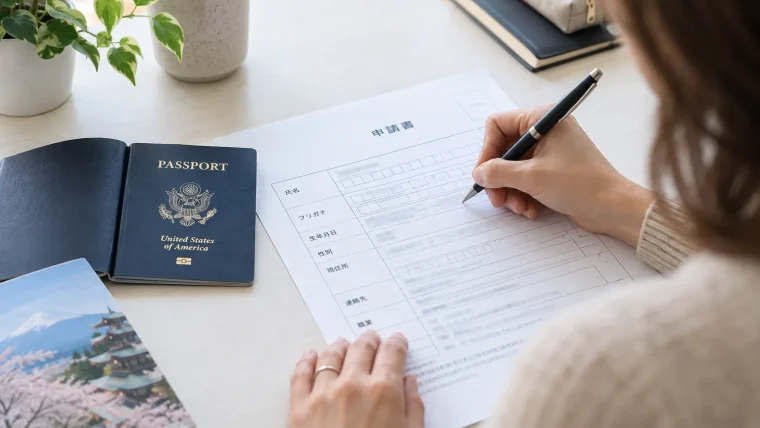
Japan flipped its own romanized name order in January 2020. What that means for the order you write, and where a swapped name creates a mismatch.

Japan Know How archive
How American and English names are written in katakana, and why the spelling that stuck is often not the one the rules predict. Syllable breakdowns, ateji kanji, vertical writing, and the difference between an established spelling and a calculated one. Start here if you came for your own name.
Your Name in Japanese
Japan flipped its own romanized name order in January 2020. What that means for the order you write, and where a swapped name creates a mismatch.
Your Name in Japanese
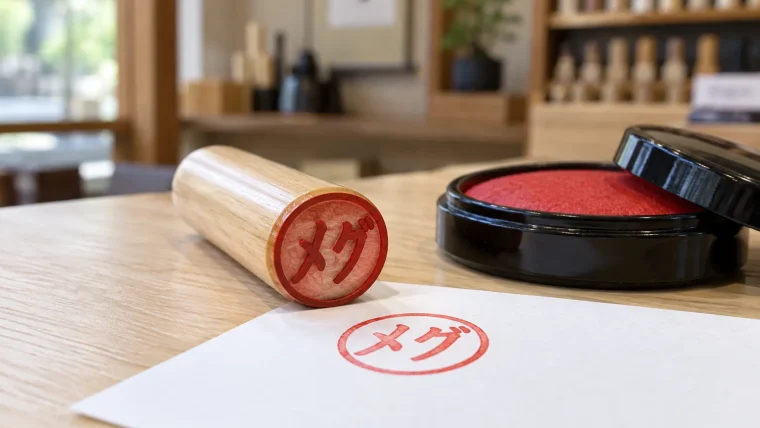
A hanko is not a signature and not always required any more. What a katakana seal costs, where banks still ask for one, and which shops carve them.
Your Name in Japanese
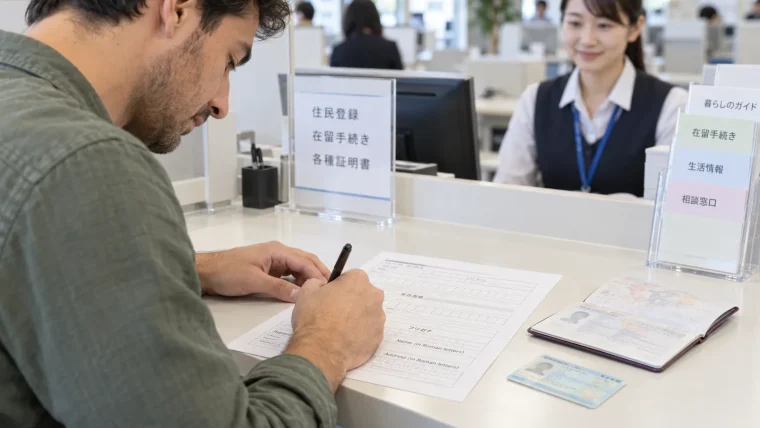
Residence card, bank, hotel, tickets: which field wants romaji, which wants katakana, and what happens when your two spellings stop matching.
Your Name in Japanese
The tradition is real and it is a sound game first. Meaning is a filter, not a starting point - and the tattoo failure mode is structural rather than linguistic.
Your Name in Japanese
Vertical Japanese is not horizontal text turned sideways. The long-vowel bar rotates, small kana change corner, and columns run right to left. Here is what actually changes.
Your Name in Japanese
L and R, both th sounds, V, the missing consonant-vowel pairs and the vowels Japanese inserts into consonant clusters. None of it is random, and all of it is predictable.
Your Name in Japanese
We tested a rule engine on 61 names with documented Japanese spellings. It scored 77 percent, and the misses were Michael, Thomas, Sean and Charlotte. Here is the autopsy.
Your Name in Japanese
Which script your name belongs in, how English sounds get remapped, the four adjustments that decide whether a spelling looks natural, and where the rules simply lose to precedent.