How a Foreign Name Becomes a Carved Seal: Hanko for Foreign Names
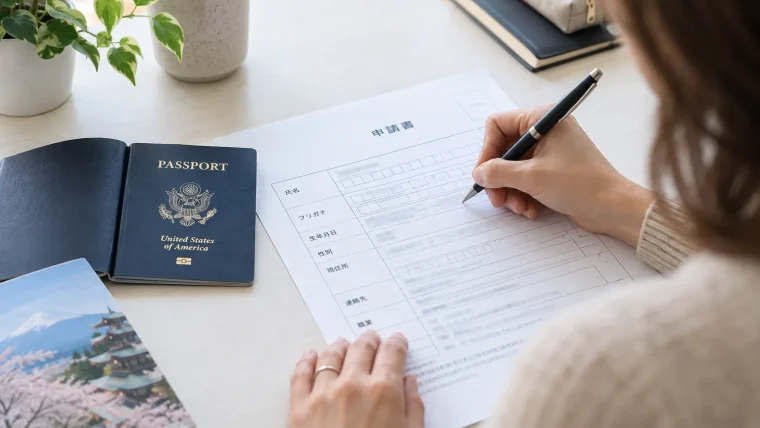
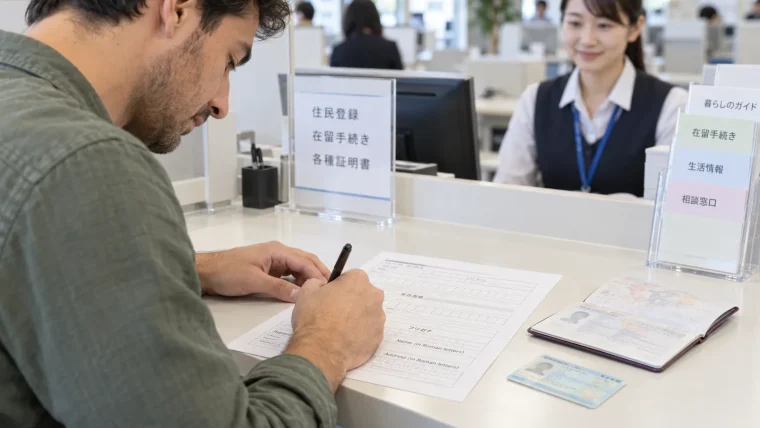
You are at a bank counter or real estate office when a staff member points to a circle beside your name. The form appears complete, but the clerk asks whether you brought your 印鑑, inkan, literally “seal impression device.” If you do not own one, the next question is whether you actually need it or have simply met an old workflow that the organization still uses.
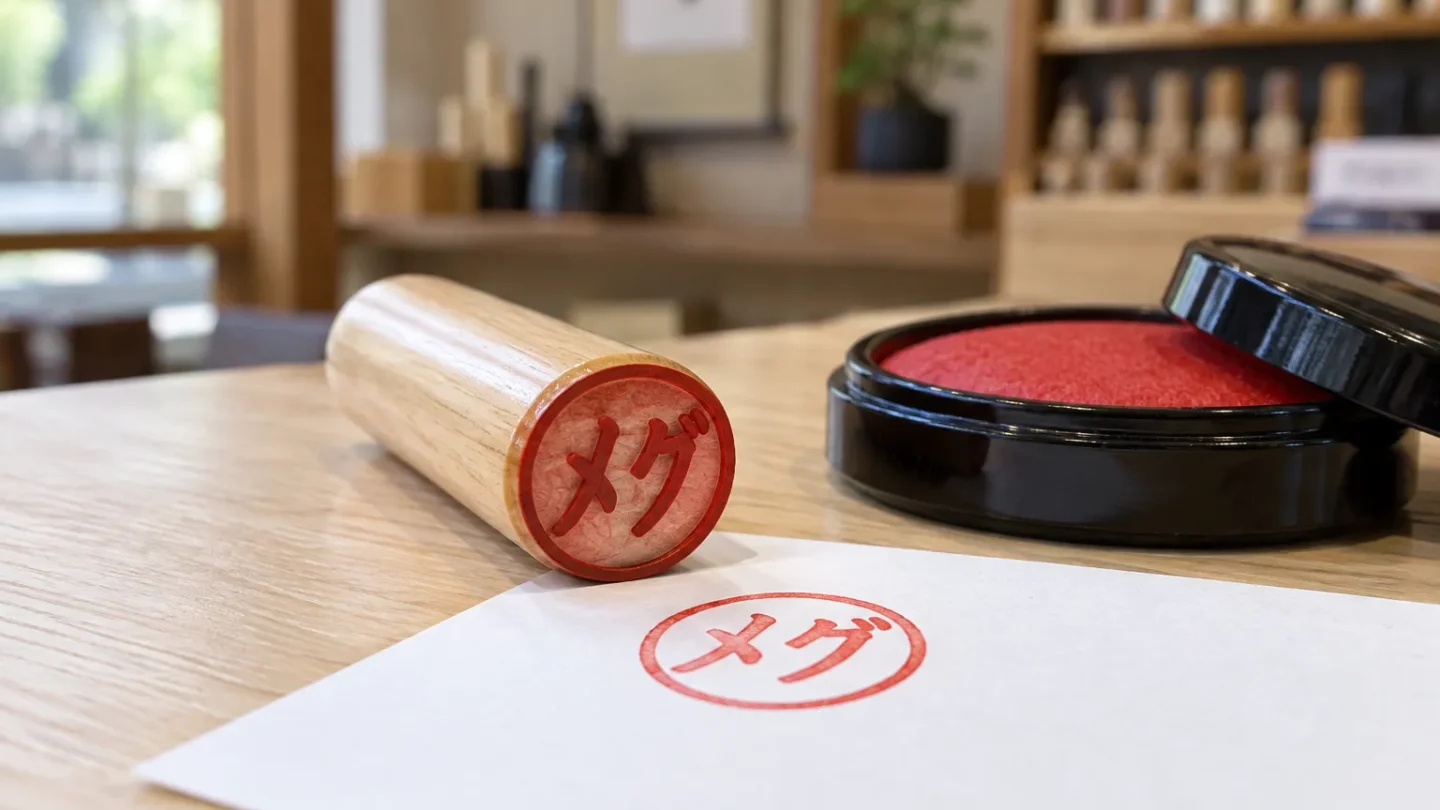
A hanko for foreign names is not a Japanese translation of your identity. It is a physical seal carved with a name that the receiving institution can connect to you. Depending on the purpose, the carving may use katakana, the Roman alphabet, or a registered alias, but the acceptable form is determined by the bank, municipality, landlord, or other organization receiving it.
The uncomfortable truth is that Japan’s national government largely stopped requiring seals for routine administrative applications in 2020 and 2021, yet private procedures did not change in one coordinated sweep. Some banks retain registered-seal systems for particular accounts or services. Some rental transactions still include seal fields, while others accept signatures or electronic contracts. A stamp can therefore be unnecessary at one counter and essential at the next.
“All administrative procedures” were to be reviewed for requirements involving paper, seals, and in-person attendance.
That was the national government’s stated direction in 2020, not a promise that every private contract would immediately become seal-free.
What changed in 2020 and 2021
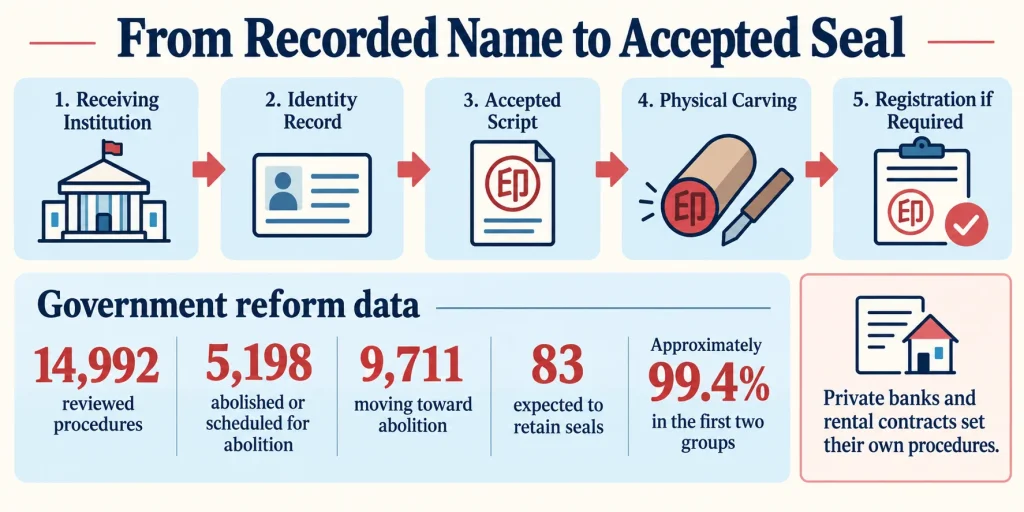
The reform was substantial. A Cabinet Office summary published in December 2020 counted 14,992 national administrative procedures that required seals. Of these, 5,198 had already had the requirement abolished or were scheduled for abolition, 9,711 were moving toward abolition, and 83 were expected to retain it.
Together, the first two groups represented 14,909 procedures, or approximately 99.4% of the reviewed total. That figure explains the phrase “almost all,” but it needs a boundary around it: the survey concerned national administrative procedures. It did not prohibit banks, property companies, employers, or other private parties from establishing their own authentication processes.
The government continued publishing implementation material in 2021. The direction was to amend laws, notices, and established practices where a seal lacked a sufficient reason to remain. Procedures involving a registered seal or a particularly strong form of identity verification were treated differently from forms that had acquired a stamp box merely through habit.
This distinction still matters. An everyday 認印, mitome-in, “acknowledgment seal,” is not the same as a registered 実印, jitsuin, “true seal.” A 銀行印, ginkō-in, “bank seal,” is the seal recorded by a financial institution. One physical stamp could theoretically fill more than one role if accepted, but combining them increases the consequences of loss and is not required by the language itself.
The larger naming problem is covered in Every Japanese Form That Asks for Your Name. That guide explains how passport spelling, residence-card spelling, katakana, and aliases interact; this article follows the narrower path from an accepted name form to a physical seal.
How to order a hanko for foreign names
Do not begin by choosing a color, case, or decorative typeface. Begin with the institution that expects the mark. A beautifully carved seal is useless if its text does not match the name the bank or municipality is permitted to record.
- Ask whether a seal is actually required. Show the specific form and ask whether a handwritten signature or electronic procedure is accepted. What this looks like is a direct question to the bank, landlord, employer, or municipal counter handling the transaction. What happens next is that you receive the institution’s current requirement instead of relying on a general rule from another organization.
- Identify the type of seal requested. The three common labels are mitome-in for routine acknowledgment, ginkō-in for a seal registered with a bank, and jitsuin for a seal registered by a municipality. What you do next depends on that category. A municipal registration rule should not be inferred from a stationery shop’s recommendation.
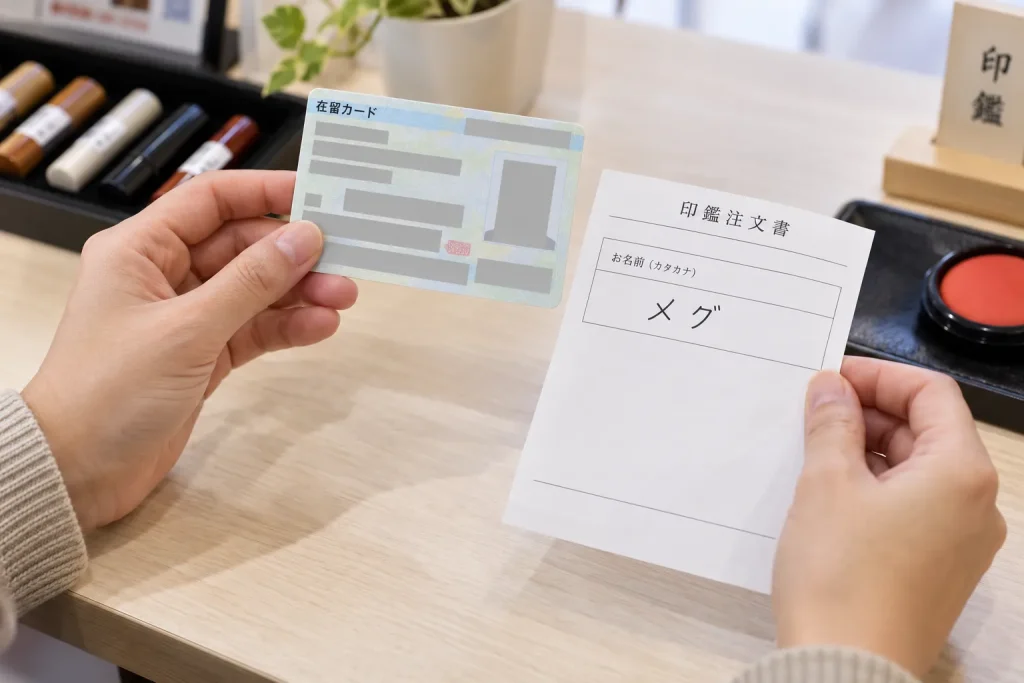
- Match the name to the controlling record. Check your residence card, resident record, bank record, or proposed contract. A municipality may accept the Roman-alphabet name recorded on your resident registration but accept katakana only when that katakana reading has also been recorded. Requirements differ between municipalities, so take the written name to the relevant counter before ordering.
- Settle the katakana spelling. Use the spelling by which the receiving institution already identifies you, not a fresh phonetic experiment. How to Write Your Name in Japanese: The Complete Guide explains the basic conversion process, while Katakana Name Rules, and the Names That Break Them covers irregular forms. If your first name is included in the site’s name converter with 898 checked names, use its page as a reference and then compare the result with your official records.
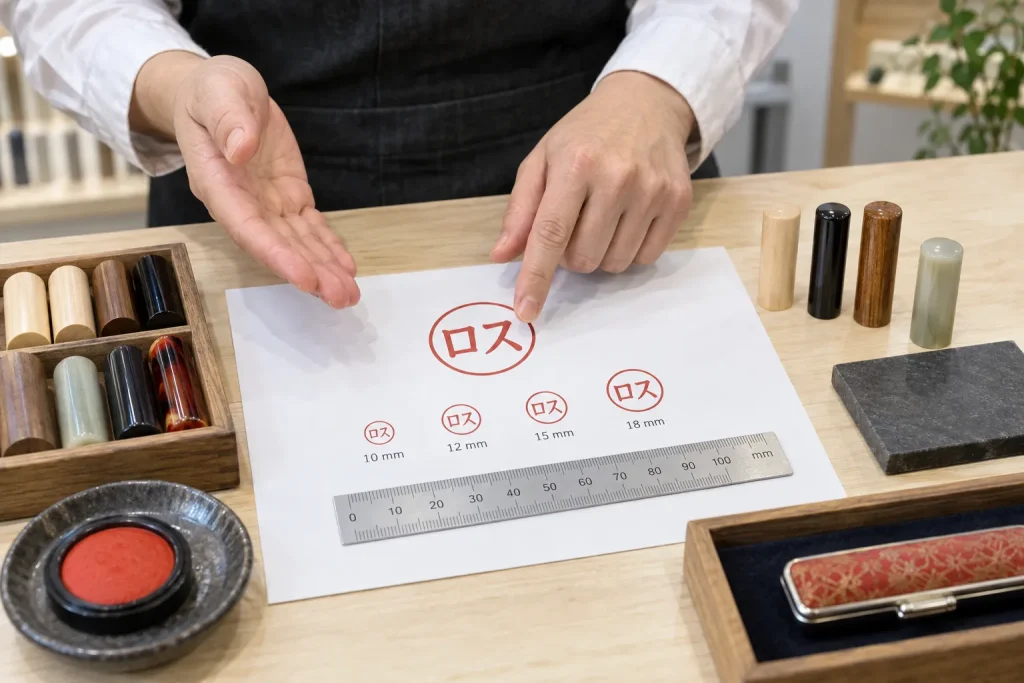
- Confirm how much of the name will fit. A seal may contain a surname, given name, full name, or another accepted portion of the registered identity. The store can explain what fits physically, but the receiving institution decides what it will recognize. Long katakana names may require abbreviation, a larger seal, or Roman letters, none of which should be assumed valid without confirmation.
- Choose a compliant size and material. If the seal will be municipally registered, obtain the municipality’s current size and material rules first. Sunagawa City, for example, states that a registrable impression must be larger than a square measuring 8 millimeters on each side and fit inside a 25-millimeter square. It also rejects rubber and other easily deformable materials. Those are Sunagawa’s published rules, not a nationwide template.
- Approve the carving proof. The shop may show the text, orientation, and seal-script design before production. Compare every character with the name you confirmed. What happens next is irreversible: once the face is carved, correcting a long vowel mark, small kana, or character order generally means producing another seal.
- Collect and test the seal. Make a clear impression on scrap paper using a proper ink pad. Check whether the outer edge and every character print cleanly. Do not alter the face yourself if the seal is intended for official registration.
- Register it only where required. A routine stamp does not become a jitsuin merely because it looks formal. It becomes one through municipal 印鑑登録, inkan tōroku, “seal registration.” A bank seal likewise becomes relevant to an account when the financial institution records it through its own procedure.
- Store the seal with its purpose documented. Keep a private note identifying which institution has which impression. Do not photograph the carved face unnecessarily or leave the seal beside account documents. If it is lost, contact the organization that registered it and follow that organization’s replacement process.
| Seal category | Japanese term | What gives it its status | Where it may appear |
|---|---|---|---|
| Everyday seal | 認印, mitome-in | Ordinary use without municipal registration | Workplace acknowledgments and private forms |
| Bank seal | 銀行印, ginkō-in | Recorded by a particular financial institution | Account and service procedures specified by that bank |
| Registered seal | 実印, jitsuin | Registered with the resident’s municipality | Transactions requesting a registered seal and certificate |
| Self-inking stamp | シャチハタ, Shachihata | Commercial stamp format rather than legal status | Casual receipt acknowledgment; often rejected for registration |
A worked example: turning Michael into a seal
Suppose a resident named Michael Grant has マイケル・グラント, Maikeru Guranto, recorded as his katakana reading. He is not free to assume that マイク, Maiku, a shortened form, will be accepted simply because friends use it. The first task is to identify the exact name held by the organization requesting the seal.
If a bank says a katakana surname is acceptable, グラント may be the practical carving. If the bank requires the name matching its account record in another form, that instruction controls instead. If Michael wants municipal registration, he must separately ask his city whether the proposed characters match information recorded in his resident record.
The length also affects layout. グラント occupies four katakana symbols, while the full form マイケルグラント occupies eight when the separator is omitted. A seal shop can determine whether the selected face accommodates the text clearly, but it cannot guarantee that a bank or municipality will accept the result.
This is why katakana name stamps should not be ordered from pronunciation alone. The carved string, the recorded identity, and the receiving organization’s rules must agree. A phonetic form that is linguistically sensible can still fail an administrative comparison.
What a carved seal can cost
There is no official national price for a personal hanko. Retail cost changes with the seller, material, diameter, character count, case, production speed, and whether the product is intended as a casual stamp or a registered seal. Because promotional prices change quickly, a permanent article should not present one store’s temporary discount as Japan’s standard cost.
The primary-source prices that matter are the prices displayed by the shop on the day you order. Obtain a total that includes carving, tax, shipping, a case, and any rush fee. If the store charges extra for Roman letters or a long katakana name, have that confirmed before payment.
Municipal charges are separate from the price of the object. Ojiya City lists a ¥300 registration fee, approximately $2.04 at the editorial conversion rate of ¥147 per $1. Sunagawa City lists ¥400, approximately $2.72, for one seal-registration certificate issued at the counter. These examples, checked on September 9, 2026, demonstrate local variation; they are not national fees.
| Cost item | Verified example | Dollar equivalent | What must be rechecked |
|---|---|---|---|
| Physical seal | No national fixed price | Not applicable | Store’s current total before ordering |
| Seal registration | ¥300 in Ojiya City | About $2.04 | Your municipality’s fee and eligibility rules |
| Registration certificate | ¥400 per copy at Sunagawa City counter | About $2.72 | Issuing method and local fee |
| Replacement after loss | Institution-specific | Not calculated | Bank or municipal procedure |
The exchange rate is included only to help an American reader judge scale. It does not represent the rate that a card issuer or exchange service will apply. The yen price is the controlling amount in Japan.
Where the sequence usually breaks
The first failure is carving an attractive ateji name in kanji. 当て字, ateji, literally “assigned characters,” can represent a foreign name by sound, but decorative kanji are not automatically part of your recorded identity. Do not use them for a financial or municipal purpose unless the receiving institution explicitly confirms that exact form.
The second failure is assuming that every organization accepts the same seal. A city’s acceptance of a registered impression does not force a bank to record it. A landlord’s willingness to accept a signature does not establish the policy of a guarantor company or management company.
The third failure is confusing possession with registration. Buying a Japanese name stamp creates an object. Municipal registration can make an accepted seal your jitsuin, while a bank’s recording process can make it the registered seal for that account. The shop cannot perform those institutional acts merely by carving the stamp.
The fourth failure is discovering too late that the katakana was never entered on the resident record. Nagano City’s published guidance says foreign residents may register a Roman-alphabet seal based on the residence card, while katakana or a registered alias is accepted only for residents who have that form recorded on their resident record. Another municipality may word or administer its requirements differently.
When a financial procedure is involved, ask the bank itself to identify the required seal, documents, and name form. Do not rely on a landlord, coworker, seal seller, or general travel article to promise that an application will be approved.
Banks did not keep one universal rule
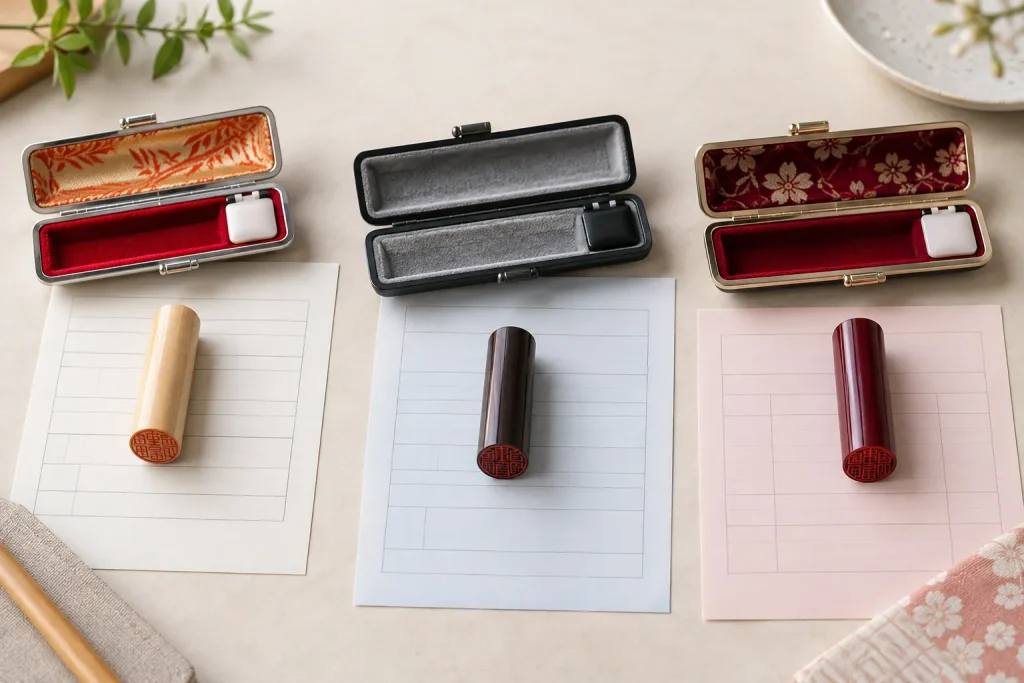
Japan Post Bank illustrates why “banks still require hanko” is too broad. Its published counter guidance says a customer opening an individual account should bring a seal and identity documents. Yet its passbook-free account page says seal registration is not performed when that account is opened, although registration may later be necessary for specified services such as certain utility-payment arrangements.
That is not a contradiction; it reflects different channels and products. A branch-counter procedure, app-based opening process, account type, or later service may have different requirements. Other banks can operate different systems again.
For an existing account, the registered impression can remain relevant even if a newer account-opening route is seal-free. Japan Post Bank has a procedure for changing the seal recorded on an account and asks for the old and new seals plus identity documentation in the stated circumstances. Its rules for a lost seal and an authorized representative add further documentation.
Evidence: the named bank publishes procedures in which a seal is still used.
Tradition: people often say that “you need a hanko to open a Japanese bank account.”
The evidence supports the narrower statement, not the tradition. Before buying a bank seal in Japan, check the current page for your chosen bank, product, application channel, and residency situation. Rules and screening practices can change, and no particular seal promises that an account will be opened.
Rental contracts depend on the parties and the contract
The same caution applies to housing. National seal reform did not automatically remove stamp fields from private leases. A landlord, management company, real estate agency, guarantor, or insurer may still request a routine seal, registered seal, handwritten signature, electronic signature, or some combination of identity documents.
There is no reliable national rule saying that every foreign tenant needs a jitsuin. There is also no safe rule saying that a signature must always be accepted. Ask the agency which party requests the seal and whether it needs a seal-registration certificate.
If a registered seal is requested, verify the requirement before paying a deposit or ordering a stamp. Request the document name and deadline in writing. A housing professional or the contracting company should explain its current process; a seal shop can carve a product but cannot determine the legal or contractual requirements of your lease.
Every Japanese Form That Asks for Your Name is the relevant companion for matching the contract name to your identity documents. This article does not attempt to reproduce those paperwork rules.
What changes by municipality, shop, and level of formality
Municipalities publish their own registration criteria and fees. They commonly restrict registration to residents on the local resident register, reject impressions outside defined dimensions, and exclude unstable materials. Exact size, character, age, identification, and proxy-registration rules must be taken from the municipality where you live.
Shops also differ. A specialist seal store can discuss tight katakana layouts and produce a proof, while an automated kiosk or online seller may require you to enter the text without much review. Production time can vary by stock and customization, so do not assume same-day completion unless the seller confirms it.
The degree of formality changes the object requested. A delivery acknowledgment may accept a casual seal where a transaction requiring a seal-registration certificate would not. Self-inking stamps can be convenient for daily use but are commonly excluded from municipal registration because their impression or material may not meet local rules.
The season itself does not change the legal function of a seal. However, municipal counters, banks, and shops may have reduced hours around national holidays and the year-end period. Check operating information when timing matters rather than assuming a standard turnaround.
What nobody minds about your foreign-name seal
Nobody minds that the seal uses katakana instead of kanji. Katakana is the ordinary script for many foreign names, not an inferior substitute. You do not need to manufacture a Japanese surname or assign flattering kanji to appear integrated.
Nobody expects the carving to reproduce English pronunciation perfectly. Japanese writing maps a name into Japanese sound patterns. What matters in paperwork is consistency with the accepted record, not whether the seal captures every consonant distinction in your spoken name.
Nobody cares if you ask the clerk to write down the precise characters. That is the sensible move. Asking whether the surname alone is acceptable is also ordinary when the full name is long.
People do care about mismatches, unclear impressions, and missing registered documents. They may also care if you bring the wrong seal after recording a different one with the institution. Administrative consistency matters more than aesthetic authenticity.
Frequently asked questions
Does every foreign resident in Japan need a hanko?
No. Need depends on the procedures you use and the organizations handling them. Many government forms no longer require a seal, while particular banking, housing, workplace, or private processes may retain one. Ask the receiving organization before ordering.
Can my seal use katakana?
It may, but acceptance depends on the organization and the name information it holds. For municipal registration, some cities require the katakana reading to appear on the resident record. Confirm the exact carving with your municipality or bank before production.
Must a foreign name be converted into kanji?
No. Decorative ateji may be interesting, but kanji are not necessary for an ordinary foreign-name seal. They may also fail to match official records. Katakana or Roman letters are often more defensible when the institution accepts them.
Is a hanko legally the same as a handwritten signature?
No single answer covers every procedure. The effect depends on the contract, registration status, applicable rules, and the receiving organization’s authentication process. A casual stamp, bank-registered seal, and municipally registered seal do not carry identical evidentiary roles.
Can one seal be used for banking and municipal registration?
An institution may accept the same physical seal, but acceptance must be confirmed separately. Using one object for multiple sensitive purposes also means that one loss affects several relationships. This article describes the distinction and does not recommend a particular security arrangement.
Where can I get a foreign name carved?
Specialist seal stores, some stationery businesses, online retailers, and certain automated services sell personal seals. Before choosing a seller, confirm that it supports the required alphabet, layout, material, dimensions, proofing process, and production deadline.