Since May 26, 2025, a Japanese birth registration has had to include a phonetic reading that the chosen kanji can plausibly support. That is the practical end of the unrestricted “Pikachu era.” Parents may still choose rare, stylish, or surprising readings, but they cannot assume that any spoken name can be attached to any attractive pair of characters. For readers researching kirakira names Japan, the important change is narrower than a ban and more consequential than a spelling guideline: the written name and its official pronunciation now have to make sense together.
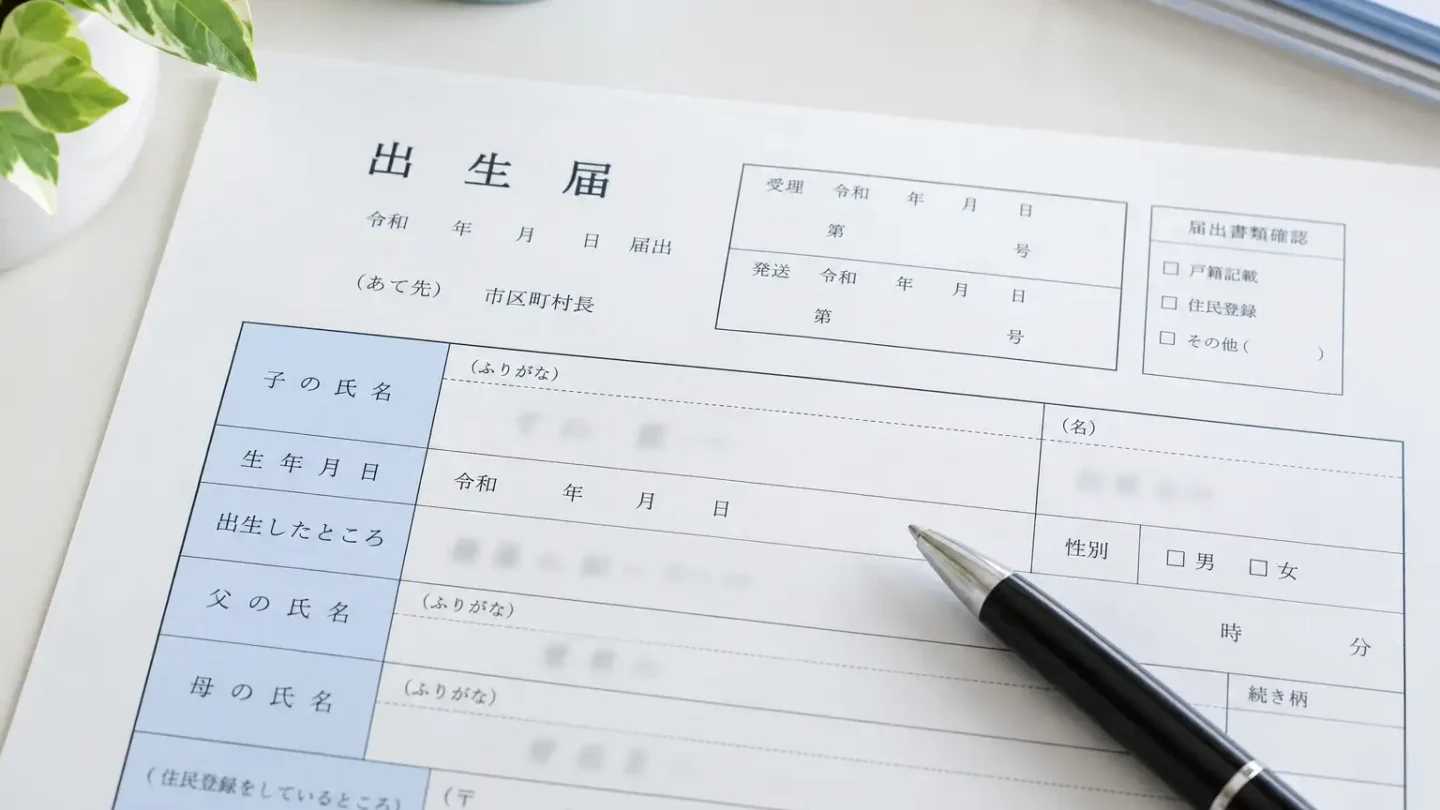
Look at the name as it appears on a birth notification. You meet the kanji first, then the small phonetic reading that tells an official how those characters should be pronounced. This article takes that combination apart in the order you encounter it: the characters, the reading, the legal connection between them, and the registrar’s decision. The parts look simple. Their interaction is where the new rule lives.
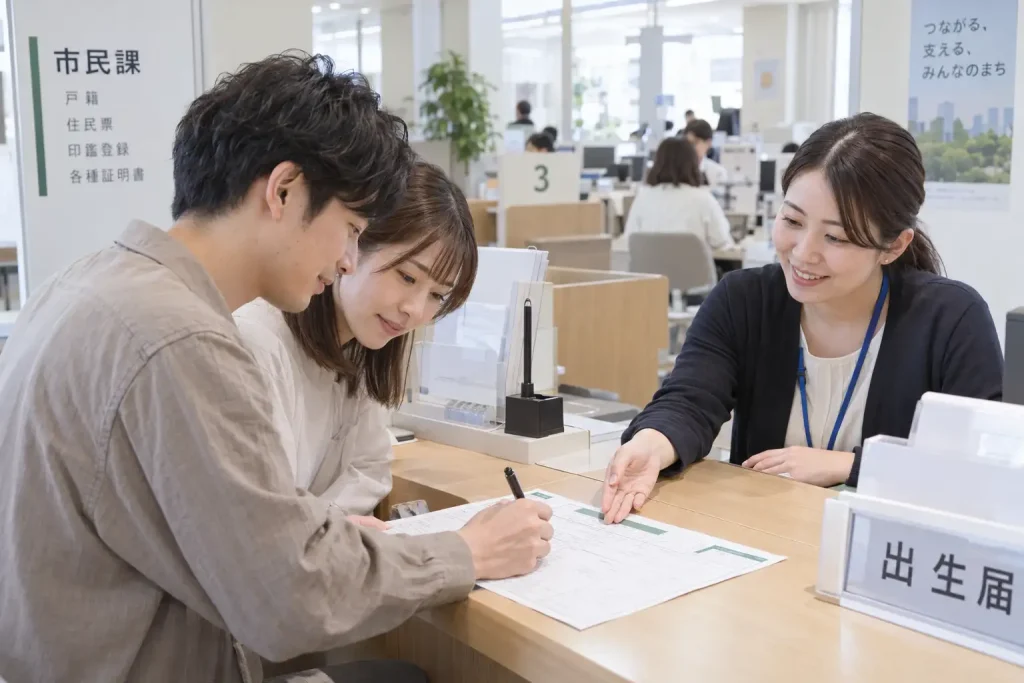
The written name: 氏名, shimei
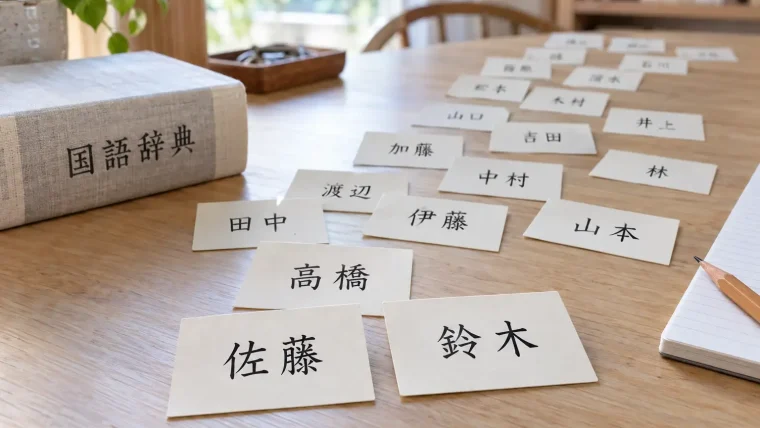
The first part is 氏名, shimei, literally “surname and given name.” Japanese names normally use kanji, although hiragana and katakana can also appear in legal names. Kanji do more than record sound: each character has meanings, established readings, and patterns of use that readers bring to the name. A parent therefore does not choose an empty symbol and freely assign it a pronunciation. The selected characters create the field of readings from which the registered name must now be defensible.
If you need the wider structure before examining the new restriction, How a Japanese Name Is Built and Read explains surname-first order, multiple kanji readings, and the difference between written form and pronunciation. Surnames create a related but different problem: Sato, Suzuki and the Long Tail Behind Them shows why familiar family names are only the visible end of a much larger distribution. The present rule matters most at the other end of the name—the newly chosen given name.
A child’s kanji must already come from the characters permitted for names. The 2025 change did not replace that character rule. It added scrutiny of the reading placed beside those characters. That distinction explains why Japanese baby name rules now operate on two levels: whether the characters may be used and whether the declared pronunciation can reasonably belong to them.
The reading beside it: 振り仮名, furigana
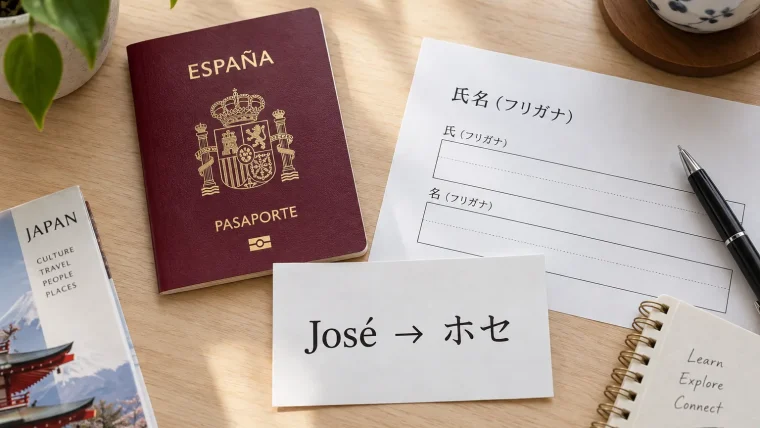
The second part is 振り仮名, furigana, literally “assigned kana.” It records how a name is pronounced, usually in katakana for family-register procedures. Before the amended system took effect, the family register—戸籍, koseki, literally “household register”—officially recorded the written name but did not nationally authenticate its phonetic reading in the same way. From the effective date, furigana became an official family-register item.
That administrative change matters because databases cannot reliably infer a name’s sound from kanji. A single character may have an on-reading, a kun-reading, a name-specific reading, or a shortened form used inside compounds. Two people can write a name identically and pronounce it differently. Conversely, two names can sound identical while using different characters. The new field gives government systems an authoritative reading instead of forcing a clerk, school, bank, or computer system to guess.
The visible reading is therefore not just a pronunciation aid. It is legal data. Once recorded, it can follow the person through identity checks and public procedures. The reform is partly about unusual names, but its broader purpose is to make names machine-readable and administratively consistent.
| Component | Japanese term | Romaji | What it records |
|---|---|---|---|
| Full written name | 氏名 | shimei | The legal characters |
| Phonetic reading | 振り仮名 | furigana | The official pronunciation |
| Family register | 戸籍 | koseki | The legal civil-status record |
| Birth notification | 出生届 | shusshō todoke | The filing used to register a birth |
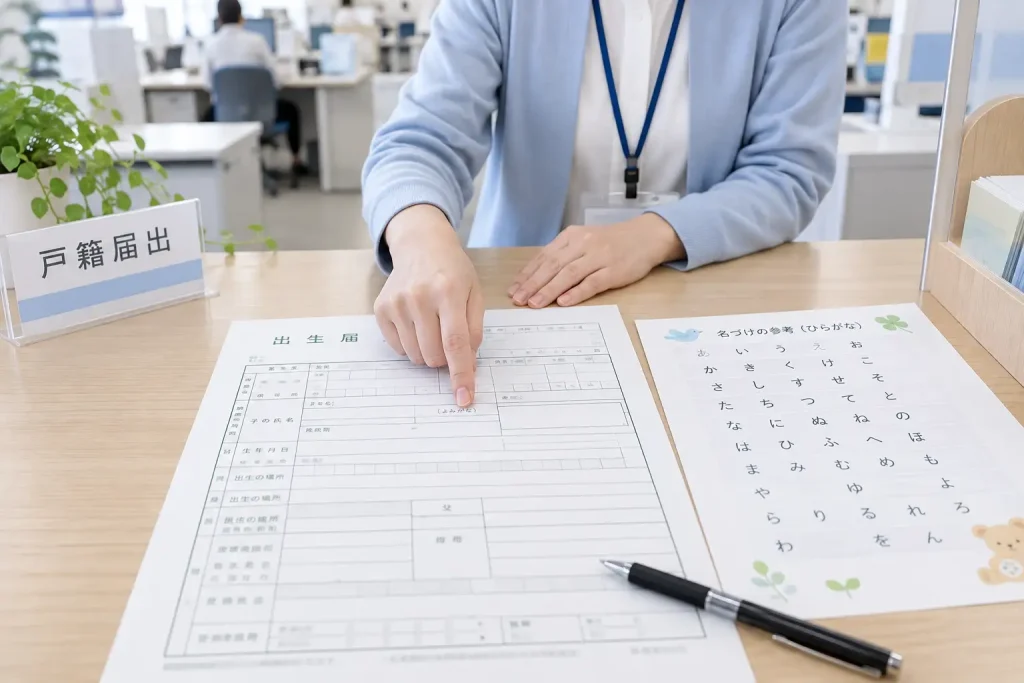
The connecting rule behind the 2025 Japanese baby name law
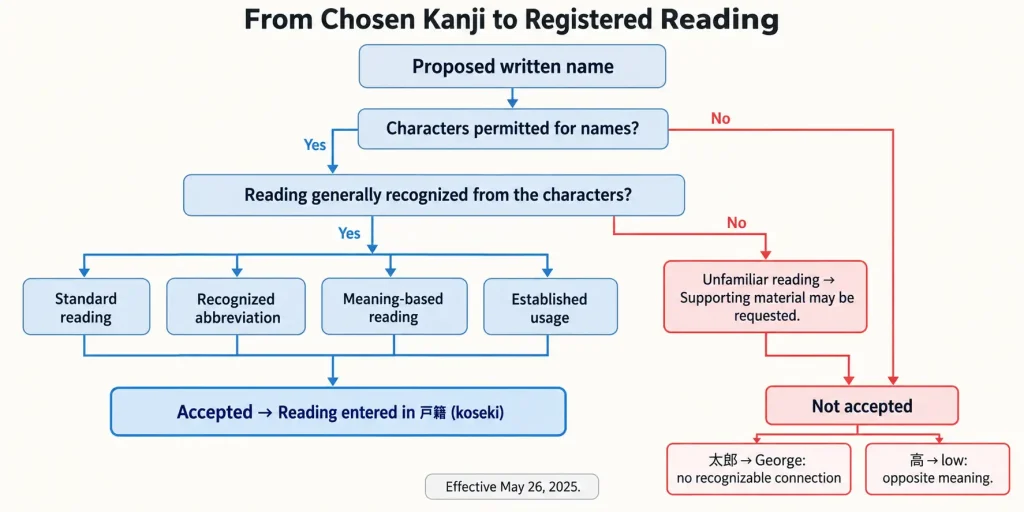
The third component is not a printed box. It is the required connection between the boxes. Japan’s amended Family Register Act says a reading must be one “generally recognized as a reading of the characters used for the name.” In practical terms, officials ask whether the declared sound can be derived from the kanji’s pronunciation, meaning, or accepted naming usage.
This is the part that created headlines about Japan refusing baby names. A reading wholly unrelated to the written characters may be rejected. A pronunciation that reverses their meaning may also fail, as can an apparent mistake that turns a familiar name into a different one. The Ministry of Justice has used deliberately clear examples when explaining the boundary: 太郎, normally Tarō, cannot simply be declared “George,” while 高, meaning “high,” cannot be read hikushi, “low.”
“Generally recognized as a reading of the characters used for the name.”
That standard is restrictive, but it is not mechanical. Officials are not limited to the most common dictionary reading. The Ministry recognizes several ways that a less obvious name can still be connected to its kanji:
- A reading may use only part of a standard compound pronunciation.
- A name may omit a sound conventionally left unspoken.
- A reading may arise from the meaning of the complete character combination.
- An established name reading may pass even when a beginner could not predict it.
- Parents may be asked for supporting material when the connection is not immediately clear.
This is why calling the reform a ban on imaginative names is inaccurate. The legal target is not novelty by itself. It is the absence of a credible relationship between writing and sound.
The “Pikachu ban” is not as simple as it looks
The nickname “Pikachu name” usually points to 光宙 read as ピカチュウ, Pikachū. The combination has circulated for years as the emblem of a キラキラネーム, kirakira nēmu, literally a “sparkling name”: visually striking kanji paired with an unexpected, pop-cultural, or foreign-sounding reading. Yet the example is more useful as shorthand than as a confirmed universal ruling.
The law does not contain a blacklist headed “Pikachu.” Nor does it automatically reject every name inspired by fiction, English, food, colors, or celebrities. A registrar examines whether the proposed reading is generally recognizable from the selected characters. A difficult case may be referred for further review, and parents may have to explain the reading or submit supporting evidence.
That is the uncomfortable part behind Pikachu baby names in Japan: there is no dependable online trick for finding the outer boundary. A clever explanation created after choosing unrelated kanji may not persuade an official. Parents who want an unusually read name may have to consult their municipal office before filing, produce a dictionary or examples of established usage, and accept that the first choice might not be registered as submitted.
The phrase “end of the Pikachu era” is therefore fair only in a limited sense. The era of treating kanji and pronunciation as two independent creative choices is over. The name Pikachu is not proven to be categorically impossible under every conceivable spelling and set of evidence.
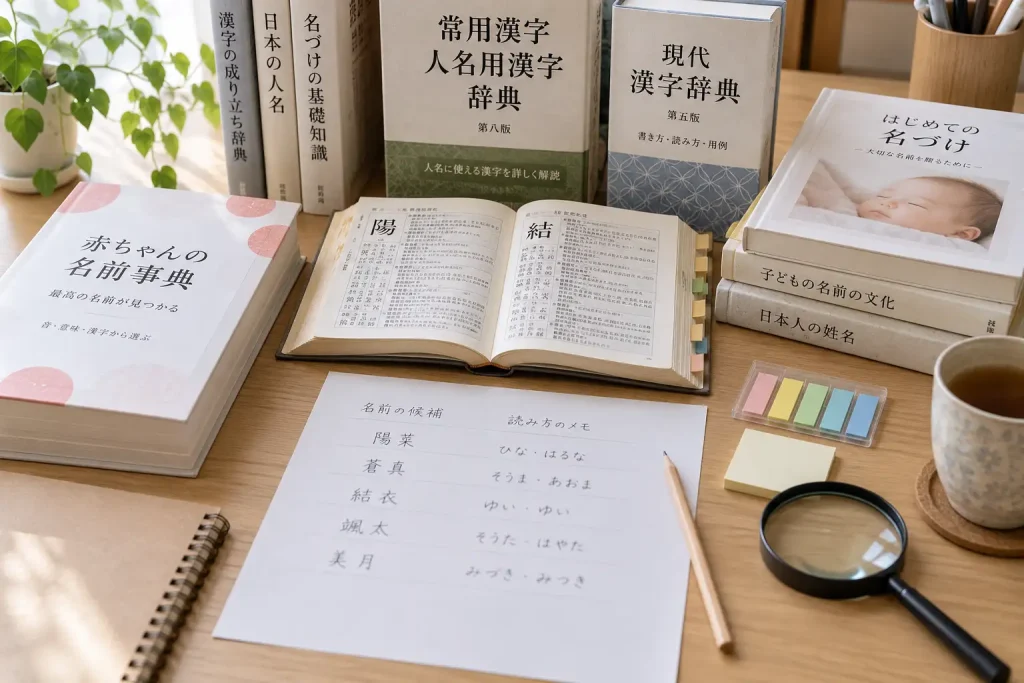
A worked example: where creativity still passes
Consider 心愛, a name often read ここあ, Kokoa. A reader learning Japanese might expect readings closer to kokoro for 心, “heart,” and ai for 愛, “love.” Kokoa is not obtained by mechanically joining the most familiar readings. However, the government’s guidance treats meaning-based and established naming conventions as relevant, so a non-obvious reading is not automatically invalid.
Now compare 太郎 read as ジョージ, Jōji, or “George.” Nothing in the ordinary readings or meaning of 太郎 produces that pronunciation. The spoken name may be perfectly valid on its own, and the kanji are ordinary name characters, but the combination lacks the required bridge. This is the distinction the reform formalizes.
| Proposed combination | Connection between kanji and reading | Likely treatment under the guidance |
|---|---|---|
| Standard dictionary or name reading | Direct and familiar | Normally accepted |
| Recognized shortened reading | Part of an established reading remains | May be accepted |
| Meaning-based reading used in names | Indirect but explainable | May be accepted |
| 太郎 → George | No recognizable connection | Not accepted |
| 高 → “low” | Reading contradicts the character’s meaning | Not accepted |
| Unfamiliar but documented usage | Evidence may establish the connection | Individual review possible |
Unusual does not mean illegal. Unrelated is the more important warning sign.
Foreign residents should not confuse this rule with the process of representing a non-Japanese name in katakana. How to Write Your Name in Japanese: The Complete Guide covers standard transliteration, while Katakana Name Rules, and the Names That Break Them explains why established spellings sometimes defeat a rule-based conversion. The site’s name converter provides a separate page for each of 898 checked names; it does not determine whether invented kanji will be accepted for a Japanese birth registration.
What the complete registration tells an official
The kanji alone tell an official how the name is written. Furigana alone tells the official what sound the parents intend. The completed registration tells something neither part can establish independently: that this exact person legally bears this exact written-and-spoken combination.
That combination is increasingly important when records move between municipal systems, financial institutions, health insurance, taxation, and other services. A standardized reading reduces mismatches caused by competing spellings or guesses. It also means that the reading is no longer an informal note that can be changed casually when a form becomes inconvenient.
For parents, the filing sequence is now straightforward:
- Choose characters that are permitted in a legal name.
- Decide the pronunciation and write it in the designated reading field.
- Check that the sound follows an established reading, accepted abbreviation, meaning-based convention, or documented usage.
- Bring supporting material if the connection may not be obvious.
- Ask the municipal office before filing when the planned combination is unusually difficult.
The extra effort falls on families choosing the least predictable combinations. That is intentional. The system places the burden of explaining an exceptional reading at registration rather than making the child explain it repeatedly afterward.
What changed nationwide and what remains local
The national standard does not change from prefecture to prefecture. The effective date, the addition of furigana to the family register, and the requirement for a generally recognized relationship between characters and reading apply throughout Japan. A municipality cannot invent a separate legal definition of what a registered name is.
What can vary is the path of an unusual application. A counter clerk may accept a familiar reading immediately, request a dictionary or other evidence, or refer a doubtful case for legal review. The documentation needed to establish actual use can also depend on the circumstances. That procedural variation should not be mistaken for regional naming law.
Existing residents were handled differently from babies born after the reform took effect. Authorities began notifying people of the readings provisionally associated with their records, giving them a process to report corrections. When a long-used reading is not generally predictable from the kanji, proof that the person has actually used it may be relevant. The reform was not designed to erase established identities overnight.
A separate article, How a Japanese Name Is Built and Read, covers what name order and kanji readings communicate outside the registration counter. For decorative kanji chosen for foreign names, the relevant issue is different again: sound-based character selection is explained in the site’s guide to ateji for foreign names.
The small detail to inspect next time
When you next see a Japanese baby-name announcement, look past the large kanji and find the kana beside them. Ask how that reading grows out of the characters: through a standard pronunciation, a shortened name reading, an accepted meaning, or established use. That small line of kana is no longer supplementary information. Since May 26, 2025, it is the legally recorded bridge between the name Japan can see and the name the child will hear.