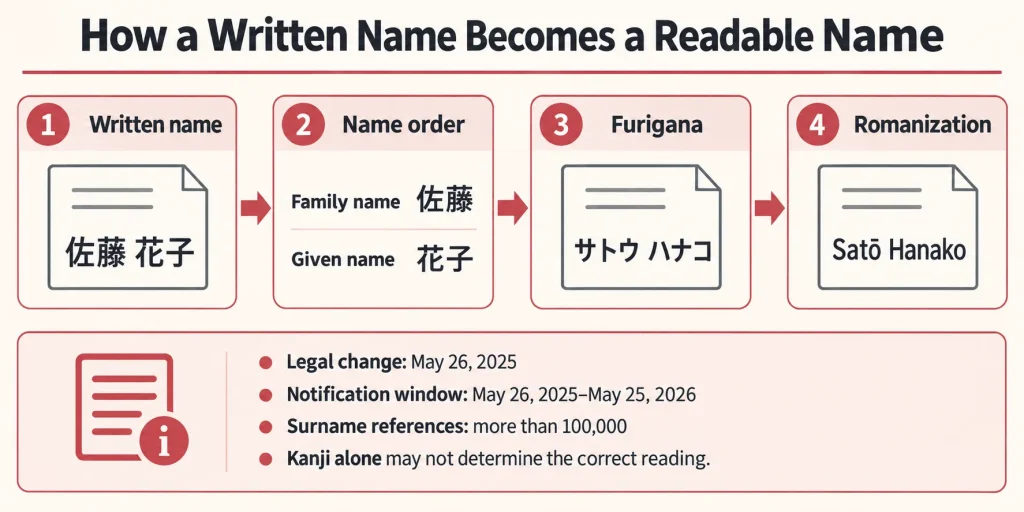
What comes first in a Japanese name? The family name normally comes first in Japanese contexts, followed by the given name: 佐藤花子, Satō Hanako.
That simple answer gets you through the first line of a form. The harder part is knowing how the written characters should be pronounced. Understanding how Japanese names work means separating three things that English spelling usually combines: the name’s order, its written form, and its reading.
Is the family name or given name written first?
In Japanese, the family name is normally written before the given name. In 佐藤花子, 佐藤 is the family name Satō and 花子 is the given name Hanako. You may also see the parts separated by a space in romanized text, although Japanese writing itself does not require one.
English-language publications have not always followed this order. For decades, many reversed Japanese names to match the Western pattern, producing Hanako Satō. Japanese government guidance introduced in 2020 asked government bodies to use family-name-first order in romanized Japanese names, bringing English presentation closer to the order used in Japanese.
Context still matters. An airline booking, passport, academic journal, or international database may impose its own format. When a form labels its boxes “surname” and “given name,” follow the labels rather than relying on position.
Are Japanese names always written in kanji?
No. Japanese names can be written with 漢字, kanji, “Chinese characters”; ひらがな, hiragana, the flowing phonetic script; or カタカナ, katakana, the angular phonetic script.
Kanji is common because each character can contribute both sound and meaning. A given name such as 花子, Hanako, combines 花, “flower,” with 子, “child.” That does not mean every person named Hanako uses those characters: the same spoken name may have another spelling, and the same written characters may sometimes receive another reading.
Hiragana and katakana remove much of that reading uncertainty because they represent sound. A kana name can also be a deliberate stylistic choice rather than an incomplete or informal name. Foreign residents usually write non-Japanese names in katakana for everyday Japanese use, but the legal spelling printed on an identity document may follow different rules.
If you are converting an American or European name, How to Write Your Name in Japanese: The Complete Guide explains how to choose the appropriate script. The separate guide to katakana name rules and the names that break them covers sound conversion and established spellings instead of the structure of native Japanese names.
What parts make up a Japanese name?
A modern Japanese personal name usually has a family name and a given name. Titles such as さん, san, an everyday polite suffix, or 先生, sensei, “teacher” or “master,” are not part of the legal name.
The basic structure looks like this:
| Element | Japanese example | Reading | Function |
|---|---|---|---|
| Family name | 佐藤 | Satō | Identifies the family |
| Given name | 花子 | Hanako | Identifies the individual |
| Full Japanese order | 佐藤花子 | Satō Hanako | Family name followed by given name |
| Polite spoken form | 佐藤さん | Satō-san | Family name plus an honorific |
Middle names are not a standard structural element in Japanese names. This becomes important for foreigners whose passports contain several given names. A Japanese form may provide too little space, reject punctuation, or expect a single continuous katakana rendering.
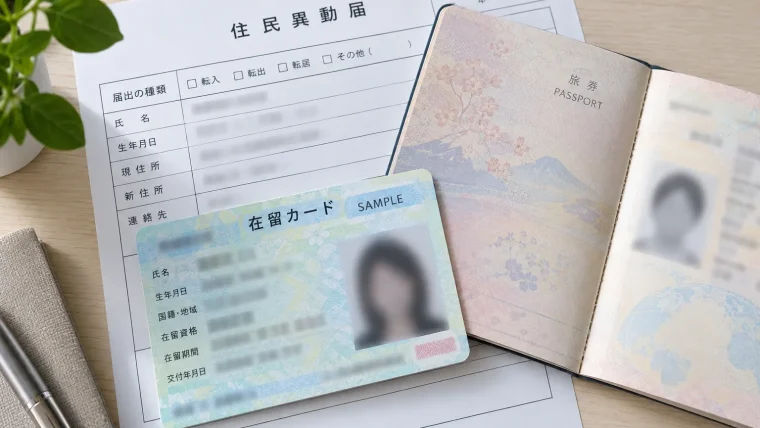
The practical problem is not solved by inventing a shorter Japanese identity. Your official records need to remain consistent with the document controlling the transaction. What the Zairyu Card Prints and What It Cannot explains how residence-card limitations can affect banking, contracts, and matching records.
Why can one kanji have several readings?
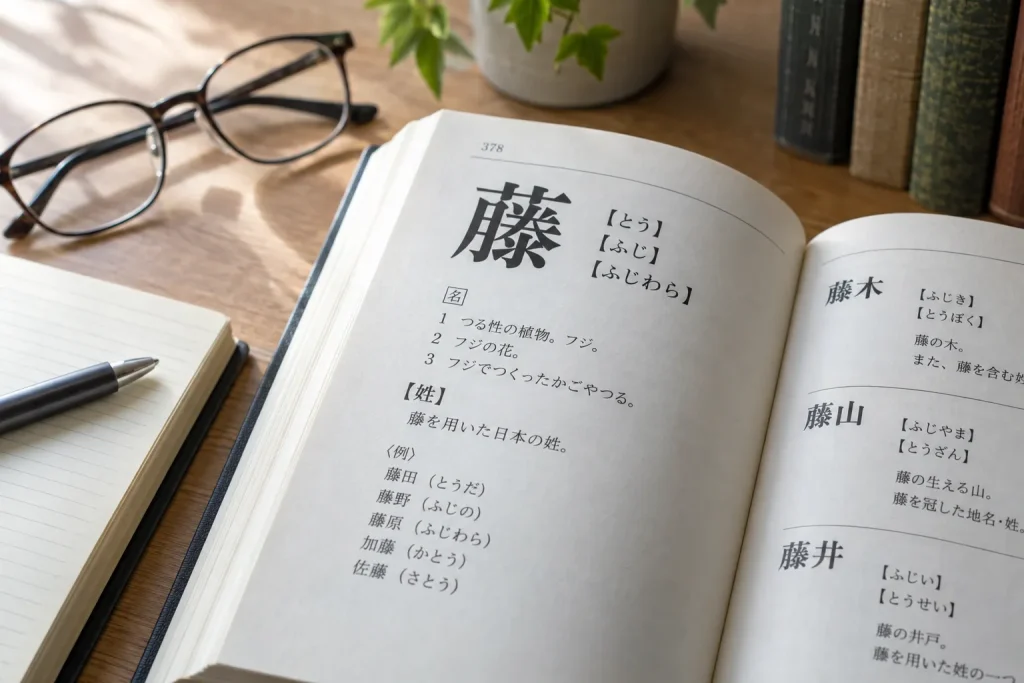
Kanji entered Japanese through a long process rather than as a purpose-built alphabet. Many characters developed readings associated with Chinese pronunciation as well as native Japanese words. Names then added conventional, historical, regional, and name-specific possibilities.
Consider 生. In ordinary vocabulary and names, it can participate in numerous readings depending on the word and surrounding characters. Seeing it does not give you a single sound that can be substituted automatically. A name is read as a complete name, not decoded by assigning the most familiar sound to each character independently.
This is why Japanese name readings cannot be reduced to a dependable chart. Dictionaries and databases can show attested possibilities, but they cannot guarantee which one belongs to the person in front of you. Frequency helps you form a hypothesis; it does not turn that hypothesis into the person’s name.
“The reading must be one generally recognized as a reading of the characters.”
That is the central standard used in Japanese government explanations of the revised family-register rules. It still leaves room for accepted name readings that are not the first readings taught to a beginner.
Can the same Japanese name be read in different ways?
Yes. The same kanji spelling can represent different names, while the same spoken name can be written with different characters. That many-to-many relationship is the main reason names remain difficult after you have learned basic kanji.
For example, 裕子 may be read Yūko, while other character combinations can also produce the spoken name Yūko. Conversely, a written form encountered without furigana may permit more than one plausible reading. A reader uses familiarity, regional knowledge, context, and—when accuracy matters—confirmation from the person.
The important distinction is between possible and correct. A dictionary may provide several possible readings, but only the bearer’s established reading is correct for that person. Treating a plausible reading as certain is the naming equivalent of assuming that the English surname “Read” must rhyme with “reed.”
A useful reading process is:
- Identify where the family name ends and the given name begins.
- Check whether the complete name is familiar, rather than reading each kanji separately.
- Look for furigana on the form, badge, roster, or business card.
- If no reading is supplied, consult a name dictionary or reliable organizational record.
- Ask the person before saying the name in a consequential setting.
How many Japanese surnames are there?
There is no authoritative government total. Frequently repeated estimates range from more than 100,000 spellings to roughly 300,000 when rare forms, historical forms, character variants, and differences in how databases separate entries are all counted.
That qualification matters. Japan’s family-register system records people, marriages, births, and legal family relationships; it does not publish a master list assigning every living surname one standardized database entry. Commercial surname dictionaries and telephone-directory projects use their own rules for combining or separating variants.
The defensible statement is therefore that Japanese surnames number well over 100,000 in major reference works, not that Japan has one exact, officially certified total. Sources giving a figure near 300,000 often count distinct kanji forms and variants that another source may consolidate.
| Claim | What can safely be said | What should not be implied |
|---|---|---|
| More than 100,000 surnames | Supported by major surname references and specialist estimates | That the government maintains this exact total |
| Roughly 300,000 variants | Possible under broad counting methods | That all are equally common or currently represented |
| One spelling, several readings | Documented feature of Japanese names | That every spelling has unlimited readings |
| Rare names are hard to read | Common practical consequence | That common names are always unambiguous |
The uncomfortable fact is that memorizing a list will not solve the problem. Even a native reader may need a pronunciation hint for an unfamiliar surname. That is not a failure of education; it follows from the relationship between kanji spellings and name readings.
What is furigana, and why do forms ask for it?
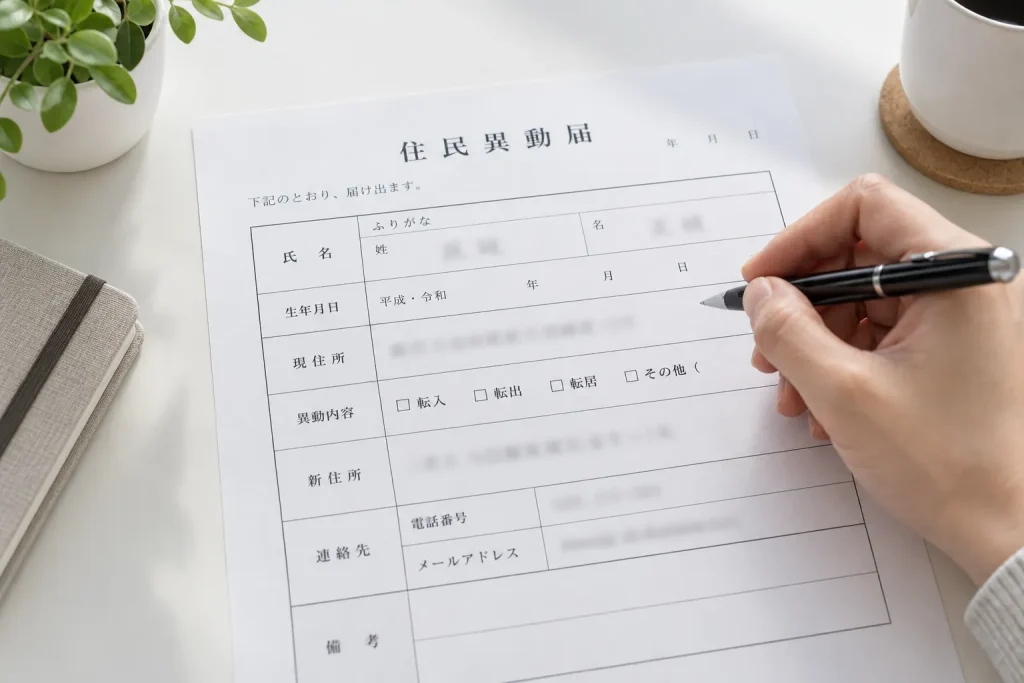
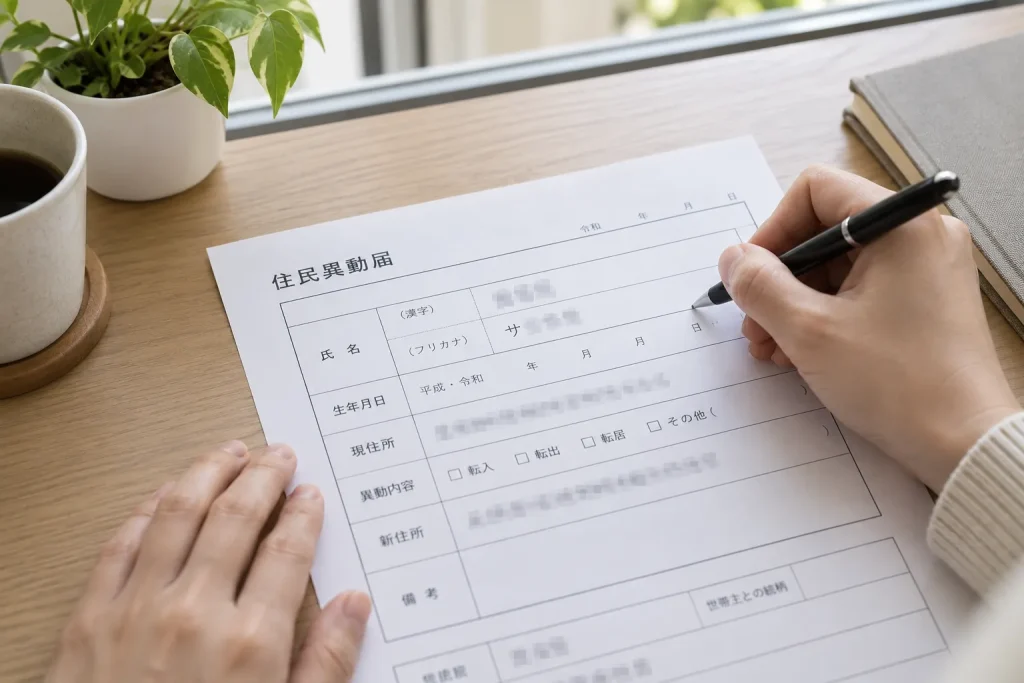
振り仮名, furigana, “assigned kana,” records how written characters should be read. On forms, it often appears in a separate フリガナ or ふりがな field above or beside the kanji name.
If the label is フリガナ in katakana, enter the reading in katakana unless the instructions say otherwise. If it is ふりがな in hiragana, hiragana is generally expected. A form may use the reading for search, sorting, customer calls, or phonetic matching within its system.
This is where the surname count becomes practical. Because a clerk cannot reliably derive every name from its kanji, the form asks you to supply the missing sound. The kana field is not merely a beginner’s aid; it is structured data connecting a written name to its pronunciation.
However, “every Japanese form has a furigana field” is too broad. Many applications request it, especially when names are entered in kanji, but form design varies. International services may request roman letters instead, while a simple signup page may not collect a reading at all.
Did furigana become legally important in 2025?
Yes. Japan’s revised family-register system began recording the furigana of names in 戸籍, koseki, the family register, from May 26, 2025. Before that change, the family register officially recorded the written name but did not nationally certify its pronunciation in the same way.
For people already listed in a family register, municipalities sent notices showing the reading they planned to record. The notification and correction process ran for one year from the law’s effective date, through May 25, 2026. If the notified reading was correct, the national guidance generally told recipients that no filing was necessary.
For births and other newly created register entries after the effective date, the reading is submitted with the name. It must be a reading generally recognized in relation to the characters. Authorities can request supporting material when an established reading is unusual.
The law does not make every imaginative association acceptable. Government examples distinguish readings connected to a character’s established sound or meaning from readings with no meaningful relationship to the written name. Readings likely to cause social confusion can also be rejected.
Does the 2025 rule ban unusual baby names?
Not simply. The rule regulates whether a submitted pronunciation has a recognized relationship to the characters; it does not require every child to receive a common name.
The Ministry of Justice’s guidance allows several kinds of connection. A reading may use part of a conventional reading, reflect the meaning of a compound, or follow an established naming pattern. The assessment concerns the whole name and its accepted relationship to the written form.
This means that “unusual” and “unrelated” are different categories. A rare reading may be accepted if parents can show that it is in established use. A fashionable reading is not automatically invalid, while a sound assigned with no defensible connection to the kanji may fail the standard.
You should also separate the reading rule from the characters permitted in a child’s registered given name. Japan has legal character restrictions, but listing every eligible character here would duplicate a government-maintained resource that can change. For an actual birth registration, check the current Ministry of Justice guidance rather than relying on an article or name generator.
What should I do when I cannot read someone’s name?
Ask. In Japanese, お名前は何とお読みしますか, onamae wa nan to oyomi shimasu ka, “How should I read your name?” is polite and direct.
Do not announce a guess and make the other person correct it unless the situation forces an immediate attempt. If you are preparing for a meeting, check the person’s official organization page, email signature, business card, or profile for kana or romanization. Those sources are better evidence than a generic reading produced character by character.
If you need to enter a name in a system, copy the form the person uses rather than “correcting” it. Long vowels may appear as Satō, Satoh, or Sato in roman letters, and databases do not always treat those spellings as equivalent. The appropriate spelling is the one belonging to the record you are trying to match.
This is the question beginners do not know to ask yet: are you trying to pronounce the name, or reproduce the exact legal spelling? Those tasks can produce different-looking answers. Pronunciation, kana transcription, passport romanization, and database matching are related, but they are not interchangeable.
How are foreign names handled in Japanese?
Foreign names are normally represented phonetically in katakana. The goal is not to translate the name’s meaning but to approximate its established pronunciation using Japanese sound patterns.
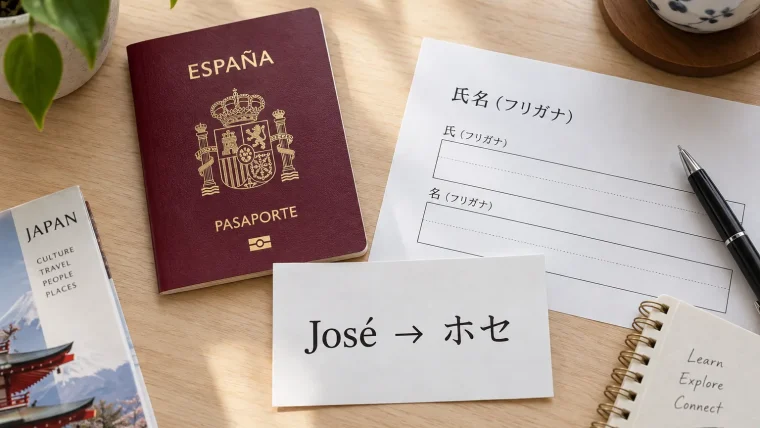
José illustrates why spelling alone is unreliable. Depending on the person’s language and pronunciation, the Japanese result may begin with ホ, not the English-style ジョ that an inexperienced converter might infer. Why Jose Becomes Hose and Not Joe-Say follows that problem through a complete worked example.
Use these distinctions when dealing with your own name:
- Your passport spelling controls many official transactions.
- Your katakana spelling tells Japanese readers approximately how to say the name.
- A kanji rendering made for decoration is not automatically an official identity.
- A familiar international name may have an established Japanese spelling that beats a mechanical conversion.
- The spelling used across related accounts should be kept as consistent as each system permits.
The Japanese name converter is useful at this stage because it checks 898 names with individual pages before relying on general conversion logic. Treat the result as a practical starting point, particularly for uncommon names or pronunciations that differ from their apparent English spelling.
What should I learn after Japanese name order?
Learn to distinguish script, pronunciation, and legal representation. That single separation prevents most beginner mistakes: kanji can identify a name without uniquely revealing its sound, kana can supply the sound, and roman letters can reproduce an official or international spelling.
Then practice with complete names rather than isolated characters. Mark the surname boundary, look for furigana, confirm the reading, and preserve the spelling required by the relevant document. How to read Japanese names is ultimately a skill of checking evidence, not producing ever more confident guesses.
For your own name, continue with the complete guide to writing your name in Japanese. If you already have a katakana spelling and need to understand its exceptions, move next to Katakana Name Rules, and the Names That Break Them.