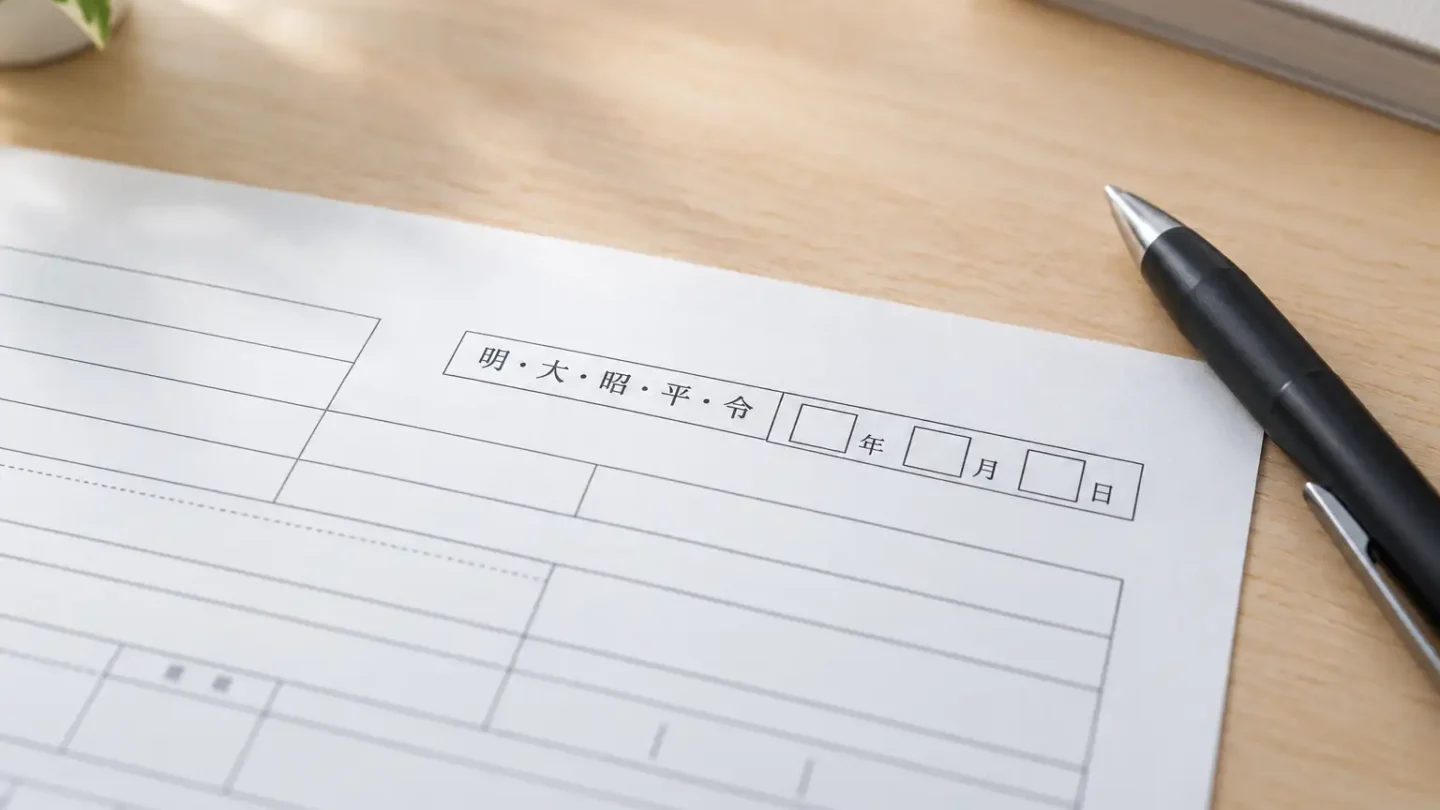
A Japanese form places five small characters before a row of year, month, and day boxes: 明・大・昭・平・令. If you are deciding between wareki or seireki on forms, those characters are the first instruction, not decoration. They tell you that the form expects a Japanese era date, usually beginning with the era in which the event occurred. Circle one character, write the year within that era, and then complete the month and day without switching calendar systems halfway through. This article takes that compact date field apart in the same order your eye meets it, then puts it back together with a worked example.
The safest protocol is simple: follow the calendar system printed or selected by the form. If the field supplies era choices, use an era year; if it explicitly says 西暦, use the four-digit Western year. When an online form offers a dropdown, choose from that dropdown rather than converting the date into a different format yourself. If an old paper form has no 令 option, do not assume that crossing out 平 is accepted everywhere, because correction rules belong to the organization receiving the form. Request a current form or follow that organization’s published correction instructions.
Start with the calendar label
The first label may be 年号・元号, nengō/gengō, “year name” or “era name,” although many forms omit the full term and print only abbreviated era choices. This part determines the calendar system for the entire date field. A label such as 西暦, seireki, “Western calendar,” calls for a four-digit Gregorian year, while 和暦, wareki, “Japanese calendar,” calls for an era name and a year counted from the start of that era. A row of era abbreviations performs the same job as an explicit 和暦 label. Once the form has made that choice, you should not replace it with the other system merely because the conversion feels more familiar.
The distinction matters because a bare number does not identify a calendar. “7” can mean the seventh year of an era, while “2025” is a Western year, but a hybrid such as “令和2025” is not a valid date in either system. The broader question of where era dates remain operational is covered in The Documents That Refuse the Western Year. That guide addresses document types; this one stays at the level of the individual boxes you must complete. The uncomfortable part is that there is no universal permission to substitute a Western year whenever a Japanese era field is inconvenient. Acceptance is controlled by the form and the receiving institution.
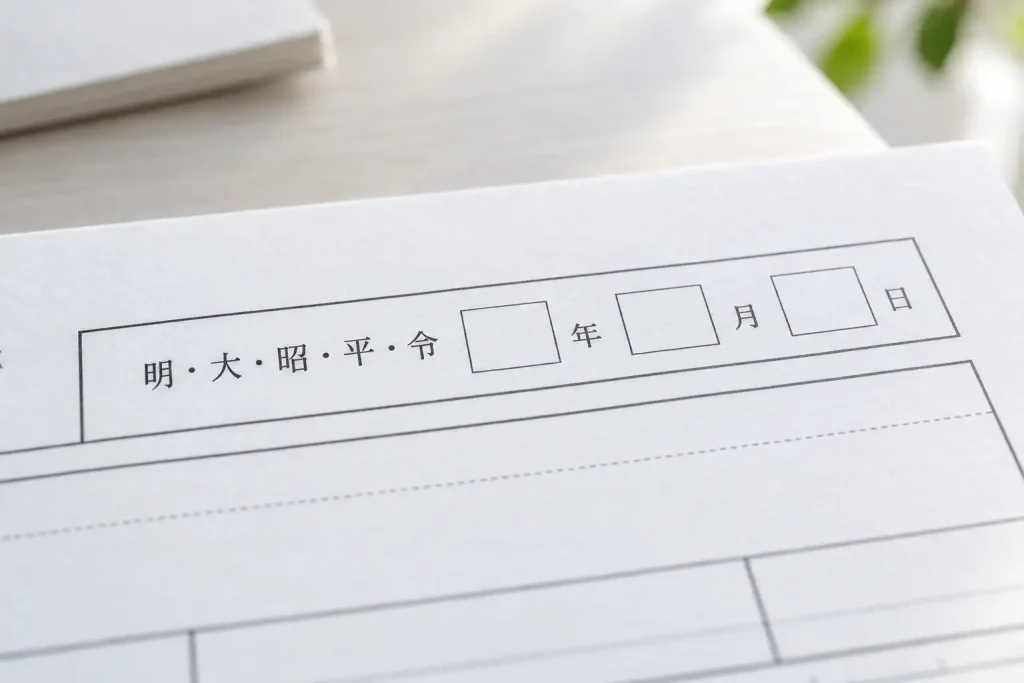
Which abbreviation should you circle?
The characters 明・大・昭・平・令 are shortened labels for five modern eras. They are not five possible ways to write the current year. You select the era containing the birth date, issue date, commencement date, or other event named beside the field. The relevant date controls the choice, so a form completed during Reiwa may still require 昭 for a person born in Shōwa or 平 for a qualification earned in Heisei. This is the core rule behind Japanese era date fields.
| Printed choice | Japanese name | Romaji | Date range | What circling it means |
|---|---|---|---|---|
| 明 | 明治 | Meiji | January 25, 1868–July 29, 1912 | The stated event occurred in Meiji |
| 大 | 大正 | Taishō | July 30, 1912–December 24, 1926 | The stated event occurred in Taishō |
| 昭 | 昭和 | Shōwa | December 25, 1926–January 7, 1989 | The stated event occurred in Shōwa |
| 平 | 平成 | Heisei | January 8, 1989–April 30, 2019 | The stated event occurred in Heisei |
| 令 | 令和 | Reiwa | May 1, 2019–present | The stated event occurred in Reiwa |
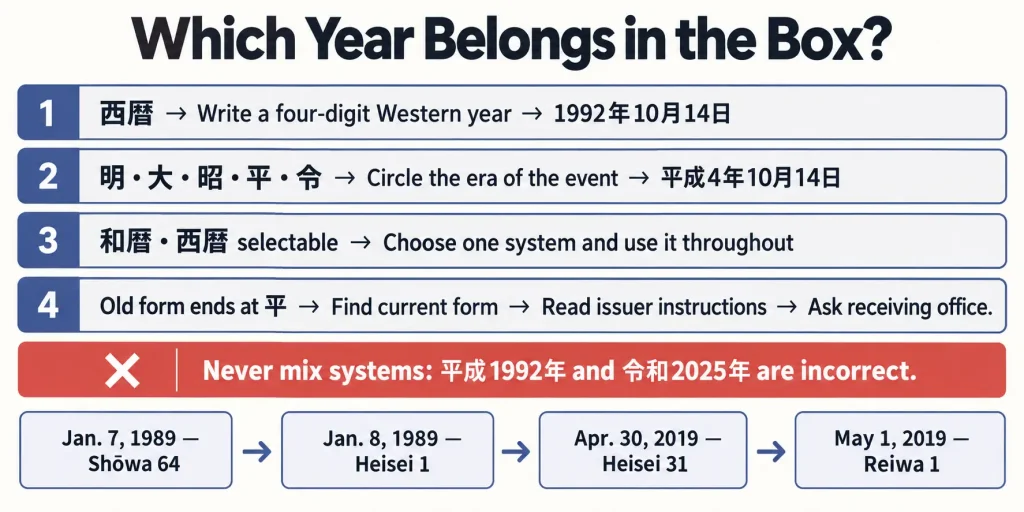
The transition dates are important because an era does not always change on January 1. The year 1989 contains both Shōwa and Heisei dates, while 2019 contains both Heisei and Reiwa dates. If your date falls in either transition year, use the month and day before selecting the era. Japanese Era Years: Meiji to Reiwa, Explained covers how the era system works, while Showa, Heisei and Reiwa Year Tables provides quick year-by-year reference tables. Those resources are more useful than memorizing a conversion shortcut without its boundary dates.
A date before May 1, 2019, cannot be Reiwa simply because the form is being completed now. For example, April 30, 2019, is 平成31年4月30日, Heisei sanjūichi-nen shigatsu sanjū-nichi. May 1, 2019, is 令和元年5月1日, Reiwa gannen gogatsu tsuitachi. The Cabinet Order changing the era established May 1, 2019, as the effective date, so the boundary is legal and exact rather than stylistic. The relevant era must therefore be determined from the complete event date.
Wareki or seireki on forms: read the instruction before converting
After the era selector comes the year box, normally marked 年, nen, “year.” If you circled 令, the box wants the year counted within Reiwa, not the Western year. If the form instead says 西暦, write the four-digit Gregorian year and leave era choices unused unless the form instructs otherwise. A form offering 和暦・西暦 may let you select either system, but you should complete the entire date in the selected format. This prevents the most common structural error: combining an era label with a Gregorian number.
Use this order whenever you meet a date field:
- Read the description beside the field to identify which event the date represents.
- Look for 西暦, 和暦, an era dropdown, or the abbreviations 明・大・昭・平・令.
- Determine the era from the complete date, including the month and day in a transition year.
- Circle or select exactly one era if the form provides era choices.
- Write the year number belonging to that era, followed by the requested month and day.
- Compare the finished entry with the source document before submitting it.
A person born on October 14, 1992, supplies a clean worked example. The form asks for 生年月日, seinengappi, “date of birth,” and prints 明・大・昭・平・令 before the year box. The correct entry is 平成4年10月14日: circle 平, write 4 in the year box, 10 in the month box, and 14 in the day box. Writing 平成1992年 would mix an era label with a Western year, while circling 令 because the form is being completed during Reiwa would attach the wrong era to the birth date. If you need to verify an unfamiliar year, the era converter for every year from 1868 through 2050 and all five eras is the appropriate tool.
“元号を令和に改める。” — Cabinet Order No. 143 of 2019
That brief legal wording means “the era name is changed to Reiwa.” It does not say that every document created earlier becomes unusable, nor does it create one national correction method for every old form. Form validity and correction procedure remain administrative questions for the issuing body. That distinction becomes crucial when the printed choices end at 平.
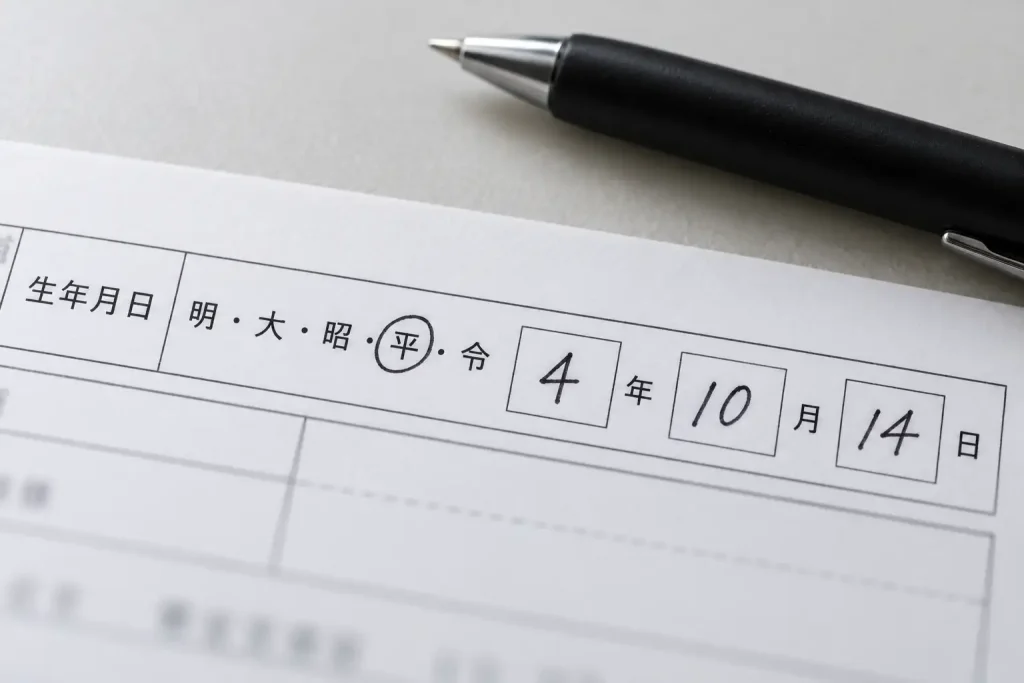
The year-one box is not asking for the numeral 1 every time
The component that is not quite what it looks like is the first-year entry. In Japanese era notation, the first year may be written 元年, gannen, “first year,” instead of 1年. Official publications commonly use 令和元年 for dates from May 1 through December 31, 2019. Yet a tightly designed form may accept or require the numeral 1 because its year field contains only numeric boxes. The visual size of the box, input validation, example entry, and instructions determine whether 元 or 1 belongs there.
Do not force 元 into a numeric-only online field, and do not assume every paper form treats 元 and 1 identically. If an example printed on the form uses 元年, follow that example. If the input control accepts digits only, enter 1 unless the accompanying instructions state another method. The date still refers to the same first year of the era, but the permitted notation can differ by system. This is a formatting issue, not a different calendar calculation.
Why the whole field matters more than any one character
No individual box supplies a complete date. The circled era identifies the starting point, the year box counts from that point, and the month and day locate the event inside that era year. Together, 平・4・10・14 means October 14 in Heisei 4, which corresponds to October 14, 1992. Remove 平 and “4” becomes ambiguous; replace 4 with 1992 and the field becomes internally contradictory. This is why Reiwa date conversion must happen before the form is filled in, not piece by piece while writing.
| Form instruction or layout | Correct pattern | Example | Avoid |
|---|---|---|---|
| 西暦 年 月 日 | Four-digit Western year | 1992年10月14日 | 平成1992年10月14日 |
| 明・大・昭・平・令 年 月 日 | Circle one era and enter its year | 平成4年10月14日 | 平成1992年10月14日 |
| 和暦・西暦 with a choice | Select one system and remain consistent | 西暦1992年10月14日 | 西暦平成4年10月14日 |
| Era dropdown plus numeric year | Select the era and enter its year number | 平成 + 4 + 10 + 14 | 令和 + 1992 + 10 + 14 |
| No calendar label | Check instructions or ask the recipient | Follow the supplied example | Guessing from the box width |
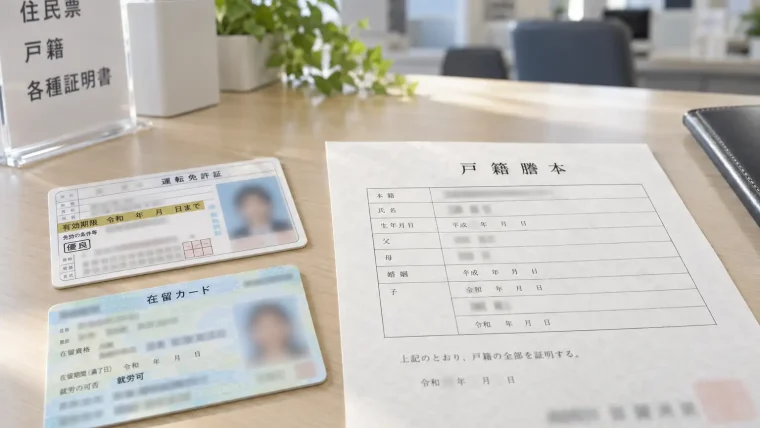
The same logic applies when copying from identification documents. You must preserve what the destination field requests rather than mechanically copying the source format. Reading Your License, Card and Register explains where to locate and interpret dates on common documents. Once you have identified the source date, convert it only if the destination form uses a different calendar. Then verify the complete result, especially around January 1989 and May 2019.
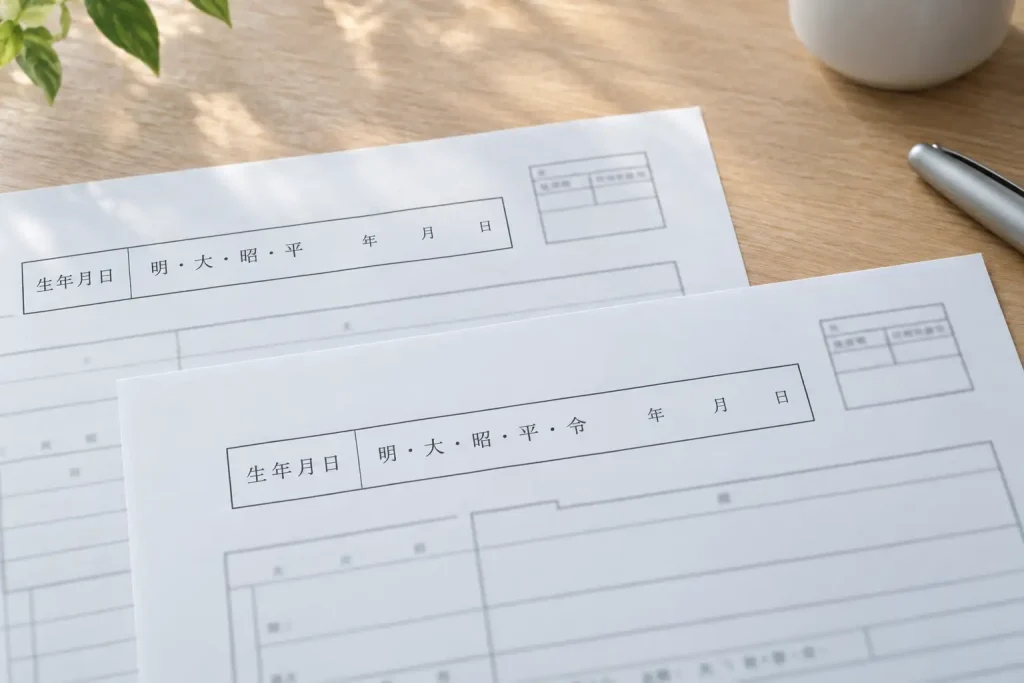
Old forms that stop at Heisei
An old form printed with 明・大・昭・平 but no 令 is outdated for a Reiwa event, yet that does not automatically make it invalid. After the 2019 transition, some public bodies issued instructions allowing specified older forms to remain in use, sometimes with the former era name corrected. Those notices applied to particular forms and procedures; they were not a blanket national rule for every ministry, municipality, bank, insurer, employer, school, or clinic. Therefore, “cross out 平 and write 令” is a possible institution-approved method, not a universal protocol. Presenting it as universally safe could result in a rejected application or a request to complete the form again.
Use the following escalation rule for an old Heisei form:
- First, download the newest version from the issuing organization’s official website.
- If the organization supplies correction instructions, follow them exactly, including any rule on lines, stamps, initials, or replacement text.
- If no instructions are published, ask the receiving office whether the old version remains acceptable.
- If the deadline is close, keep a copy of the guidance or record the office and date of the confirmation.
- Do not alter protected, machine-readable, or preprinted official fields without explicit permission.
This extra check costs time, but it is safer than relying on a correction convention seen on an unrelated government website. Different forms feed different workflows, and a handwritten correction that is harmless on a manually reviewed application may fail in scanning or data-entry processing. A form number or revision date printed at the bottom can help staff identify whether you have the current version. If a current form is available, replacing the old sheet is normally cleaner than modifying it. The institution receiving the document has the final authority over its own submission requirements.
Paper, online, and regional variants
Municipal and national forms vary in typography, abbreviation order, box count, and whether they accept both calendars. A city office may provide a bilingual explanation, while a clinic or private employer may rely on a compact Japanese-only field. Online forms often replace circles with dropdown menus and may reject a four-digit number after an era has been selected. Paper forms offer more physical freedom, but that freedom does not mean every handwritten variation is acceptable. The unchanging rule is to follow the calendar indicator attached to that specific field.
Some forms write the full names 明治・大正・昭和・平成・令和, while others use the single-kanji abbreviations or Latin initials such as M, T, S, H, and R. The letters save space but perform the same selection function. The year still belongs to the era of the event, not the era in effect when you hold the pen. The full combination must remain internally consistent, and transition dates still depend on month and day. For a broader inventory of institutions that retain era dates, return to The Documents That Refuse the Western Year.
The detail to check before you write
The next time a Japanese form presents a date field, look immediately to the left of 年. That small area tells you whether the year box expects 2025, 令和7, or another era-and-number combination. Circle only the era containing the event, keep the remaining boxes in the same system, and treat a missing 令 as evidence that the form needs checking. Do not repair an old form by habit when the receiving organization has not approved the repair. One careful look at the calendar label prevents nearly every mixing error described here.