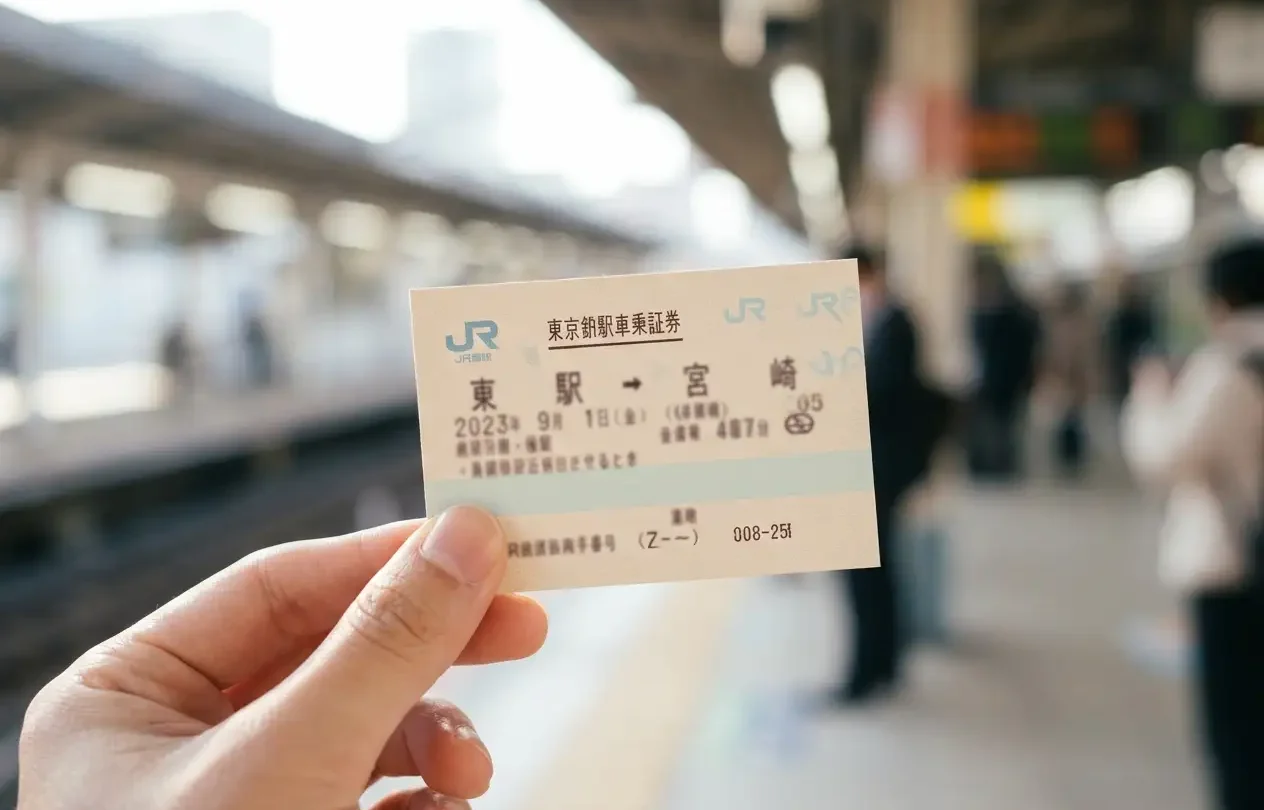
A JR ticket that reads 7.-4.-1 is not a typo and it is not month-first American notation. It is Reiwa 7, the 4th month, the 1st day — read left to right as japanese train ticket date format always does: era year, month, day.
Why Does a Japanese Train Ticket Show Three Numbers Instead of a Full Date?
Because Japan runs two calendars at once, and a printed ticket only has room for one line of it. Alongside the familiar Gregorian year, Japan uses 和暦 (wareki, “Japanese calendar era dating”) — a count that resets to 1 every time a new emperor takes the throne, rather than climbing endlessly like 2024, 2025, 2026. A ticket printed under this system shows the era year first, then month, then day, all separated by periods, with no month name and no comma to soften it.
That’s a compressed version of a system that shows up everywhere in Japanese officialdom, not just on train tickets — the reasoning behind why is laid out fully in The Documents That Refuse the Western Year, which is worth a look if the era system itself is still unfamiliar.
What Is the “Era Year” Printed on the Ticket?
It’s the number of years the current emperor has reigned, not the calendar year. Japan’s current era, Reiwa, began on May 1, 2019, when Emperor Naruhito took the throne — so 2019 was Reiwa 1 (also written 元年, gannen, “the founding year”), and each following January 1st adds one, making 2026 Reiwa 8. The system is called 元号 (gengo, “era name”), and five of them cover everything since 1868: Meiji, Taishō, Shōwa, Heisei, and Reiwa.
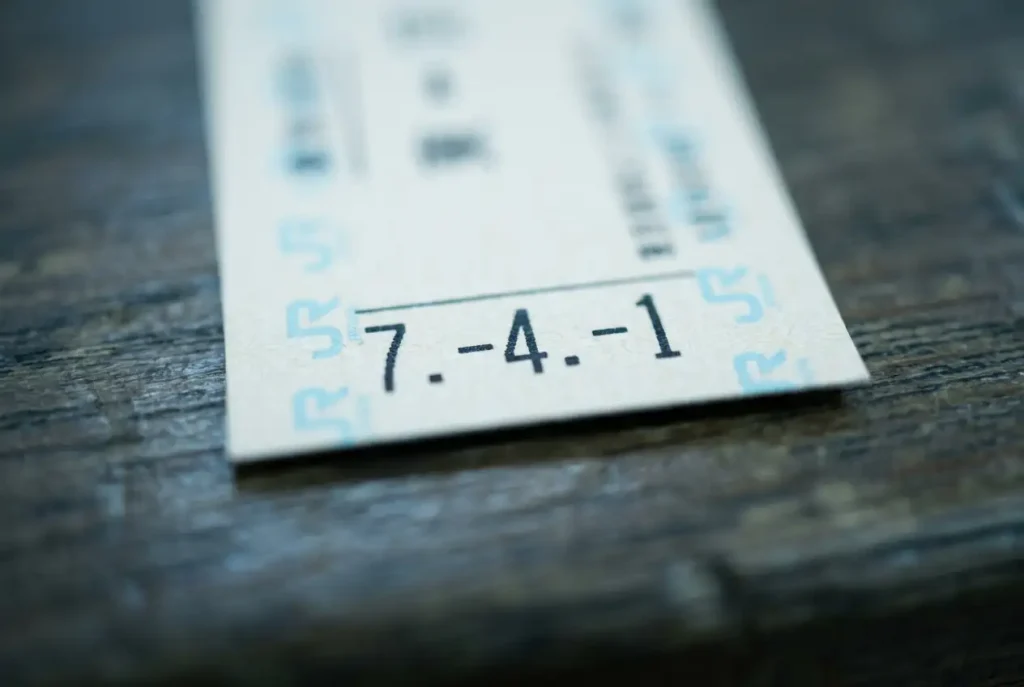
Why Do the Month and Day Sometimes Show a Hyphen Instead of a Number?
This is the actual mechanic behind the japanese train ticket date format that trips up American readers, and it’s simpler than it looks: on many printed Japanese tickets, receipts, and date stamps, a single-digit month or day is padded with a hyphen instead of a leading zero. So April doesn’t print as “04” — it prints as “-4.” The first of the month doesn’t print as “01” — it prints as “-1.” Two-digit months and days, like November or the 25th, print normally, with no hyphen involved at all.
How Do You Read a Full Ticket Date Like 7.-4.-1?
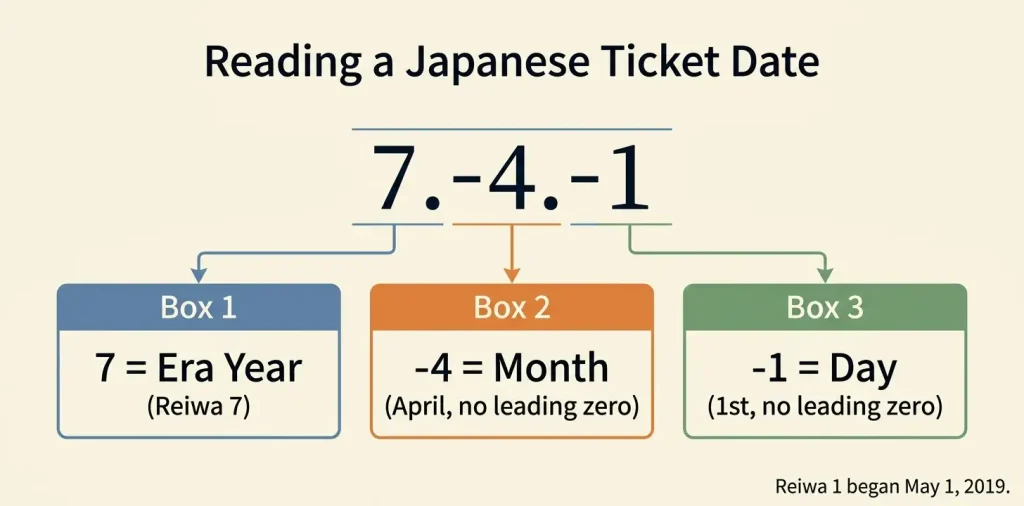
Break it into its three pieces and it stops looking cryptic:
- First number, before the first period — the era year. A “7” here means the seventh year of the current era, not 2007 and not the 7th day of anything.
- Second number, between the periods — the month. A hyphen in front, like “-4,” just means “4” with no leading zero — April.
- Third number, after the last period — the day. Same rule: “-1” means the 1st, not a negative number.
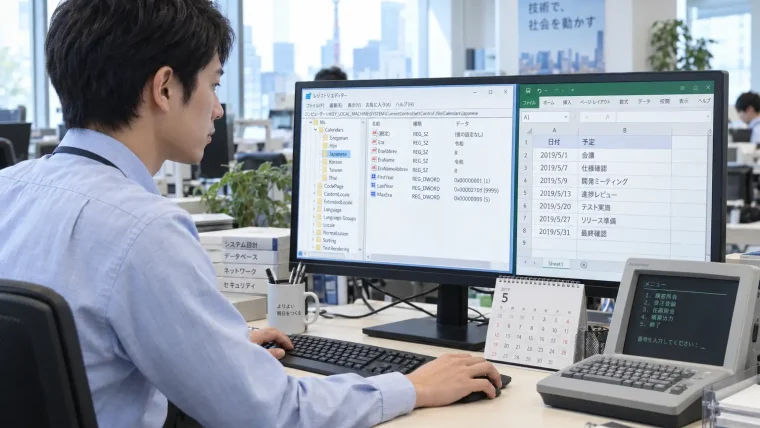
Put together, 7.-4.-1 reads as Reiwa 7, April 1 — which, since Reiwa 1 started in 2019, converts to April 1, 2025. Checking that kind of era-to-Western conversion by hand gets error-prone fast once the era year climbs into double digits, which is exactly what the site’s era converter is built for — it covers every year from 1868 to 2050 across all five eras.
| Printed segment | What it represents | Decoded value |
|---|---|---|
| 7 | Era year (Reiwa) | Reiwa 7 = 2025 |
| -4 | Month, hyphen = no leading zero | April |
| -1 | Day, hyphen = no leading zero | 1st |
Which Number Is the Year, and Which Is the Day?
This is the mistake almost every first-time reader makes, and it isn’t really about the hyphens at all — it’s about which end of the string is which. The era year comes first and looks small and unfamiliar (a “7” or an “8”), while the day comes last and looks like an ordinary date number. It’s easy to glance at a ticket, see a low number up front, and assume it must be the day, not a year count that only goes back to 2019.
As one Japan Rail Pass guide put it, describing a pass that looked like it expired in 1926:
“You’re right, it definitely doesn’t mean it expired on the 20th May 1926, the Shinkansen was still but a twinkle in its Daddy’s eye!”
— JRPass.com Blog, Japanese Dates on the JR Pass
The joke lands because the mistake is common: reading the era-year digit as if it were a day, and the day digit as if it were a year.
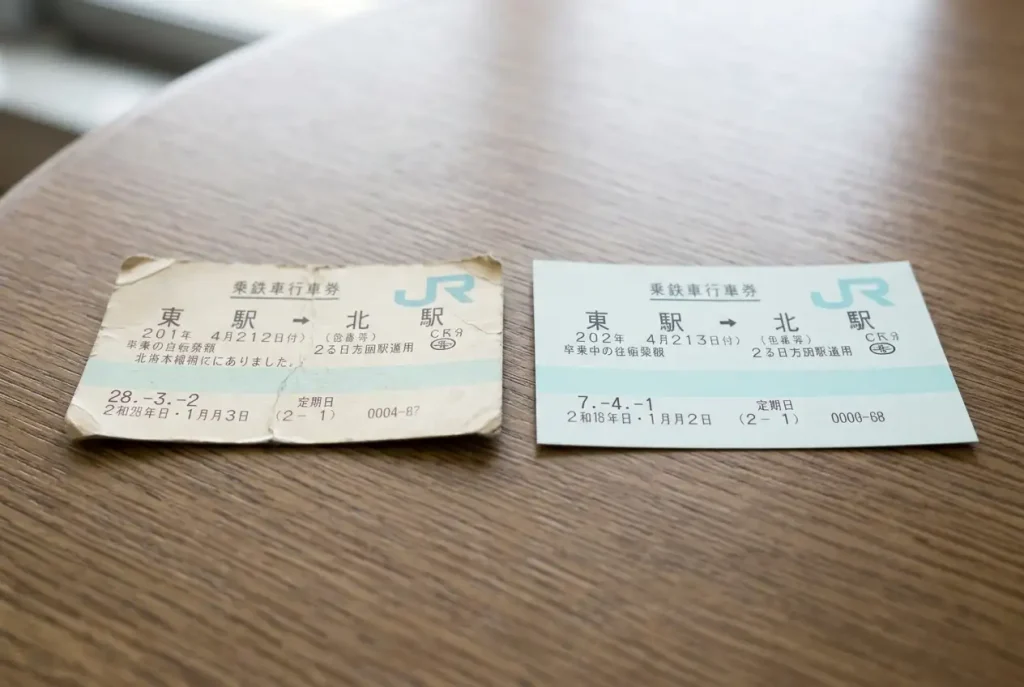
Do All JR Tickets Still Use the Era Year?
Not anymore, and this is the part worth being straight about rather than writing around. JR East switched the printed sale-year on its conventional-line tickets — including multi-ride tickets and commuter passes, for routes that begin and end entirely within its own network — from the era year to a four-digit Western year, starting in April 2018. The change came directly out of Japan’s Heisei-to-Reiwa transition anxiety: printing systems that had always assumed the era number would keep climbing indefinitely had to be rebuilt once an era change was actually on the calendar.
That switch is specific to JR East’s own conventional lines. It doesn’t necessarily extend to Shinkansen tickets, tickets that cross between JR companies, or systems run by JR Central, JR West, or JR Kyushu, and this article can’t confirm a single, current, company-wide standard across all of JR as of the date checked. The honest version: expect to see the era-year format on many Japanese tickets and receipts, especially reserved-seat and multi-company tickets, but don’t assume it’s universal — some JR East local tickets have printed a plain four-digit year since 2018.
What About Receipts and Warranty Cards — Same Format?
The era-year-plus-hyphen convention isn’t a train-specific quirk; it’s a printing convention that shows up anywhere a Japanese business stamps or prints a short date with limited space. Rotary date stamps used at post offices and banks, and warranty cards from Japanese retailers, commonly follow the same logic: era year (or a two-digit Western year), then month, then day, with a hyphen standing in wherever a digit would otherwise need a leading zero. If a receipt from a Japanese shop shows a date that looks like it’s missing a number, that missing number was never meant to print at all.
What’s the One Thing Nobody Tells You Before You Read a Japanese Date?
Here’s the part that beginner guides tend to skip entirely: a bare, low era-year number is genuinely ambiguous on its own, separate from the hyphen issue. The year an era begins is often split between two eras — Heisei 31 and Reiwa 1 both existed in 2019, covering different halves of the same calendar year, and something similar happens at every era transition. A ticket dated with a bare “1” in the year position could belong to either era, depending on which one was active on that exact date. The Four Japanese Years That Belong to Two Eras covers exactly which years split this way and how to tell them apart.
Where Else Will You See This Same Era-Year Format?
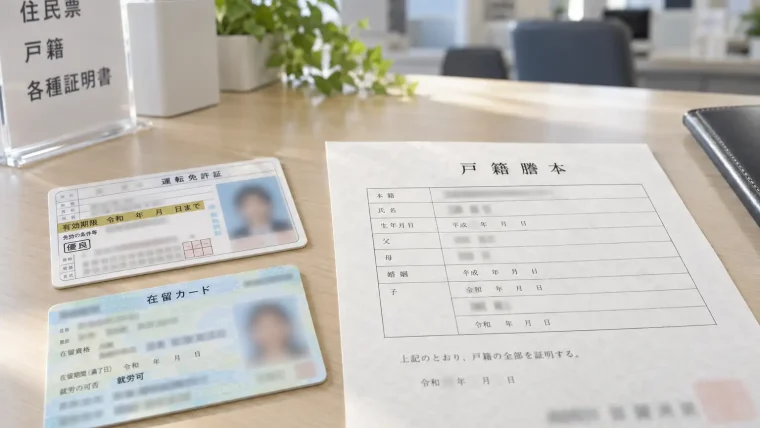
Train tickets are far from the only place this shows up — it’s the same format printed on driver’s licenses, health insurance cards, and family register documents, all of which lean on the era year as the default rather than an alternative. Reading Your License, Card and Register walks through how each of those documents lays out its dates, since the field order isn’t always identical to a train ticket’s.
- Driver’s licenses print an issue date and an expiration date, both typically in era-year format.
- Health insurance cards use the era year for the enrollment date.
- Koseki (family register) entries record birth and marriage dates almost exclusively in wareki.
Should You Write the Era Year or the Western Year on Your Own Forms in Japan?
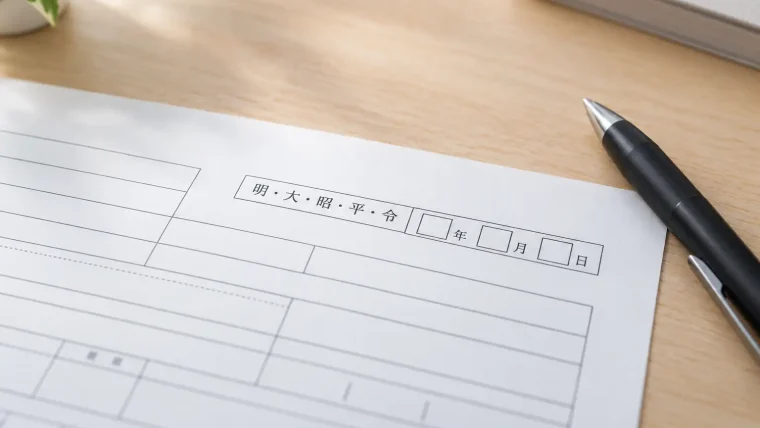
If a Japanese form hands you a blank date field with no era pre-printed, the honest answer is: it depends on the form, and guessing wrong is a minor annoyance, not a real problem — most offices will simply ask you to correct it. Which Year to Write on a Japanese Form breaks down which government and business forms still expect wareki by default and which have quietly switched to accepting the plain Western year.
What to Learn Next
Once the hyphen convention and the era-year order both make sense on their own, the next practical step is converting specific years correctly — including the split years that belong to two eras at once, which is where the arithmetic actually gets people. Japanese Era Years: Meiji to Reiwa, Explained is the natural next stop.