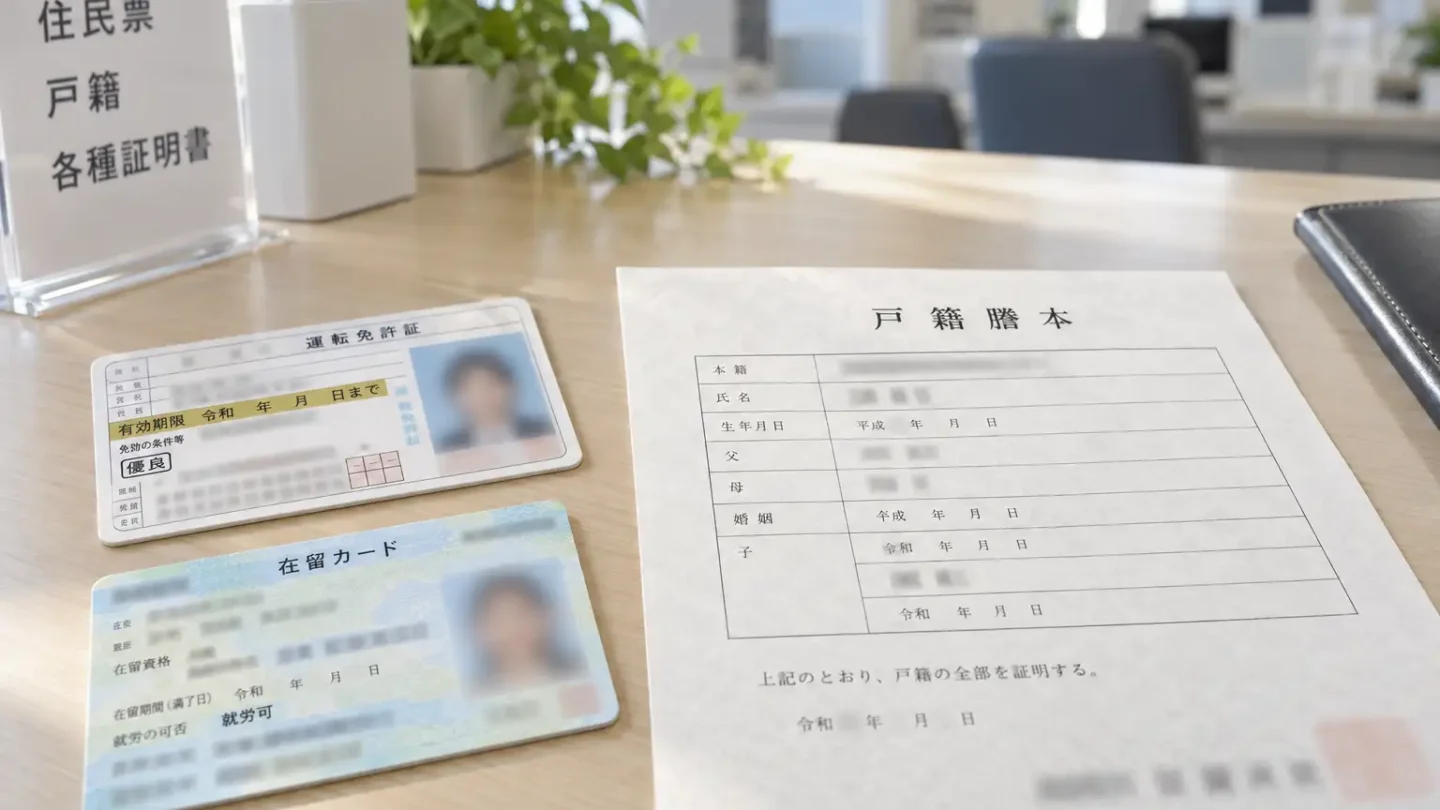
This case follows May 1, 2019—the first day of 令和 Reiwa, literally “beautiful harmony”—across a Japanese driver’s license, a family register and a residence card. It is representative because the calendar date remains the same while the printed year changes with the document. A japanese driving licence era date can combine the Western calendar with the era system, a 戸籍 koseki, literally “family register,” normally records dates in the era system, and a 在留カード zairyū kādo, literally “residence card,” uses Western-numbered dates. Copying the visible figures without checking the destination field can therefore turn one correct date into one incorrect answer. The problem is not difficult arithmetic; it is assuming that Japanese government documents share one date format.
The worked date is real and legally significant. Reiwa began on May 1, 2019, after Heisei ended on April 30, 2019. The example does not invent a document holder or claim that the three records belong to one real person, because a foreign resident would not ordinarily have an individual Japanese family register entry. Instead, it follows the same verified date string through three official document systems. The Documents That Refuse the Western Year provides the broader map; this article stays with the side-by-side document check.
Stage one: identify which date field you are reading
A Japanese ID does not contain just “the date.” A driver’s license can show a birth date, issue date, license-acquisition dates and the last day of validity. The format introduced for the validity field does not automatically apply to every other field on the card. A residence card also separates birth date from the card’s validity and immigration-related dates, although the visible fields changed with the card redesign introduced in 2026. Before converting anything, identify the field label and the document version in front of you.
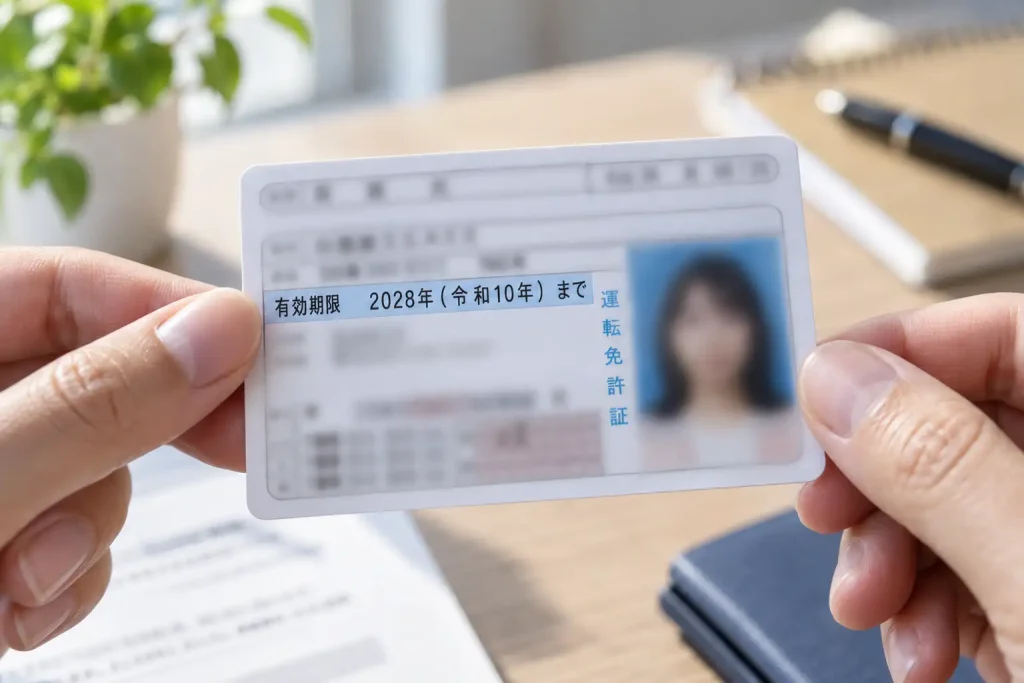
On a Japanese driver’s license, the key label is 有効期限 yūkō kigen, literally “validity limit.” Following a National Police Agency rule change implemented in 2019, the last day of validity is displayed with the Western year followed by the era year in parentheses. A date may therefore appear in the form 2024年(令和6年)5月1日まで有効, meaning the license is valid through May 1, 2024. The Western and era years are not alternatives supplied by the holder; they are two representations of the same expiry date. The card’s birth and issue fields should not be assumed to follow that dual format.
“The last day of the validity period will be written with the Western year and era name together.” — translation of the National Police Agency amendment summary
The first decision is therefore simple: read the field label before reading the number. The administrative cost of skipping this step is not published as a national fee or processing-time figure, so none is invented here. The practical cost can be a mismatch between the supporting document and the form. A clerk or online validation system may then require correction or additional evidence. Japanese license dates are useful confirmation only when you know which field they confirm.
Stage two: preserve both versions from the license
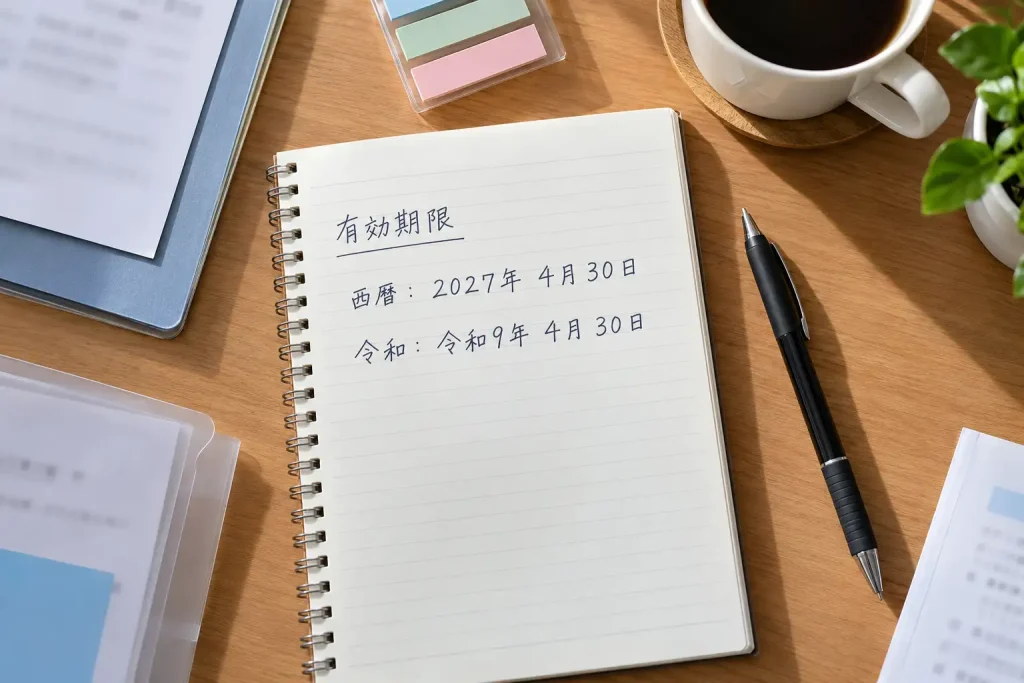
For the worked case, begin with the verified calendar relationship 令和元年5月1日 = May 1, 2019. 元年 gannen, literally “origin year,” replaces the numeral for the first year of an era. If a later license expiry falls on May 1, 2024, its paired form is 2024年(令和6年)5月1日. The parentheses do not make Reiwa optional or approximate. They make the conversion visible so the reader does not have to perform it mentally.
Record the date in two separate notes before completing another form:
- Western form: 2024-05-01
- Japanese written order: 2024年5月1日
- Era form: 令和6年5月1日
- Source field: driver’s-license validity
- Confidence check: both printed years point to the same full date
This is a transcription stage, not a conversion stage, because the license already supplies both years for its expiry. Do not change the month or day, and do not use the birth-date field as a substitute. If you need the underlying conversion rather than this document comparison, Japanese Era Years: Meiji to Reiwa, Explained covers the arithmetic and transition boundaries. The Reiwa date conversion itself should not be duplicated by hand when the destination accepts the Western year already printed on the card. Preserve both forms, then choose the one the receiving field requests.
| Stage | Source in front of you | Date retained | State after the decision |
|---|---|---|---|
| Identify | Driver’s-license validity field | 2024年(令和6年)5月1日 | Field confirmed |
| Separate | Same license field | 2024-05-01 and 令和6年5月1日 | Both calendar forms retained |
| Match | Destination form | Requested calendar selected | No unnecessary conversion |
| Verify | Source document and completed field | Full year, month and day compared | Ready to submit |
Stage three: the family register removes the Western-year safety net
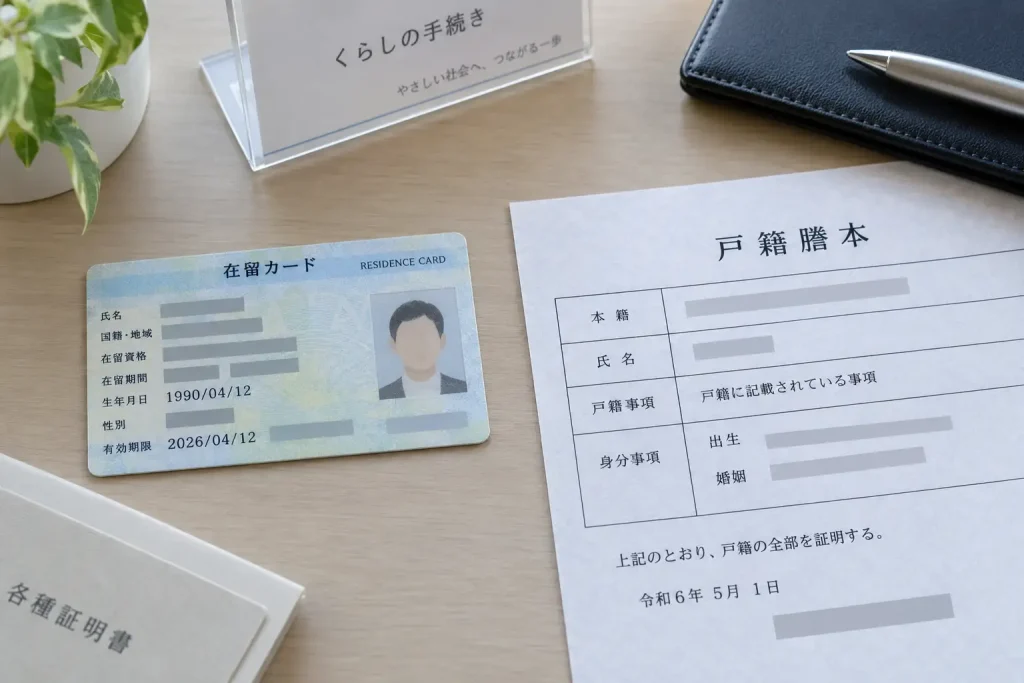
The family register does not follow the driver’s-license solution. 戸籍 koseki is the legal record of family relationships for Japanese nationals, and its entries use Japanese era dates. In this context, May 1, 2019 appears as 令和元年5月1日 rather than as a Western year with an era supplied in parentheses. If you approach the register expecting the license’s dual display, the supporting Western year may simply not be there. You must recognize the era name and the full date.
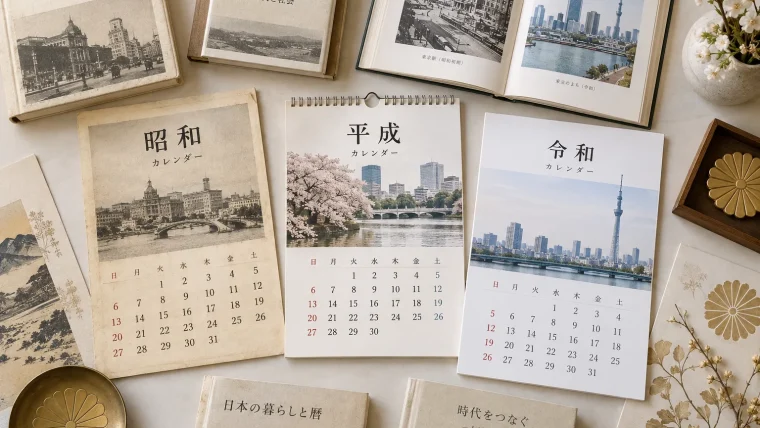
This is also where the representative case needs a boundary warning. April 30, 2019 is 平成31年4月30日, but the following day is 令和元年5月1日. Converting only from “2019” fails because that Western year belongs to two Japanese eras. The site’s Showa, Heisei and Reiwa Year Tables are useful for ordinary years, but a transition date requires the month and day as well. Koseki dates must be copied as full dates, not reduced to a year-pair lookup.
A second limitation matters for foreign residents. A residence card holder who is not a Japanese national does not ordinarily have a personal koseki entry equivalent to a Japanese citizen’s record. You may encounter a koseki as the spouse, parent or child of the Japanese person whose register it is, or while supplying family evidence for another procedure. Do not describe the koseki as Japan’s universal resident record. That role is different from both immigration documentation and the resident-record system.
Stage four: the residence card switches back to Western years
The residence card uses Western-numbered dates rather than era names. A birth date appears in a numerical year-month-day format, so a date corresponding to Reiwa’s first day is read as 2019年5月1日. You should not “Japanese-ize” that field by replacing 2019 with 令和元年 when copying it into another Western-year field. The card already gives the calendar system the immigration authority intends you to use. Residence card dates and koseki dates can therefore describe the same day with different year notation.
The practical comparison is easier to see side by side:
| Document or field | Calendar presentation | Worked date | What you copy |
|---|---|---|---|
| Driver’s-license expiry | Western year plus era year in parentheses | 2024年(令和6年)5月1日 | The version requested by the form |
| Koseki entry | Era year | 令和元年5月1日 | Era name, year, month and day |
| Residence-card date | Western year | 2019年5月1日 | Western year, month and day |
| Form with 西暦 | Western calendar | 2019年5月1日 | 2019 |
| Form with 和暦 or 元号 | Era calendar | 令和元年5月1日 | Reiwa first year |
The card format requires a dated caution. Japan introduced redesigned residence cards and the optional 特定在留カード tokutei zairyū kādo, literally “specified residence card,” in June 2026. Some immigration information that appeared visibly on the older card moved to the integrated circuit chip under the redesign. The Western-year treatment of visible date fields should be checked against the exact card version being used, particularly when a procedure depends on a field that may no longer be printed on the face. A general instruction written for the older card can now identify the right calendar but the wrong physical location.
Stage five: choose the form’s calendar, not the source document’s
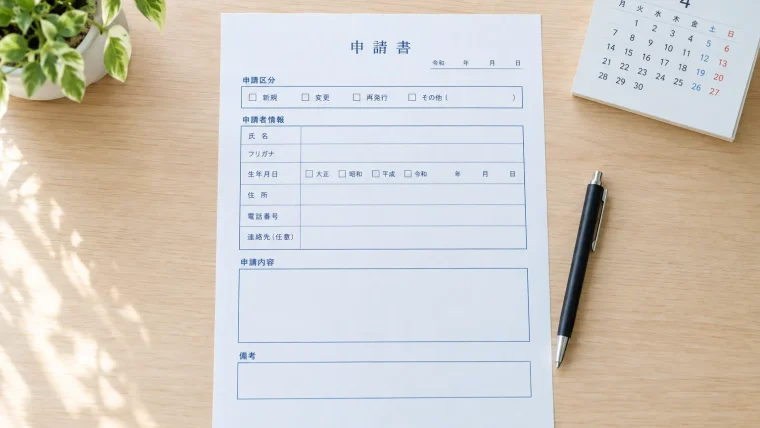
Suppose the source is a residence card showing 2019年5月1日, while the form provides a preprinted 令和 box. Copying “2019” into the year space would be wrong because the box asks for an era year. The correct entry is 元 for the first year, followed by 5月1日 in the month and day fields. If the same form instead labels the year 西暦 seireki, literally “Western calendar,” you write 2019. The decision is controlled by the destination field.
Look for these signals before writing:
- 西暦 means the Western year is required.
- 和暦 wareki, literally “Japanese calendar,” means an era date is required.
- 元号 gengō, literally “era name,” means you must identify Reiwa, Heisei or another era.
- A preprinted 令和 means the form expects a Reiwa year number.
- A choice such as 西暦・和暦 means you should select one system and complete it consistently.
The general advice “copy the document exactly” fails here. Exact copying works only when the source and destination use the same calendar. A residence card can be perfectly valid evidence while displaying 2019, and the receiving form can still require 令和元年. Conversely, converting a residence-card date into Reiwa for a field labeled 西暦 creates an unnecessary error. Japanese era documents must be matched field to field, not card to card.
Stage six: check the complete date at an era boundary
The worked case sits at the most dangerous point in the modern era table. Reiwa began on May 1, 2019, not at the beginning of that calendar year. A form that converts 2019 automatically to Reiwa without asking for the month and day will mishandle dates from January through April. The same problem occurs at the other modern transition boundaries, which the published era guide covers separately. The safe unit is always the complete date.
For routine checks, use the site’s Japanese era converter rather than reproducing its year database in the article. The tool covers every year from 1868 through 2050 and the five modern eras, while the guide explains where simple arithmetic stops being reliable. Enter the year, month and day when the date falls in a transition year. Then compare the result with the source document instead of overwriting the source. A converter is a verification tool, not permission to alter a correctly printed official record.
Adapting the case to another document or procedure
Budget, city and season do not change the conversion rule. A license issued in Osaka and one issued in Sapporo follow the national license format rather than local calendar systems. The relevant variation is the document type, the date field and the version of the card or form. A paper form may preprint an era name, while a digital form may accept a four-digit Western year. Adapt the method to the interface, not to the prefecture.
Your level of Japanese changes how much preparation helps. If you can recognize 年 nen, “year”; 月 gatsu, “month”; and 日 nichi, “day,” you can usually isolate the date before translating the surrounding text. If the form contains a choice between 西暦 and 和暦, circle or select the system you intend to use before entering any digits. For older records, preserve the original era notation in your notes even when the receiving office requests a Western conversion. The Documents That Refuse the Western Year explains where that original notation remains institutionally important.
Era names also carry cultural associations outside administration, but those associations do not change a legal date. Japanese Teenagers Are Nostalgic for 1998 deals with Heisei as a remembered period rather than a form field. On an official document, 平成10年 is a date notation before it is an aesthetic reference. Treating it as culture first makes the paperwork harder than it needs to be. Read the label, retain the full date and match the destination calendar.
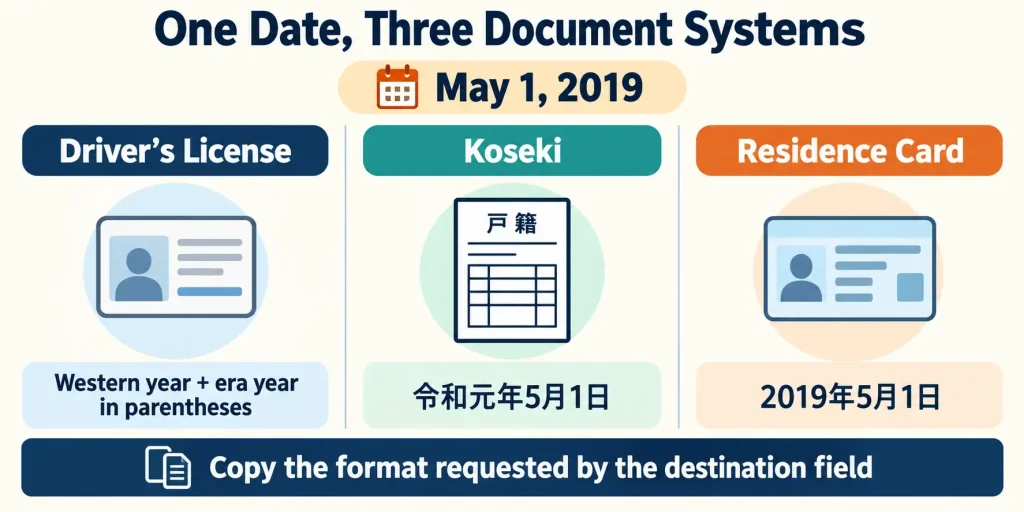
The transferable rule is short: identify the field, preserve the complete date and answer in the calendar requested by the destination. Do not assume that a Japanese ID must use an era year, or that a Western year printed on one card belongs unchanged in every form. The driver’s-license expiry helps by showing both systems, the koseki requires era literacy, and the residence card starts from the Western calendar. The mismatch is normal administrative design, not a contradiction between the documents. Most form-filling mistakes begin when you copy the number before reading the label.