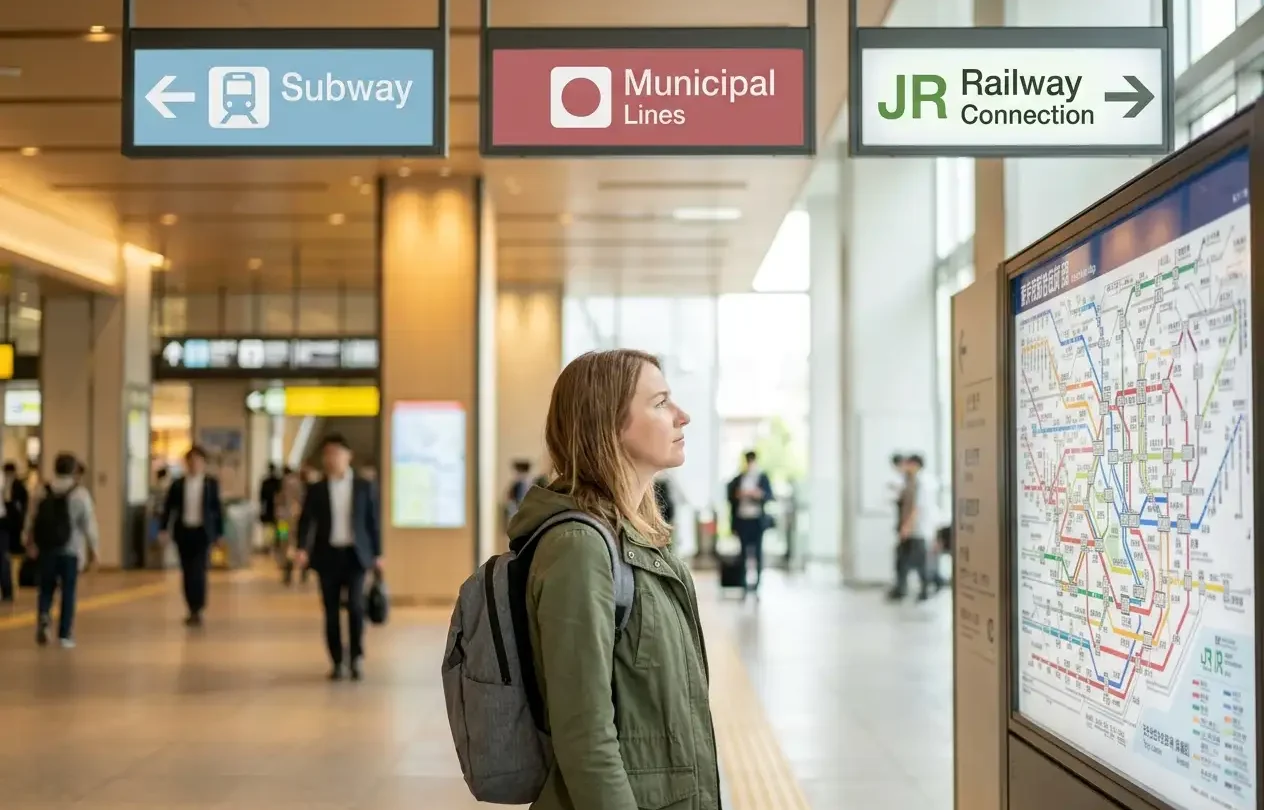
You are standing at a Tokyo ticket gate because your route app says “transfer,” but the signs point toward another set of barriers. The map made the journey look continuous. The gate is about to treat it as a change of operator.
That is the central problem behind tokyo metro vs toei: Tokyo Metro and Toei Subway operate separate networks, while JR East is a third system. A Metro-to-Toei journey is generally priced by adding the two operators’ fares and applying a ¥70 transfer discount—about $0.45 at the September 17, 2026 exchange rate of roughly ¥156.23 per US dollar. The Tokyo Subway Ticket covers Metro and Toei, but it does not cover JR.
The uncomfortable part is that “charged twice” is an imperfect shorthand. With an IC card, you may experience only two ordinary taps and never see separate tickets. Underneath that convenience, however, the fare calculation still crosses an operator boundary. If your pass excludes the next operator, the system takes money from your stored balance.
One map does not mean one company, one fare or one pass.
For the larger logic behind distance bands, operator boundaries and through-services, read How Japan’s Rail Fares Are Actually Built. This guide stays with the gate-level decision: what you should do when your Tokyo route crosses from one system to another.
The three networks hiding on one map
Tokyo Metro operated nine lines when checked on September 17, 2026. Toei Subway, run by the Tokyo Metropolitan Government’s Bureau of Transportation, operated four. JR East’s urban railways—including the Yamanote, Chuo and Keihin-Tohoku lines—are conventional railway lines rather than subway services.
The visual distinction is easier than the corporate one. Metro station codes use a letter tied to the line, such as G for Ginza or M for Marunouchi. Toei uses the same basic letter-and-number idea for its four subway lines. JR stations use JR branding and their own route symbols, platforms and gates.
| Network | What it operates | Included in Tokyo Subway Ticket? | What happens with ordinary IC travel |
|---|---|---|---|
| Tokyo Metro | Nine subway lines | Yes | Metro fare is calculated |
| Toei Subway | Four subway lines | Yes | Toei fare is calculated |
| JR East | Urban rail lines and longer-distance trains | No | A separate JR fare is calculated |
| Private railways | Networks such as Keio, Odakyu and Tokyu | No | That railway’s fare rules apply |
Network and ticket coverage checked against Tokyo Metro and Toei official information on September 17, 2026.
This distinction matters even when the trains feel integrated. A route can place a Metro line, a Toei line and a JR line in the same list of instructions without telling you, in plain language, that your pass stops working halfway through.
Tokyo Metro vs Toei at the gate
Use this sequence whenever your route contains a transfer in central Tokyo. It works whether you are holding a paper ticket, tapping an IC card or using a subway pass.
- Read the operator name before entering.
Look beyond the station name. “Tokyo Metro,” “Toei Subway” and “JR” identify different fare systems. At large stations, entrances for multiple operators may be on different blocks or underground levels. What happens next depends on the operator printed in your route. - Check the line code and destination direction.
Confirm both the colored line symbol and the station number. “Shinjuku” alone is not enough because the wider station area contains JR, Metro, Toei and private-railway facilities. Once the code matches your route, follow that operator’s signs. - Use the same payment medium throughout the transfer.
If you start with Suica or PASMO, keep using that same card or device. Do not tap in with a physical IC card and try to continue with a phone wallet. The fare system needs one continuous record of entry, exit and transfer. - Expect a gate when the operator changes.
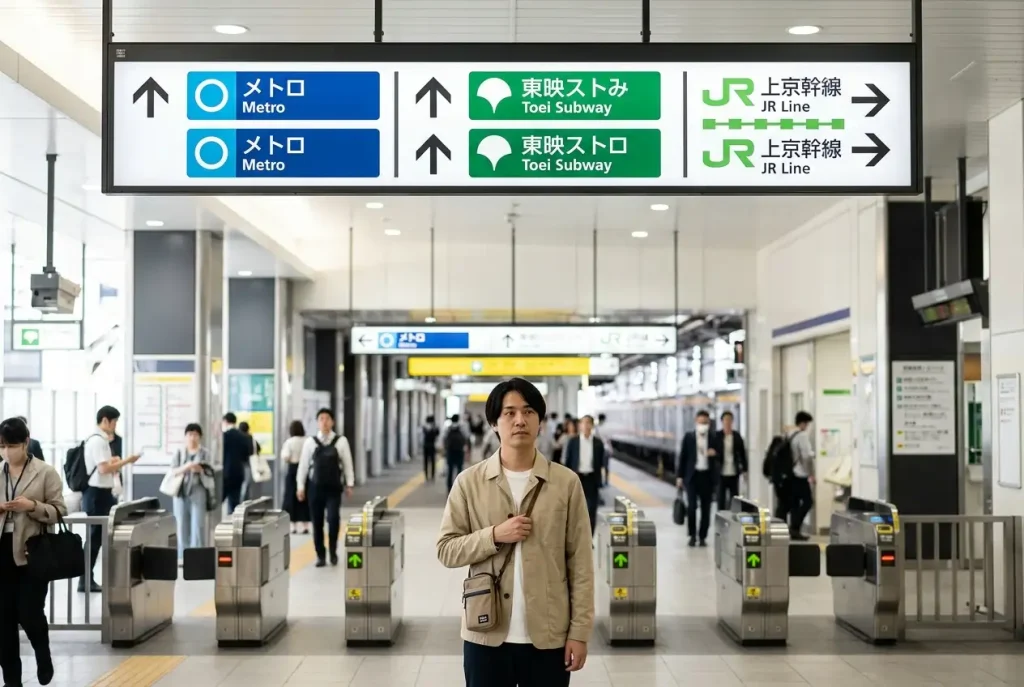
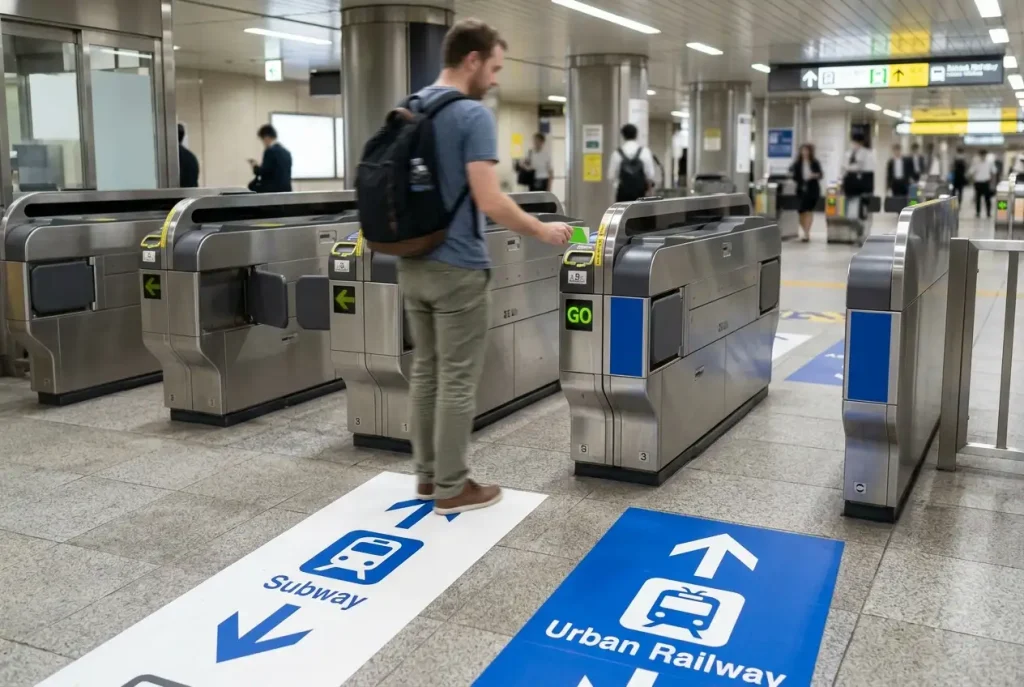
A Metro-to-Toei transfer can require you to pass through one company’s gate and enter through the other’s. That is not proof that you took a wrong turn. Follow the marked transfer route instead of selecting an ordinary street exit merely because it looks shorter.
- Let the IC card calculate the combined trip.
With sufficient balance, an interoperable IC card normally handles the operator boundary automatically. The adult Metro–Toei connecting fare is based on the sum of the relevant fares minus ¥70, approximately $0.45 using the September 17, 2026 exchange rate. The card hides the arithmetic, not the operator boundary. - Treat a subway pass as a coverage rule, not money.
A valid Tokyo Subway Ticket opens Metro and Toei gates during its validity period. It does not become stored value when you reach JR. If the route changes to JR, you need another valid ticket or an IC balance that can pay the JR section. - At JR, look for JR gates before following the platform number.
Platform numbers can repeat across neighboring operators. Confirm the JR route name or symbol first, then find the platform. If your subway pass cannot open the JR gate, use an IC card or purchase the required JR ticket. - Check the fare record if the amount surprises you.
IC-card history can be viewed at compatible machines, and station staff can inspect a failed or incomplete journey. If you need help explaining the problem, the site’s phrasebook with 337 phrases sorted by situation is more useful than memorizing railway vocabulary in advance.
The process is shorter than the explanation: identify the company, use one card, follow transfer signs and assume that a new operator may mean a new fare.
What the ¥70 discount actually means
The Tokyo subway transfer fare is not one unified subway fare. Tokyo Metro and Toei retain their own fare structures. For an eligible connecting journey, the relevant fares are combined and the adult discount is applied.
That distinction changes how you should describe the cost. You are not normally paying two completely unrelated full fares without relief. You are also not continuing on one uninterrupted fare. You are paying a connecting fare across two operators.
| Situation | Fare treatment | Main practical consequence |
|---|---|---|
| Metro to another Metro line | Metro journey | No Toei fare is introduced |
| Toei to another Toei line | Toei journey | No Metro fare is introduced |
| Metro to Toei on an eligible connection | Relevant fares combined, with ¥70 adult discount | More than a same-operator ride may cost |
| Metro or Toei to JR | Subway fare plus separate JR fare | Tokyo Subway Ticket does not cover JR |
| Tokyo Subway Ticket on Metro and Toei | Covered during the ticket’s valid hours | No ordinary Metro or Toei fare deducted |
| Tokyo Subway Ticket followed by JR | Subway section covered; JR section payable | IC balance or JR ticket still required |
Fare treatment checked against Tokyo Metro and Toei sources on September 17, 2026. Exact journey prices depend on the stations and route.
Do not calculate the trip by subtracting ¥70 from any two fares you happen to find. The official fare search may select a recognized connecting route and apply the correct rules. Station layout and the gates used can matter, particularly where similarly named stations are linked by a designated transfer.
If you use a paper ticket, buy the appropriate connecting ticket rather than two unrelated single tickets. If you use an IC card, keep enough stored value and follow the official transfer route. That is the easiest way to preserve the intended fare calculation.
Four places where travelers stall
The first failure is assuming that every subway line belongs to Tokyo Metro. It does not. The Asakusa, Mita, Shinjuku and Oedo lines are Toei Subway lines, according to the Toei network information checked on September 17, 2026.
The second failure is following an exit instead of a transfer sign. Some transfers involve gates and passages that look like you are leaving the system. Read the English operator and line names before committing to a street exit.
The third failure is presenting a Tokyo Subway Ticket at a JR gate. The current ticket covers every Tokyo Metro and Toei Subway line for its stated validity period, but JR is outside that coverage. The gate is rejecting the ticket, not the passenger.
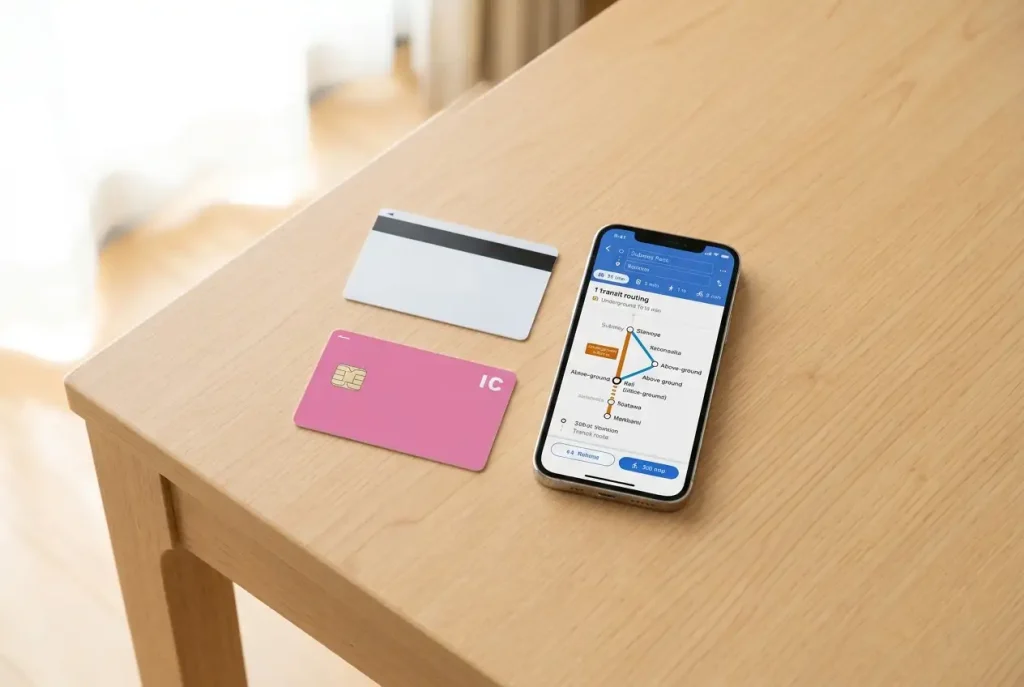
The fourth failure is switching cards midway. If you tapped in with Suica on your phone, tapping out with a physical PASMO creates two incomplete records. Use the same medium at every gate until that journey is closed.
If a gate closes, step aside rather than tapping repeatedly. Show the card or ticket to the staffed window. A stopped gate is routine railway administration, not an accusation that you tried to avoid a fare.
Which pass covers which rails
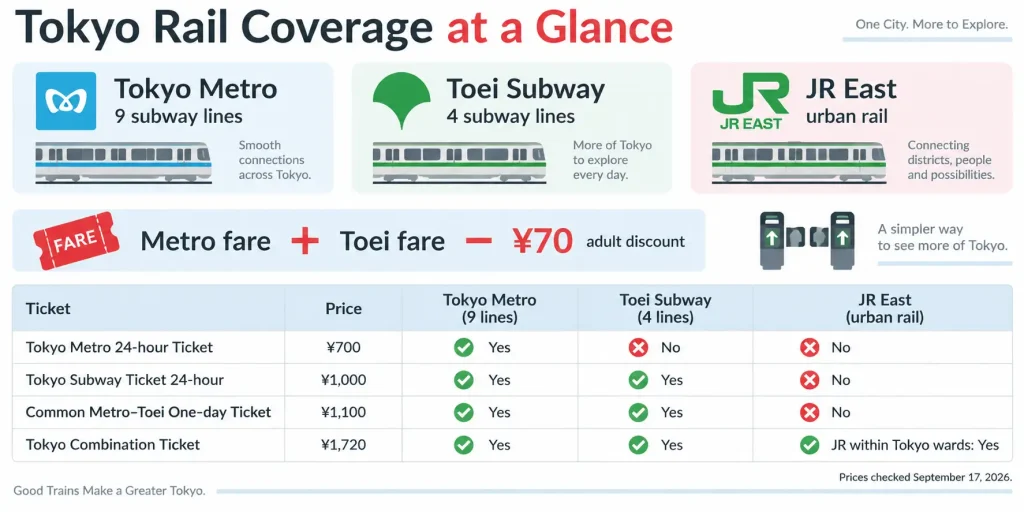
The tourist-oriented Tokyo Subway Ticket was priced at ¥1,000 for 24 hours, ¥1,500 for 48 hours and ¥2,000 for 72 hours when checked on September 17, 2026. At the same exchange rate, those prices were approximately $6.40, $9.60 and $12.80. It covers all Tokyo Metro and Toei Subway lines for the stated number of hours from activation.
A Tokyo Metro 24-hour Ticket cost ¥700, about $4.48, and covered Tokyo Metro only. The Common One-day Ticket for Tokyo Metro and Toei Subway cost ¥1,100, about $7.04, and ran for the specified calendar day rather than the tourist ticket’s rolling 24-hour format. Eligibility and sales channels differ, so the cheapest number is not automatically the ticket you can or should buy.
The broader Tokyo Combination Ticket cost ¥1,720, approximately $11.01, and included Metro, Toei Subway and JR lines within Tokyo’s wards, together with specified Toei services. Its scope is much wider than the Tokyo Subway Ticket, but its calendar-day validity makes it a different product.
| Pass checked September 17, 2026 | Adult price | Time basis | Metro | Toei Subway | JR |
|---|---|---|---|---|---|
| Tokyo Metro 24-hour Ticket | ¥700 / about $4.48 | Rolling 24 hours | Yes | No | No |
| Tokyo Subway Ticket, 24-hour | ¥1,000 / about $6.40 | Rolling 24 hours | Yes | Yes | No |
| Tokyo Subway Ticket, 48-hour | ¥1,500 / about $9.60 | Rolling 48 hours | Yes | Yes | No |
| Tokyo Subway Ticket, 72-hour | ¥2,000 / about $12.80 | Rolling 72 hours | Yes | Yes | No |
| Common Metro–Toei One-day Ticket | ¥1,100 / about $7.04 | Calendar day | Yes | Yes | No |
| Tokyo Combination Ticket | ¥1,720 / about $11.01 | Calendar day | Yes | Yes | Selected JR area |
The pass only wins if your actual covered fares exceed its price. Do the route math before buying. The same principle is worked through for longer-distance products in The Break-Even Math on Kansai, JR East and Hokkaido.
Do not buy a subway pass simply because you are staying in Tokyo. A day centered on JR’s Yamanote Line can leave a Metro–Toei pass mostly unused.
How the sequence changes
With a regular IC card, the visible process is easiest: tap out, follow the transfer signs and tap in. The underlying fare is still operator-specific, but the card performs the calculation and payment.
With paper tickets, you must buy a ticket intended for the complete connecting journey where available. Keep the ticket when the gate returns it during a transfer. If you bought only enough fare for the first operator, use the fare-adjustment machine or ask staff before forcing the sequence.
With a Tokyo Metro pass, Toei remains outside the coverage. With the Tokyo Subway Ticket, both subway operators are covered, but JR remains outside. With a JR pass or qualifying JR regional pass, the direction reverses: JR may be covered while Metro and Toei are not.
Long-distance travel introduces another ticket layer. A shinkansen journey can require a basic-fare component and a limited-express component rather than a single urban tap. Machines, Apps and the Ticket Counter covers that purchase process instead of duplicating it here.
Peak travel periods change crowding, not the underlying identity of the operators. During holidays or rush hours, give yourself more walking time and decide on the correct gate before joining the queue. Planning a First Trip to Japan: The Order That Works explains when to book accommodation and intercity transport; this article deals only with the local operator boundary.
The things nobody at the gate cares about
Nobody minds if you pause beside the gate to read the sign. Move out of the direct flow first, then check your route. That is better than stopping inside the barrier lane.
Nobody minds if you ask whether a pass works on JR. Staff answer coverage questions all day. Show the destination on your phone instead of attempting a long explanation.
Nobody cares whether you can pronounce Toei perfectly. The written line name, station code and destination are enough. Japanese railway systems are designed around visual identifiers because local passengers also need to distinguish dozens of routes.
Nobody expects you to understand the fare calculation before boarding. You need a valid payment method and the correct operator. The machine can calculate the rest.
What does matter is using the same IC card at entry and exit, maintaining enough balance, and not tailgating another passenger through a gate.
The shortest useful checklist
- Name the operator.
- Match the line code.
- Use one payment method.
- Follow transfer signs.
- Pay the uncovered section.
One map, three payment decisions
The Tokyo train system becomes manageable when you stop treating its map as a single network. Tokyo Metro and Toei share the work of running the subway, but they do not share one ordinary fare structure. JR is another operator again.
An IC card makes this separation almost invisible. A pass makes it visible the moment you reach an uncovered gate. Before every transfer, ask one question: am I changing lines, or changing companies?
Tokyo Rail Coverage at a Glance
FAQ
Are Tokyo Metro and Toei the same company?
No. Tokyo Metro is a separate railway company, while Toei Subway is operated by the Tokyo Metropolitan Government’s Bureau of Transportation. Their lines appear together on subway maps, but their ordinary fares are calculated through separate systems.
Does Suica work on Tokyo Metro and Toei Subway?
Yes. Interoperable IC cards such as Suica and PASMO can be used on both networks. Use the same card or device from entry through exit so the system can maintain one journey record.
Do I always pay two full fares when changing between Metro and Toei?
No. For an eligible connecting journey, the fare is generally based on the two relevant fares with a ¥70 adult transfer discount. Calling it “two full fares” misses that discount, while calling it one fare hides the fact that two operators are involved.
Can I ride JR with a Tokyo Subway Ticket?
No. The Tokyo Subway Ticket covers Tokyo Metro and Toei Subway lines. It does not cover JR East, private railways or most other transport services.
Is a Tokyo Subway Ticket always cheaper than using Suica?
No. Suica deducts the ordinary fare for the trips you actually take. A subway pass saves money only when the value of your covered Metro and Toei journeys exceeds the pass price during its validity period.
What should I do when a ticket gate rejects my card?
Step away from the lane and take the card or ticket to the staffed window. Do not keep tapping different cards. Staff can identify an incomplete journey, insufficient balance or incompatible pass and tell you what must be paid.
Is the Japan Rail Pass useful on Tokyo Metro?
No. The Japan Rail Pass covers qualifying JR services, not Tokyo Metro or Toei Subway. The broader value calculation is covered in Is the Japan Rail Pass Worth It in 2026?.