The decision sounds like a product comparison: Suica, Pasmo or ICOCA. Getting it wrong does not normally raise the fare, but it can cost you a ¥500 deposit, about $3.25 at the Federal Reserve’s September 11, 2026 exchange rate, or strand money on an expiring visitor card. The answer to suica vs pasmo vs icoca depends on three factors: where you arrive, whether you remain within one card’s validity period and where you finish the trip. The ten major cards participate in a mutual-use network, so a Suica bought in Tokyo can pay ordinary eligible fares in the ICOCA area around Osaka and Kyoto. You are choosing an issuer and purchase point, not a better nationwide fare system.
Suica vs Pasmo vs ICOCA is mostly a false choice
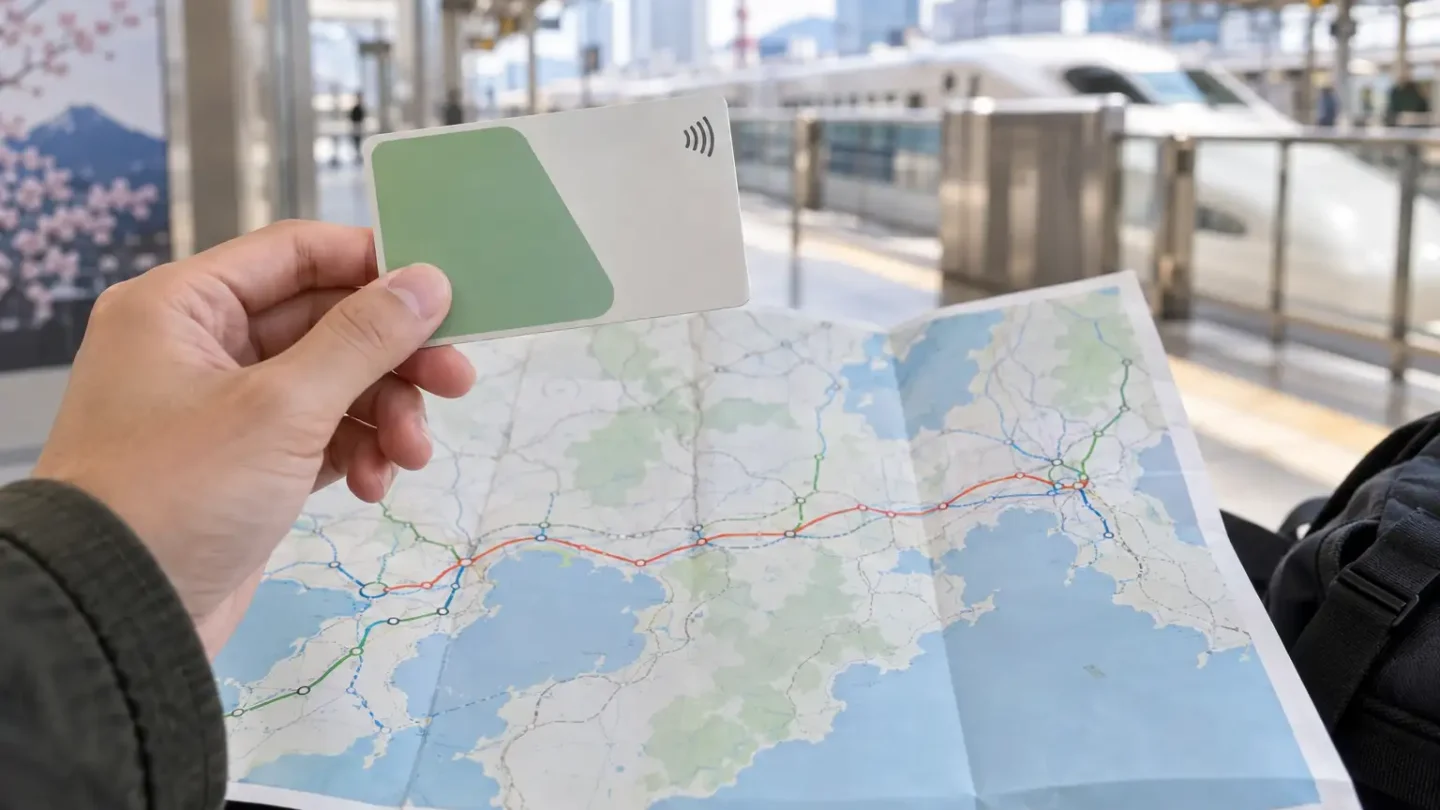
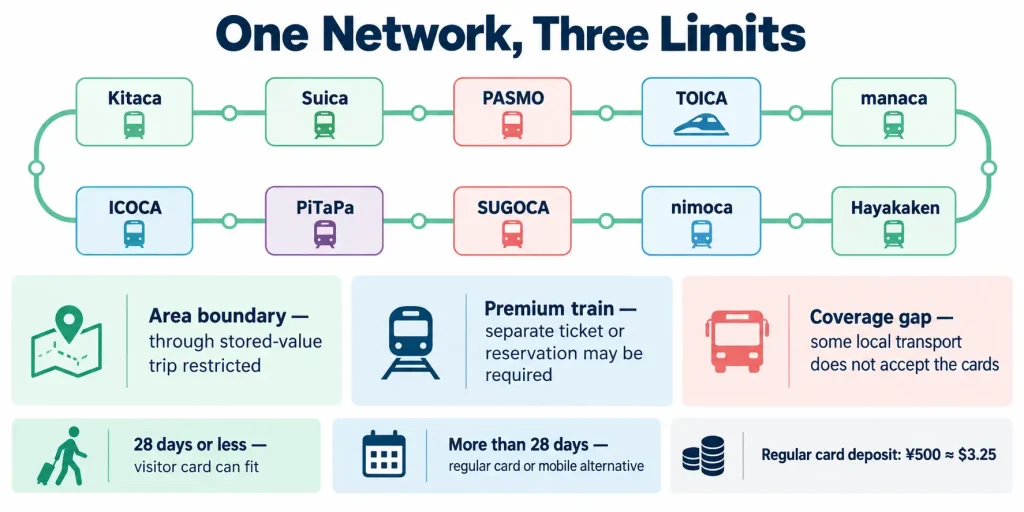
The interoperable group consists of Kitaca, Suica, PASMO, TOICA, manaca, ICOCA, PiTaPa, SUGOCA, nimoca and Hayakaken. On participating trains and buses, you touch the card at the gate or reader and the system deducts the applicable fare. Suica does not give a discount merely because the train is operated by JR East, and ICOCA does not become cheaper when you reach Osaka. For the mechanics behind distance, operator and ticket type, How Japan’s Rail Fares Are Actually Built explains the fare rather than the plastic. The useful default is therefore simple: obtain the card that is conveniently sold where your trip begins.
“Mutually usable” is not the same as literally universal. You generally cannot ride across separate IC-card service areas as one continuous stored-value journey, even if the card works on both sides. A card also does not automatically include a limited-express supplement or Shinkansen reservation, although some booking systems let you register an IC card as the gate credential. Finally, local railways, buses and rural stations may lack support for the nationwide mutual-use group. Those are the three exceptions worth planning around.
| Option | Upfront card cost | Validity | Reload and balance | Best fit |
|---|---|---|---|---|
| Physical Welcome Suica | No deposit; add the travel value you choose | 28 days from purchase | Reload with cash; remaining value is not refunded | Short visitor trip beginning where the card is sold |
| Regular Suica | ¥500 deposit, about $3.25, plus stored value | No short visitor expiry | Cash reload widely available; refund handled by JR East under its rules | Longer stay beginning in eastern Japan |
| Regular PASMO | ¥500 deposit, about $3.25, plus stored value | Expires after 10 years without use, replacement or top-up | Physical-card purchase is cash only; refundable in the issuing network, less any applicable balance fee | Tokyo-area arrival when PASMO is easiest to obtain |
| Regular ICOCA | Usually ¥2,000, about $13.01, including ¥1,500, about $9.76, in usable value and a ¥500 deposit | No 28-day visitor limit | Physical-card purchase is cash only; deposit redeemed through JR West | Osaka, Kyoto or another JR West starting point |
| TOURIST PASMO | Initial stored value depends on the sales arrangement | 28 days from sale | Top-ups allowed at specified devices; remaining value is not refunded after expiry | Eligible international visitor who finds it more convenient than Welcome Suica |
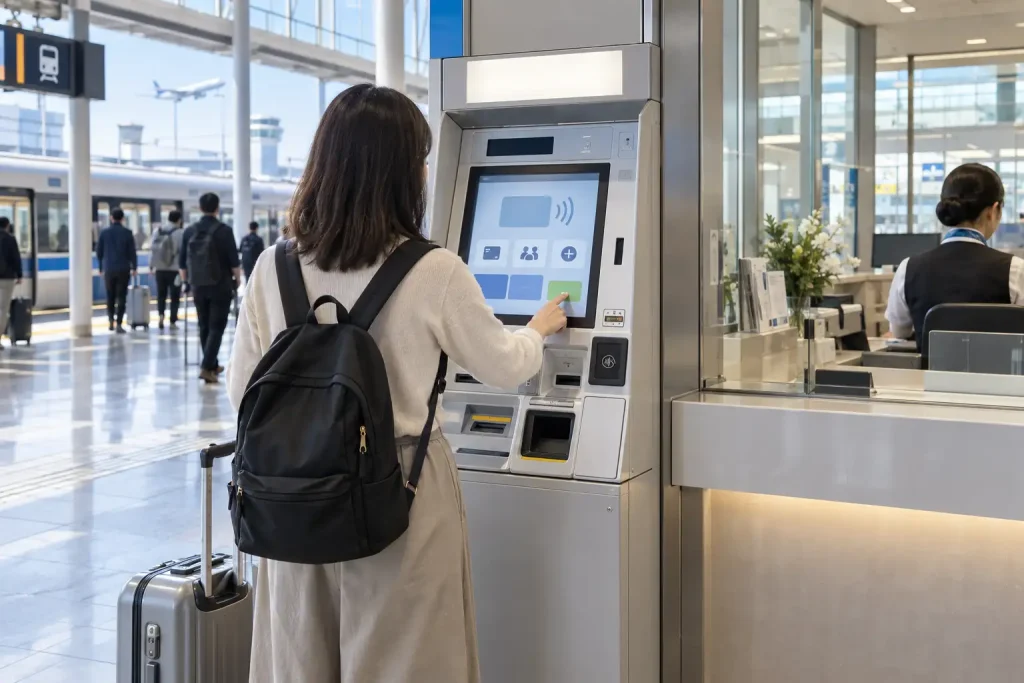
Welcome Suica removes the deposit and the refund
Welcome Suica for tourists is the cleanest physical-card answer for a short trip when it is available at your arrival point. JR East states that it is valid for 28 days from the date of purchase, requires no deposit and provides no refund of the loaded balance. A physical card can be reloaded with cash at compatible machines and other supported cash locations; you should not plan on topping it up with a foreign credit card at a station machine. Its convenience is real, but so is the catch: any money left after the trip stays on the card and becomes unusable when validity ends. Load conservatively near departure instead of treating the card as a prepaid travel budget.
“Any remaining balance cannot be refunded.” — JR East’s official Welcome Suica guidance
JR East also instructs physical-card users to retain the reference paper showing the validity period and present it if staff request it. The expiry clock is based on the purchase date, not on the first train ride. That detail matters if you buy the card several days before you plan to use it. A traveler whose stay extends beyond the validity window should choose a regular card or another payment method rather than expecting an extension. The card’s value is convenience without a deposit, not a cheaper ride.
Regular Suica or PASMO suits a longer Tokyo start
A Suica or PASMO card makes more sense when your time in Japan will exceed the tourist card’s validity or you expect to return and reuse the card. Both regular physical cards involve a ¥500 deposit, approximately $3.25 at the cited exchange rate. PASMO’s official rules say that refunding stored value normally incurs a fee of up to ¥220, about $1.43, while the deposit is returned with the qualifying card refund. Refund administration belongs to the issuer, which is why ending in a different region matters more than using the card there. Buying a Tokyo-issued card and flying home from Osaka can make reclaiming a small deposit more trouble than it is worth.
Current availability must be checked at the station or operator site because sales channels have changed during and after the semiconductor shortage. Do not build the first hour of your trip around a specific card design. If a regular Suica is available at the JR East machine in front of you, there is no transport advantage in walking away to hunt for PASMO. If PASMO is the accessible option, the same logic runs in reverse. Japan IC card compatibility makes convenience the deciding factor.
ICOCA is the practical Kansai purchase
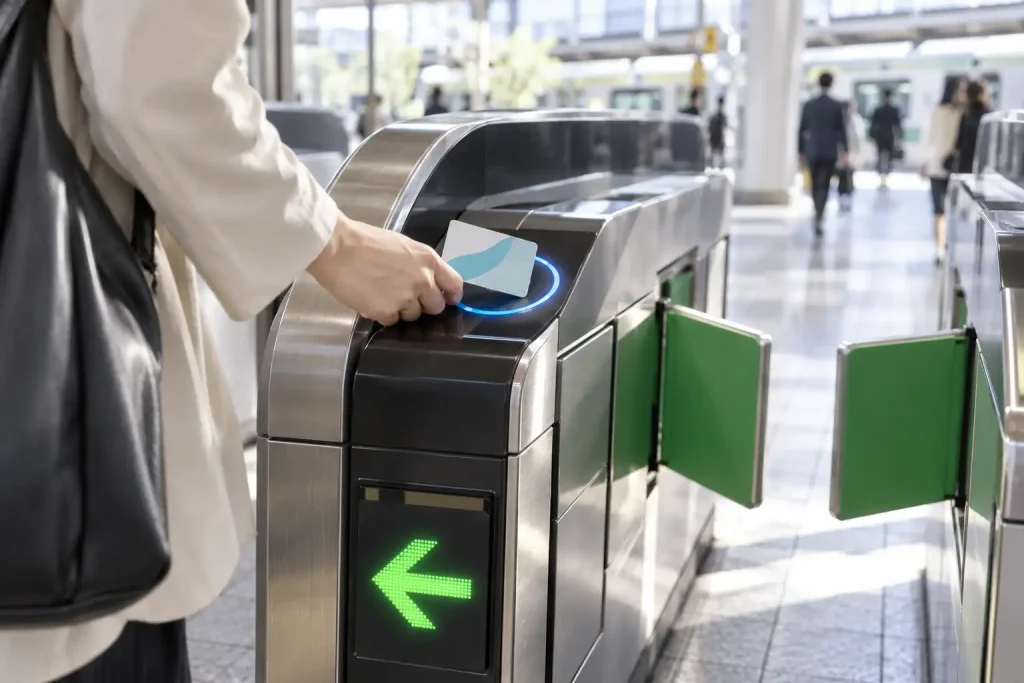
If you begin around Osaka or Kyoto, ICOCA for Kansai travel is usually the obvious physical card because JR West sells and services it. JR West’s visitor guidance gives a standard purchase example of ¥2,000, about $13.01, made up of ¥1,500, about $9.76, in usable value and a refundable ¥500 deposit. The card then works on participating mutual-use services in Tokyo and other covered regions, just as Suica works on participating Kansai transport. Choosing ICOCA does not lock you inside western Japan. It simply places the deposit and refund relationship with JR West.
This is where itinerary direction flips the answer. Arrive in Osaka and leave from Osaka, and ICOCA provides both convenient purchase and a realistic chance to return the card. Arrive in Tokyo, travel west and depart from Kansai International Airport, and a deposit-free visitor card may be less bothersome than a regular Tokyo card you forgot to return before leaving the JR East area. If your itinerary includes expensive intercity rail, compare passes separately through The Break-Even Math on Kansai, JR East and Hokkaido. An IC card is stored-value payment, not a substitute for a pass that genuinely beats individual fares.
Three variables that actually change the answer
The first threshold is trip length. If the entire period in which you need the visitor card fits inside 28 days from purchase, Welcome Suica or the current TOURIST PASMO can work; if it does not, choose a regular card or mobile alternative. The second variable is arrival geography: Tokyo points you toward Suica or PASMO, while Osaka and Kyoto point you toward ICOCA. The third is departure geography, because ordinary card refunds are handled within the issuer’s network rather than at every interoperable station nationwide. Card color, mascot and online popularity do not change the fare.
Use this decision sequence before you join a machine queue:
- Mark the place where you will first need local transit.
- Count from the tourist card’s purchase date to your last intended day of use.
- Note whether you care enough about ¥500, about $3.25, to return a regular card.
- Check whether any planned ride crosses IC areas, uses unsupported rural transport or requires a separate premium ticket.
- Buy the easiest compatible card at the start rather than collecting regional cards along the route.
For a broader first-trip sequence—flights, cities, accommodations and transport in the order that prevents expensive backtracking—use Planning a First Trip to Japan: The Order That Works. If you need to ask whether a machine accepts cash or where to add value, the site’s phrasebook with 337 phrases sorted by situation covers everyday transport exchanges. The useful term is 交通系ICカード, kōtsū-kei ai-shī kādo, literally “transport-type IC card.” Station staff may answer with the name of the card their operator sells. You do not need to recite all ten brands.
Worked choices with the arithmetic visible
A first-time visitor arrives in Tokyo and needs transit for nine days. Nine days is below the official 28-day Welcome Suica limit, leaving 19 days of unused validity, so the card fits the schedule. The deposit comparison is ¥0 versus ¥500, approximately $0 versus $3.25, for a regular physical card. The fares remain the same on eligible services, so the financial advantage is only the avoided deposit and refund errand. The visitor should buy Welcome Suica if conveniently available and keep the final top-ups small because the balance cannot be refunded.
A traveler stays for 40 days and begins in Tokyo. Forty days minus the visitor card’s 28-day validity leaves 12 days uncovered, so a short-use card fails before the trip ends. Paying a ¥500 deposit, about $3.25, for a regular Suica or PASMO avoids replacing the payment method during the stay. The traveler can keep the card for a later visit or seek a refund in the relevant network. Here, validity—not branding—flips the result.
A third traveler lands in Osaka, spends seven days in Kansai and departs from the same region. Seven days fits easily inside the trip, but a standard ICOCA is sold where the traveler starts and can be returned within JR West territory before departure. At the standard ¥2,000 purchase example, about $13.01, ¥1,500, about $9.76, is spendable and ¥500, about $3.25, is the deposit. If the traveler expects to use at least the loaded value, the only temporarily tied-up amount is the deposit. ICOCA is the sensible choice because of purchase and return geography, not because Kansai fares are cheaper with its logo.
| Traveler | Threshold calculation | Best answer | Why |
|---|---|---|---|
| Tokyo arrival, nine-day visit | 9 < 28 days | Welcome Suica if available | No deposit; validity covers the trip |
| Tokyo arrival, 40-day stay | 40 − 28 = 12 uncovered days | Regular Suica or PASMO | Tourist validity is too short |
| Osaka arrival and departure, seven days | 7 < 28 days; JR West at both ends | ICOCA | Easy regional purchase and possible return |
The default mistakes cost time or trapped value
The first mistake is buying a second major IC card after changing cities. A functioning Suica normally remains useful on participating ICOCA-area services, so the extra card adds another balance to manage without improving the fare. The second mistake is loading a visitor card as though the remaining cash could be withdrawn later. The third is assuming “nationwide” means you can tap through a boundary between IC service areas or use every rural operator. Welcome Suica balance refund is not an available rescue when you overfill the physical visitor card.
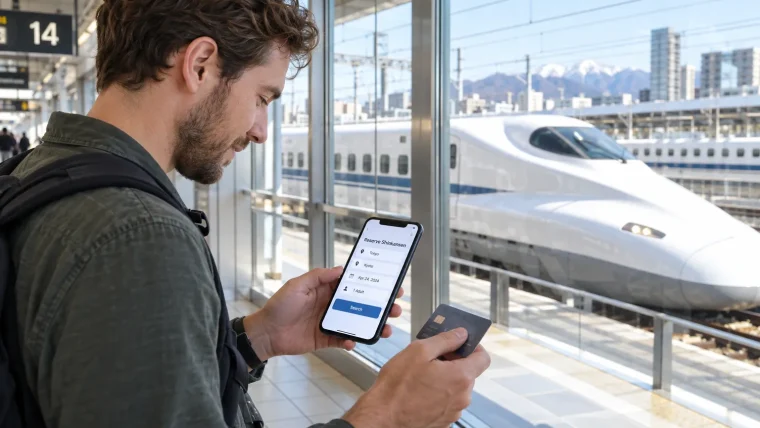
Another mistake is treating the IC card as a Shinkansen ticket. You may link a card to certain reservations, but the stored-value card alone does not buy every required reservation or supplement. Machines, Apps and the Ticket Counter explains the separate long-distance purchase. The same separation matters when evaluating the nationwide rail pass: Is the Japan Rail Pass Worth It in 2026? covers the pass calculation rather than local tap-in convenience. Keep the payment tool and the fare product conceptually separate.
The two-line rule
If your trip fits within 28 days and you can easily obtain a deposit-free visitor card, use it and finish the balance before it expires.
Otherwise, buy the regular major IC card sold where you arrive—Suica or PASMO in Tokyo, ICOCA in Kansai—and think about the issuer only if you intend to request a refund.
FAQ
Can I use Suica in Osaka and Kyoto?
Yes, you can use Suica on transport that participates in the nationwide mutual-use IC network in the ICOCA area. That covers many ordinary urban rail and bus trips, but not every operator or station. You cannot assume that one stored-value tap will carry you across separate IC service-area boundaries. Premium trains may also need another ticket or reservation. Check the operator for unusual rural or intercity journeys.
Is Welcome Suica cheaper than regular Suica?
It does not charge the regular ¥500 deposit, approximately $3.25 at the cited exchange rate. It does not, however, make ordinary eligible fares cheaper. The physical card expires after 28 days from purchase, takes cash reloads and does not refund remaining stored value. A regular card may be better for a longer stay or repeat visits. The cheaper-looking option becomes expensive only if you abandon a large balance.
Can I reload a physical Welcome Suica with a credit card?
Plan to reload the physical card with cash. Compatible station machines and other supported locations accept yen for top-ups, while foreign credit-card acceptance should not be assumed. Mobile products have different device and payment rules and should not be confused with the physical visitor card. Keep smaller cash notes available before the balance becomes too low to exit. If you accidentally load too much, the normal remaining-balance refund is not available.
Should I buy a new card when I travel from Tokyo to Osaka?
Usually no. A major interoperable card that works correctly in Tokyo will normally work on participating local transport in Osaka. Buy the Shinkansen or other long-distance ticket separately where required. A second IC card creates a second stored balance and another possible deposit. Replace the card only when a specific unsupported service or card problem gives you a concrete reason.
Can I return ICOCA in Tokyo or Suica in Osaka?
Do not rely on that. Refunds and deposit returns are handled by the issuing operator or its designated network, not by every company that accepts the card for travel. ICOCA belongs to JR West, while Suica belongs to JR East and PASMO has its own participating operators. If reclaiming ¥500 matters, plan the return before leaving the issuer’s territory. Otherwise, keep a regular card for a later trip and avoid leaving excessive value on it.