Nengajo New Year Card Japan Guide: The Lottery, Animals and Costly Mistakes
The costliest mistake is throwing away an ordinary-looking card before checking its number: the top prize announced for the 2027 draw is ¥300,000, approximately $1,921 at the September 17, 2026 exchange rate. A nengajo new year card japan search may suggest that every eligible postcard must carry the year’s animal, but that is not the rule.
Japan’s lottery-bearing postcards date to 1949. The official name is お年玉付年賀はがき, otoshidama-tsuki nengajo hagaki, literally “New Year postcard with a New Year’s gift attached.” The “gift” is not printed inside the greeting. It is the chance attached to the numbered postal stock.
The animal is a seasonal design convention, not the mechanism that enters the card in the draw—and it is not compulsory. That correction matters because the central claim in the original brief does not survive comparison with Japan Post’s own products.
Mistake 1: Ignoring the Nengajo New Year Card Japan Lottery Number
People display their favorite cards and recycle the plain ones. That seems harmless because the photograph, handwriting or illustration feels like the valuable part.
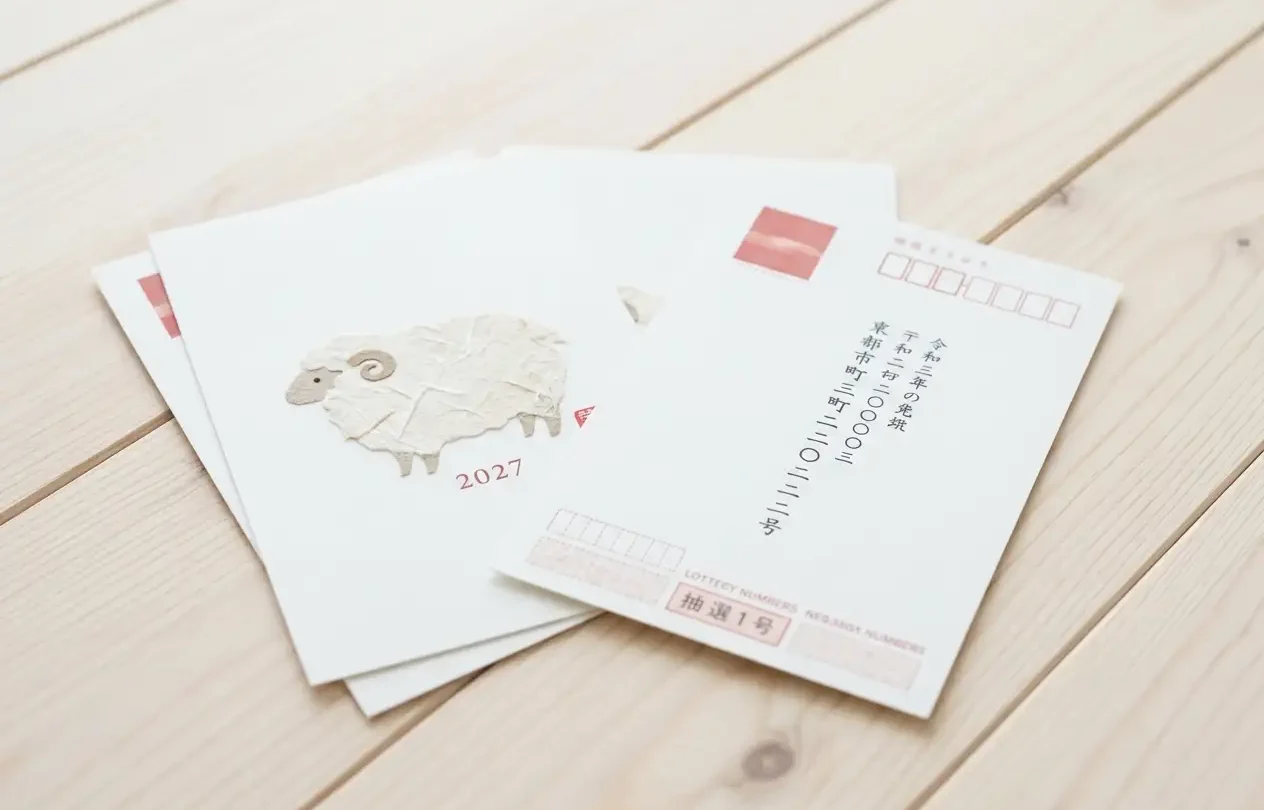
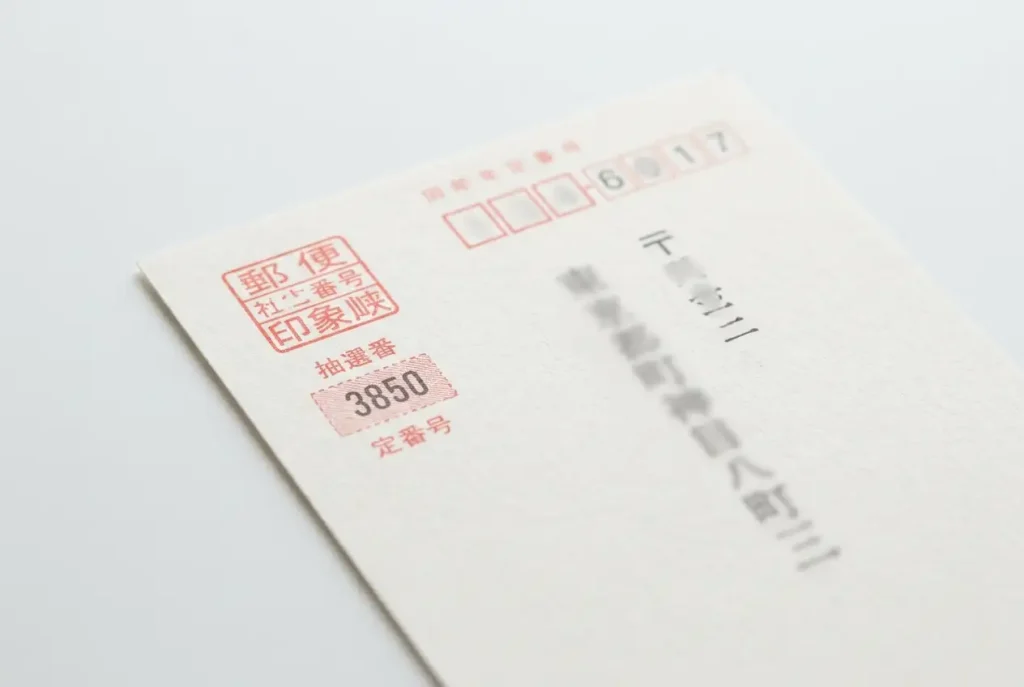
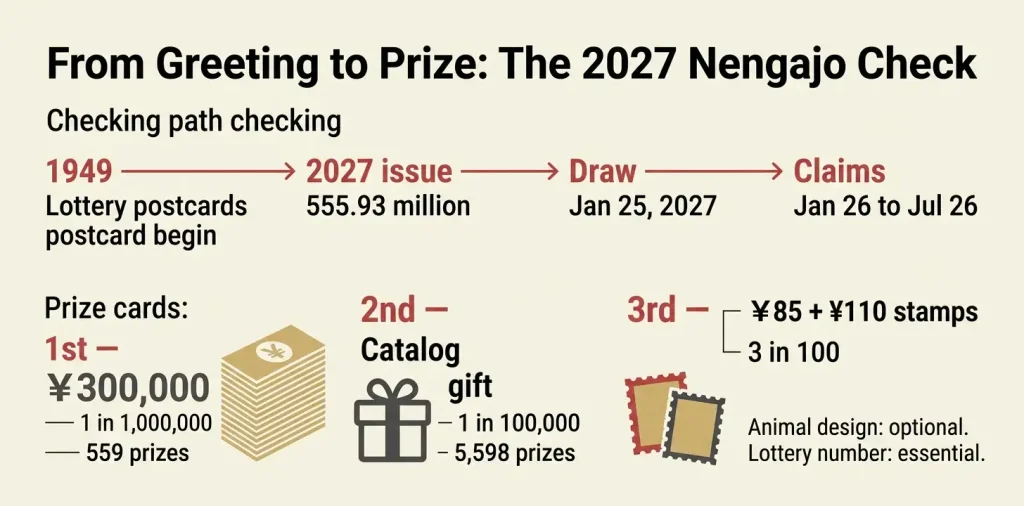
For the lottery, however, the important area is on the address side. The 2027 draw is scheduled for January 25, 2027, and Japan Post has announced these prizes:
| Prize level | What the 2027 card can win | Published probability | Planned number of prizes |
|---|---|---|---|
| First prize | ¥300,000 cash, about $1,921 | 1 in 1,000,000 | 559 |
| Second prize | One item selected from a prize catalog | 1 in 100,000 | 5,598 |
| Third prize | A sheet containing one ¥85 stamp and one ¥110 stamp; ¥195 face value, about $1.25 | 3 in 100 | About 16.8 million |
| Draw | Winning numbers announced | January 25, 2027 | — |
| Claim period | Postal-counter collection period | January 26–July 26, 2027 | — |
Dollar conversions use ¥156.20 to $1, observed on September 17, 2026. The catalog prize has no verified retail value in Japan Post’s August 31 announcement, so assigning it a dollar figure would be guesswork.
The recipient normally possesses the ticket: the postcard itself. Japan Post instructs claimants to bring the winning card or eligible lottery-bearing stamp to a post office. Identification is required for the higher prize categories.
Treat every lottery-bearing card as a ticket until the winning numbers have been checked.
What to do instead — check your nengajo lottery number before recycling any card.
Mistake 2: Believing the Animal Is Required
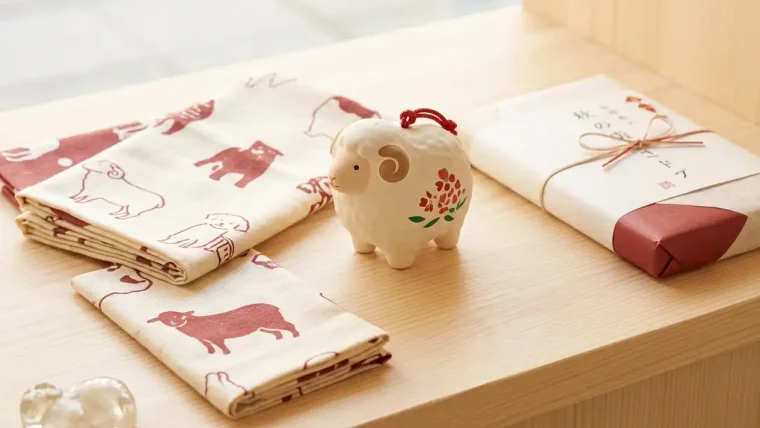
The animal appears so frequently that a visitor can easily mistake convention for regulation. Japan Post issues seasonal stamps and postcard designs using the coming year’s 干支, eto, “cyclical year designation,” while stores fill their shelves with matching templates.
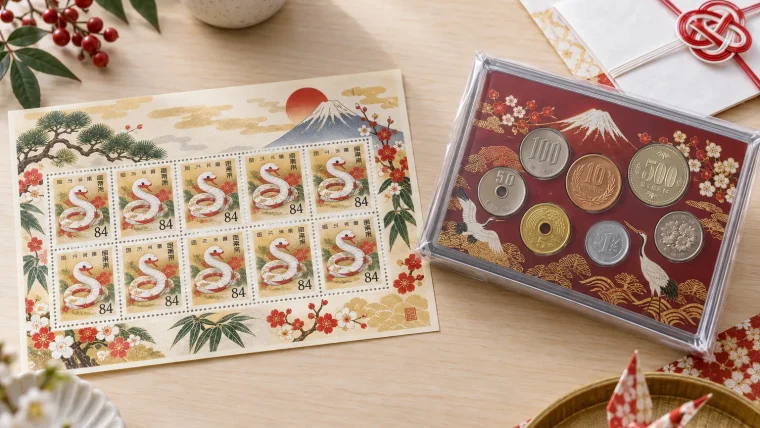
None of that makes the animal mandatory. A valid New Year postcard can carry a family photograph, a landscape, calligraphy, flowers or a company design. Historical Japan Post releases also show non-animal subjects, including Mount Fuji and auspicious plants.
The lottery follows the numbered postcard or qualifying lottery-bearing New Year stamp—not the illustration. A sheep picture printed on an ordinary card does not create a lottery entry, while an official lottery postcard remains eligible even if you cover its blank message side with a photograph.
The animal still matters culturally. How the Animal of the Year Runs December explains why the motif moves through advertising, packaging and household displays before January. It is visual shorthand for the approaching year, not a postal admission rule.
What to do instead — choose a Japanese New Year card design you like, but verify the postal stock separately.
Mistake 3: Assuming Every New Year Greeting Has a Lottery Entry
A carefully designed card can look more “official” than a plain Japan Post postcard. That makes it tempting to assume that anything mailed as a New Year greeting receives a number automatically.
It does not. The practical distinction is between the design and the postal product carrying the entry.
| What you send | Animal image possible? | Lottery automatically included? | What must be checked |
|---|---|---|---|
| Japan Post lottery-bearing New Year postcard | Yes | Yes | Correct year and intact number |
| Private postcard with a qualifying lottery-bearing New Year stamp | Yes | Through the eligible stamp | Stamp type and current postage |
| Ordinary prepaid postcard | Yes | No | No printed lottery number |
| Handmade or commercially printed card | Yes | No | Postage and New Year handling |
| Digital greeting | Yes | No | Not a postal lottery product |
The distinction has existed since the first お年玉付郵便葉書, otoshidama-tsuki yūbin hagaki, “postcard with a New Year’s gift,” was issued in December 1949. The artwork changed over time; the numbered draw is the enduring mechanism.
For mailing dates, mourning etiquette and wording before or after January 1, use A Foreigner’s New Year Card Protocol. Those decisions affect whether you should send a card and when it should enter the postal system; they do not turn ordinary paper into a lottery entry.
What to do instead — buy an otoshidama postcard or an explicitly eligible lottery-bearing stamp.
Mistake 4: Printing Across the Functional Side
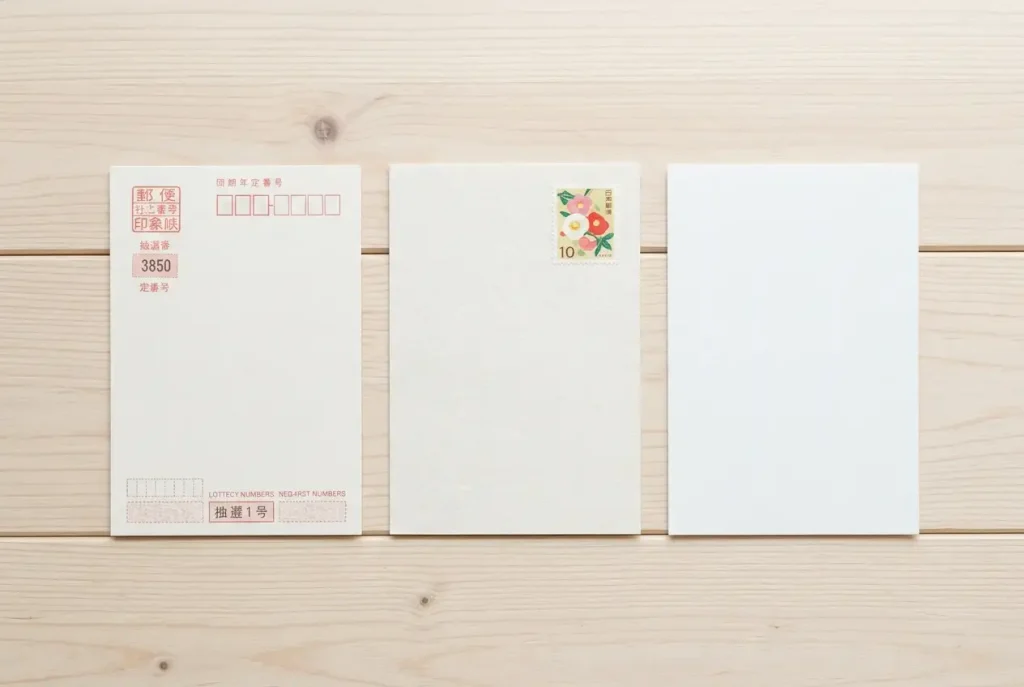
A half-informed sender knows that custom artwork is allowed, so they create a full-bleed layout on both sides. It looks polished on screen. It may also cover the postal imprint, number, address guides or sorting space.
Japan Post says that slight damage may sometimes be accepted if the item can still be identified conclusively. Damage to or removal of the postage-imprint area is a more serious problem and is generally grounds for refusing a prize exchange. That is not a useful boundary to test with a home printer.
Before loading the cards, check the print orientation with a sheet of plain paper. Keep artwork on the message side unless your template has been made specifically for that year’s postal stock. Printer software can rotate a postcard without making the change obvious in its preview.
What to do instead — protect the lottery and postage areas when printing nengajo at home.
Mistake 5: Using the Chinese Lunar-Year Boundary
Someone who has researched the Chinese zodiac may know that its year can change in January or February. They then apply that movable boundary to a Japanese card intended for January 1.
That produces a knowledgeable-looking but misplaced correction. Contemporary Japanese New Year materials change the animal for the January calendar year. The 2027 Japanese New Year motif is 未, hitsuji, “sheep,” from January 1; you do not wait for Lunar New Year before using it on a Japanese January greeting.
If you need the broader sequence rather than card etiquette, The Chinese Zodiac Years, Explained Properly covers the repeating animal order. Born in January or February? Your Zodiac Sign May Be Wrong deals specifically with the lunar boundary that causes confusion.
For a quick year lookup, the zodiac calculator covering every year from 1930 through 2043 and all twelve signs is more reliable than counting backward by hand.
What to do instead — use the Japanese calendar year when selecting the animal for a January nengajo.
Mistake 6: Treating the Picture as the Prize Ticket
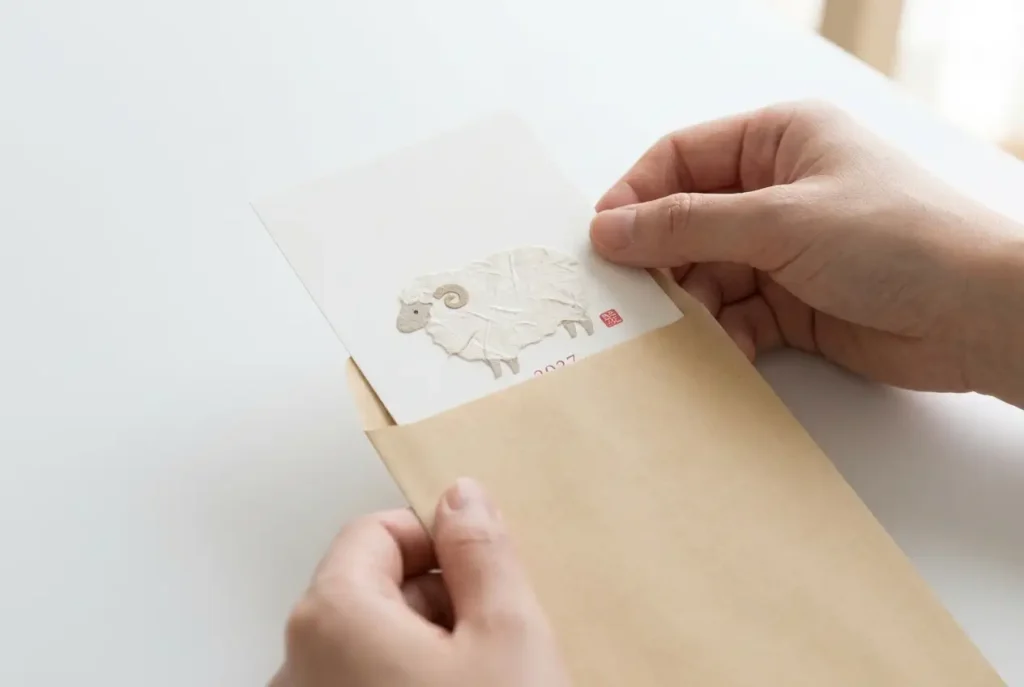
People sometimes cut the animal illustration from a postcard for a scrapbook or display. If the attractive front is preserved, the card can appear to have been “saved.”
The winning information is elsewhere. The card must remain identifiable as the relevant year’s postal product, and Japan Post requires the actual winning item when a prize is claimed. A photograph, photocopy or detached illustration is not a replacement for it.
This also explains why collectors distinguish the postal artifact from the subject pictured on it. Collecting the Animal Year in Paper and Metal follows the designs as collectible objects; lottery eligibility is a separate property.
A small amount of accidental edge damage is not necessarily fatal. Japan Post’s published answer says it may accept an item when the missing portion is slight and the year’s postcard remains certain. But if the postage-imprint section has been cut away or damaged, exchange is generally unavailable.
What to do instead — keep the complete numbered postcard until the claim period has ended.
Mistake 7: Checking the Wrong Draw—or Checking Too Late
A New Year card received in January can contain two visually competing years: the year being celebrated and a printing or copyright date connected with its production. An old image-search result can add a third.
For the card sent for New Year 2027, you need the 2027 winning-number announcement after the January 25 draw. The published claim window runs from January 26 through July 26, 2027. Last year’s numbers do not roll forward, and finding a match after the closing date does not reopen the window.
The odds also change. For 2026, Japan Post offered three first-prize choices and set the second-prize probability at 1 in 10,000. Its August 31, 2026 release for 2027 lists a cash-only first prize and changes the second-prize probability to 1 in 100,000. Advice copied from an earlier year is therefore unsafe even when it came from a reliable source.
The easiest habit is to bundle your received cards, write “check after January 25” on the envelope, and keep it with paperwork you will open before July.
What to do instead — use the winning numbers and redemption dates printed for the same New Year as the card.
The transferable rule is simple: check the year, number and intact postal area before you judge a nengajo by its animal.
The 2027 Nengajo Lottery at a Glance
Short FAQ
Does every Japanese New Year card show the year’s animal?
No. The motif is common, especially on Japan Post’s seasonal products and commercial templates, but it is not required.
Does every nengajo enter the lottery?
No. Look for the official lottery number on an eligible New Year postcard or qualifying lottery-bearing New Year stamp.
Who receives the prize?
The recipient who possesses the winning card normally claims it. Japan Post requires the winning item and, for higher-tier prizes, identification.
Can I design my own card?
Yes. You can customize the message side or use private postcard stock. If you want lottery eligibility, make sure the underlying postcard or attached stamp provides it.