The words you will meet are 米のとぎ汁, kome no togijiru, “water from washing rice,” in home recipes; 米ぬか, kome nuka, “rice bran,” in traditional cleansers; and ぬか袋, nuka-bukuro, “bran bag,” in accounts of Edo-period bathing. On modern packaging, the language changes to 発酵, hakkō, “fermentation,” and フェルラ酸, ferura-san, “ferulic acid.” These terms are related, but they do not describe the same material or carry the same evidence.
The central correction is simple. Using a cloth bag filled with rice bran was a real historical practice, but it was a cleanser and bathing implement—not proof that rice water for skin treats pigmentation, acne, eczema, or aging. The familiar tale about sake brewers retaining youthful hands is a modern corporate origin story repeated in beauty marketing. It should not be presented as a documented observation that proves fermented filtrate works.
Tradition can establish that people used something. It cannot, by itself, establish what the substance does to living skin.
For the larger difference between Japanese product design and the mythology built around it, What J-Beauty Actually Does Differently explains the routines, textures, regulation, and marketing language behind the category.
Rice water for skin is not the same as rice bran
米のとぎ汁 — kome no togijiru — “water from washing rice”
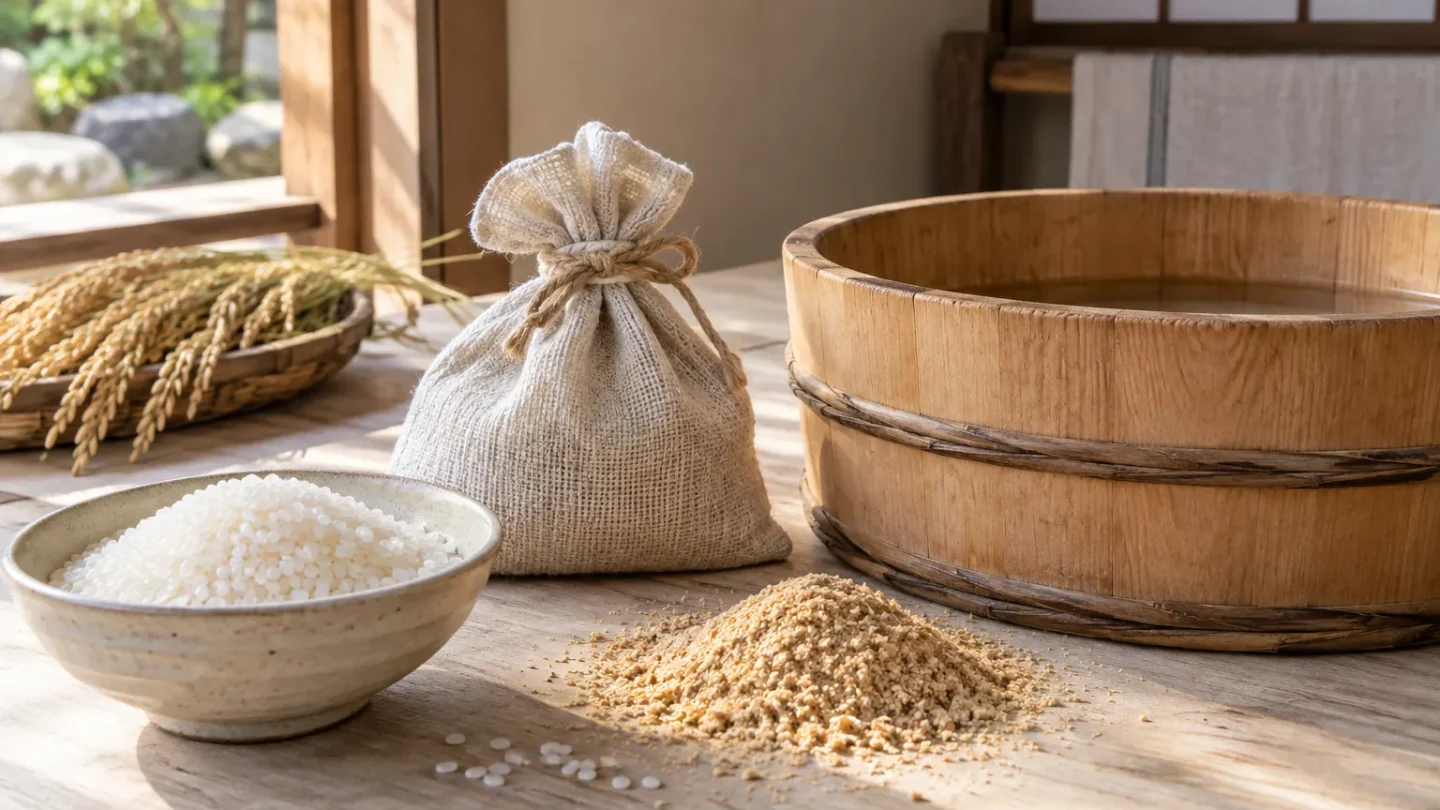
You meet 米のとぎ汁 in kitchens and online recipes. 米, kome, means rice, while とぎ汁, togijiru, is the cloudy water produced when uncooked rice is washed. It contains material released from the grain’s surface, but its composition changes with the rice, polishing level, washing method, water volume, and contact time.
The common mistake is calling every rice-derived cosmetic “rice water.” A bottle containing rice extract, rice-bran oil, fermented filtrate, or isolated ferulic acid is not equivalent to water left after rinsing dinner rice. A formulated cosmetic also contains preservatives, stabilizers, and other ingredients that homemade rinse water lacks.
There is not strong clinical evidence showing that ordinary kitchen rice-rinse water treats a diagnosed skin condition or produces a dependable anti-aging effect. Claims about “glass skin,” pore tightening, or pigment removal go beyond the available evidence. Anyone managing eczema, persistent acne, rosacea, infection, or unexplained discoloration should ask a dermatologist rather than substitute a food by-product for treatment.
米ぬか — kome nuka — “rice bran”
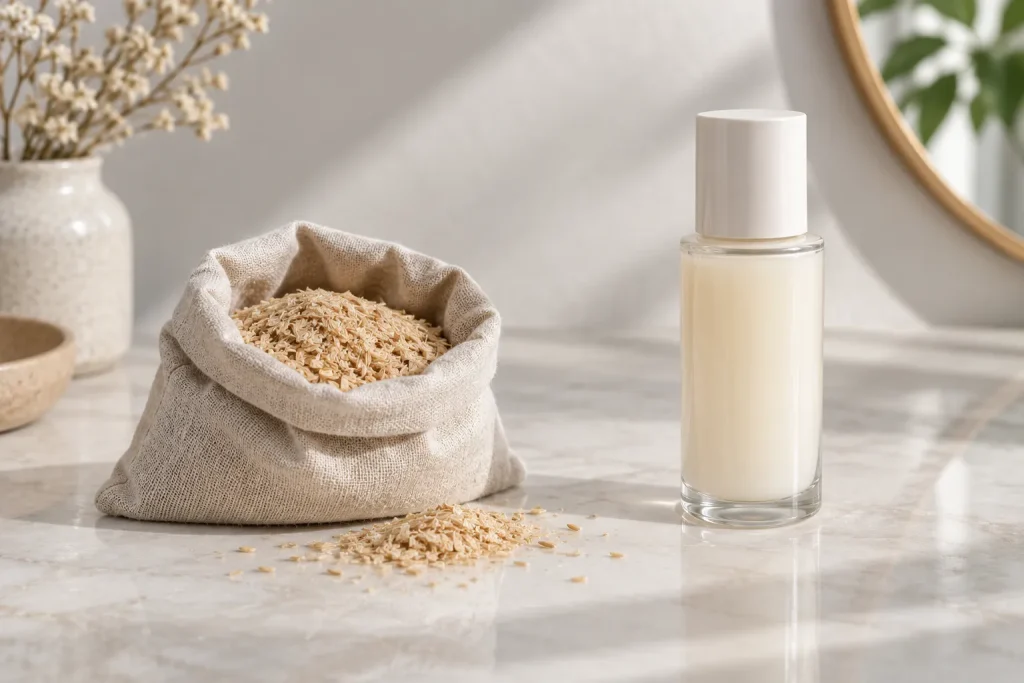
You meet 米ぬか on ingredient descriptions, soap packaging, bath products, and historical accounts. Bran is the outer material removed when brown rice is polished into white rice. It contains oil, proteins, carbohydrates, and phenolic compounds, but the exact mixture depends on processing and extraction.
The mistake is treating rice bran skincare and rice-rinse water as interchangeable. Bran is a solid milling fraction. Rinse water is a variable liquid washed from rice grains. Rice-bran oil is another material again, produced from the lipid-rich portion of bran.
Modern cosmetic formulas may use a controlled rice-bran extract or oil because manufacturers can define the ingredient and preserve the finished product. That does not mean loose food-grade bran behaves identically on the face. Formulation, concentration, stability, and contact with other ingredients all matter.
ぬか袋 — nuka-bukuro — “bran bag”
You meet ぬか袋 in museum material and histories of Japanese cosmetics. It was a small cloth pouch filled with rice bran and moistened for washing. The POLA Research Institute of Beauty and Culture describes Edo-period users placing rice bran in a small bag and using it like face soap.
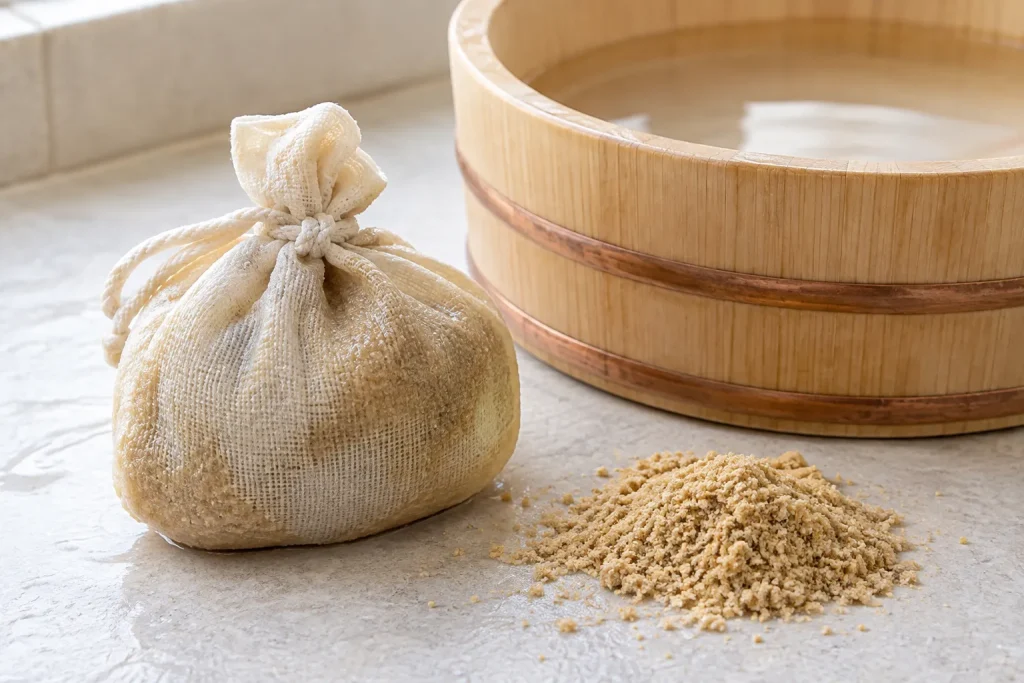
The usual mistake is turning the object into a serum. A nuka-bukuro was handled as a cleansing or rubbing implement. Its immediate physical functions included carrying the bran, controlling the mess, and allowing the damp bag to be moved across the skin.
“People in the Edo period used rice bran as face soap.”
That museum description confirms the practice, not the modern list of promised benefits attached to it. It does not show that all social classes used the same method, that the practice remained unchanged throughout the Edo period, or that it produced measurable clinical improvements.
| Material | What it actually is | Historical or modern context | What it does not prove |
|---|---|---|---|
| Rice-rinse water | Cloudy water from washing rice | Household by-product and modern DIY trend | Treatment of acne, pigmentation, or hair loss |
| Rice bran | Outer fraction removed during milling | Food material and cosmetic ingredient source | That raw bran equals a formulated extract |
| Bran bag | Cloth pouch filled with bran | Documented Edo-period cleansing practice | Clinical efficacy or suitability for sensitive skin |
| Rice-bran oil | Oil extracted from bran | Modern food and cosmetic formulations | The effects of rice water |
| Fermented filtrate | Filtered product of a controlled fermentation | Modern cosmetic manufacturing | That any fermented kitchen mixture is equivalent |
The washing vocabulary behind the historical object
洗い粉 — araiko — “washing powder”
You meet 洗い粉 in historical writing about cleansing materials. 洗い, arai, means washing, and 粉, ko, means powder. The term can refer broadly to powdered substances used for washing rather than to one standardized cosmetic formula.
The mistake is reading “powder” as a modern facial exfoliant with a tested particle size and controlled instructions. Historical materials varied, and rubbing any coarse substance across the skin can cause irritation. The existence of a washing powder does not establish that it was gentle by current dermatological standards.
A nuka-bukuro helped contain the powder and softened direct contact when wet. That practical construction is a more convincing explanation for the bag than modern claims that the cloth somehow activated nutrients.
洗顔 — sengan — “face washing”
You meet 洗顔 on contemporary cleansers and in descriptions of facial routines. 洗 means wash, and 顔 means face. The term tells you the purpose of a product, not its active mechanism.
The mistake is translating historical washing directly into the modern idea of a treatment step. Cleansing removes material from the skin surface. It does not automatically brighten pigmentation, alter collagen, or repair the barrier.
Modern Oil First, Foam Second, and Why explains how Japanese cleansing categories now separate oil-soluble makeup removal from a water-based wash. The bran bag belongs to a different material culture and should not be retrofitted into that contemporary two-product system.
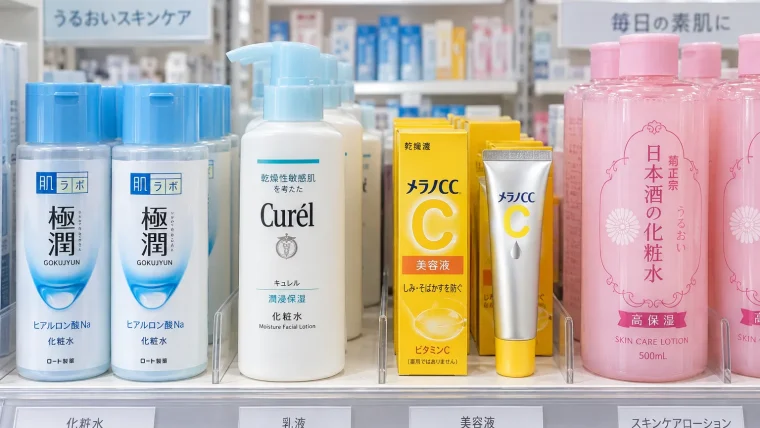
化粧水 — keshōsui — “cosmetic water”
You meet 化粧水 on bottles used after cleansing. The literal components are “cosmetics” and “water,” but the standard American comparison is a toner or light hydrating liquid. It is not simply water used to wash rice.
The mistake is seeing 水, mizu, “water,” and assuming that any watery household preparation performs the same function. Commercial keshōsui is formulated for stability, texture, preservation, and a defined ingredient list. Homemade rice water has none of those guarantees.
The brewery story belongs to marketing history
酒粕 — sake kasu — “sake lees”
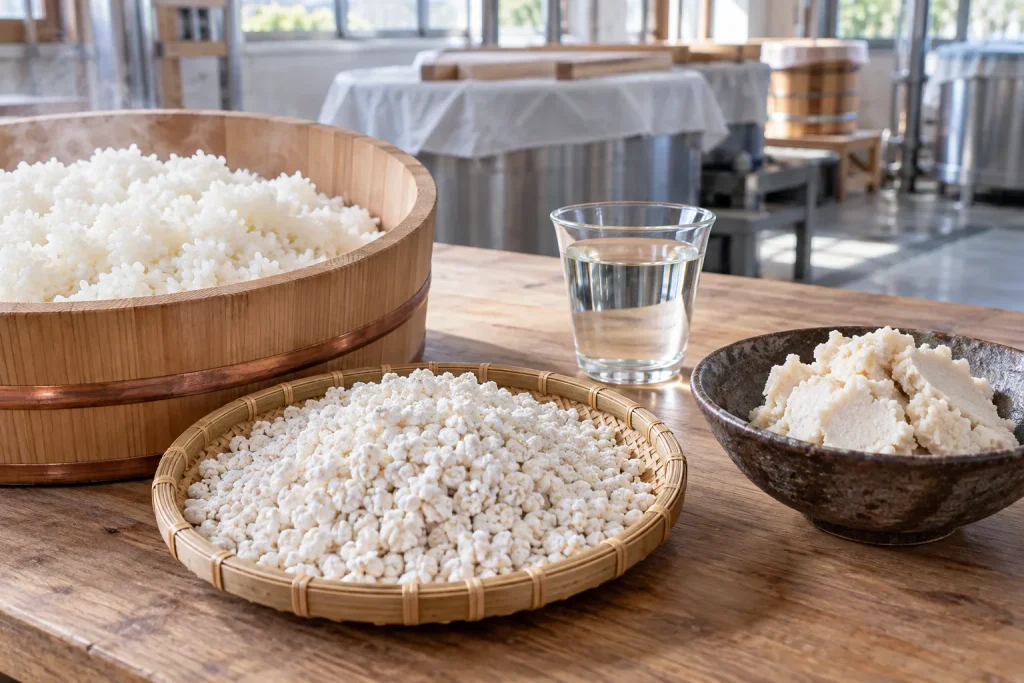
You meet 酒粕 in food shops, cooking, bath products, masks, and fermented-beauty marketing. 酒, sake, refers here to sake, while 粕, kasu, means the solids left after pressing the fermented rice mash. Sake lees are not the same as sake, rice water, rice bran, or a purified cosmetic ferment.
The common mistake is using “sake” as a loose label for every rice-fermentation ingredient. A commercial formula may contain a sake extract, yeast ferment, rice ferment filtrate, or another material with a different manufacturing process. The ingredient list matters more than the front-label story.
Raw sake lees are also perishable food material. Their traditional or culinary use does not establish that a homemade mask is microbiologically stable or appropriate for irritated skin.
麹 — kōji — “cultured grain”
You meet 麹 in discussions of sake, miso, soy sauce, and other Japanese fermentations. It usually refers to grain cultivated with Aspergillus oryzae. In sake production, rice kōji supplies enzymes that help convert rice starch into sugars that yeast can use.
The mistake is calling kōji “yeast.” It is a molded grain substrate used in fermentation, while sake production also involves yeast. Beauty marketing often compresses several organisms, substrates, and fermentation products into the friendlier phrase “sake yeast.”
This distinction matters because an anecdote about brewery workers cannot identify which substance supposedly touched their hands or caused an observed difference. Water, steamed rice, kōji, yeast, alcohol, cleaning work, and repeated wetting may all be present in a brewery environment.
発酵 — hakkō — “fermentation”
You meet 発酵 across Japanese food and cosmetic packaging. 発 suggests development or emission, while 酵 relates to fermentation. In manufacturing, the term describes a biological process controlled through organisms, substrate, temperature, time, and later purification.
The mistake is treating “fermented” as a synonym for proven, gentle, or more effective. Fermentation changes a material, but the result depends on what was fermented and how. It is a process, not a clinical outcome.
The brewery-hands story is best described as a brand narrative. SK-II’s official history says its scientists noticed that elderly sake brewers had wrinkled faces but soft, youthful-looking hands and then searched for the relevant ferment. The company presents this as the origin of PITERA™, its proprietary fermentation-derived ingredient.
What the public account does not provide is a contemporary observational study, identified brewery, participant group, control group, examination method, or independently reviewable data. That absence does not prove the product ineffective. It means the story itself cannot serve as clinical evidence.
The legend may explain a product’s identity. It cannot establish the product’s effect.
ろ過液 — roka-eki — “filtrate”
You meet ろ過液 in translated ingredient explanations and technical descriptions of fermented cosmetics. ろ過, roka, means filtration, and 液, eki, means liquid. A filtrate is the liquid retained after selected solids have been removed.
The mistake is picturing a bottle of cloudy brewery waste. Cosmetic filtrates are manufactured ingredients with specifications and quality controls. They cannot be reproduced by leaving rice water at room temperature until it smells fermented.
What the ferulic acid data can support
フェルラ酸 — ferura-san — “ferulic acid”
You meet フェルラ酸 in scientific papers and antioxidant-serum ingredient descriptions. Ferulic acid is a plant phenolic compound found in cereal materials, including forms associated with rice bran. Its presence gives researchers a plausible chemical subject to study; it does not turn rice water into a measured dose of ferulic acid.
A widely cited laboratory and human photoprotection study published in 2005 examined a topical formula containing vitamin C, vitamin E, and ferulic acid. Adding ferulic acid improved the formula’s chemical stability and increased protection against experimentally induced ultraviolet damage compared with the vitamin formula without it.
There are three limits that advertising summaries often remove:
- The research tested a formulated combination, not kitchen rice water.
- It did not isolate the effect of naturally occurring ferulic acid in a bran bag.
- Photoprotection under study conditions is not proof that the mixture treats every sign of aging or replaces sunscreen.
The result is relevant to ferulic acid skincare, especially formulation science. It is not evidence that soaking rice produces the same concentration, skin penetration, stability, or effect. Ferulic acid can also degrade or behave differently depending on pH, solvent, packaging, and the other antioxidants present.
| Claim | Evidence type | What the data supports | What remains unproven |
|---|---|---|---|
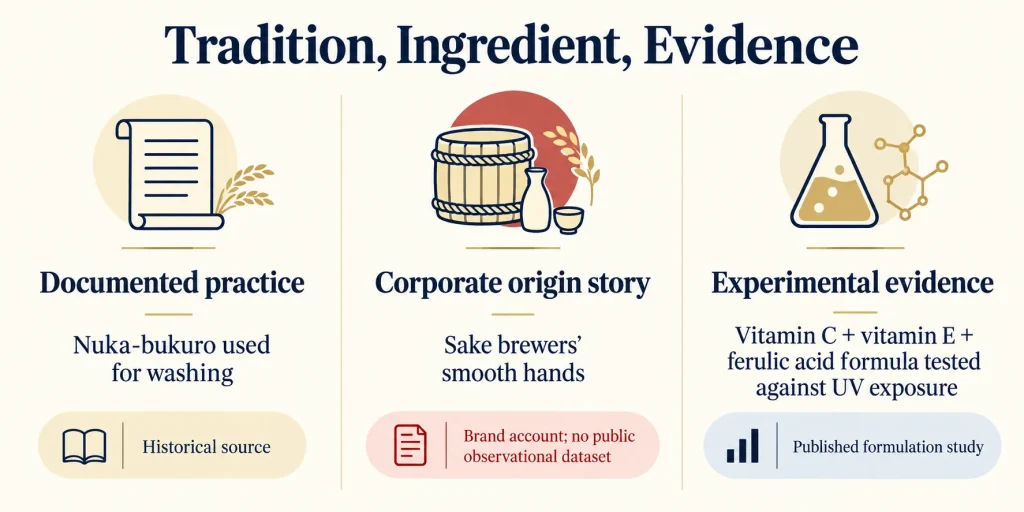
| Rice bran was used in cloth washing bags | Museum and historical evidence | The practice existed in Edo Japan | Medical or anti-aging effectiveness |
| Brewery workers had unusually youthful hands | Corporate origin story | The story is part of brand history | An independently documented occupational effect |
| Ferulic acid has antioxidant activity | Chemical and laboratory research | A plausible antioxidant mechanism | Benefit from unmeasured homemade rice water |
| Ferulic acid improved a vitamin C and E formula | Formulation and controlled UV study | Greater stability and photoprotection in that formula | Ferulic acid alone producing identical results |
| Rice water makes hair grow faster | No strong human clinical evidence located | No dependable growth claim | Follicle stimulation or a predictable growth rate |
Protection from ultraviolet exposure remains a separate matter. Different Filters, a Different Rulebook explains why Japanese and American sunscreen labels cannot be compared as if they operate under identical regulations. A rice-derived cosmetic should not be treated as sunscreen unless it is legally marketed and tested as one.
Hair claims stop at the fiber
毛髪 — mōhatsu — “hair fiber”
You meet 毛髪 in technical product descriptions and cosmetic research. 毛 means hair, and 髪 refers specifically to the hair of the head. In cosmetic testing, the term often means the existing fiber rather than the living follicle beneath the scalp.
The common mistake is confusing a smoother hair shaft with faster hair growth. A rinse can change friction, coating, combing, or the feel of existing hair without changing how follicles produce hair. Less breakage may preserve length, but that is not evidence of accelerated growth.
The frequently repeated claim that rice water improves elasticity comes from limited cosmetic and historical discussion rather than a substantial body of controlled human trials. No strong clinical evidence was located showing that household rice water stimulates human hair follicles. Persistent hair loss, scalp inflammation, pain, or sudden shedding belongs with a dermatologist, not a fermented-rice experiment.
ローション — rōshon — “lotion”
You meet ローション on Japanese skincare and scalp-care packaging. Although it comes from the English word “lotion,” it often describes a thin watery product rather than the thicker cream-like body lotion an American shopper may expect.
This is another loanword whose Japanese use can mislead English speakers. A rice “lotion” may be a toner, scalp liquid, or lightweight treatment. You need the usage instructions and ingredient list to know what the bottle is for.
The site’s Japanese phrasebook contains 337 phrases, including shopping language that can help when asking what a product is used for. It does not replace medical or pharmacist guidance about irritation, allergies, or an active skin condition.
Why the kitchen version has a different risk profile
Home rice water has no standardized composition, preservative system, microbial specification, or validated shelf life. Fermentation adds another uncontrolled variable. A change in smell or appearance is not a reliable laboratory test for whether a mixture is safe.
“Natural” also does not mean non-irritating. Bran particles can add friction, while fragranced additions, essential oils, or acidic ingredients copied from online recipes introduce separate risks. Skin that is broken, inflamed, sunburned, or affected by dermatitis is especially poor ground for experimentation.
If a rice-derived cosmetic causes burning, swelling, persistent redness, blistering, or worsening symptoms, stop using it and contact a dermatologist or pharmacist. For a diagnosed condition, check the product against the treatment plan rather than replacing prescribed care. This is more cautious than the old bran bag, but the historical object was never designed to answer a modern medical question.
The three terms worth remembering
Remember 米のとぎ汁, kome no togijiru, because it means rice-rinse water; 米ぬか, kome nuka, because it means the solid bran removed during milling; and ぬか袋, nuka-bukuro, because it identifies the real Edo-period washing bag. Keeping those materials separate prevents most of the mythology from forming.
Recognize 酒粕, sake kasu, 麹, kōji, and 発酵, hakkō, when reading fermented-product stories. Keep フェルラ酸, ferura-san, in the evidence column, but only with the formulation and study conditions attached. The remaining terms can stay reference vocabulary until you meet them on a label.
The bran bag was real. The brewery-hands account remains an origin story supplied by the brand that commercialized it. Ferulic acid has meaningful antioxidant formulation data, but that evidence does not transfer automatically to rice water, raw bran, sake lees, or a home ferment.
| Term | Reading | Literal or working meaning | Where you meet it |
|---|---|---|---|
| 米のとぎ汁 | kome no togijiru | Water from washing rice | Kitchen and DIY recipes |
| 米ぬか | kome nuka | Rice bran | Historical cleansers and labels |
| ぬか袋 | nuka-bukuro | Bran bag | Edo beauty history |
| 洗い粉 | araiko | Washing powder | Historical descriptions |
| 洗顔 | sengan | Face washing | Cleanser packaging |
| 化粧水 | keshōsui | Cosmetic water or toner | Post-cleansing products |
| 酒粕 | sake kasu | Sake lees | Food, bath, and cosmetic products |
| 麹 | kōji | Cultured grain | Brewing and fermentation |
| 発酵 | hakkō | Fermentation | Food and cosmetic marketing |
| ろ過液 | roka-eki | Filtrate | Technical ingredient descriptions |
| フェルラ酸 | ferura-san | Ferulic acid | Antioxidant formulas |
| 毛髪 | mōhatsu | Hair fiber | Cosmetic testing |
| ローション | rōshon | Watery lotion or treatment | Skin and scalp products |
Mini-FAQ
Was the nuka-bukuro really used in Edo Japan?
Yes. Japanese cosmetic-history sources document rice bran being placed in a small cloth bag and used for washing. The evidence confirms the practice, but it does not prove modern medical or anti-aging claims.
Is fermented rice water the same as a cosmetic ferment filtrate?
No. A manufactured filtrate is produced under controlled conditions and incorporated into a preserved formula. A household mixture left to ferment does not have the same identity, concentration, purity, or stability.
Does rice water make hair grow?
Strong human clinical evidence showing that household rice water accelerates follicle growth was not found. Claims about smoother fibers or reduced friction should not be rewritten as proof of faster growth.