On August 30, 2025, Rohto replaced the formula of its flagship Melano CC lotions in Japanese drugstores. That change captures the problem with shopping for Japanese skincare brands from an old online list: the bottle, ingredients, legal category, and price can change while the familiar brand name remains.
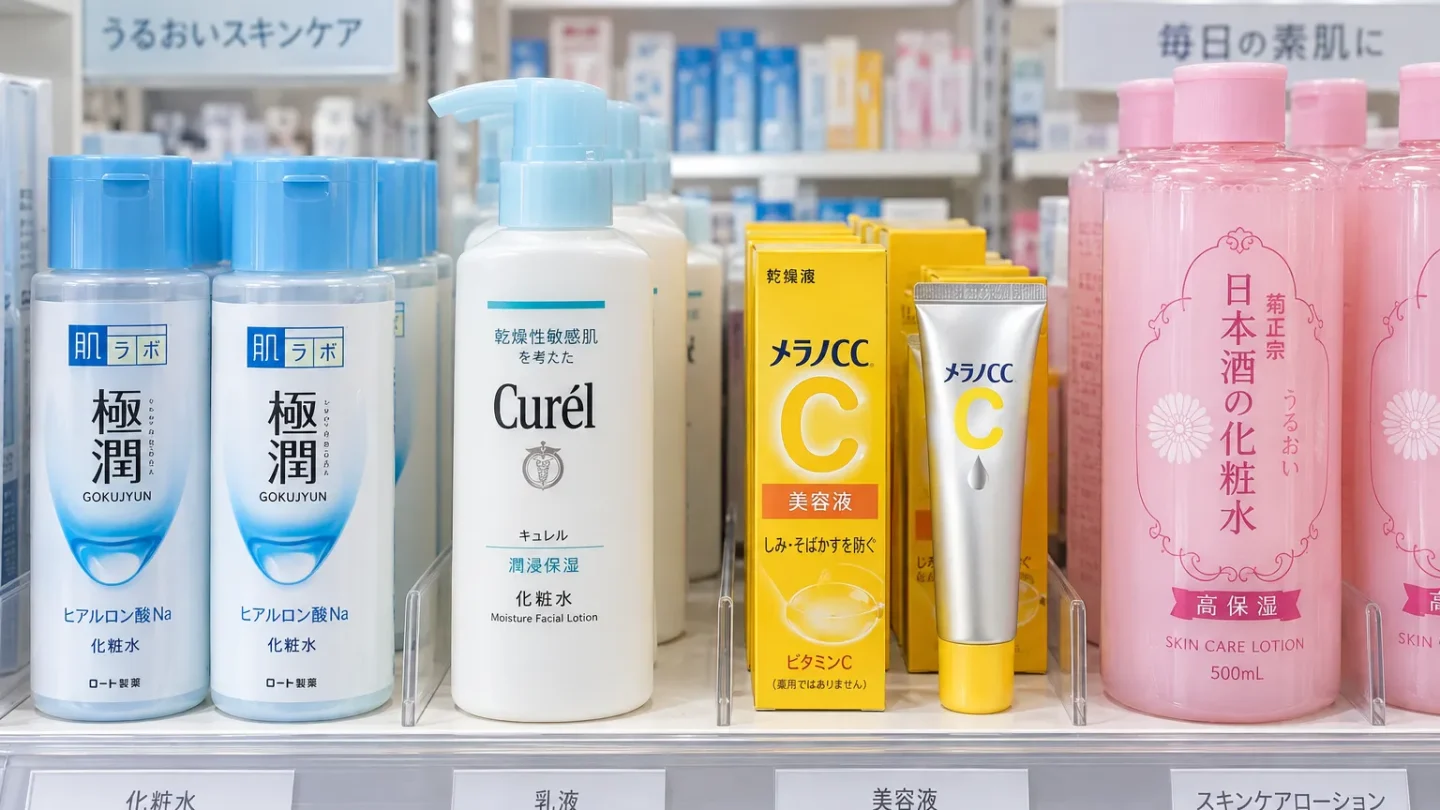
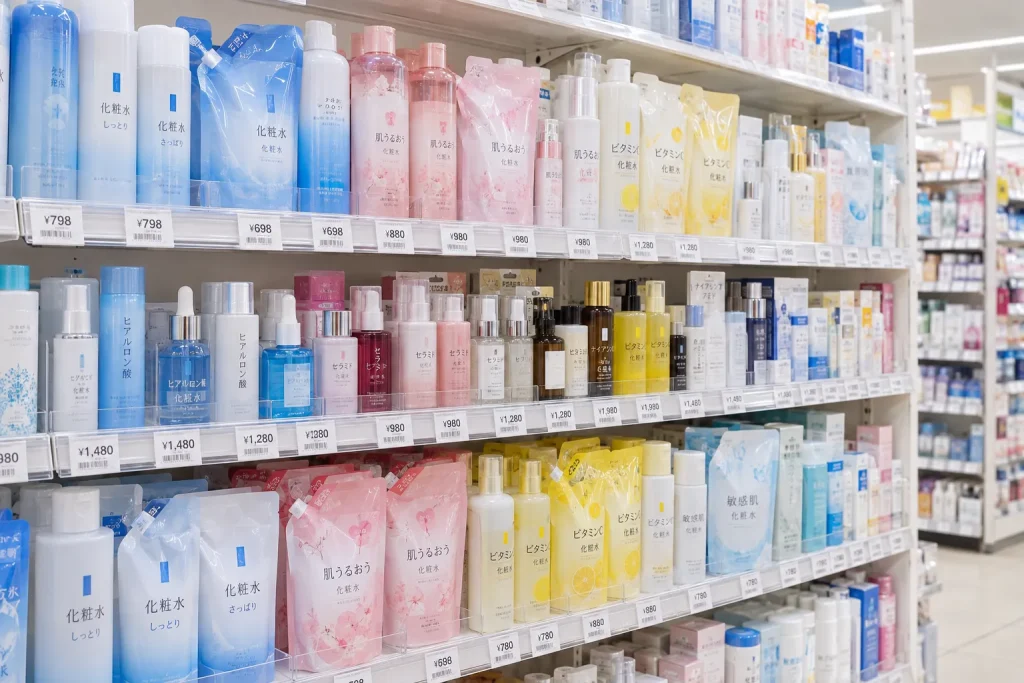
At Matsumoto Kiyoshi—usually shortened to マツキヨ, Matsukiyo—Japanese drugstore skincare is arranged less like a carefully edited beauty boutique and more like a working pharmacy. Similar-looking bottles may be cosmetics, regulated quasi-drugs, refills, imports, or Japan-only versions. The useful question is therefore not “Which product is famous?” but “Which exact product is this?”
This guide checks four representative products against manufacturer information and Matsukiyo’s online prices on September 11, 2026. The dollar equivalents use the Bank of Japan’s September 9, 2026 central exchange rate of ¥153.72 to $1; your card’s rate and foreign-transaction fee may differ.
What Was on the Shelf Before the Current J-Beauty Boom?
These brands were not created as matching steps in a universal routine. Hada Labo began as Rohto’s moisture-focused line, Curél grew from Kao’s research into dry, sensitive skin, Melano CC developed around Japanese quasi-drug claims, and Kikumasamune brought a sake-brewing name into mass-market body and facial care.
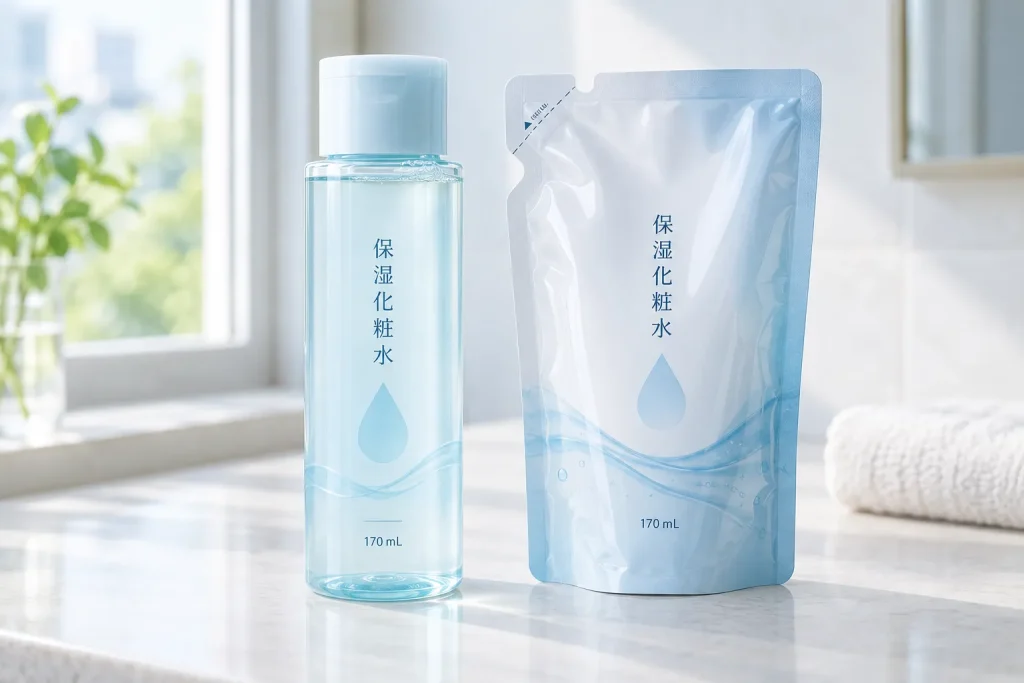
The shelf also uses Japanese product categories that do not map neatly onto American beauty vocabulary. 化粧水, keshōsui, literally “cosmetic water,” is usually translated as “lotion,” but it normally means a watery hydrating step rather than the thicker hand or body lotion an American shopper may expect.
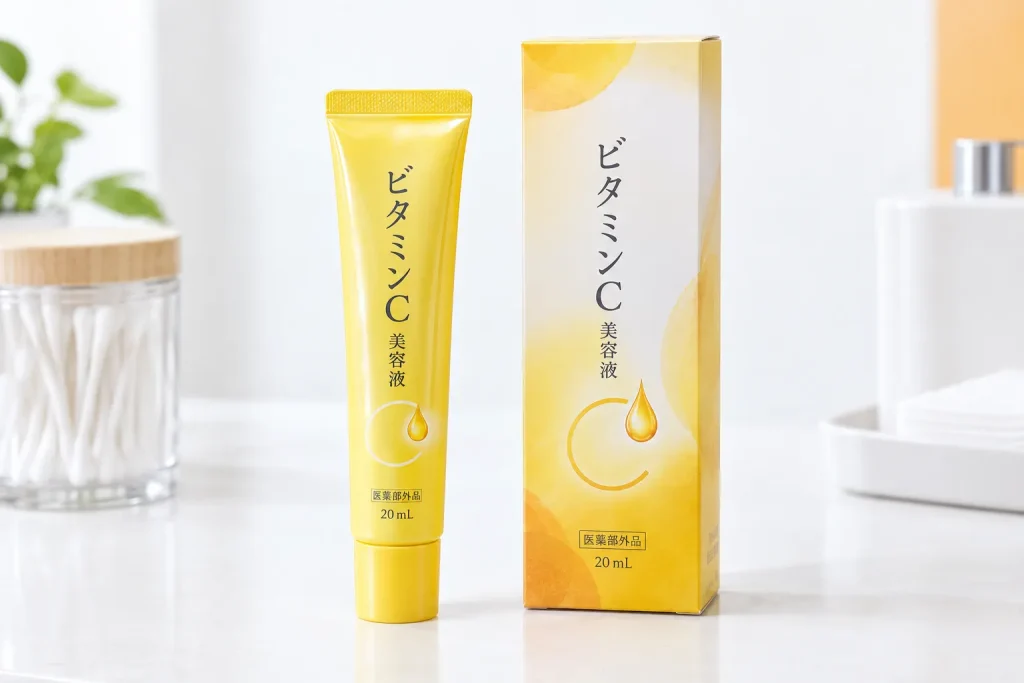
美容液, biyōeki, literally “beauty liquid,” is the usual word for serum or essence. 薬用, yakuyō, literally “medicated use,” commonly appears on products classified as 医薬部外品, iyakubu-gaihin, “quasi-drugs.” That status permits specified active ingredients and approved claims; it does not mean the product is a prescription medicine.
For the larger system behind cleansing, lotions, emulsions, and UV products, What J-Beauty Actually Does Differently explains the routine without repeating this product-by-product shelf guide.
What Changed, and Why Old Recommendations Expire
Rohto announced its Melano CC lotion reformulation on July 1, 2025 and released the new products nationwide on August 30, 2025. The company added L-ascorbic acid 2-glucoside, panthenol, and dipotassium glycyrrhizate to the renewed lotions while retaining an open-price system under which retailers set the selling price.
Kao has also continued adding Curél products rather than treating the line as fixed. It released two carbonated-foam Curél products in Japan on September 6, 2025, then launched a Skin Repair UV Serum on February 7, 2026 and a Deep Barrier Serum on March 7, 2026.
The practical change is not that Japanese skincare suddenly became better. It is that product families now change quickly enough that a brand-level recommendation is incomplete.
| Period | What shoppers could reasonably assume | What you must verify now |
|---|---|---|
| Before a reformulation | A familiar product name often led to the formula shown in an older review | Release date, current ingredient panel, and current legal category |
| After August 30, 2025 | “Melano CC lotion” may refer to the renewed Japanese formula | Full product name and current package |
| During global expansion | The same brand appears in Japan and the United States | Whether it is the same SKU, a regional formula, or a parallel import |
| At the register | Shelf prices appear definitive | Store price, online price, coupon price, and tax-free eligibility may differ |
A reformulation does not prove that the old product was ineffective or that the new one will suit you. It proves only that an undated review may describe a product that is no longer on the shelf.
Japanese Drugstore Skincare: Four Bottles Compared
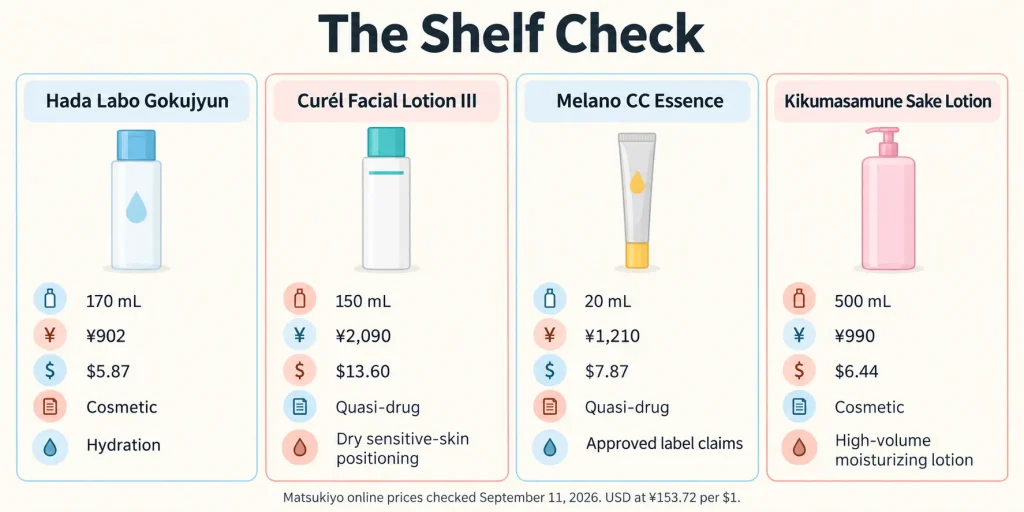
The prices below are Matsukiyo online prices including Japanese consumption tax, checked September 11, 2026. Matsukiyo itself warns that store prices can differ from its online prices.
| Product checked | Size | Matsukiyo price | Approx. USD | Japanese category | What the label positions it for |
|---|---|---|---|---|---|
| Hada Labo Gokujyun Hyaluronic Lotion N | 170 mL | ¥902 | $5.87 | Cosmetic | Straightforward hydration |
| Curél Intensive Moisture Care Facial Lotion III | 150 mL | ¥2,090 | $13.60 | Quasi-drug | Moisture and prevention of rough skin |
| Melano CC Medicated Intensive Anti-Spot Essence | 20 mL | ¥1,210 | $7.87 | Quasi-drug | Approved melanin-suppression and skin-conditioning claims |
| Kikumasamune Sake Skin Care Lotion High Moist | 500 mL | ¥990 | $6.44 | Cosmetic | High-volume moisturizing care |
These prices are a dated shelf snapshot, not a promise. Currency conversion is included for scale, not as a forecast of what a US importer will charge.
Hada Labo: the plain hydration bottle
Hada Labo’s 極潤ヒアルロン液N, Gokujun Hyaluron-eki N, roughly “extreme-moisture hyaluronic liquid,” is the simplest item in this group. The 170 mL Hada Labo lotion cost ¥902, approximately $5.87, on Matsukiyo’s website when checked.
Rohto lists four forms of hyaluronic-acid-derived moisturizing ingredients in the current Japanese formula. Matsukiyo describes it for the face and body and does not label it as a quasi-drug.
This is a hydrating cosmetic, not a treatment for a diagnosed skin condition. “Hyaluronic” on the bottle does not establish how your skin will respond, particularly if you are sensitive to another ingredient in the formula.
The US Hada Labo Tokyo range should not be treated as an English-labeled duplicate of this Japanese bottle. Its product names, formats, and published ingredient lists form a regional line; compare the complete ingredient panels instead of matching the words “Hada Labo” or “hyaluronic.”
Curél: sensitive-skin positioning plus a legal category
Kao develops Curél for 乾燥性敏感肌, kansōsei binkan-hada, literally “dry, sensitive skin.” The Japanese Curél Facial Lotion III checked here cost ¥2,090, approximately $13.60, for 150 mL.
The important distinction is that Curel sensitive skin is brand positioning, while 医薬部外品 is a regulated product classification. This particular lotion is a quasi-drug and lists allantoin as an active ingredient for preventing rough skin; “Curél” itself is not a legal category, and not every product worldwide has identical regulatory status.
Kao describes the lotion as mildly acidic, fragrance-free, colorant-free, and without added ethyl alcohol. Those are label facts, not proof that it is incapable of causing irritation or that it is suitable for every sensitive-skin condition.
Curél is sold internationally, but the Japanese Facial Lotion III and American Curél products should not be assumed identical. The US products use their own names and US-format ingredient declarations, and the Japanese quasi-drug designation does not transfer onto a US cosmetic package.
Melano CC: read the small legal line
The 20 mL Melano CC serum checked at Matsukiyo cost ¥1,210, approximately $7.87. It is a Japanese quasi-drug containing ascorbic acid, tocopherol acetate, dipotassium glycyrrhizate, and isopropyl methylphenol as listed active ingredients.
Its approved Japanese wording says that it suppresses melanin production to help prevent spots and freckles. That is narrower than removing an existing spot, curing acne, or guaranteeing a visible change, none of which should be inferred from the English phrase “anti-spot.”
Rohto’s own instructions place the product after lotion. Readers building a complete cleansing sequence can use Oil First, Foam Second, and Why for the separate question of when two cleansers are—and are not—being described.
There is no verified, direct US-formula counterpart in the sources checked for this draft. A US marketplace listing may simply be a Japanese package imported unchanged, but the seller, batch, storage history, and authorization cannot be determined from the brand name alone.
Kikumasamune: lotion means watery moisturizer
菊正宗 日本酒の化粧水 高保湿, Kikumasamune Nihonshu no Keshōsui Kōhoshitsu, means “Kikumasamune sake lotion, high moisture.” The 500 mL sake lotion was listed by Matsukiyo at ¥990, approximately $6.44, while Kikumasamune’s own online store listed it at ¥880 on the same research date.
That difference is a useful warning: a manufacturer’s store, a drugstore website, and a physical branch need not post the same price. Matsukiyo was also displaying a temporary ¥30 campaign reduction, so even the online figure may change before publication.
The formula includes sake-derived ingredients alongside moisturizing ingredients identified by the manufacturer, including amino acids and ceramide-related ingredients. “Made with sake” does not mean that the bottle is unpreserved rice wine, and the brand does not classify this product as a quasi-drug.
No official US-specific counterpart was located. If it appears on an American retailer’s site, check whether the label identifies a US distributor and compare the full ingredient list with Kikumasamune’s current Japanese page.
What Has Not Changed on a Matsukiyo Shelf
A high price still does not establish that a product is stronger, more suitable, or legally closer to medicine. In this comparison, the cost difference reflects size, formulation, brand position, and category—not a measurable ranking of results.
The word “medicated” also remains easy to overread. A Japanese quasi-drug sits between ordinary cosmetics and pharmaceuticals under Japan’s regulatory system, but the classification applies to the exact approved product and claims.
The sunscreen aisle remains a separate source of confusion because US and Japanese regulatory systems classify UV filters differently. Different Filters, a Different Rulebook covers that issue without turning this shelf guide into a sunscreen catalog.
Refills are not travel minis. Confirm つめかえ用, tsumekae-yō, “for refilling,” before buying a soft pouch, because it may require the original bottle or another suitable container.
What Should You Check Before Paying?
Start with the exact front and back labels, not a social-media photo. A useful counter check follows this order:
- Match the full Japanese product name.
- Confirm the bottle or refill size in milliliters.
- Look for 化粧品, keshōhin, “cosmetic,” or 医薬部外品, iyakubu-gaihin, “quasi-drug.”
- Compare the current ingredients with any allergies or known sensitivities.
- Check the physical-store price rather than assuming the online price applies.
- Ask whether the item is eligible for any tax-free procedure before the transaction.
If you need help locating a product, 在庫はありますか, zaiko wa arimasu ka, literally “Is there stock?”, is more useful than trying to pronounce the entire label. The site’s phrasebook with 337 phrases, including shopping, provides the Japanese writing, romaji, and usage context rather than duplicating those phrases here.
Stop using a product if the manufacturer’s warning tells you to stop after redness, swelling, itching, irritation, loss of color, or darkening appears. For a continuing reaction, ask a pharmacist or dermatologist rather than relying on a translated product description.
Quick FAQ
Is every Curél product a quasi-drug?
No. The Japanese Facial Lotion III described here is marked 医薬部外品, but legal status belongs to the individual product in its market. Check the exact package.
Is Japanese “lotion” the same as American body lotion?
Usually not. 化粧水, keshōsui, is generally a watery facial or body hydration step, although manufacturers choose their own English translations.
Are products sold in the United States unchanged?
Sometimes an American seller imports the Japanese package, and sometimes a brand operates a separate regional line. Neither the shared logo nor an English sticker proves that the formula is identical.
When should this guide be checked again?
Recheck every product page and Matsukiyo price immediately before the scheduled October 6, 2026 publication date. Review the article again by April 2027, or sooner if a manufacturer announces a reformulation, recall, discontinuation, or US launch.