A Japanese hair care routine repeats on two overlapping rhythms. The daily cycle runs from cleansing to drying and overnight friction, while the yearly cycle moves between dry winter air, spring transitions, a humid rainy season, hot summer weather, and a milder fall. Neither cycle proves that Japanese products are inherently superior. Shampoo can lather differently because water hardness changes, while the behavior of an individual strand depends partly on its diameter, shape, chemical history, and condition. The useful question is therefore not “What is Japan’s secret?” but “Which physical condition changed?”
Morning: what hair structure can and cannot explain
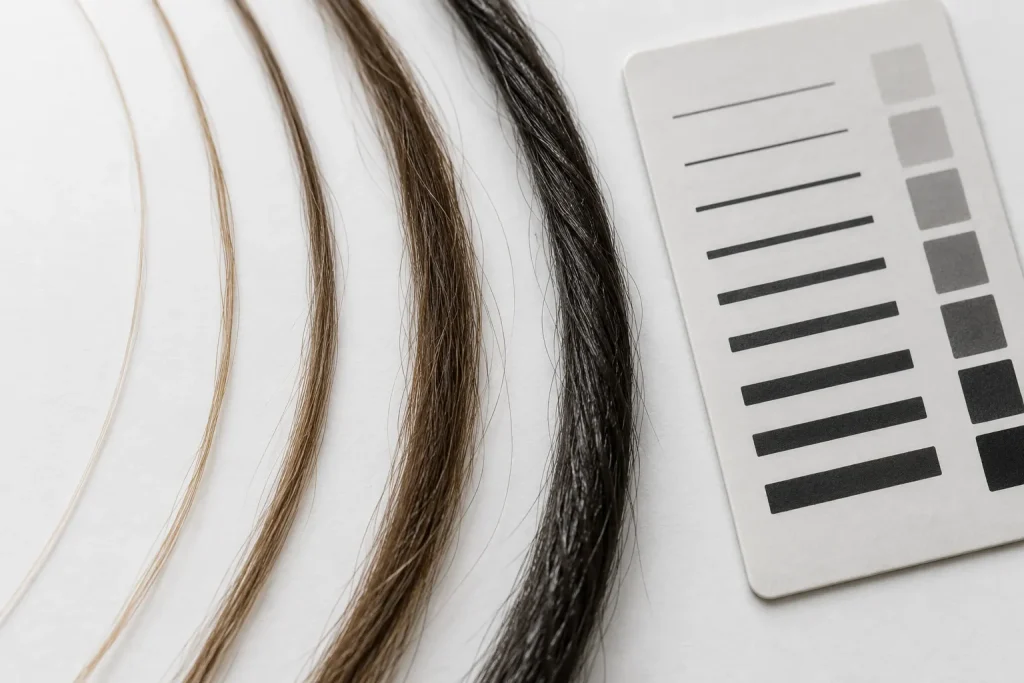
毛髪 mōhatsu, literally “hair,” is not structurally identical across every person or population. Research reviews report that hair commonly classified as East Asian tends to have a larger cross-sectional area and a more circular cross-sectional shape than hair in comparison groups. In everyday language, that often means a thicker individual strand, but it does not mean every Japanese person has dense, straight, resilient hair. Strand thickness and the number of hairs on the scalp are separate characteristics. Bleaching, heat, age, hormones, styling, and individual genetics can matter more than a population average when you assess one person’s hair.
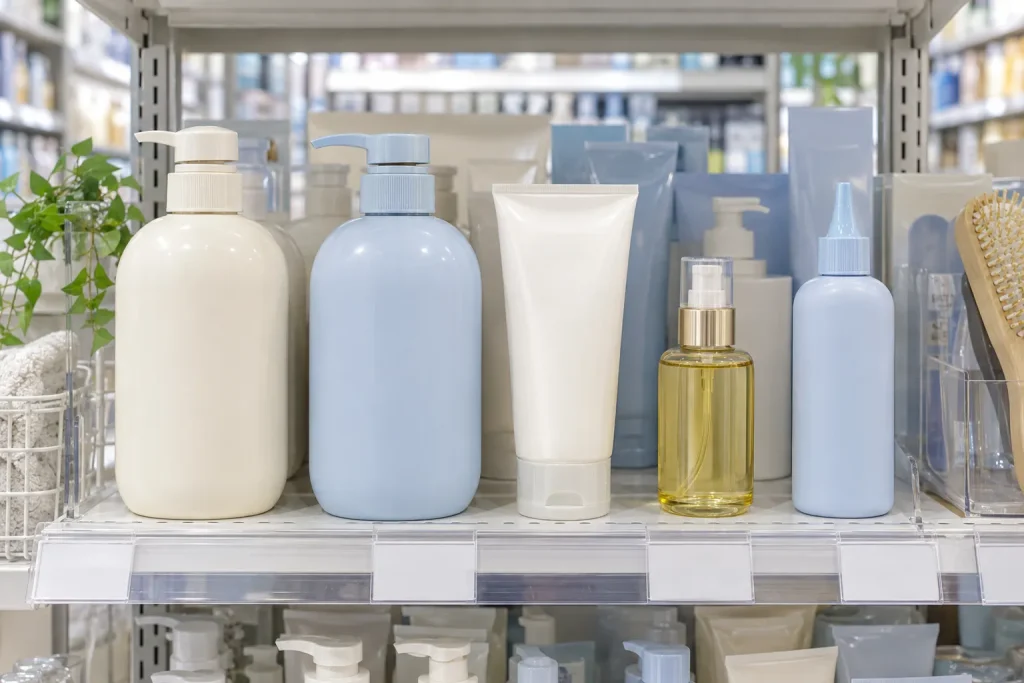
This distinction explains why some Japanese shampoos, conditioners, and styling products may feel lighter than an American visitor expects. A formula designed for relatively thick, straight fibers may prioritize surface smoothness and controlled movement without adding heavy residue. On fine, porous, curly, or repeatedly bleached hair, the same formula can behave differently. That is a product-hair interaction, not evidence that the product is ineffective or that Japanese hair possesses a special quality. Japanese hair products are still ordinary cosmetic formulations working on physical fibers.
The wider J-beauty context is covered in What J-Beauty Actually Does Differently, including the gap between product marketing and daily practice. Hair care shares some of that preference for layered, moderate steps, but it should not be reduced to skincare vocabulary. Scalp products, shampoos, masks, oils, and straightening services perform different jobs. Using more layers does not automatically create a better result. The relevant variables are your scalp, hair condition, water, climate, and the product instructions.
Wash time: soft water changes the same shampoo
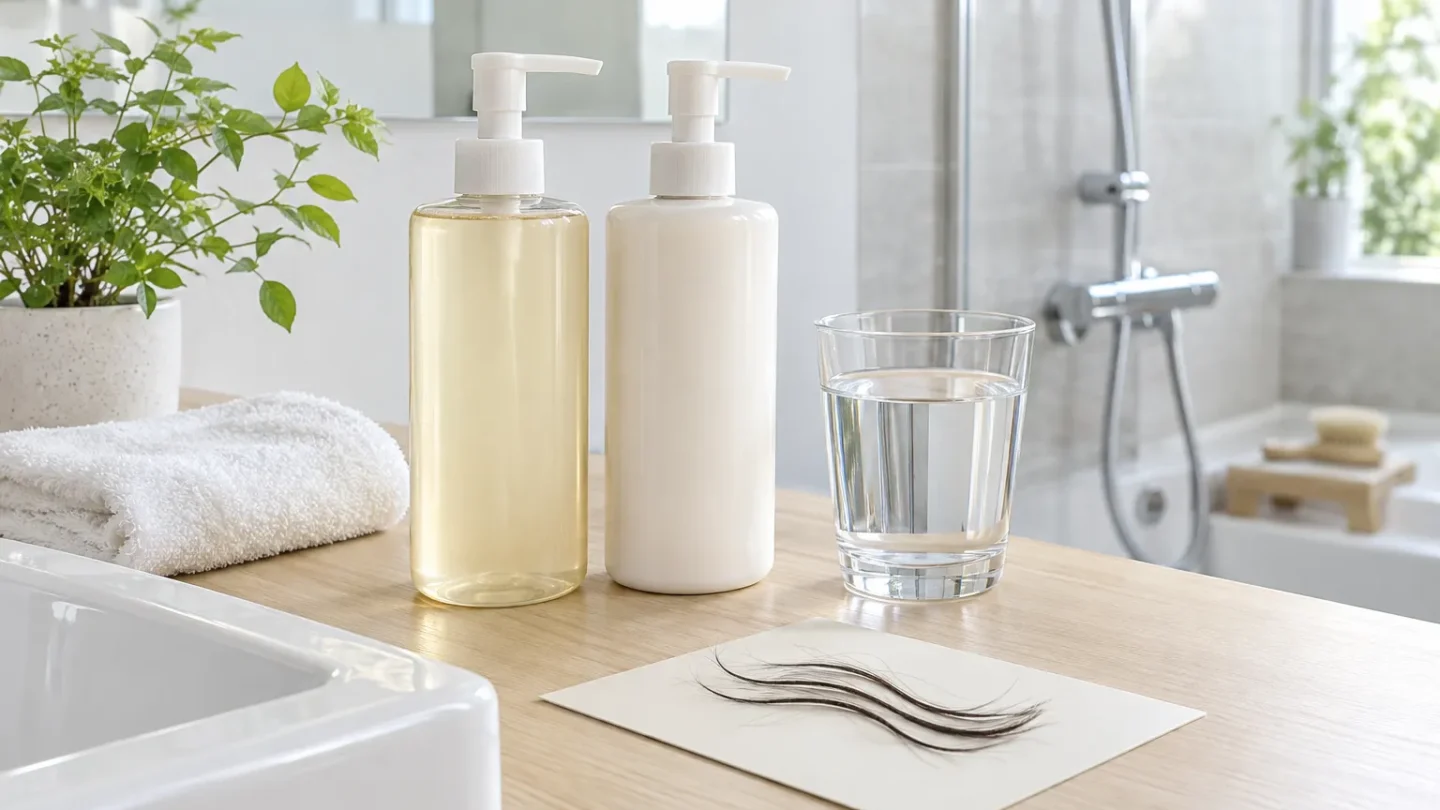
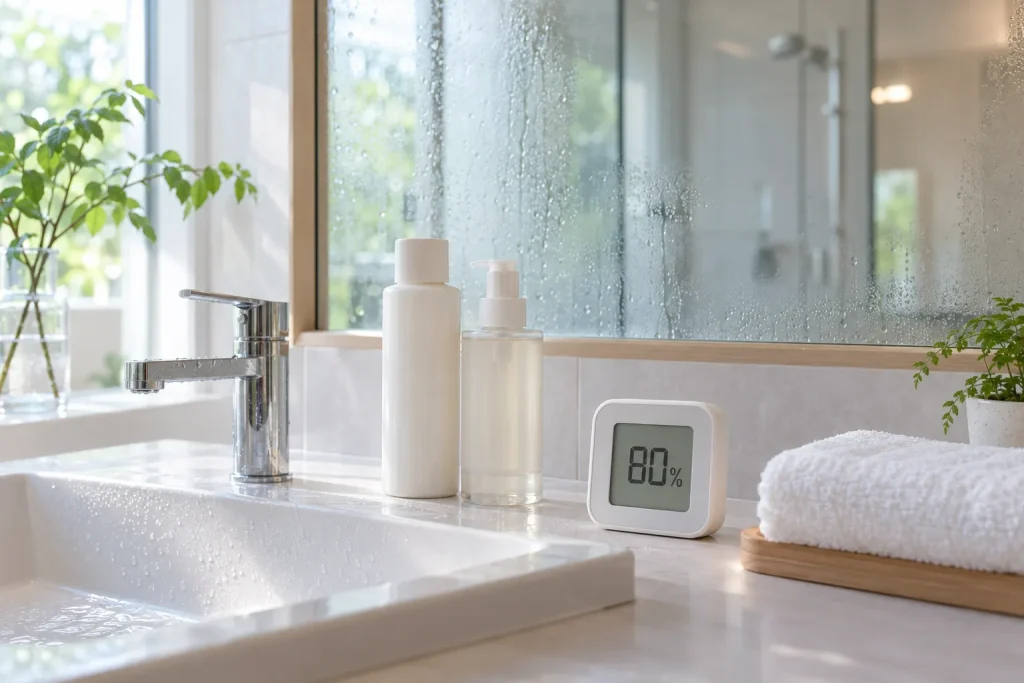
軟水 nansui, literally “soft water,” contains relatively low concentrations of the calcium and magnesium associated with water hardness. Japan has substantial regional variation, but official water-quality records show many Japanese supplies within ranges commonly described as soft. The United States has much broader variation, and the U.S. Geological Survey map shows extensive hard-water areas across parts of the country. That means a bottle brought from Japan may meet very different water in Arizona, Texas, Florida, Indiana, or another hard-water location. The shampoo has not changed, but the washing system has.
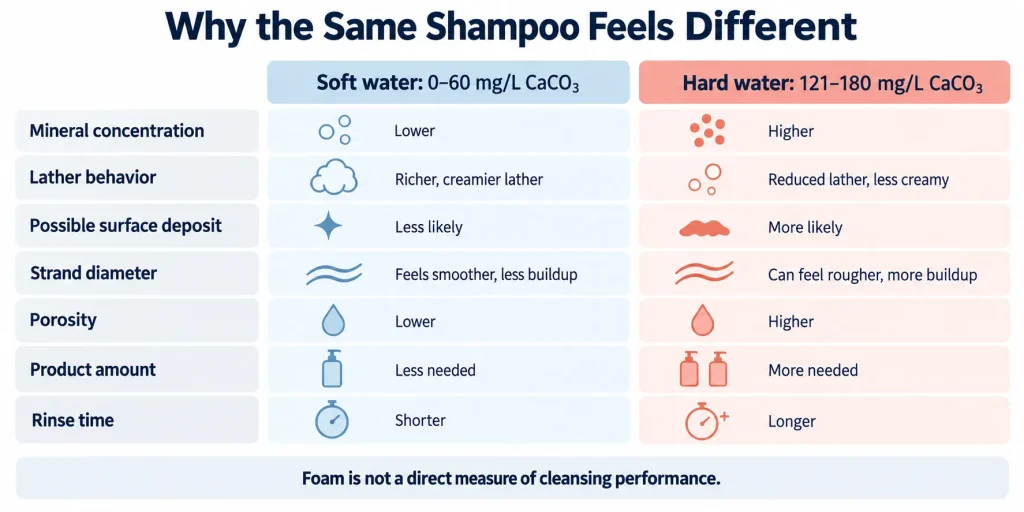
Hardness is generally reported as milligrams per liter of calcium carbonate equivalent. The USGS classifies water from zero through sixty milligrams per liter as soft, while higher bands are described as moderately hard, hard, or very hard. Dissolved minerals can interact with surfactants and contribute to deposits on hair, plumbing, and bathroom surfaces. Consequently, a shampoo may produce less foam or require more effort to spread and rinse in hard water. Foam is not a direct measurement of cleansing power, but a noticeable change in lather can be a clue that the water is different.
| Water category | Hardness as CaCO₃ | What a visitor may notice |
|---|---|---|
| Soft | 0–60 mg/L | Lather forms readily; less mineral scale |
| Moderately hard | 61–120 mg/L | Some change in foam and residue may appear |
| Hard | 121–180 mg/L | More mineral scale and altered shampoo behavior |
| Very hard | More than 180 mg/L | Strong scale potential and a clearer difference from soft-water washing |
The uncomfortable part is that buying a more expensive imported shampoo may not reproduce the result you noticed in Japan. If the original experience involved soft hotel water and the home trial uses a hard municipal supply or private well, the comparison is not controlled. Adding more shampoo can increase product use without removing the cause of mineral deposition. A local water utility’s consumer confidence report or a tested private-well sample gives you more useful information than the country printed on the bottle. Hard water and hair should be treated as a water-quality variable, not as a beauty trend.
A simple comparison keeps the variables visible:
- Check the hardness reported by your local utility or laboratory rather than guessing from taste.
- Compare the same shampoo, approximate quantity, washing interval, and styling products.
- Note lather, rinsing, residue, and scalp comfort separately instead of assigning one overall score.
- Stop using a cosmetic product if it causes persistent irritation and ask a dermatologist about continuing symptoms.
- Do not treat a shower filter as a water softener unless its specifications say that it reduces calcium and magnesium hardness.
After washing: conditioner is not a repair certificate
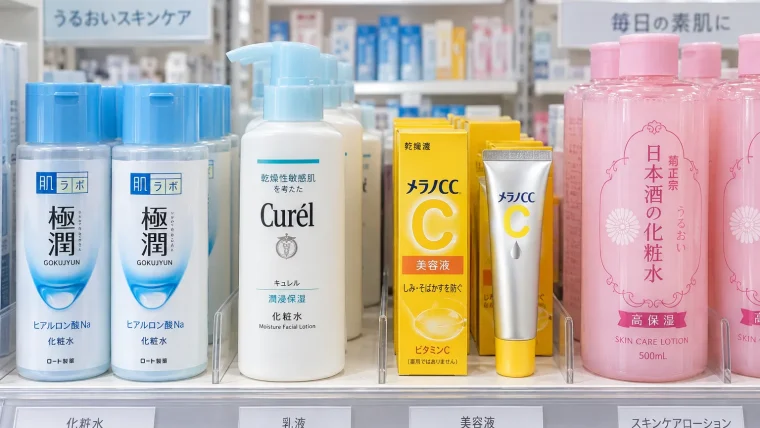
コンディショナー kondishonā, “conditioner,” usually reduces friction and changes how the hair surface feels. トリートメント torītomento, borrowed from “treatment,” commonly refers in Japanese retail to a richer rinse-out conditioning product. The English word can imply medical treatment or permanent repair, but the Japanese beauty label usually describes a cosmetic step. Neither term proves that the product reconstructs a damaged fiber. Hair outside the scalp is not living tissue, so a smoother feel should not be described as biological healing.
This is one of the places where translation encourages overclaiming. A product called ヘアパック hea pakku, literally “hair pack,” is generally an intensive conditioning mask rather than a diagnostic treatment. 洗い流さないトリートメント arainagasanai torītomento, “treatment that is not rinsed out,” means a leave-in product. These categories may coat, lubricate, reduce friction, or temporarily improve manageability, depending on the formula. They do not guarantee thicker growth, restored bonds, or permanent recovery.
You will commonly encounter the following retail terms:
- シャンプー shanpū — shampoo
- コンディショナー kondishonā — conditioner
- トリートメント torītomento — richer conditioning treatment
- ヘアマスク hea masuku — hair mask
- ヘアオイル hea oiru — hair oil
- 頭皮ケア tōhi kea — scalp care
- ダメージケア damēji kea — damage care, usually a cosmetic positioning term
If you need help asking whether a product is rinse-out, leave-in, fragranced, or intended for the scalp, the site’s Japanese phrasebook includes 337 phrases, including shopping language. Product packaging may provide the essential instructions even when the front label relies on English loanwords. Look for 使用方法 shiyō hōhō, literally “method of use,” and 使用上の注意 shiyōjō no chūi, “precautions for use.” Those instructions matter more than assumptions based on the bottle’s color or marketing category. Ask store staff when the distinction remains unclear.
Drying time: technique changes the finish
ドライヤー doraiyā, derived from “dryer,” means a handheld hair dryer in this context. Many Japanese routines emphasize drying the scalp area and roots rather than leaving washed hair wet for a long period. That habit can affect volume, direction, and the way the surface dries, but it does not establish one medically superior schedule for everyone. High heat and prolonged exposure can also damage fibers. The useful comparison is controlled airflow and heat versus repeated overheating, not Japan versus America.
Hair oil is commonly used in a small cosmetic role before or after drying, depending on the product directions. It may reduce friction, add shine, or make ends feel less rough, but “oil” does not identify one standardized formula. Some products are largely silicone-based despite being marketed through an oil ingredient. Others contain plant oils, fragrance, or a mixture of conditioning agents. If you have a sensitive scalp or known fragrance allergy, check the ingredient label and ask a pharmacist or dermatologist about a reaction instead of assuming a traditional ingredient is harmless.
The facial-cleansing idea of using oil before foam has a separate purpose and should not be copied automatically onto the scalp. Oil First, Foam Second, and Why explains double cleansing in its proper skincare context. Hair oil is usually a finishing or friction-reducing product, not proof that the scalp needs two cleansing stages. Excess product can simply create buildup or require more washing. This is one example of a recognizable J-beauty term meaning something different when it moves from skin to hair.
Winter through spring: the quieter stretch
From January through March, much of Japan experiences cooler conditions and lower indoor humidity than in summer, although climate varies significantly by region. A visitor may notice static, dry-feeling ends, hats, indoor heating, and more emphasis on conditioning products. There is no official winter hair-care calendar and no fixed date on which routines change. Product launches and advertising campaigns do not create a biological deadline. This is a quiet stretch in the cycle, and it should be described that way.
April and May bring a transition toward warmer and, in many places, more humid weather. People may change the weight of styling products or respond to increasing frizz, but there is no national rule requiring a seasonal switch. Spring pollen can affect people with allergies, yet a hair article should not diagnose scalp symptoms as a pollen response. Persistent itching, scaling, pain, or hair loss belongs with a dermatologist rather than a cosmetic counter. Japanese scalp care remains cosmetic unless a regulated medicinal claim and product category state otherwise.
| Period | Typical condition in much of Japan | What a visitor may notice | Fixed date? |
|---|---|---|---|
| January–March | Cooler, often drier air | Static and more conditioning marketing | No |
| April–May | Warming transition | Lighter styling and humidity preparation | No |
| June–July | Rainy-season humidity in many regions | Frizz-control and straightening promotion | No; timing varies |
| August–September | Heat and high humidity | More frequent washing and scalp-focused products | No |
| October–December | Milder fall, then cooler air | Transition back to richer conditioning | No |
The rainy season: humidity exposes texture
梅雨 tsuyu, literally “plum rain,” is the rainy-season period affecting much of Japan, though not every region in the same way. Its beginning and end are assessed by the Japan Meteorological Agency from weather patterns rather than determined by a permanent calendar rule. For the Kanto-Koshin region, which includes Tokyo, the agency announced the apparent start of the 2026 rainy season on June 7, 2026. The corresponding 2027 timing cannot be known in advance because it depends on observed and forecast atmospheric conditions. Any article claiming an exact 2027 rainy-season start this far ahead is inventing a date.
Higher humidity can make changes in curl pattern, swelling, and frizz more visible, especially in porous or chemically processed hair. This is why shelves and salons may emphasize うねり uneri, “waviness” or “bending,” and 広がり hirogari, “spreading” or unwanted volume. Those words describe appearance rather than a medical condition. The same humidity does not produce the same outcome on every head of hair. A traveler should plan around weather and personal styling needs, not expect one anti-humidity product to guarantee a fixed finish.
Summer into fall: sweat does not rewrite the rules
August and September can bring high temperatures and humidity across much of Japan, with large regional differences. Visitors may wash more frequently because of sweat, commuting, outdoor activity, or personal comfort. That does not establish a universal Japanese requirement for daily shampooing. Scalp type, hairstyle, exercise, product buildup, and clinician guidance all affect the decision. The quiet truth is that ordinary washing, drying, and sun exposure dominate this period more than any special ritual.
UV products for hair and scalp appear beside facial sunscreens, but their labels and intended uses are not interchangeable. Different Filters, a Different Rulebook explains why Japanese and American sunscreen categories cannot be compared from texture alone. A cosmetic hair mist is not automatically a substitute for a regulated skin sunscreen on an exposed part line. Follow the labeled use and reapplication directions of the skin product you choose. Ask a pharmacist or dermatologist if scalp exposure or sensitivity makes ordinary application difficult.
October through December form another relatively quiet transition. Humidity often eases, temperatures fall, and richer conditioners may return to store displays. No movable holiday or annual event dictates the change, so there are no genuine 2026 and 2027 hair-care dates to list. The only movable seasonal entry is the meteorological rainy season, whose assessed timing varies by year and region. Planning should follow current Japan Meteorological Agency information close to travel.
Salon day: 縮毛矯正 is not a keratin service
縮毛矯正 shukumō kyōsei, literally “curly-hair correction,” is a chemical straightening service that alters the hair’s internal bonds and uses heat to set a straighter configuration. In common salon practice, a reducing stage, flat-ironing stage, and oxidizing stage are distinct parts of the process. Product chemistry varies, so the Japanese service name alone does not identify every ingredient, concentration, or safety precaution. Previously bleached or severely damaged hair may respond differently from untreated hair. Only a qualified stylist who has examined the hair can describe whether a specific service is appropriate.
A U.S. keratin smoothing service is a different category. It generally aims to smooth the surface, reduce frizz, and make styling easier rather than use the same reduction-and-oxidation sequence as Japanese chemical straightening. “Keratin” is a marketing category, not a guarantee of ingredient safety. The FDA warns that some hair-smoothing products release formaldehyde gas when heated, and it tells consumers to read ingredient lists and ask salon professionals about product contents. Its consumer guidance states:
“Hair smoothing products may release formaldehyde gas, a known human carcinogen.”
This does not mean every U.S. smoothing service contains or releases formaldehyde. It does mean “formaldehyde-free,” “keratin,” and “natural” should not be accepted as complete safety information without checking the actual product and safety data. If you are considering either service, ask the salon for the product name, ingredient information, ventilation measures, and a candid assessment of previous bleach or color damage. If fumes cause eye, nose, throat, skin, or breathing symptoms, leave the exposure area and seek medical guidance. Japanese hair straightening and keratin smoothing should be compared by chemistry and process, not by the photographs used to sell them.
| Feature | 縮毛矯正 shukumō kyōsei | U.S. keratin smoothing |
|---|---|---|
| Main purpose | Chemical straightening | Smoothing and frizz reduction |
| Basic mechanism | Bond reduction, heat shaping, oxidation | Product applied and sealed with heat; chemistry varies |
| New growth | Retains its natural pattern | Effect varies as treatment wears and hair grows |
| Main uncertainty | Hair condition and chemical compatibility | Product ingredients and possible gas release |
| Question for the salon | What chemistry is used on bleached or colored hair? | What is the exact product and its safety data? |
What is worth planning around
The first period worth planning around is wash time, because local water hardness can change how the same shampoo foams, rinses, and deposits residue. The second is the rainy season if humidity strongly affects your hair texture or styling. A salon appointment is the third, but only when you have enough time for a consultation and the salon can identify the chemicals it will use. The period to avoid is a rushed straightening appointment immediately before an important event or departure. A photograph cannot tell a stylist the full bleaching, coloring, and chemical history of your hair.
There are no meaningful fixed dates for the Japanese hair care routine, and the annual table should not pretend otherwise. The repeatable factors are strand structure, water composition, humidity, cleansing, heat, friction, and chemical history. Japanese products may suit those conditions well, but nationality is not an active ingredient. Soft water can explain a lather difference without proving a shampoo is better. A thicker average cross-section can explain product preferences without predicting the needs of an individual person.
Short FAQ
Is all Japanese hair thick and straight?
No. Research describes group averages, not a rule applying to every Japanese person. Individual diameter, density, curl pattern, porosity, damage, and scalp condition vary widely. “East Asian hair” is also a broad research category rather than a personalized diagnosis. Choose products according to your own hair and the formula’s purpose, not an ethnic stereotype.
Does Japanese shampoo work only with soft water?
No, but water hardness can change lather, rinsing, and mineral deposition. The same bottle may therefore feel different in two homes. Foam alone does not measure whether hair is clean. Check your utility’s hardness data before blaming the formula. If scalp symptoms persist, consult a dermatologist rather than repeatedly changing products.
Is 縮毛矯正 safer than a keratin treatment?
The service name alone cannot establish safety. 縮毛矯正 and keratin smoothing use different processes, while formulas within either category can vary. Hair condition, chemical ingredients, heat, ventilation, and operator technique all matter. Ask the salon to identify the exact products and review your previous chemical services. Seek professional medical guidance if a treatment causes respiratory, eye, skin, or scalp symptoms.