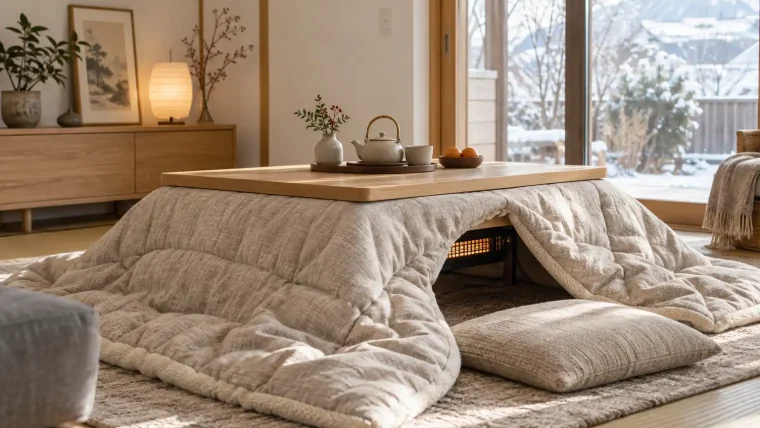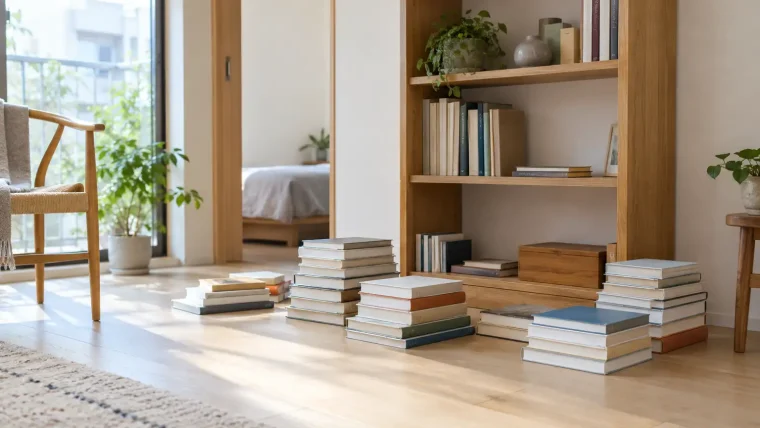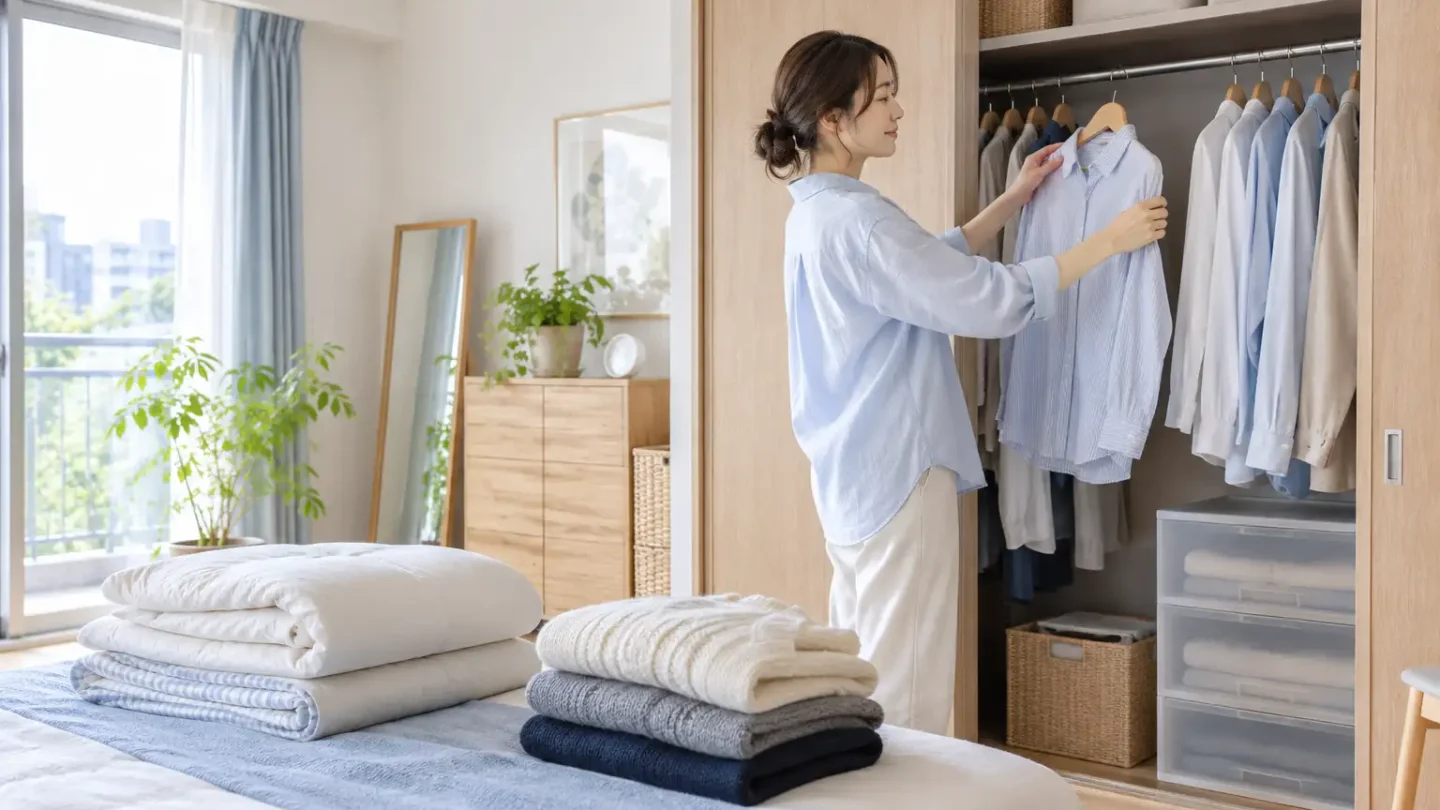
This walkthrough follows a renter preparing one compact Tokyo apartment for June 1, then reversing the process around October 1. It is a representative koromogae seasonal change because the same dates traditionally signal summer and winter uniform changes in schools and workplaces. At home, however, there is no official order requiring curtains, bedding and clothing to move on those exact days. The useful version of the custom is a controlled household reset, not a ceremonial race to empty every closet in one afternoon.
衣替え, koromogae, literally “changing clothes,” now refers both to changing seasonal clothing and to the wider reorganization that can accompany it. The worked case uses possessions already in the apartment, so its direct cost is ¥0 ($0). That is deliberate: buying storage products is not what makes the process work. The decisions about cleaning, drying, access and timing matter more.
The calendar behind the household reset
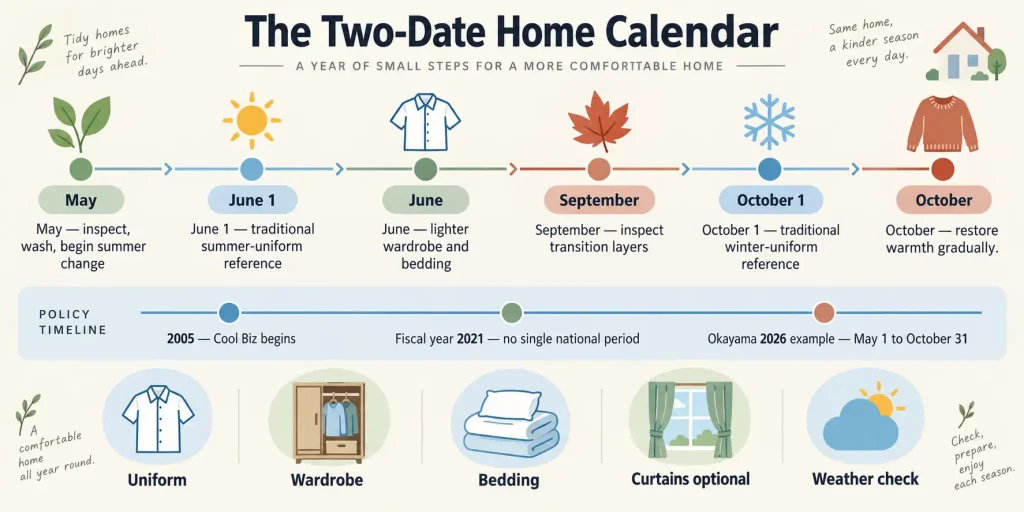
June 1 and October 1 remain familiar reference dates for changing uniforms, but they are conventions rather than universal national deadlines. Individual schools establish their own uniform rules and may provide transition periods during which students can wear either version. Employers likewise set their own dress policies.
The older custom is associated with 更衣, kōi, literally “changing garments,” at the imperial court. Court clothing changed with the season, but it would be too neat to claim that a modern apartment’s curtain swap has continued unchanged from court practice. The name, seasonal logic and formal change of clothing have historical roots; the present household routine is a modern extension shaped by manufactured wardrobes, limited storage and contemporary work schedules.
The modern reference calendar can be read like this:
| Date or period | Traditional signal | What it means at home |
|---|---|---|
| Around June 1 | Summer uniforms appear | Move heat-trapping items out of daily use |
| June through summer | Lighter workplace clothing | Keep rain and humidity in mind before storing textiles |
| Around October 1 | Winter uniforms return | Restore layers gradually rather than all at once |
| From fiscal year 2021 | No single national Cool Biz period | Follow local weather and workplace rules |
A small apartment makes this more visible because one shelf cannot hold every season equally well. Reading 1LDK, Jo and the Move-In Bill explains the layout terms that determine how much usable storage a Japanese rental actually gives you.

Stage one: take inventory before June 1
The first decision is what needs to remain reachable. Our model apartment does not send every long-sleeved garment into deep storage. One cardigan, one light jacket and rainwear stay near the door because early summer is not uniformly hot.
The renter starts with four household zones:
- The daily wardrobe
- The bed and linen shelf
- The windows and curtains
- The entrance storage area
The entrance matters because outdoor layers, umbrellas and damp items often collect there. Why the Floor Steps Up Inside the Door explains how the 玄関, genkan, literally “entrance gateway,” separates outdoor and indoor space. That separation gives you a practical boundary: wet rainwear should dry before it joins clean clothes inside the main wardrobe.
Nothing is purchased at this stage. The direct cost remains ¥0 ($0), while the apartment’s state changes from “winter items mixed with spring items” to “items assigned to daily, transitional or stored use.”
The date starts the review; the weather decides what leaves the room.
Stage two: clean before anything is sealed
The next decision is whether an item is ready to disappear for several months. Clothing worn only briefly may look clean while still holding skin oils, food residue or moisture. Storing it immediately can turn an invisible mark into a stubborn stain.
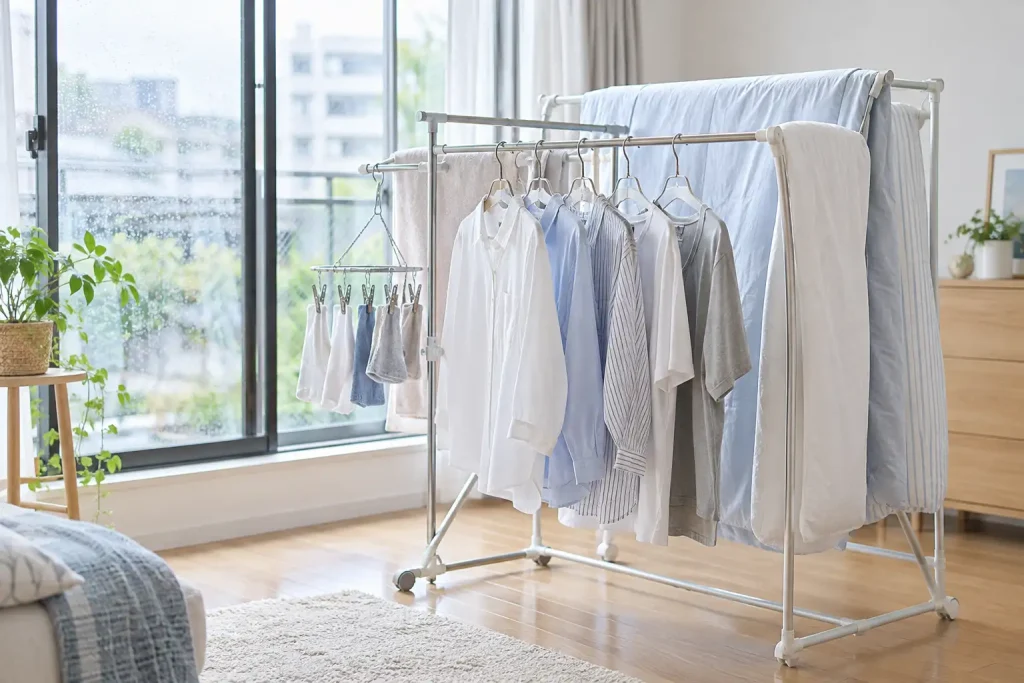
Wash or professionally clean garments according to their care labels. Bedding must also be completely dry before it is folded into a closed compartment. Japan’s early-summer rainy period makes this part more important than the attractive photographs of perfectly packed closets suggest.
The worked apartment follows this sequence:
- Wash clothing and removable bedding covers.
- Air bulky bedding until no moisture remains.
- Wipe the shelf or drawer before refilling it.
- Check clothing for loose buttons and damaged seams.
- Fold only after every item is fully dry.
- Keep a light layer outside the stored group.
The cost is still ¥0 ($0) in this case because ordinary scheduled laundry is used and no new container is purchased. A household using dry cleaning would need to add the shop’s current quoted price, which varies by garment and location.
Stage three: move summer items into working space
The third decision is not what to own but what deserves the easiest access. Lightweight shirts, breathable sleepwear and summer bedding move to the front. Heavy sweaters and thick covers move to the upper or rear storage area.
This is Japanese home organization in its least glamorous form. You lift one group out, clean the space, and put another group where your hands naturally reach. In a small rental, poor placement creates daily friction much faster than a lack of decorative storage boxes.
The bed changes in layers rather than through one dramatic replacement. A heavy winter setup can first lose its thickest top layer while a light blanket remains available. Curtains may be washed, and some households use lighter or heat-blocking window treatments, but changing curtains is neither compulsory nor universal.
The room itself also affects the plan. 畳, tatami, are traditional floor mats, while 帖 or 畳, jō, is used as a room-size unit in property listings. How Many Mats Is the Room You Are Renting shows why the same wardrobe can feel manageable in one layout and overwhelming in another.
The running state of the June change
The following table records the worked case without pretending that every household owns the same number of garments or linens.
| Stage | Decision | Apartment state | New spending | Running total |
|---|---|---|---|---|
| Inventory | Keep transitional layers reachable | Three seasonal groups identified | ¥0 ($0) | ¥0 ($0) |
| Cleaning | Store nothing damp or soiled | Winter textiles cleaned and dried | ¥0 ($0) | ¥0 ($0) |
| Wardrobe | Give summer clothes prime access | Heavy items moved to secondary storage | ¥0 ($0) | ¥0 ($0) |
| Bedding | Remove warmth in layers | Light blanket remains available | ¥0 ($0) | ¥0 ($0) |
| Windows | Clean before changing any fabric | Curtains assessed rather than automatically replaced | ¥0 ($0) | ¥0 ($0) |
The zero-cost result is not a promise that every changeover costs nothing. It shows that seasonal wardrobe change does not require a shopping trip. If your existing storage is safe, dry and usable, buying matching containers only consumes money and space.
What Cool Biz changed at work
クールビズ, Kūru Bizu, or “Cool Biz,” began as a Japanese Ministry of the Environment campaign in fiscal year 2005. It encouraged lighter office clothing and reduced dependence on aggressive air conditioning during summer. The campaign helped normalize open collars, lighter fabrics and workplace dress codes that did not require a jacket and tie in hot weather.
For years, the government announced a nationwide implementation period. That made the office calendar look like a formal extension of koromogae. June became strongly associated with summer business clothing even when individual companies used different dates.
The current rule is more flexible. In its fiscal year 2021 announcement, the Ministry of the Environment said the national government would no longer set one uniform Cool Biz period for the whole country. Regional climate, unusual heat, personal health and different working arrangements made a single calendar less useful.
Local governments and organizations can still publish their own periods. For example, Okayama Prefecture set its 2026 campaign from May 1 through October 31, with May and October treated as transition months. That is good evidence of how Cool Biz Japan now works: the national campaign supplies the idea, while actual dates may be chosen locally.
October is the reverse process, not a reset button
Around October 1, the worked apartment begins moving in the other direction. The first items restored are not the heaviest winter coat and thickest comforter. They are transitional layers that handle cooler mornings without making the room uncomfortable on warm afternoons.
Summer items go through the same checks as winter items did:
- Wash before storage.
- Repair damage while it is still visible.
- Dry everything completely.
- Separate items that will still be useful.
- Return warmer layers in stages.
- Avoid sealing anything after a damp day.
The cost remains ¥0 ($0) if the same wardrobe, covers and storage spaces are reused. The state changes from “summer-first access” to “transitional access,” with full winter clothing returning only when conditions require it.
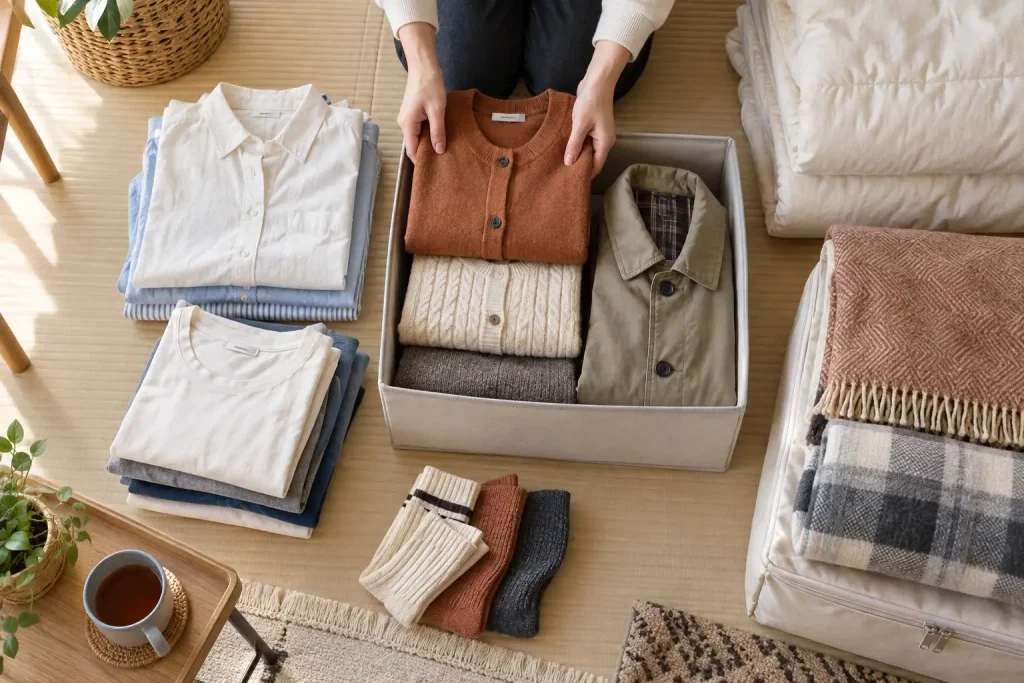
This gradual approach also prevents a common failure: putting away every short-sleeved item on October 1 and then needing to unpack it during a warm spell. The traditional date is useful for remembering the task, but it cannot forecast the temperature outside your building.
Where the June 1 rule fails
The general advice fails when it treats Japan as one climate zone. A date that feels reasonable in northern Japan may be much too late or too early in a warmer region. Elevation, coastal weather, building insulation, air conditioning and an individual’s work schedule also change what should remain accessible.
The rule can fail inside the same city. A top-floor apartment receiving afternoon sun behaves differently from a shaded ground-floor unit. A dry closet behaves differently from storage beside a poorly ventilated exterior wall. A household using a dryer has different timing options from one that relies on outdoor drying during rainy weather.
Schools are another important exception. June 1 and October 1 are familiar uniform markers, but there is no verified national Ministry of Education rule forcing every school to change on those dates. Follow the calendar and transition instructions issued by the school itself. The same applies to workplace uniforms.
The uncomfortable part is that a rigid one-day change can damage clothes. If you seal bedding or jackets while they retain moisture, completing the ritual “on time” is worse than waiting for suitable drying conditions.
How to adapt the change to your home
For a low budget, reuse clean containers and reduce the amount stored. Do not buy an organizer until you have measured the space and identified what it needs to hold. A container that blocks access or cannot fit through a closet opening creates another storage problem.
For a warmer city, move the summer stage earlier and delay the winter stage. For a colder area, keep insulation and outerwear available longer in spring and restore them earlier in fall. The fixed dates can remain reminders on your calendar without becoming commands.
For a very small home, divide the process into three groups instead of two:
- Current-season items in immediate reach
- Transition items in secondary reach
- Clearly off-season items in deeper storage
This method uses small apartment storage more efficiently because the wardrobe does not have to flip from one extreme to another. It also matches contemporary weather better than an all-at-once exchange.
If you need to ask a cleaner, landlord or store employee about storage, laundry or household items, the site’s phrasebook with 337 phrases for everyday situations is more useful than reproducing another phrase list here.
The household rule worth keeping
Koromogae works best when June 1 and October 1 trigger an inspection rather than dictate an outfit. Check the forecast, clean before storing, keep a transition layer accessible and spend money only after the existing storage has failed a specific need.
Short FAQ
Does every Japanese household change everything on June 1?
No. The dates are traditional reference points. Modern households often change clothing and bedding gradually according to weather, available storage and laundry conditions.
Must every school switch uniforms on June 1 and October 1?
No national rule covering every school was verified. Many schools use these familiar dates or nearby periods, but you should follow the school’s own instructions.
Is Cool Biz still a fixed national summer period?
No. The Ministry of the Environment stopped prescribing one nationwide period from fiscal year 2021. Employers and local governments may establish their own dates.
Do curtains have to be changed during koromogae?
No. Some households wash or change them as part of a seasonal reset, but curtain replacement is not a required element of the custom.