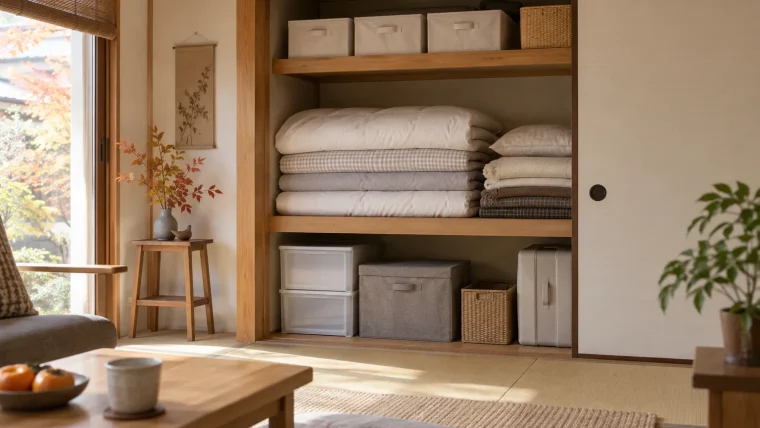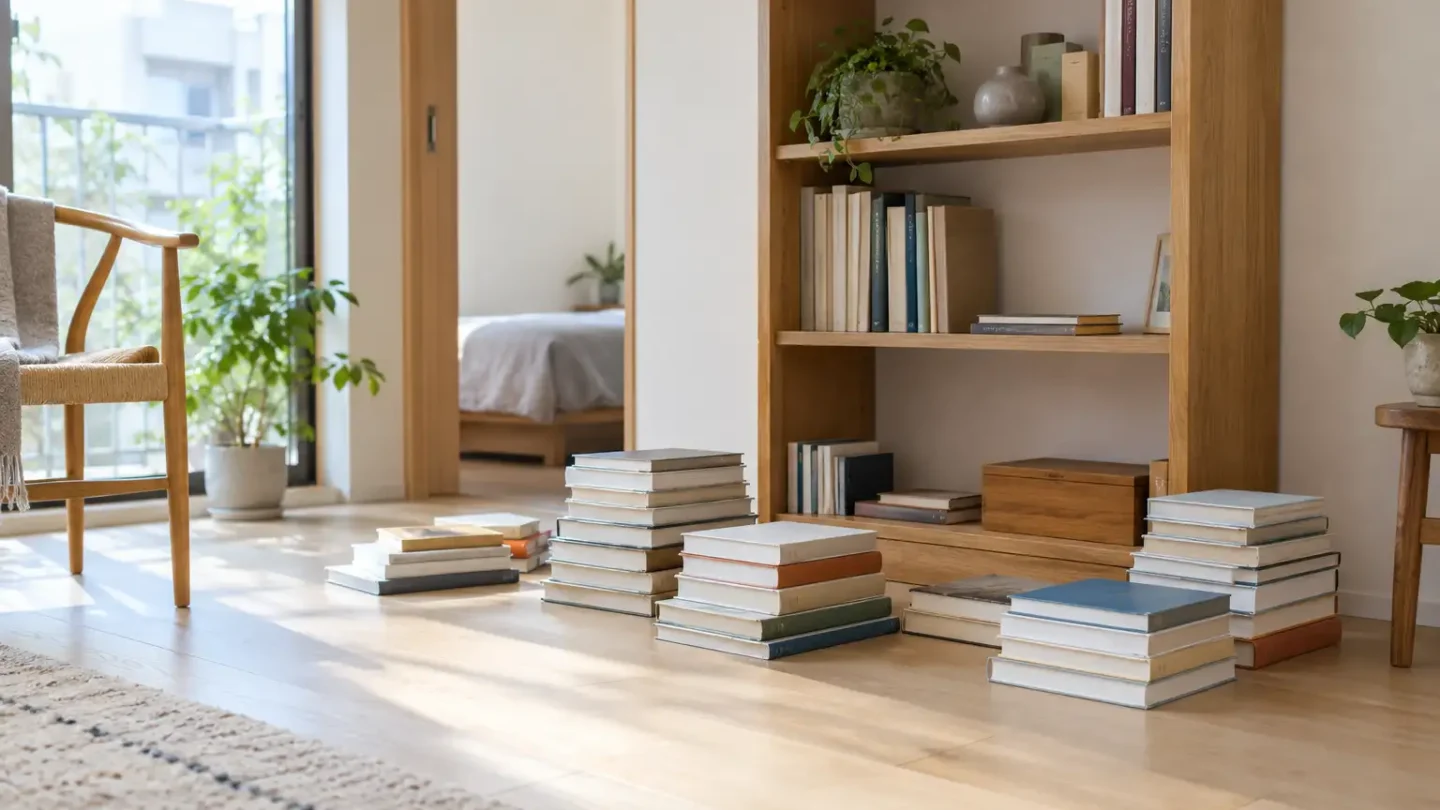
The claim repeated most often is that Marie Kondo tells you to keep no more than 30 books. She does not, and the konmari method explained through that alleged limit immediately becomes less rigid than its online reputation. The number describes Kondo’s own collection in an English-language edition of her book, not a maximum imposed on every reader. When the claim spread widely in 2019, she publicly called it a misconception and said the number of books a person keeps is an individual decision. The error is a useful warning: the television image, translated slogan and viral argument are not always the same thing as the written method.
“Marie Kondo says you may own only 30 books”
Verdict: false — the Marie Kondo 30 books rule does not exist.
Kondo wrote that she personally kept her collection at about 30 volumes at that point in her life, but she did not turn that number into a universal ceiling. Online discussion in January 2019 stripped away the first-person context and recast her personal result as an instruction to readers. During an appearance on Jimmy Kimmel Live! that month, she described the supposed rule as a complete misconception. In a February 2019 interview with The Wall Street Journal, she again said she had never instructed people to limit their libraries to that number. The accurate rule is to handle books as a category and decide which ones matter to you, even if your answer fills several shelves.
This distinction matters in a Japanese apartment, where storage can be limited but is not identical from home to home. A compact studio and a family 1LDK do not give their occupants the same choices, and Reading 1LDK, Jo and the Move-In Bill explains the housing terms behind that difference. Kondo’s personal shelf cannot be converted into a rule for every floor plan. Nor does a small Japanese home automatically prove that its residents prefer minimalism. Space affects decisions, but it does not make the decisions for you.
| Repeated claim | What the source actually says | Practical reading |
|---|---|---|
| Keep no more than 30 books | Kondo described her own collection as about 30 volumes | Your total depends on which books you choose to keep |
| Discard books that are unread | Unread status can prompt a decision, but it is not an automatic sentence | Handle each book and decide whether it belongs in your life |
| Kondo dislikes books | She has repeatedly said readers may keep books they value | The method evaluates possessions, not reading itself |
| The controversy created the number in 2019 | The number appeared earlier in her book; 2019 coverage turned it into a supposed command | Separate the original first-person statement from the viral version |
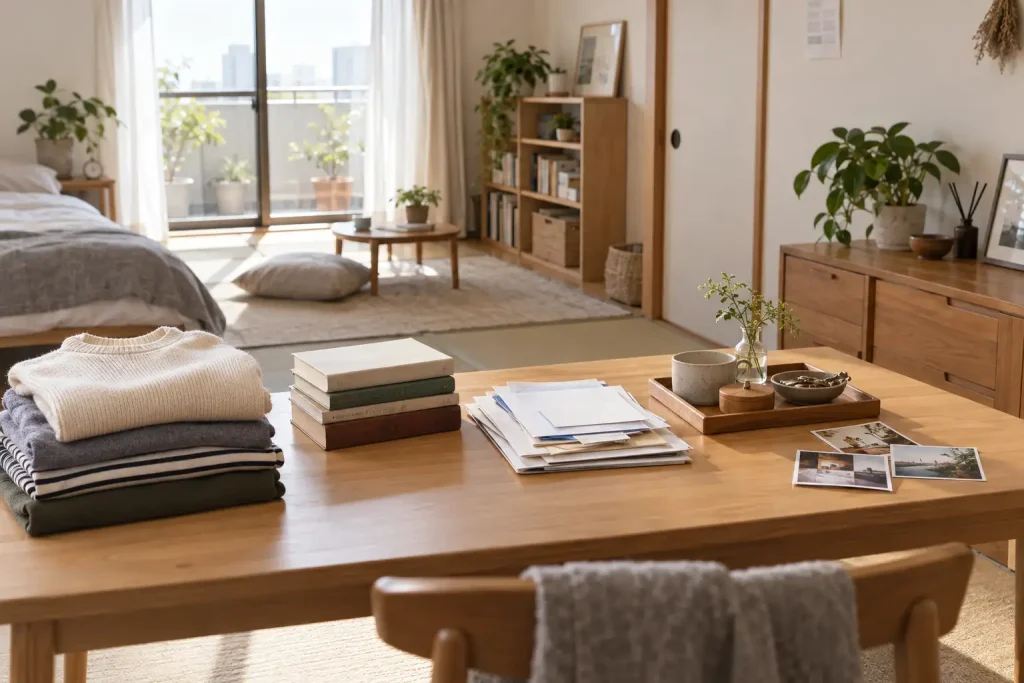
“Spark joy is the exact meaning of ときめく”
Verdict: mostly true — spark joy is useful, but ときめく carries movement.
The Japanese expression is ときめく, tokimeku, meaning to flutter, throb or quicken with excitement. “Spark joy” is an effective English rendering because it turns an internal reaction into a short question, but it is not a word-for-word equation. The Japanese verb can suggest the feeling of your heart stirring, not merely a calm judgment that an object is pleasant or useful. Kondo’s book title, 人生がときめく片づけの魔法, Jinsei ga tokimeku katazuke no mahō, literally points toward “the tidying magic that makes life flutter.” You therefore do not need to wait for theatrical happiness; you are noticing whether an item produces a positive, enlivening response when you hold it.
This is also why usefulness and joy are not necessarily opponents. A plain saucepan, winter coat or screwdriver can support your daily life so reliably that you want to keep it. The method asks you to recognize that relationship instead of pretending every possession must feel like a birthday present. Translation made the test memorable, while television made the reaction look more visible than it may feel in an ordinary home. What does spark joy mean is therefore best answered as “Does this belong in the life you want to keep living?”
“You have to follow the categories in a fixed order”
Verdict: mostly true — the KonMari category order is prescribed.
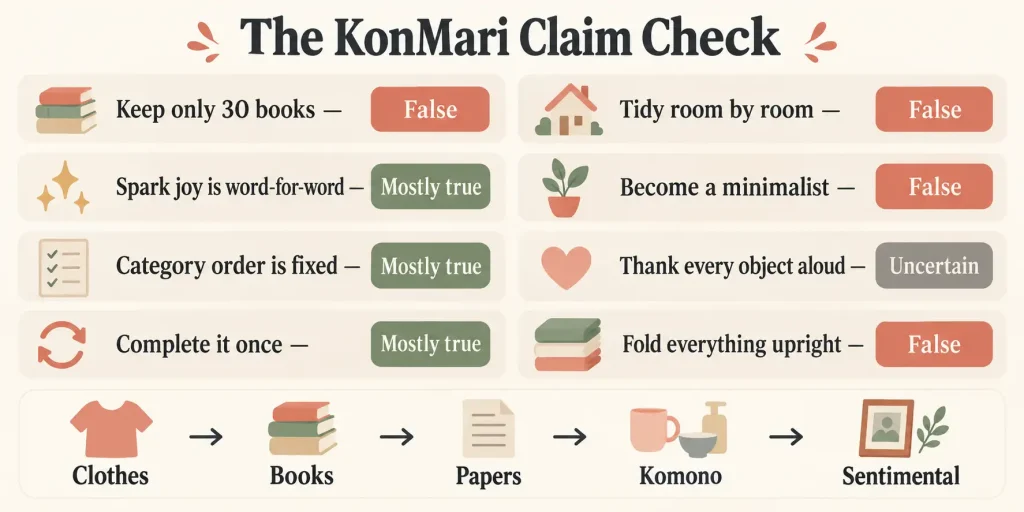
The official sequence is clothes, books, papers, 小物, komono, literally “small things” or miscellaneous items, and sentimental possessions. Kondo’s official course and checklist continue to present the categories in that order. The reasoning is progressive rather than decorative: you begin with items that are usually easier to assess and leave emotionally difficult possessions until your decision-making has had practice. You tidy by category across the home, not by finishing the bedroom and then repeating the process in the living room. Within a broad category, however, you can create smaller groups so that a mountain of every miscellaneous possession does not become unmanageable.
| Order | Category | What normally belongs there | Useful subdivision |
|---|---|---|---|
| 1 | Clothes | Garments, shoes and wearable accessories | Tops, bottoms, outerwear, shoes |
| 2 | Books | Printed books and similar reading material | Fiction, reference, cookbooks |
| 3 | Papers | Documents that must be reviewed or retained | Action required, limited-term, permanent |
| 4 | Komono | Kitchenware, toiletries, tools, electronics and other miscellaneous goods | Sort by function rather than room |
| 5 | Sentimental items | Photographs, letters, keepsakes and inherited objects | Begin with the least emotionally difficult group |
Do not confuse this prescribed sequence with Japanese architectural order. Removing shoes in a 玄関, genkan, literally “entrance,” follows a boundary between outside and inside, which Why the Floor Steps Up Inside the Door examines separately. Likewise, 畳, tatami, room measurements concern floor area rather than how you should sort possessions; How Many Mats Is the Room You Are Renting covers that system. The KonMari categories are Kondo’s organizing framework, not ancient rules observed by every Japanese household. Treating them as national custom romanticizes a commercial method and makes Japanese homes seem more uniform than they are.
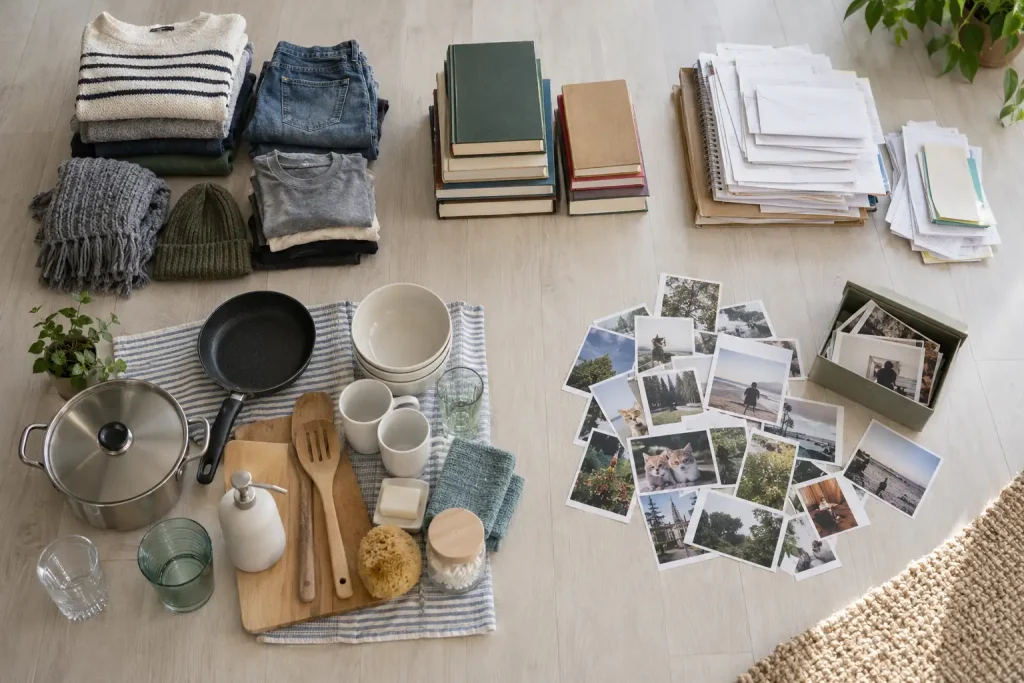
“You complete the whole method once”
Verdict: mostly true — the one-time tidying festival is followed by maintenance.
Kondo distinguishes a concentrated 片づけ, katazuke, meaning “putting in order,” from the repetitive work of cleaning and returning objects to their places. Her method presents the major sorting project as a special event that you complete rather than a small daily habit that never reaches an endpoint. That does not mean the home remains orderly without further action. Laundry still accumulates, papers enter the house, children grow out of clothes and possessions change with work or family life. The “once” claim applies to the comprehensive decision-making process, while ordinary upkeep continues.
The practical difficulty is that a full-home project can take longer than a television episode suggests. Kondo’s own material advises completing the process quickly and completely, but “quickly” is relative to the household and is not a verified universal number of days. A person moving alone can work differently from a family negotiating shared belongings. You should never discard another household member’s property to make the project look finished. KonMari tidying once means one defined campaign, not one afternoon and not permanent freedom from housework.
“You should tidy one room at a time”
Verdict: false — KonMari sorting is organized by category, not location.
Room-by-room cleaning is familiar because it gives you a visible stopping point, but it can conceal duplicate possessions. Books may be in the bedroom, hallway, kitchen and storage closet, while batteries and cables may have migrated into several drawers. Kondo asks you to gather one category so you can see what you own before deciding what stays. The difficult part is the temporary disorder: collecting a category can make the home look worse before it becomes easier to use. If you cannot safely place every item in one pile, work through clearly defined subcategories without quietly returning to random room-by-room decisions.
The same principle explains why storage products come late. Buying boxes before reducing and categorizing your belongings can produce tidier-looking clutter without solving duplication. You need to know the retained volume before assigning permanent homes. This does not forbid using containers you already own, and it does not require buying Kondo-branded products. The KonMari decluttering method is supposed to decide what stays before it decides which box will hold it.
“KonMari means becoming a minimalist”
Verdict: false — Marie Kondo minimalism is a popular shortcut, not the stated goal.
Minimalism usually emphasizes owning less, while Kondo’s stated test emphasizes selecting what supports the life you want. Those approaches can produce similar-looking rooms, but they are not identical standards. A collector may keep a large, carefully chosen collection, while another person may discover that an almost empty room feels comfortable. The method does not establish a target number for shirts, cups, books or sentimental objects. It therefore offers no objective finish line that lets you compare your household with an uncluttered photograph online.
The uncomfortable part is that the method still demands substantial labor. You must gather possessions, handle them, make decisions and establish storage after discarding, which can be harder than buying matching containers. It can also be emotionally difficult when an object represents money wasted, an abandoned hobby or a relationship that has changed. A clean visual style does not remove that work. The method may leave you with fewer things, but KonMari vs minimalism is a difference between choosing by relationship and reducing by quantity.
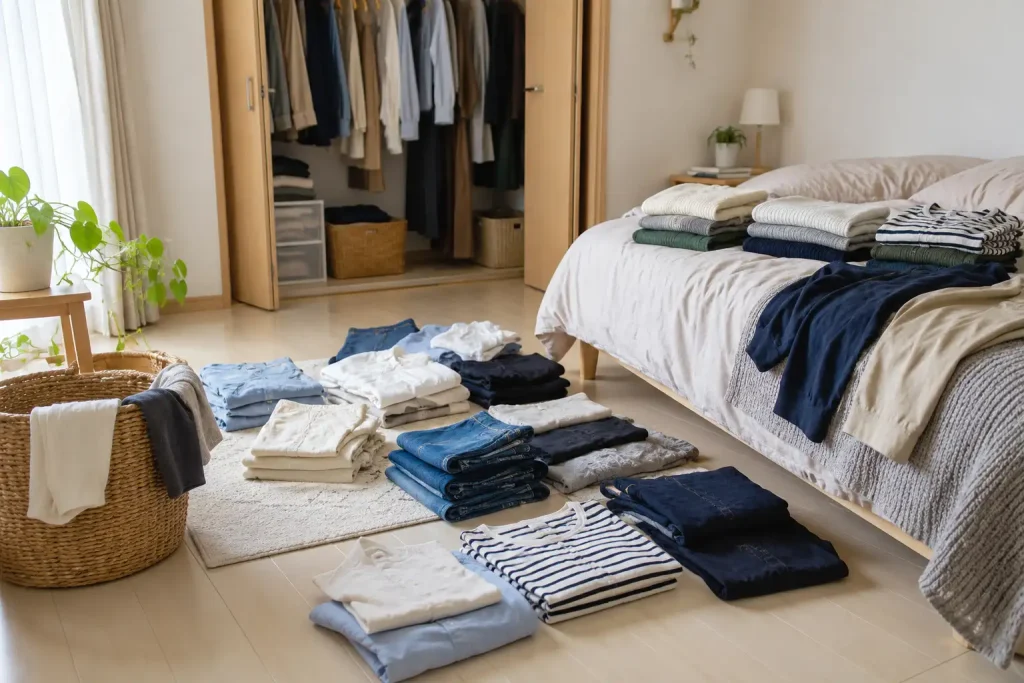
“You must thank every object before letting it go”
Verdict: uncertain — gratitude is present, but the exact ritual is not equally mandatory in every presentation.
Kondo teaches gratitude toward possessions and is often shown thanking an item before releasing it. Her books, official materials, translated interviews and television programs do not always give the gesture identical emphasis or describe every movement in precisely the same way. Translation also complicates the tone because 感謝, kansha, meaning “gratitude,” can sound solemn in English when the practical act is quiet and brief. It is clear that appreciation belongs to her approach, but it is less clear that every reader must speak aloud to every discarded object. The safest reading is that you acknowledge what an item provided rather than treating a specific televised gesture as a compulsory script.
If you want usable Japanese for asking where household items belong, arranging a delivery or handling other daily exchanges, the site’s phrasebook with 337 phrases for everyday situations is more useful than copying lines from an organizing program. The method does not require you to speak Japanese. Saying “thank you” in English, thinking it silently or simply recognizing an item’s past purpose can serve the practical function. What cannot be verified is another person’s private emotional response to that ritual. Thanking discarded items is part of Kondo’s language of respect, but the evidence does not support policing a single performance.
“Folding clothes upright is the entire system”
Verdict: false — KonMari folding is one storage technique inside a larger process.
The television series made upright folded rectangles highly recognizable because they are easy to show on camera. Kondo recommends folding suitable clothes so they can stand in drawers and remain visible, but the method begins before storage. First you collect the clothing category, decide what stays and only then assign each retained item a place. Hanging remains appropriate for garments that are better stored on hangers. Perfect rectangles cannot compensate for keeping clothes you neither use nor want.
A drawer also has physical limits that online advice often ignores. Heavy knitwear, delicate fabrics, unusual drawer dimensions and mobility needs can justify a different storage choice. The objective is to see and retrieve what you own without collapsing the rest of the arrangement. You should adapt the fold if the standard movement is difficult or damages the garment. A household system succeeds when the people living there can maintain it, not when every drawer resembles a television reveal.
What to believe instead
Believe that Kondo’s method is a fixed category sequence for making decisions, followed by ordinary maintenance. Believe that ときめく, tokimeku, describes a felt stirring more vividly than the compact English slogan “spark joy,” and that no universal 30-book limit exists. Most importantly, judge the written rule separately from Kondo’s personal example, its English translation and the version television made memorable.
Short FAQ
Did Marie Kondo ever write the number 30?
Yes, the English-language book includes a passage in which Kondo says she personally kept about 30 volumes at that time. The sentence reports her collection rather than commanding the reader to copy it. The distinction disappeared in much of the 2019 online debate. Kondo subsequently denied that her method limits everyone to that number. You can keep a larger library if those books belong in the life and space you have chosen.
Must the five categories be completed in one day?
No verified rule requires you to finish the complete sequence in one day. The official method treats the project as a concentrated, finite “tidying festival,” but the duration depends on the volume of belongings and the household involved. You should preserve the sequence even when the work spans multiple sessions. Shared belongings also require decisions from their owners rather than unilateral disposal. Set a realistic schedule without converting “all at once” into an unsafe marathon.
Can you use the method in a very small Japanese apartment?
Yes, although gathering an entire broad category may temporarily overwhelm the available floor area. Divide clothes, papers or komono into functional subcategories while keeping the prescribed overall order. Do not buy storage before you know what will remain. Protect the entrance and walking routes so the project does not block daily use. Small rooms make sequencing more important, but they do not create a fixed possession limit.