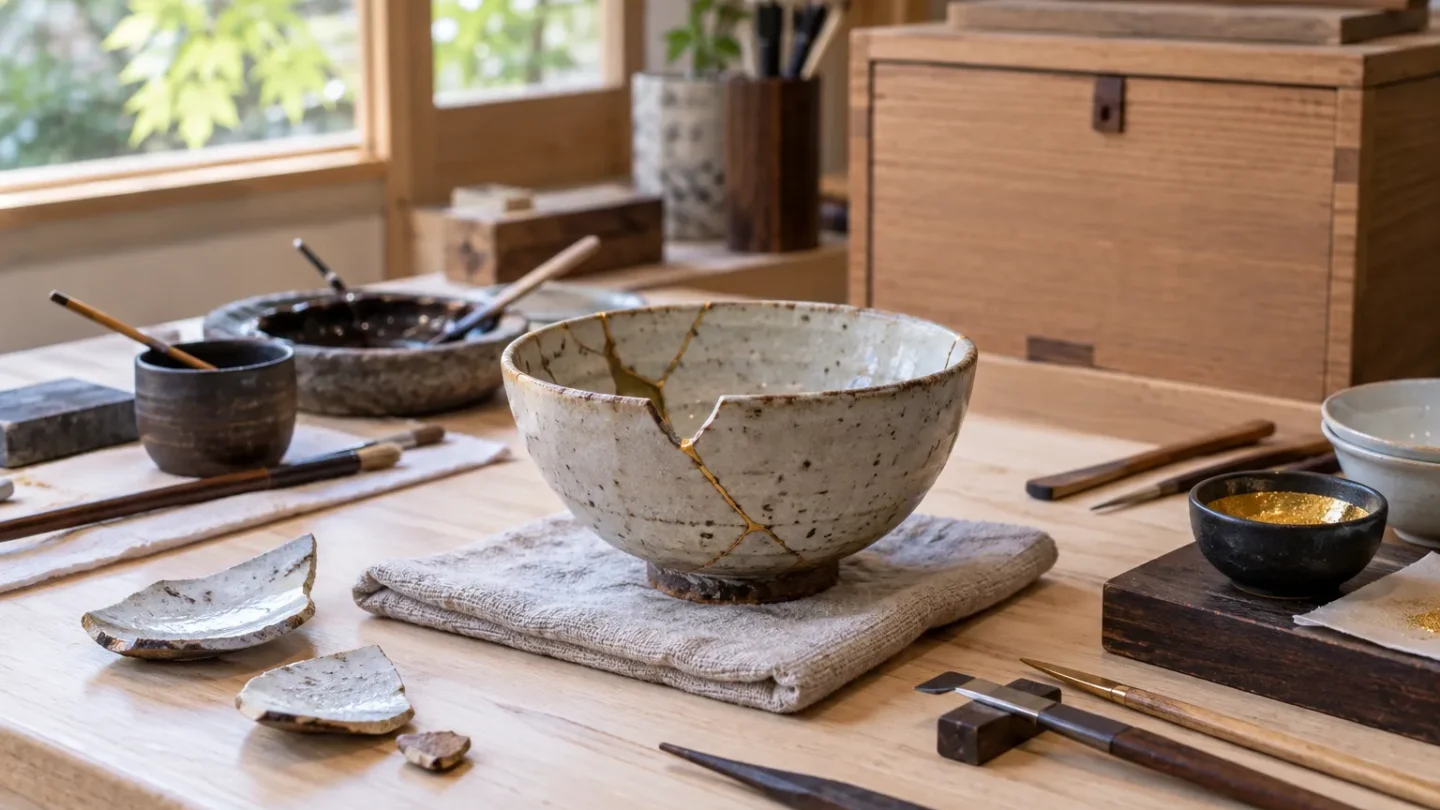
Using an uncertified epoxy kit on a favorite rice bowl and putting it back into food service is the most consequential mistake. Understanding kintsugi how it works means separating a traditional urushi repair from the fast, gold-colored adhesive sold in many hobby kits. Traditional 金継ぎ, kintsugi, literally “gold joining,” builds the repair in stages with natural lacquer, allowing successive layers to harden in controlled humidity before the final metallic finish. Raw or incompletely cured lacquer contains allergenic compounds associated with contact dermatitis, so traditional work is not a casual kitchen-table project. A convenient epoxy kit can produce an attractive decorative object, but it should not be treated as food-contact safe unless the manufacturer provides specific documentation covering the product, cure conditions, and intended use.
Putting an uncertified epoxy repair back on the table
Many beginners assume that a hard adhesive must be safe once it feels dry. The assumption seems reasonable because cured epoxy can look like plastic, resist water, and hold ceramic fragments firmly together. None of those qualities proves compliance with food-contact requirements. Resin chemistry, pigments, metallic powders, mixing accuracy, curing conditions, heat, acidity, and the intended contact surface all matter.
The phrase “non-toxic” is not the same as “approved for food contact.” A craft kit may be marketed for repairing pottery while its instructions quietly limit the result to display. Even an epoxy system that has documentation for incidental food contact may have restrictions involving temperature, repeated washing, damaged surfaces, or direct contact with food. If the manufacturer does not publish an applicable declaration, the repaired bowl should be considered decorative.
| Label or claim | What it establishes | What it does not establish |
|---|---|---|
| Non-toxic | A general marketing or hazard statement | Suitability for repeated food contact |
| Solvent-free | Absence of a particular solvent system | Compliance of resin, hardener, and pigment |
| Fully cured | The stated curing process is complete | Automatic food-contact authorization |
| Food-contact compliant | Suitability under specified conditions | Safety outside those conditions |
| Dishwasher safe | Resistance to a stated washing process | Safety of an undocumented repair mixture |
| Decorative use only | The maker does not authorize food use | Permission to serve food anyway |
The uncomfortable answer is simple: if the kit maker does not identify a food-contact standard or authorized use, the gold line is decoration. It may repair the shape without restoring the vessel’s original function.
What to do instead: Keep an undocumented epoxy repair for display, or ask the manufacturer for written food-contact information covering the complete mixed and cured system.
Touching raw urushi because “natural” sounds gentle
漆, urushi, literally “lacquer,” is refined sap from the Asian lacquer tree. Calling it natural is accurate, but treating natural as harmless is not. The material contains urushiol-related compounds capable of causing allergic contact dermatitis before adequate curing. This is the same chemical family associated with reactions to poison ivy and related Toxicodendron plants.
A maker may not react during an early exposure and still become sensitized later. That uncertainty makes bare-hand testing especially poor practice. Skin contact can also happen indirectly through contaminated tools, gloves, cloths, containers, or work surfaces. A video showing an experienced craftsperson handling materials does not establish that the same exposure is safe for a beginner.
Evidence and tradition must remain separate here. Tradition documents the long use of urushi as a durable coating and adhesive. Medical evidence documents its capacity to provoke delayed allergic contact dermatitis. Historical use does not cancel biological risk.
“Natural lacquer” describes the source of the material, not its hazard level while wet.
What to do instead: Treat uncured urushi as a sensitizing material and obtain handling guidance from an experienced lacquer instructor and the product’s safety documentation.
Treating kintsugi as gold-colored glue
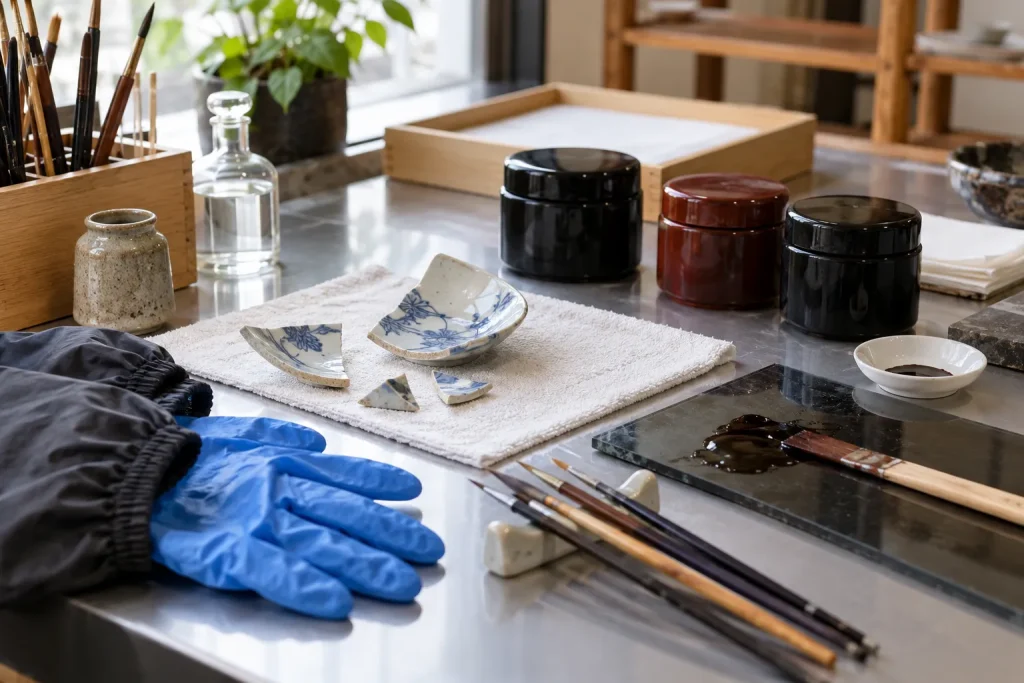
A fast repair kit often combines clear or tinted adhesive with brass, mica, or gold-colored powder. The result can imitate the visible line associated with traditional kintsugi, but the structure is different. In an urushi repair, the final metal is the surface of a layered process rather than the substance doing all the bonding. The hidden filling, leveling, and lacquer stages carry much of the technical work.
Traditional terminology varies by school and repair, but the sequence may involve joining fragments, rebuilding losses, leveling the seam, applying a finishing lacquer, and placing metal powder into the final surface. Not every break needs the same materials or number of applications. A clean crack, a missing chip, and a reconstructed rim are different problems. Compressing all of them into “glue plus gold” removes the distinction between repair structure and decoration.
The Law, the Mark, and the Price Difference explains why a traditional craft label can refer to regulated origin and technique rather than appearance alone. The same discipline matters here: a gold-colored seam does not prove that urushi or precious metal was used.
What to do instead: Describe an epoxy-and-pigment project as a kintsugi-style decorative repair unless its materials and process support a more specific claim.
Rushing the humidity-dependent curing stages
Urushi does not harden like ordinary craft paint left on a sunny shelf. Its curing depends on oxidation and enzyme-supported polymerization under suitable environmental conditions, including moisture. Craftspeople therefore use a 室, muro, literally “chamber” or “room,” to maintain a humid, protected environment while layers set. Depending on the repair, materials, environment, and workshop method, the full sequence can extend over weeks.
The half-informed mistake is buying or making a humidity box and assuming that higher humidity always produces a faster or better result. Condensation, excessive moisture, dust, unstable temperature, thick application, and poor air management can damage the surface. A layer that feels dry on top may not be ready for aggressive sanding or the next structural step. There is no responsible universal countdown for every lacquer, climate, and repair.
A worked sequence shows why the calendar expands:
- The broken edges are examined, cleaned, and fitted.
- The fragments are joined with an urushi-based adhesive mixture appropriate to the repair.
- The joint is allowed to cure in a controlled chamber.
- Gaps and missing areas are filled and cured before leveling.
- Successive lacquer layers refine and seal the repair.
- The finishing lacquer receives metal powder at the appropriate stage.
- The completed surface remains protected while the lacquer continues to harden.
These are stages, not a universal recipe. A trained craftsperson may modify, repeat, or omit steps according to the ceramic body and damage.
What to do instead: Follow the lacquer supplier’s curing guidance and a qualified instructor’s process rather than relying on one fixed humidity or time copied from social media.
Adding gold before the structural work is stable
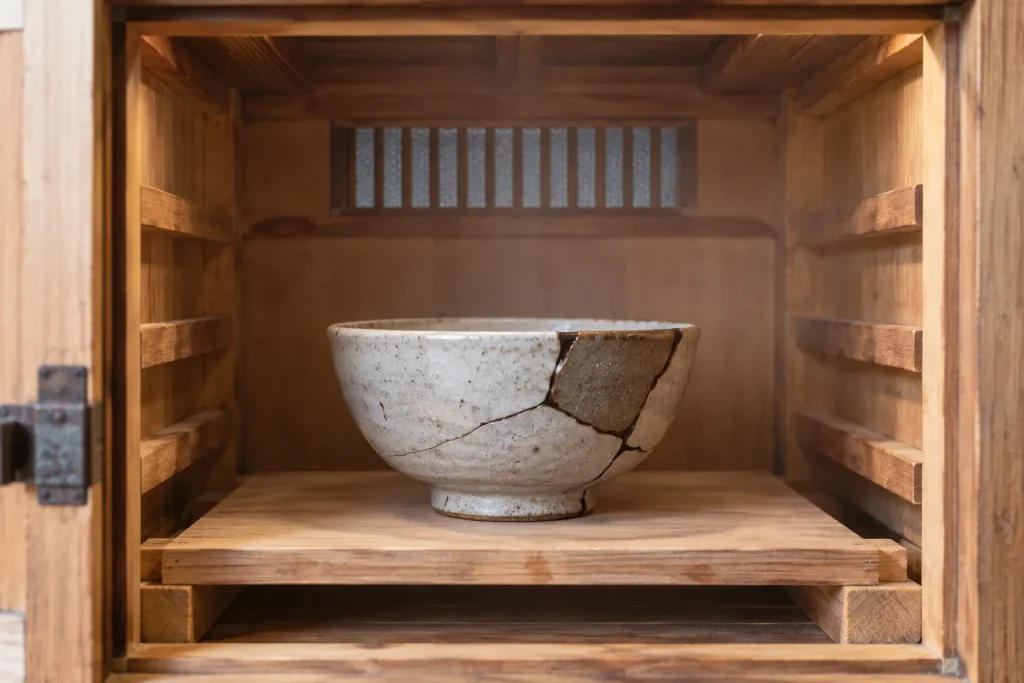
The gold line is the part people photograph, so beginners naturally want to reach it quickly. Applying metal powder before the joint, filler, and finishing surface are ready can expose uneven seams and weak transitions. Gold does not strengthen a poor bond. It emphasizes whatever lies underneath.
Real gold powder also differs from gold-colored craft pigment. Brass powder, mica, imitation metal, and precious gold can behave differently and may have different labeling, oxidation, handling, and food-contact implications. A kit photograph cannot establish what the powder contains. If the seller uses only phrases such as “gold effect” or “metallic finish,” assume appearance rather than composition.
| Stage | Main function | Visible after completion |
|---|---|---|
| Fragment fitting | Restores alignment | Usually hidden |
| Structural joining | Bonds the broken edges | Mostly hidden |
| Gap filling | Rebuilds missing volume | Covered by later layers |
| Leveling | Creates a continuous surface | Indirectly visible |
| Finishing lacquer | Receives and defines the decorative line | Partly visible |
| Metal application | Creates the gold or metallic surface | Clearly visible |
The visual finish is therefore the last expression of earlier work. When the seam looks crude, adding more metallic powder generally makes the problem brighter rather than solving it.
What to do instead: Complete and inspect the structural and leveling stages before treating the metal finish as the repair’s final surface.
Repairing a vessel whose damage exceeds the method
Kintsugi is often presented as if every broken ceramic object deserves reconstruction. Some pieces have unstable glaze, powdering clay, contaminated cracks, heat damage, or so many fragments that safe alignment becomes uncertain. A vessel used over direct heat, in an oven, or under repeated thermal shock raises different questions from a decorative cup. Repairing the appearance does not restore the manufacturer’s original performance specification.
This is where romantic language becomes expensive. Phrases about embracing imperfection cannot tell you whether a crack remains hygienic, whether a repaired handle can carry a full pot, or whether an adhesive tolerates hot liquid. Those are material and engineering questions. A sentimental object can remain valuable without returning to its former job.
Other Japanese craft practices also change function through technique rather than symbolism alone. How a Square of Cloth Carries a Bottle examines load, knot, and fabric choice, while Folds That Ended Up in Space and Surgery follows folding as an engineered structure. Kintsugi deserves the same material seriousness.
What to do instead: Ask a conservator or experienced repairer whether the object should return to use, become display-only, or remain unrepaired.
Assuming cured urushi removes every food-safety question
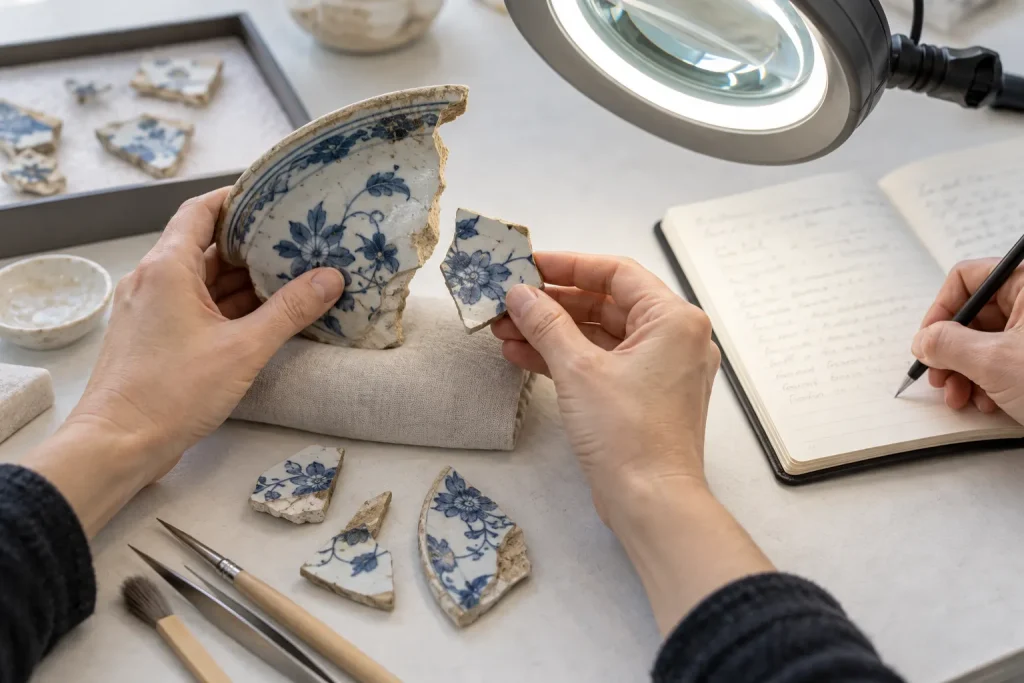
Traditional lacquerware has a long history of contact with food, and properly cured urushi forms a hard polymerized coating. That history does not let a beginner promise that any home repair is ready for serving soup. The exact lacquer, additives, fillers, pigments, metal powder, curing completeness, ceramic condition, washing method, and intended temperature remain relevant. A traditional process performed incorrectly is not protected by its name.
The crucial distinction is between evidence about a material class and evidence about one finished object. Published research can describe polymerized urushi and its curing chemistry. It cannot remotely inspect whether your seam cured evenly, whether an unlisted additive was used, or whether uncured material remains under a thick filler. Food safety belongs to the completed system, not the most traditional ingredient in it.
This also means that “real gold” cannot certify the whole repair. Gold may be the visible final material while everything beneath it remains undocumented. Conversely, an experienced professional may be able to explain the precise lacquer system, curing record, and intended limitations without making a universal promise.
What to do instead: Ask the repairer or material supplier what the finished object is intended for, and keep it decorative when that use cannot be documented.
Treating a skin reaction as proof the lacquer is working
Itching, redness, swelling, or blistering after contact with lacquer is not a normal initiation into the craft. It may be consistent with allergic contact dermatitis, but an article cannot diagnose a reader’s skin. The severity and timing of reactions vary, and contamination can persist on tools or surfaces. Continuing exposure to “test” the reaction adds risk without producing useful craft information.
Online discussions sometimes describe mild rashes as inevitable or even as something a practitioner will simply outgrow. That is not a safe inference. Sensitization can make later exposures more troublesome, and individual responses are unpredictable. A reaction involving extensive skin, the face, eyes, breathing, or other concerning symptoms requires professional medical assessment rather than folklore.
The material should also be kept away from children, pets, food-preparation surfaces, and shared household tools while uncured. Disposable barriers do not help if they are removed incorrectly or carried through the home. A workshop protocol needs to include storage, labeling, waste, and cleanup, not just gloves.
What to do instead: Stop exposure, follow the product’s safety instructions, and contact a clinician or poison-control service for symptoms or exposure concerns.
Buying the story instead of the material specification
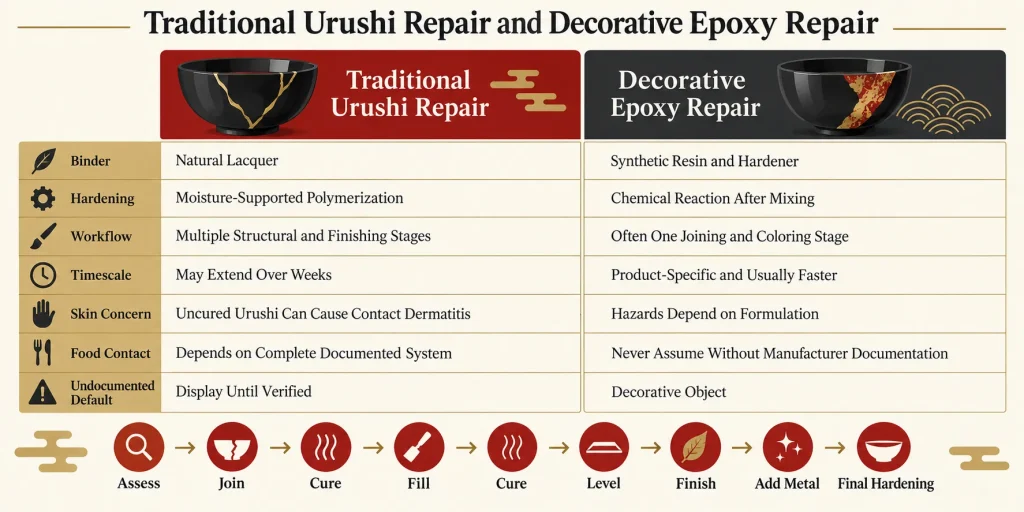
A kit can use photographs of old Japanese bowls, gold seams, and lacquer brushes without supplying traditional materials. This is a half-informed purchasing mistake because the buyer knows the vocabulary but does not verify what is inside the box. “Urushi finish,” “Japanese-inspired,” and “traditional look” may describe branding rather than composition. The safety and use claims must come from the product documentation, not its visual language.
Before buying a kintsugi repair kit, check for information that answers practical questions:
- Is the binder natural urushi, synthetic lacquer, epoxy, or another adhesive?
- Does the maker identify every decorative powder?
- Is safety documentation available for the resin and hardener?
- Does the maker authorize direct food contact after curing?
- Are temperature, washing, and immersion limits stated?
- Is protective equipment specified?
- Does the claimed cure apply to one layer or the completed repair?
A supplier name written in Japanese is not itself evidence of origin or certification. If a foreign maker wants a personal label rendered in katakana, the site’s name converter with 898 checked names can help with spelling, but it cannot authenticate lacquer, gold, or workmanship. Language and material verification are separate tasks.
The habit that prevents most kintsugi mistakes is to decide the object’s future use before choosing the repair system. If it will be decorative, say so and select materials on that basis. If anyone expects it to touch food, hot liquid, or skin repeatedly, require documentation for the complete cured repair rather than trusting the word “traditional.” That decision belongs at the beginning, not after the gold line is finished.
What to do instead: Read the ingredient, safety, curing, and intended-use documents before letting the kit’s photographs define what you are buying.