
The Law, the Mark, and the Price Difference: How Japanese Traditional Crafts Are Certified
Japan does not classify an object as one of its japanese traditional crafts merely because it looks old, was made by hand, or came from a famous workshop: the mechanism begins with a national designation under a law enacted in 1974.
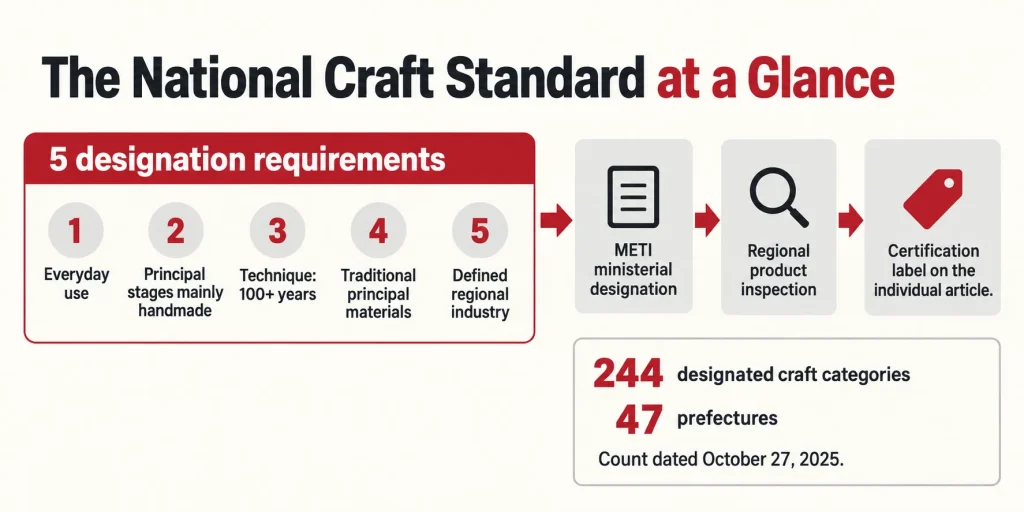
The official Japanese term is 伝統的工芸品, dentōteki kōgeihin, literally “traditional craft product.” It refers to a category designated by the Minister of Economy, Trade and Industry under the Act on the Promotion of Traditional Craft Industries. As of October 27, 2025, Japan had 244 designated craft categories across all 47 prefectures, according to the Ministry of Economy, Trade and Industry, or METI. That count remained the figure displayed by METI when checked on September 9, 2026.
A designation applies to a craft industry, not automatically to every bowl, textile, knife, or cabinet sold under the regional name. The separate 伝統証紙, dentō shōshi, or “traditional certification label,” is attached only after a qualifying product passes the inspection system operated in its production area. That distinction—between a designated industry and an inspected object—is where many buying mistakes begin.
“Old,” “local,” and “handmade” are descriptions. 伝統的工芸品 is a legal category.
How the certification mechanism works
The process has two levels. First, producers or their representative organization seek ministerial designation for a craft made in a particular area. METI examines the industry against statutory criteria, including use in everyday life, the role of handwork, the age of its techniques and materials, and the concentration of production within a defined region.
Second, the relevant producers’ association establishes product-inspection rules. An article made with the designated techniques and materials may be checked against those rules. If it passes, it can receive a certification label carrying the official 伝統マーク, dentō māku, or “tradition mark.”
The outsider’s mistake is to compress both levels into a single assumption: “This style has government recognition, so every example is certified.” The law recognizes a defined industry. The label identifies an inspected product within that system. A shop can therefore sell an authentic regional product without a certification label, while a souvenir can borrow the region’s visual language without meeting the official specification.
| Level | What is assessed | Who is involved | What the result tells you |
|---|---|---|---|
| Craft designation | The industry, techniques, materials, products, and production area | Producers’ organization, METI, and the minister | The named craft meets the national statutory framework |
| Product inspection | An individual article made within the designated system | The authorized regional organization under approved rules | The article passed the applicable local inspection |
| Certification label | The inspected article | Regional organization using the association’s labeling system | You can connect the object to the designation and inspection process |
The mark is useful precisely because the craft name alone does not complete the chain of proof.
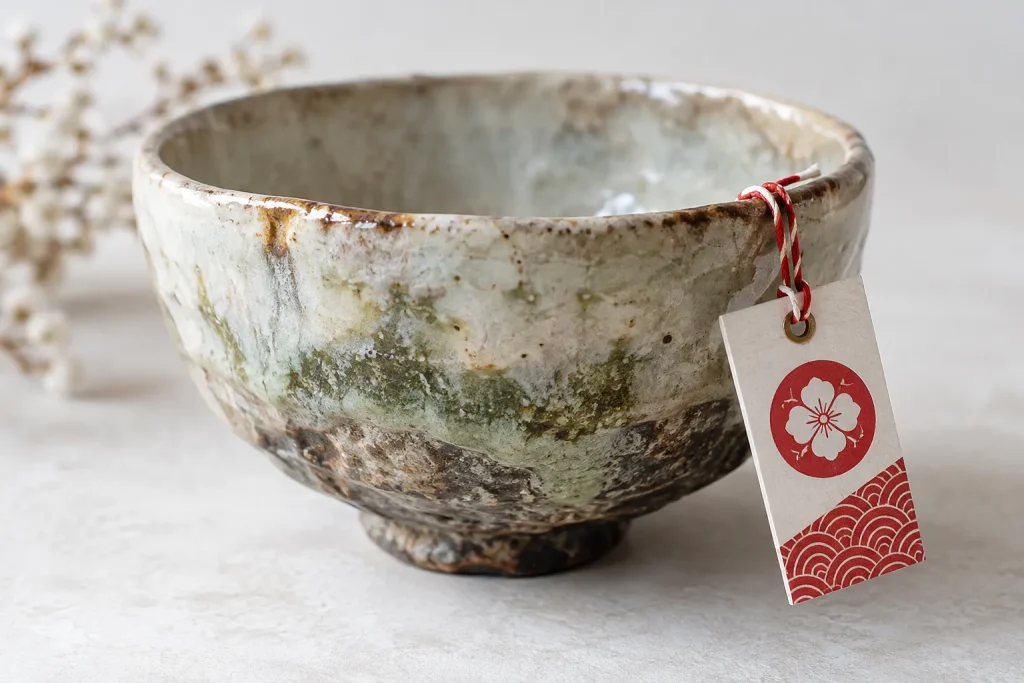
The five legal tests behind the name
METI summarizes the designation standard through five requirements. The first is easy to overlook: the product must be used principally in daily life. The framework was designed around living craft industries, not around unique fine-art objects created primarily for exhibition.
The five tests are:
- The product is used mainly in everyday life.
- The important parts of its production process are principally carried out by hand.
- It is made using a traditional technique or method that has continued for at least 100 years.
- Its principal raw materials are those traditionally used for the craft.
- Production is concentrated in a specified area and exists there on an industry scale.
These requirements operate together. A product does not qualify simply by clearing the century threshold, and an old technique does not become nationally designated without a continuing regional industry. The government is recognizing a working production system: people, processes, materials, objects, and place.
“Mainly handmade” does not mean no machines
The second test is frequently paraphrased as “completely handmade,” but that is stricter than METI’s wording. The legal concern is whether the principal production stages—the stages that materially determine the object’s distinctive character—remain handicraft processes. Machinery may be used elsewhere in production.
This matters when comparing two objects that look similar. A certified textile may involve powered equipment in preparatory work while still depending on manual dyeing, weaving, finishing, or another designated stage. Conversely, a product marketed as “hand-finished” may have received only a small manual flourish after its defining form was produced industrially.
The useful question is therefore not “Did a machine touch this?” It is “Which steps give this object the qualities for which the craft is recognized, and were those steps performed according to the designation?” Sellers who can answer should be able to identify processes rather than repeat a general claim about craftsmanship.
handmade Japanese crafts are not a separate legal category. “Handmade” can describe products outside the 1974 framework, including excellent contemporary work. It can also appear in promotional language without explaining the age of the method, the materials, the production area, or any inspection.
What the 100-year rule really measures
The threshold applies to the traditional technique or method, not necessarily to the age of the workshop, the maker, or the object in your hands. A business founded recently can participate in an established regional industry. A century-old company can also sell product lines that fall outside the designated specification.
METI’s public explanation states that the relevant techniques must have continued for 100 years or longer. The materials requirement is related but not identical: the principal materials must be those traditionally used to preserve the product’s character and quality. Official regional descriptions may define those materials and techniques with considerable specificity.
A worked example makes the distinction clearer. Imagine a vessel made this year in a recently opened studio. If the studio operates in the designated production area, uses the specified clay and established forming and firing techniques, and belongs to the applicable inspection system, the vessel may qualify for certification. Its physical age is irrelevant; the historical continuity belongs to the production method.
Now reverse the example. A decorative object made from an unrelated modern material may imitate the same shapes and colors. Even if it is produced near the traditional workshops, visual resemblance cannot substitute for the prescribed materials and processes. “Traditional style” and “designated traditional craft product” are not interchangeable statements.
Why the production region is part of the definition
The place name is not decorative branding added after production. Designation requires the craft to be made within a particular region where a group of businesses forms a recognizable production base. METI’s guidance describes this as production by a certain number of enterprises or workers within a specified area.
This regional condition reflects how many industries function. One workshop may prepare material, another may carry out a specialized process, and another may finish or assemble the article. The legal unit is therefore larger than the biography of a single celebrated maker.
A tourist often assumes that an object sold in Kyoto, Kanazawa, Tokyo, or another craft destination was made there. Retail location proves nothing about production origin. You need the craft name, the stated production area, maker or workshop information, and—when certification is claimed—the appropriate label.
The Japanese wording on packaging can be easy to misread if you do not yet distinguish a product name from a company, place, or personal name. The site’s Japanese name converter shows how 898 checked names are represented in katakana, but it should not be used to translate a certification label or invent a reading for a workshop name. Preserve the printed Japanese and ask the seller to identify each element.

What the mark confirms—and what it does not
The red-and-white symbol is the official emblem of ministerially designated traditional crafts. The Association for the Promotion of Traditional Craft Industries states that products bearing its certification paper are made with the ministerially designated techniques and materials and have passed an inspection in the production area.
That gives you a stronger basis than an unverified souvenir tag. It connects the individual object to an organized system with stated standards and local responsibility. It also helps distinguish qualifying articles from sophisticated imitations that may be difficult for a general buyer to identify by appearance alone.
The label does not establish all of the following:
- that the object is an antique;
- that every stage was performed without machinery;
- that a nationally celebrated individual personally made it;
- that the price is controlled by the government;
- that the object is unique or museum-grade;
- that an unlabeled object is fake;
- that the craft will suit your intended use.
This is the uncomfortable part of the Japanese craft certification system: the seal reduces uncertainty, but it does not perform your entire buying decision. It verifies conformity within a particular certification structure. It is not an appraisal, an authorship certificate, an insurance valuation, or a universal ranking of artistic merit.
The label supports a claim about production standards; it does not promise that you will prefer the object.
Why certified work often costs more
Neither the 1974 act nor the tradition mark sets a retail price. No official national formula converts labor hours, material use, inspection, workshop reputation, and retail margin into a required price. Claims that the government “prices” certified crafts are therefore incorrect.
Still, several consequences of the system can affect cost. Designated techniques may require skilled manual stages that are slower than automated production. Specified materials can be harder to source or prepare. Regional industries may support specialist divisions of labor, training, inspection, documentation, and small production runs. Those factors can raise costs even though the label itself does not dictate the amount charged.
| Possible cost driver | Why it can affect the price | What the mark proves |
|---|---|---|
| Skilled manual stages | Labor cannot always be accelerated without changing the product | The relevant article passed the applicable inspection |
| Specified materials | Supply, preparation, and selection may be demanding | The inspected article conforms to the designated material rules |
| Regional production | Specialist work may pass through several local businesses | The article belongs to the recognized regional system |
| Inspection and traceability | Producers’ organizations maintain standards and labeling procedures | The label connects the article to that procedure |
| Maker reputation or rarity | Individual demand can raise the selling price | Nothing by itself; investigate separately |
A higher price is not proof of certification, and certification is not proof that one price is fair. Compare objects of similar size, material, technique, maker status, and retail channel. If two pieces differ sharply in price, ask for the production explanation before accepting “tradition” as the answer.
When money appears in an English-language article about Japan, yen should be accompanied by dollars. This article gives no sample retail prices because no sufficiently broad primary-source price schedule could be verified for the category as a whole, and currency conversion would create a false comparison between unlike products.
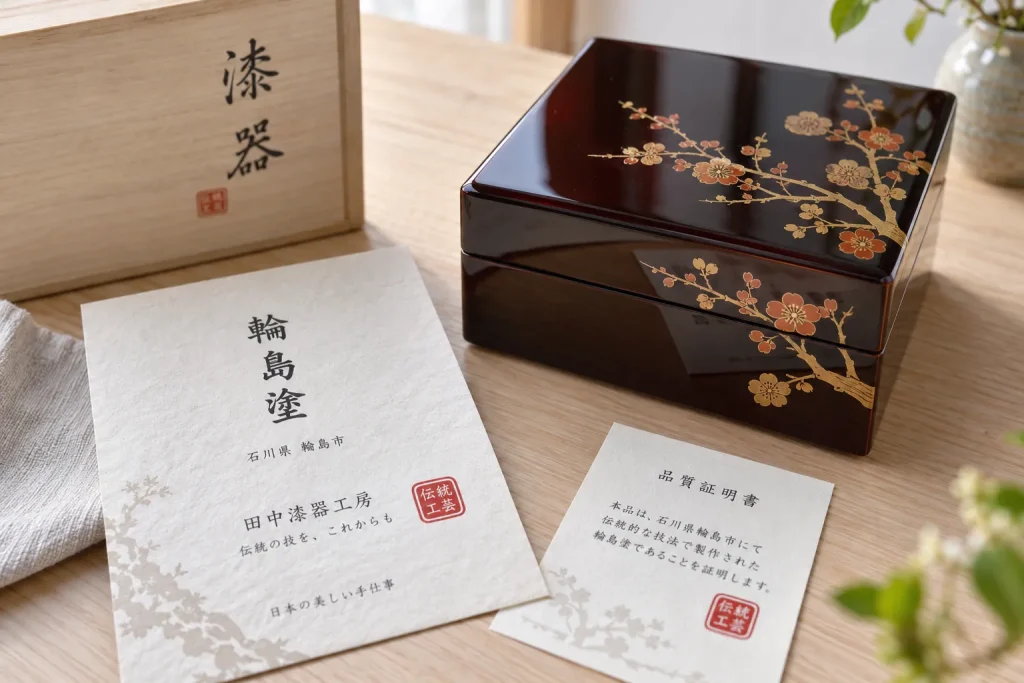
Four consequences buyers rarely anticipate
The mechanism produces several results that are not obvious from a store display.
First, one designated craft can include both certified and non-certified merchandise. Workshops may create traditional lines that satisfy the official specification and contemporary lines that intentionally change materials, dimensions, or processes. The newer line is not necessarily inferior; it simply makes a different claim.
Second, designation protects continuity without freezing all design. A maker can develop colors, forms, and products for current households while retaining the techniques and materials that define the craft. Legal tradition concerns the production framework more than a requirement to copy one historical appearance forever.
Third, the system is collective. Buyers often focus on a named “master,” yet designation depends on a regional industrial base. Material suppliers, toolmakers, preparatory specialists, finishers, inspectors, and producers’ organizations can all be necessary to keep the designation meaningful.
Fourth, the mark’s absence is ambiguous. An object may be a contemporary workshop product, an item outside the certified line, old stock, a work sold through another labeling arrangement, or an imitation. You cannot identify which explanation applies from the missing sticker alone.
These consequences make the phrase authentic Japanese crafts difficult. “Authentic” might mean legally certified, made in the claimed region, produced by a named artist, faithful to a historical technique, or simply manufactured in Japan. Ask the seller to replace the adjective with verifiable facts.
Where the national mechanism stops
Japan has other systems that use similar language but do not mean the same thing. Prefectures and municipalities can recognize local crafts under their own rules. Trade associations may maintain regional marks. Individual makers may produce historically grounded work outside a ministerially designated industry. Cultural-property protections also address different subjects and should not be treated as alternative versions of the tradition mark.
The broader Japanese phrase 伝統工芸, dentō kōgei, “traditional craft,” is not restricted in ordinary use to METI-designated industries. The crucial character in the statutory expression is 的, teki, which turns the phrase into the name used by the national program: 伝統的工芸品. English translations often flatten that distinction, so you need to inspect the Japanese wording.
The framework also does not cover every worthy handmade object. A new regional practice cannot meet a century-long technique requirement. A primarily decorative art object may fall outside the everyday-use criterion. A sole workshop may lack the production scale required for designation even when its work is exceptional.
For shoppers, these are not loopholes to solve. They are boundaries around what the label was designed to communicate. The traditional crafts of Japan extend beyond the products carrying the national mark, but only the designated and inspected products can make this particular certification claim.
A practical check before you pay
Use a short verification sequence when the distinction matters to your purchase:
- Read the exact Japanese craft name rather than relying on an English category such as “Japanese pottery.”
- Look for 伝統的工芸品, not merely 伝統工芸 or “traditional-style.”
- Ask whether the displayed object itself carries 伝統証紙.
- Check the named production region and the maker or workshop.
- Ask which materials and defining processes were used.
- Separate certification from claims about age, rarity, authorship, and investment value.
- Request care instructions, because legal designation does not tell you whether the object is dishwasher-safe, stain-resistant, or suitable for daily use.
If a seller responds to a technical question only with a story about heritage, you still do not have the technical answer.
Reading the evidence on the object
Packaging may contain several marks, seals, shop names, and regional labels. Photograph the front and back before discarding anything. Keep the certification paper with receipts and maker documentation, especially for a costly purchase.
Do not treat any red symbol as the national mark. Compare its design with the emblem published by the Association for the Promotion of Traditional Craft Industries. If the label names an inspection body or producers’ association, record that information as well.
Japanese traditional craft mark is a useful search phrase, but search results may mix the official emblem with prefectural programs, commercial logos, and general “made in Japan” marks. Verify the issuing organization instead of matching colors alone.
The National Craft Standard at a Glance
Frequently asked questions
Does “made in Japan” mean a product is a designated traditional craft?
No. Country of manufacture does not establish compliance with the five designation requirements or prove that the individual article passed a regional inspection.
Is every designated craft completely handmade?
No. METI requires the principal parts of production to be handicraft processes. Machinery can be used in stages that do not determine the product’s essential craft character.
Must the object itself be 100 years old?
No. The 100-year threshold concerns the traditional technique or method. A qualifying object can be newly made.
Does the tradition mark guarantee the lowest or fairest price?
No. The mark does not impose a national retail price. It identifies an article that passed the relevant certification process; you must still compare materials, workmanship, size, maker, condition, and seller.
Is an unlabeled object necessarily a souvenir or imitation?
No. It may be genuine workshop production that falls outside the labeled line or uses a different process. Without the label, however, you should not assume that the national product-inspection claim applies.
Can a contemporary design receive the label?
Potentially, yes. A modern shape or color does not automatically disqualify an object if it otherwise meets the designated techniques, materials, production-area rules, and inspection standard.
What is the easiest rule to remember?
Treat the craft name as recognition of an industry, but treat the official certification label as evidence about the individual object you are buying.