Marry in Japan, and the law does not ask what you’d like to be called — it asks the two of you to agree on one shared surname before it will register the marriage at all. That single rule sits behind almost every japanese surname after marriage question people search for, and it treats a marriage between two Japanese nationals very differently from one where a spouse holds a different passport.
Do You Have to Change Your Surname to Marry in Japan?
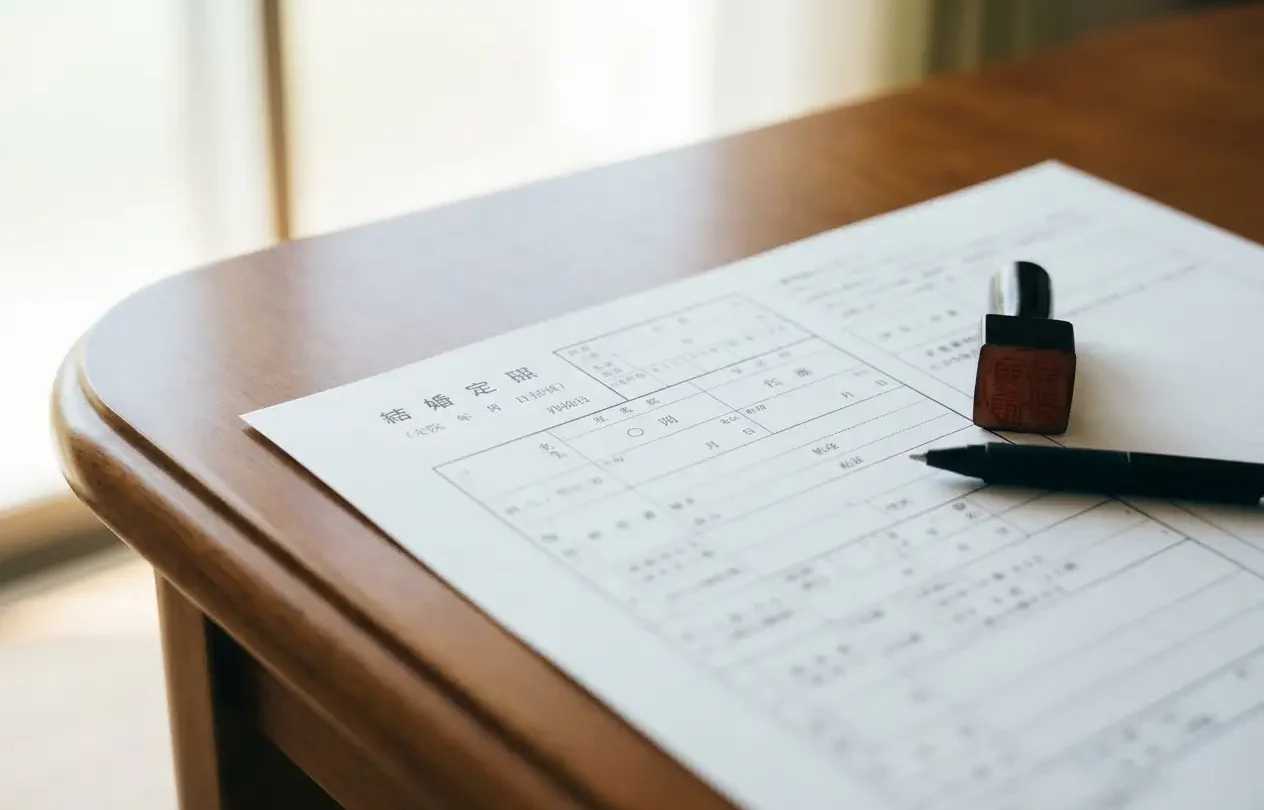
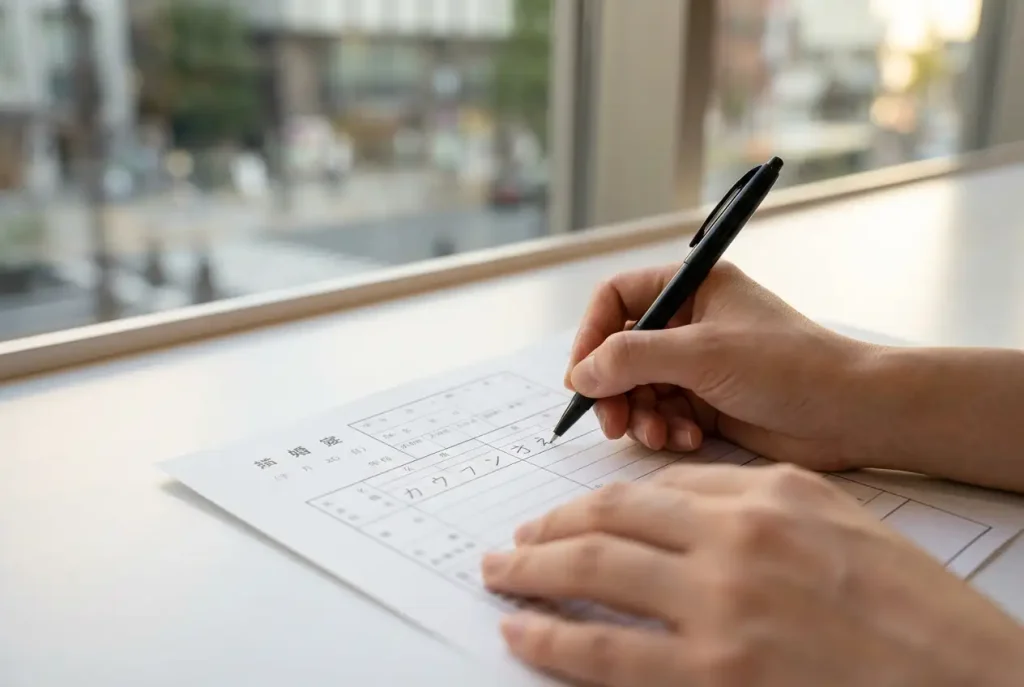
If both people getting married are Japanese nationals, yes. Under Article 750 of the Civil Code, a husband and wife must adopt one of their two surnames — either his or hers — and the marriage notification will not be accepted until that box is filled in. Nothing in the text says which spouse has to give theirs up, but the form leaves no room for keeping both.
This is not a customary preference dressed up as a rule. It is a hard administrative gate: the local government office (yakuba, ward or city hall) checks the surname field on the marriage form the same way it checks the date of birth. Leave it blank, and the marriage simply is not filed.
What Does Article 750 Actually Say, Word for Word?
The provision itself is short:
“A husband and wife shall adopt the surname of the husband or wife in accordance with that which is decided at the time of marriage.”
— Civil Code of Japan, Article 750
Paired with it is Article 74 of the Family Register Act, which requires the marriage notification to state the surname the couple has chosen. The two provisions work together: 750 sets the rule, 74 builds it into the paperwork so a registrar has no way to accept a marriage that doesn’t name one shared surname.
Neither provision mentions how a name is built or read in the first place — that’s a separate, older set of conventions covered in How a Japanese Name Is Built and Read, which is worth reading first if kanji order and family-name placement are still unfamiliar.
Courts have leaned on that neutral wording twice. In 2015 and again in 2021, the Supreme Court’s Grand Bench ruled that Article 750 does not violate the Constitution, reasoning that the law itself doesn’t specify a sex — even though the outcome, in practice, overwhelmingly does.
Whose Name Wins When the Law Stays Neutral?
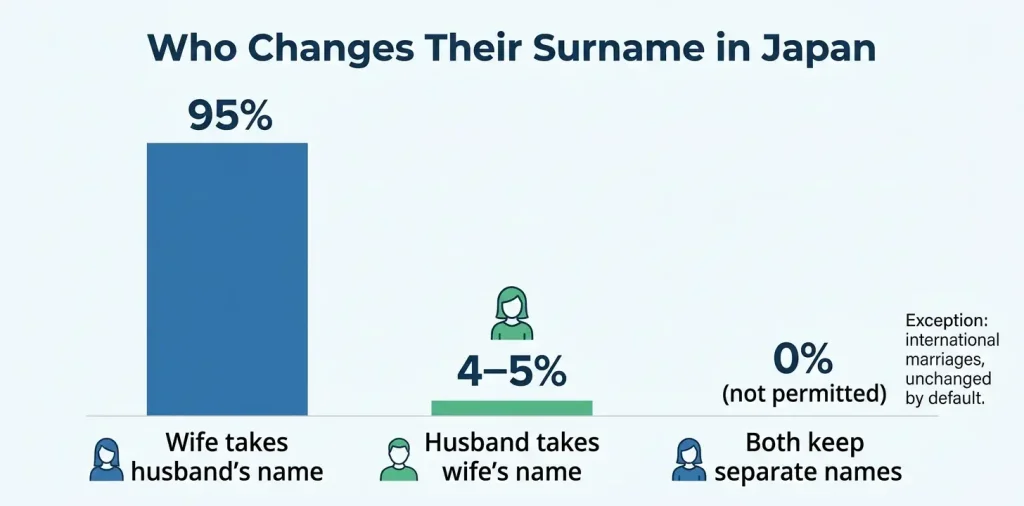
Almost always his. Cabinet Office figures for 2022 show that of roughly 480,000 couples who married that year, about 95 percent of wives switched to their husband’s surname. An earlier demographic breakdown, from 2017, put the reverse — a husband taking his wife’s name — at just 4.1 percent of marriages.
None of that is coincidence, and none of it is required by the text of the law. It’s the residue of a much older household structure, and the numbers barely move from year to year.
| Outcome | Share of Japanese–Japanese marriages | Legally required? |
|---|---|---|
| Wife takes husband’s surname | ~95% | No — by custom, not statute |
| Husband takes wife’s surname | ~4–5% | No — legally identical option |
| Both keep separate surnames | Not permitted | Blocked by Article 750 |
Can a Husband Legally Take His Wife’s Surname Instead?
Yes, without exception or special petition — the choice sits with the couple, not the government. It happens most often when a wife’s family has no son to carry the family name forward, a situation historically handled through formal adoption of the husband into the wife’s family register rather than a simple surname swap. Outside of that context, it’s simply the less common of two equally legal options.
- The surname choice is made once, at the time of the marriage notification.
- Reversing it later requires a family court petition, not a second form at city hall.
- Professional and academic names can often continue informally under the old surname even after the legal name changes — but that’s a workplace convention, not a legal alias.
What Is a Koseki, and Why Does One Surname Matter So Much?
The reason a single surname carries so much administrative weight is the koseki (戸籍, koseki, “family register”) — the household-based registry that Japan uses instead of an individual birth-certificate system. A married couple and their children are typically listed together under one entry, under one surname, with one person named as its head.
Everything from a passport application to a bank account to a child’s school enrollment traces back to that koseki entry. Change the surname on it, and the change ripples through every document that cites it. That’s the practical reason the marriage form won’t accept a blank surname field — the registry has nowhere to put an unresolved name.
Does the Same-Surname Rule Apply If You Marry a Foreign National?
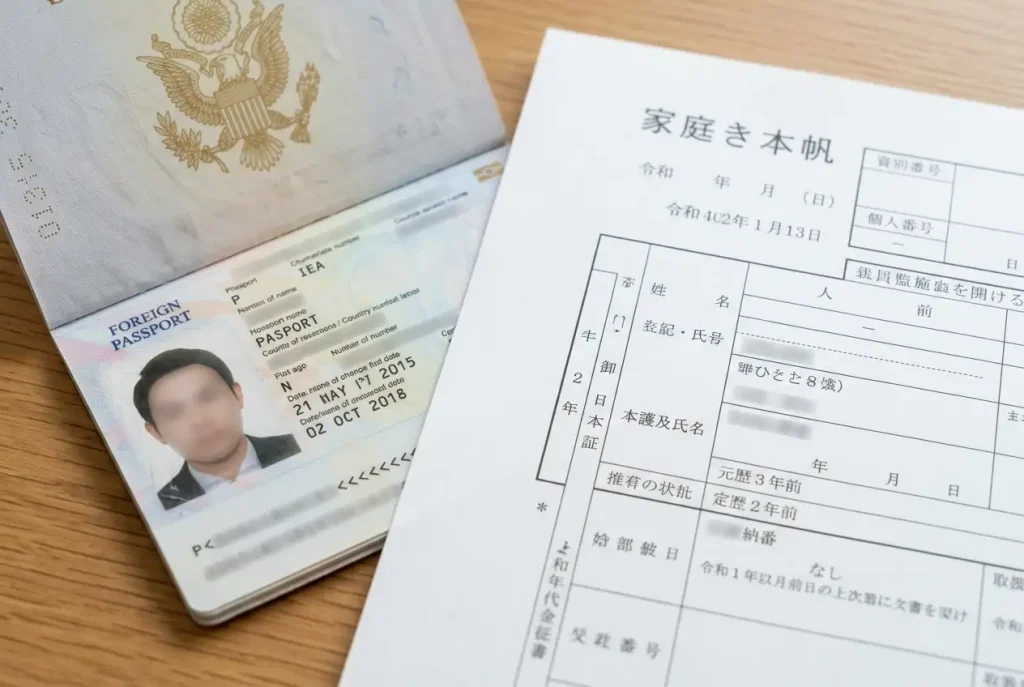
No — and this is where the whole system quietly stops applying. Only Japanese nationals can be listed as members of a koseki. A foreign spouse can’t be entered into one, so the surname-merging machinery in Article 750 simply has nothing to attach to. In an international marriage, the Japanese citizen’s koseki instead notes the marriage along with the foreign spouse’s name, date of birth, and nationality — as a record, not a name change.
The practical result: by default, both people keep the surname they already had. There’s no form field forcing a choice, because Article 750 was written for two Japanese nationals joining one register, not for a marriage where only one of them has one.
What follows from that exception is more procedural than most sites let on, and it’s worth being precise about it, since a misread here can mean a rejected form at a ward office. Getting it wrong is annoying, not dangerous — but it’s still worth double-checking against your local municipal office or the nearest Japanese consulate before you file anything.
If You Keep Your Own Surname, What Happens to It on Paper in Japan?
This is the question almost nobody thinks to ask before the wedding, and it matters more day-to-day than the legal exception itself: a foreign surname kept under Article 750’s international-marriage carve-out still has to be written down somewhere on Japanese forms, and Japanese script has firm rules about how that happens.
On the marriage registration form itself, a foreign spouse’s name is recorded in katakana, transliterated phonetically rather than translated — sound in, sound out. Someone from a country that uses Chinese characters can sometimes submit kanji documentation instead, but for most foreign spouses, katakana is the only script the registry will accept. Long vowels, name suffixes like “Jr.” or “III,” and look-alike characters such as ィ versus イ all have to be rendered with specific care, because a sloppy katakana rendering becomes the legally recorded version of the name.
That’s a narrower problem than it sounds, but it’s a real one — and it’s exactly what Katakana Name Rules, and the Names That Break Them works through in detail, sound by sound. If you want to see how your own name would likely render before you fill anything in, the site’s name converter has already checked 898 names against these exact rules, one page per name.

Can a Japanese Citizen Take a Foreign Spouse’s Surname — and Can It Go the Other Way?
Yes, but it takes a second, separate filing — the marriage notification alone doesn’t do it. Under Article 107, paragraph 2 of the Family Register Act, a Japanese citizen who wants to switch to their foreign spouse’s surname can submit a “notification of change of surname due to marriage to a foreign national,” and if it’s filed within six months of the wedding, no family court approval is needed. Miss that window, and the same change requires a family court petition instead.
Three outcomes are available in practice for the Japanese spouse:
- Keep the original Japanese surname — the default if no extra form is filed.
- Legally adopt the foreign spouse’s surname, via the Article 107(2) notification.
- Register a compound or hyphenated version of both names as a legal koseki entry.
Going the other direction is more limited: a foreign national cannot adopt a Japanese surname as part of the marriage registration process itself, since they’re never entered into the koseki to begin with. What’s often used instead is a registered “common name” (tsūshōmei) — a Japanese-script alias a foreign resident can use on local paperwork, bank accounts, and ID, without it becoming their legal name of record.
Is Japan’s Same-Surname Law About to Change?
It’s under more pressure than at any point in recent memory, but as of this writing it’s still the law. The UN Committee on the Elimination of Discrimination against Women has now recommended Japan adopt a selective separate-surname system (sentakuteki fūfu bessei, “an optional system letting married couples keep separate surnames”) four separate times — in 2003, 2009, 2016, and again in October 2024. Domestically, a fresh round of lawsuits was filed in March 2024 in the Tokyo and Sapporo District Courts, arguing the current rule breaches constitutional guarantees around marriage and equality.
In May 2025, the Diet opened formal debate on dual-surname bills for the first time in 28 years — a genuine milestone, though passage in that session looked unlikely from the outset, and no revision to Article 750 had cleared the Diet as of this article’s publication.
| Year | Event |
|---|---|
| 1898 | Meiji-era Civil Code first requires a wife to take her husband’s surname on marriage |
| 1947 | Postwar Civil Code revision introduces today’s gender-neutral wording of Article 750 |
| 2015 | Supreme Court Grand Bench rules Article 750 constitutional |
| 2021 | Supreme Court Grand Bench upholds the ruling a second time |
| 2024 | New lawsuits filed; UN CEDAW issues its fourth reform recommendation |
| 2025 | Diet holds its first substantive debate on separate-surname bills in 28 years |
What Surnames Are Even in the Running?
Whichever name a couple settles on, it’s drawn from a surname pool that’s far more concentrated than most newcomers expect — a small handful of family names cover a striking share of the population, which is its own story. Sato, Suzuki and the Long Tail Behind Them breaks down why that concentration happened and what it means for the couple actually doing the choosing.
What About Children Born to International Couples?
The surname question doesn’t stop at the couple — it continues the moment a child is born into a family where one parent isn’t Japanese. A child born to a Japanese citizen is entered into that parent’s koseki and generally carries a Japanese-registrable surname, but the given name still has to clear its own set of rules, ones that have gotten stricter, not looser, in recent years. Why Japan Started Refusing Some Baby Names covers exactly where that line now sits.
What to Check Before You File Anything
None of this replaces advice from the municipal office handling your specific paperwork, or from your country’s embassy if citizenship questions are involved — rules on notification windows and required documents get updated, and this article reflects the law as it stood when it was checked, not necessarily as it stands when you read it.
If the mechanics of writing a name in Japanese script are still the open question — rather than which surname to legally carry — How to Write Your Name in Japanese: The Complete Guide is the next logical stop.