干支, eto, 十二支, jūnishi, and 土鈴, dorei, are the words you will meet at shrine counters, department stores and craft shops from late fall onward. Understanding them matters because japanese zodiac goods new year displays place handmade regional objects beside factory-made key chains as though they belong to the same category. They do not.
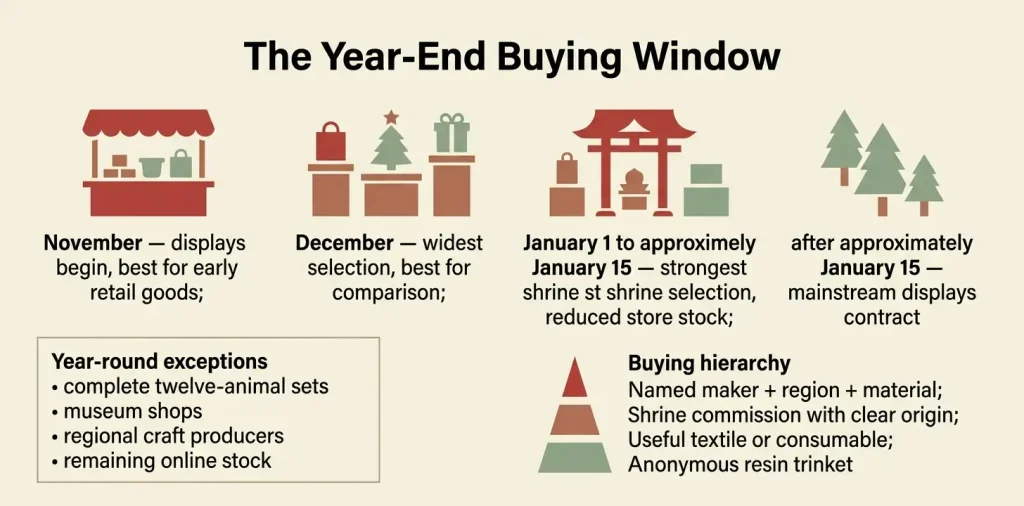
The practical shopping season usually begins during November, becomes most visible in December and runs through the first New Year visits in January. By the middle of January, mainstream displays are commonly dismantled or heavily reduced. Some shrine items, specialist crafts and online stock remain longer, so “everything disappears” is a useful warning rather than a nationwide legal cutoff.
For the larger cultural calendar behind the shelves, How the Animal of the Year Runs December explains why the coming animal appears before the old year has finished. This page stays in the shops and asks a less sentimental question: what deserves luggage space?
The vocabulary map before you shop
The terms are grouped by the place where you encounter them. The table is meant for recognition; you do not need to say every word aloud to buy the right object.
| Japanese term | Reading | Literal meaning | Where you meet it |
|---|---|---|---|
| 干支 | eto | Stem-and-branch cycle | New Year displays, labels and advertising |
| 十二支 | jūnishi | Twelve branches | Explanations of the animal sequence |
| 土鈴 | dorei | Earthen bell | Shrines, folk-toy stores and craft markets |
| 郷土玩具 | kyōdo gangu | Regional toy | Museums, craft shops and local producers |
| 縁起物 | engimono | Auspicious object | Shrines and New Year gift departments |
| 置物 | okimono | Placed object | Ceramic and home-decoration sections |
| 授与品 | juyohin | Bestowed item | Shrine or temple counters |
| 初穂料 | hatsuho-ryō | First-fruits offering | The amount shown beside a shrine item |
| 手ぬぐい | tenugui | Hand-wiping cloth | Textile and souvenir stores |
| 干支ラベル | eto raberu | Animal-year label | Sake, tea, confectionery and gift packaging |
| 限定 | gentei | Limited | Seasonal packaging and shop signs |
| 福袋 | fukubukuro | Fortune bag | Department stores and retail chains at New Year |
The phrase “zodiac goods” is convenient English, but it can mislead. These products are usually tied to the calendar year and New Year customs, not to horoscopes or personality readings. The Chinese Zodiac Years, Explained Properly covers the repeating animal sequence without turning the display into fortune-telling.
At the entrance: 干支 and 十二支
干支, eto, literally refers to the combined stem-and-branch cycle, although everyday retail use often reduces it to “the animal of the year.” You meet it in phrases such as 干支置物, eto okimono, “animal-year ornament,” and 干支商品, eto shōhin, “animal-year products.”
The common mistake is translating eto as though it always means the complete Western concept of “zodiac.” On a December price card, it normally means that the product uses the coming year’s animal. It does not promise an explanation of the full calendrical system.
十二支, jūnishi, “twelve branches,” is more precise when the subject is the sequence of twelve animals. You are likely to see it on educational products, complete figurine sets and explanatory museum labels. A twelve-piece set is jūnishi merchandise; a single sheep produced for the coming year is more likely labeled eto.
For 2027, the branch is 未, read hitsuji in this context and represented in Japan by a sheep or goat-like animal. If you need to check another year, the zodiac calculator covers every year from 1930 through 2043 and all twelve signs. Use it for the year, not as a reason to buy a personality chart.
At a shrine counter: 土鈴 and 授与品
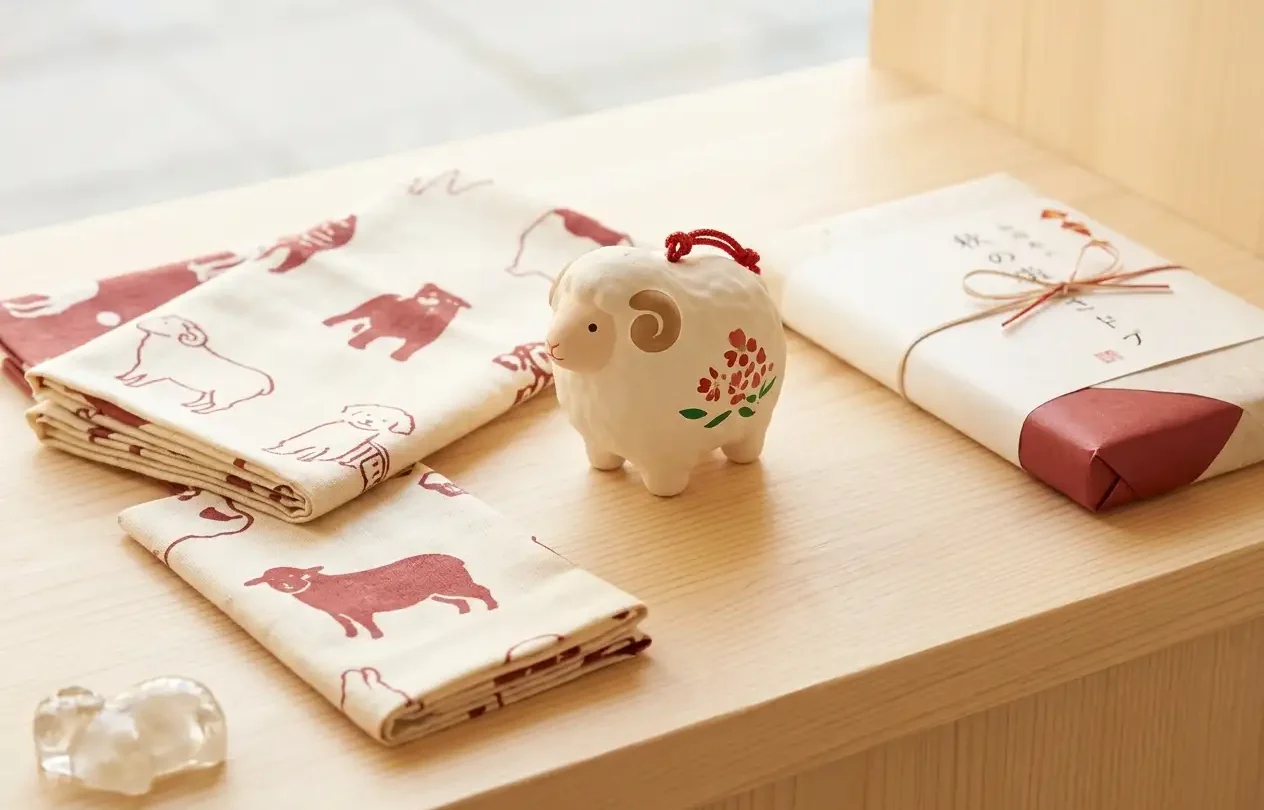
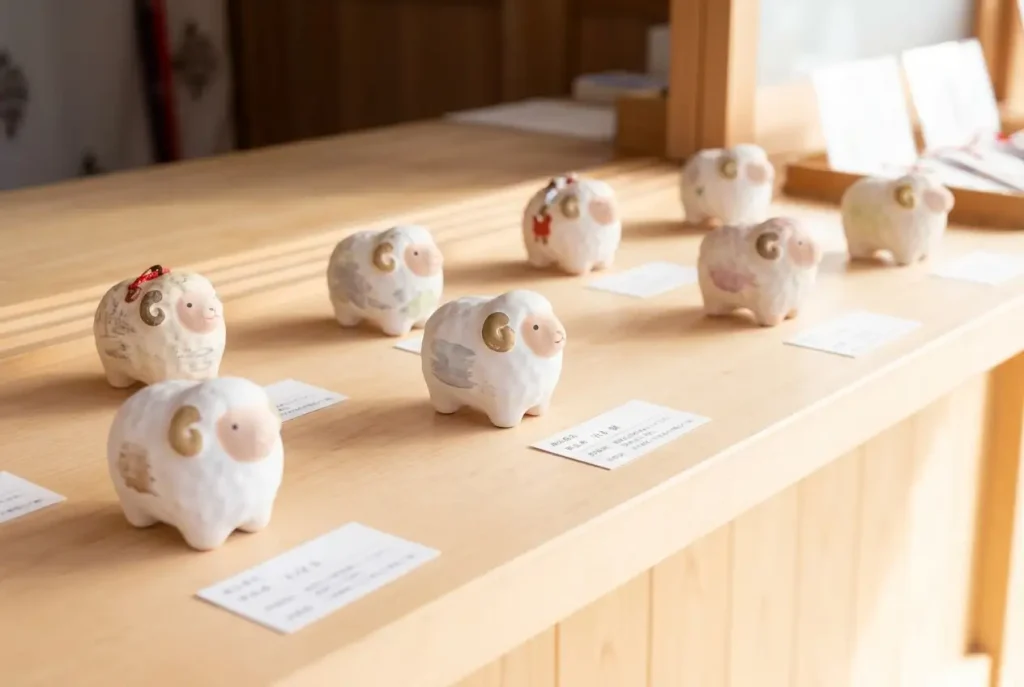
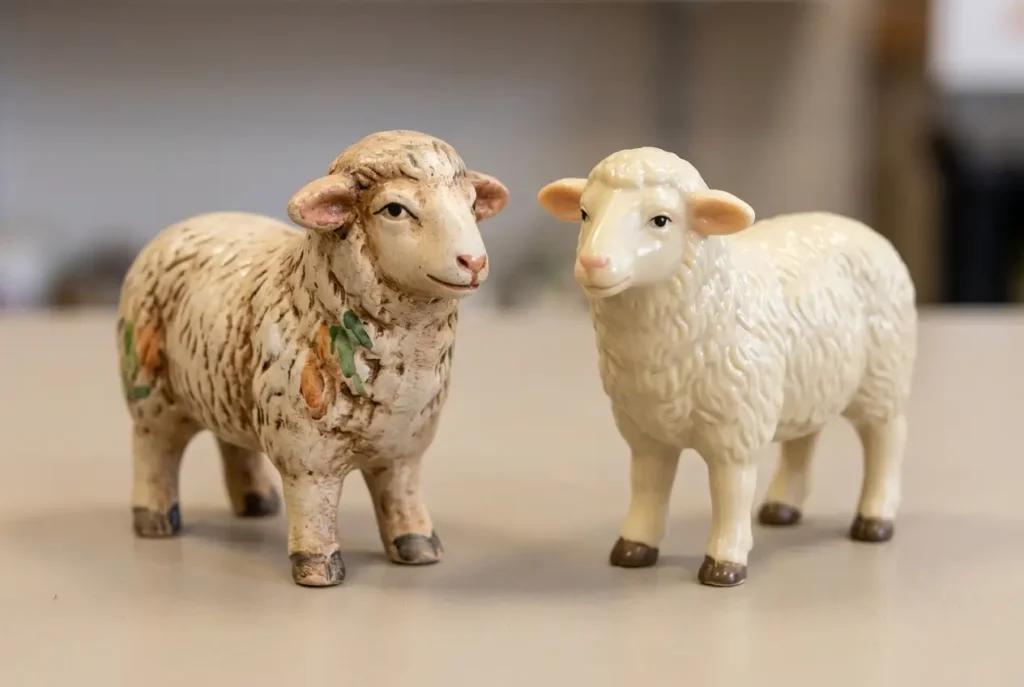
土鈴, dorei, literally “earthen bell,” is the most useful shopping word in this article. A dorei is a hollow clay bell with a pellet inside. It produces a soft, dry sound rather than the clear metallic ring suggested by the English word “bell.”
Good dorei clay bells have more than an animal shape. Look for a named shrine, workshop, locality or ceramic tradition. Small variations in painting, molding and firing are evidence of production by hand, although uneven paint alone does not prove authenticity.
The mistake is assuming that every clay animal near a shrine was made locally. Shrines may commission seasonal objects from established producers, while nearby souvenir stores may sell visually similar imports or wholesale goods. Ask where the item was made if origin matters to you.
授与品, juyohin, “bestowed item,” is the shrine’s category for objects distributed at its counter. The English word “merchandise” suggests an ordinary shop transaction, but shrines frame amulets, arrows and seasonal objects as items bestowed in return for an offering.
This does not mean the object escaped manufacturing or distribution. It means the social and religious language of the counter differs from retail language. If you want a purely decorative animal and do not want the shrine context, buy from a craft shop instead.
The amount is 初穂料, not a negotiated price
初穂料, hatsuho-ryō, literally “first-fruits offering,” is the amount associated with a shrine item or service. Historically, hatsuho referred to the first rice offered after harvest. Today the label appears beside amulets, prayer services and seasonal objects.
For a visitor, it functions much like a displayed price: you offer the stated amount and receive the item. The mistake is treating the different vocabulary as an invitation to bargain. It is not.
You may also encounter 志, kokorozashi, “a token of intention,” where the amount is not fixed. That is less common for standardized New Year objects. When an amount is posted, use it.
The wording carries context rather than a discount. A shrine dorei may be meaningful because it belongs to a particular place and New Year visit, not because it is objectively finer than every ceramic sold outside the grounds.
In the regional craft shop: 郷土玩具
郷土玩具, kyōdo gangu, literally “regional toy,” covers locally rooted folk objects made from clay, wood, papier-mâché and other materials. Some began as children’s toys; others developed as talismans or seasonal decorations. A modern adult collector may never use them as toys at all.
The English loanword “toy” suggests something designed for play, safety testing and rough handling. That is the wrong assumption here. Many regional toys are small painted craft objects intended for display. Thin clay, water-soluble paint or delicate paper may not survive a child’s hands.
This category offers the strongest alternative to generic Japanese zodiac souvenirs. A local producer may reinterpret the same animal through an established regional shape, glaze or painting style. The result tells you where you bought it as well as which year it represents.
Look for:
- A named place, kiln, workshop or maker.
- A material connected with the regional tradition.
- An explanation of how the object is formed or painted.
- Natural variations between pieces.
- Packaging that identifies origin rather than merely saying “Japan.”
Do not reject a workshop simply because it uses molds. Mold-forming is compatible with hand-finishing and traditional production. The important question is how much of the object’s identity comes from a continuing local practice.
On the homeware floor: 置物
置物, okimono, literally “placed object,” is a figurine or ornament intended to sit on a shelf, alcove or entrance cabinet. It is a broad functional word, not a guarantee of craftsmanship.
An 干支置物, eto okimono, may be a hand-painted ceramic piece, cast metal ornament, wooden carving or molded resin animal. Department stores often arrange expensive studio work and inexpensive seasonal decorations in the same New Year department.
The mistake is reading the word okimono as a quality grade. It only tells you what to do with the object: place it somewhere. Check the material, maker and origin separately.
A compact ornament can be a sensible purchase if you want Japanese New Year decorations that return every twelve-year cycle. A large object printed with a specific Western year has a much shorter decorative life. Avoiding the date can make the purchase less disposable.
In textile shops: 手ぬぐい
手ぬぐい, tenugui, literally “hand-wiping,” is a thin cotton cloth with unfinished or narrowly finished ends, depending on the maker. It can be used as a towel, wrapping cloth, kitchen cloth, head covering or wall display.
The English word “towel” creates the wrong expectation. A tenugui is thinner and less absorbent than a thick American bath or hand towel. Its advantages are quick drying, easy folding and a large printable surface.
Animal-year tenugui range from workshop-dyed textiles to factory-printed souvenir cloths. Check whether the label names a dyeing technique or producer. A vivid design alone does not establish hand production.
This is often a better purchase than a figurine if your suitcase is full. It packs flat, has a practical use and does not break. The animal motif can also be less conspicuous when the design is woven into a larger seasonal pattern.
In food and drink aisles: 干支ラベル and 限定
干支ラベル, eto raberu, “animal-year label,” appears on sake, tea, beer, confectionery and gift boxes. Usually the product inside already exists; the seasonal change is the label or outer packaging.
The mistake is assuming that a new label means a unique recipe. Read the product description. If it names only special packaging, you are buying the standard contents dressed for New Year.
限定, gentei, “limited,” needs a second word before it becomes useful. 期間限定, kikan gentei, “limited period,” means the product is sold for a restricted time. 数量限定, sūryō gentei, “limited quantity,” means the available number is restricted. 店舗限定, tenpo gentei, “store limited,” means distribution is restricted to certain shops.
None automatically means rare, handmade or collectible. A mass-produced bottle can be time-limited in enormous quantities. Buy it because you want the contents or label, not because the word limited has made the decision for you.
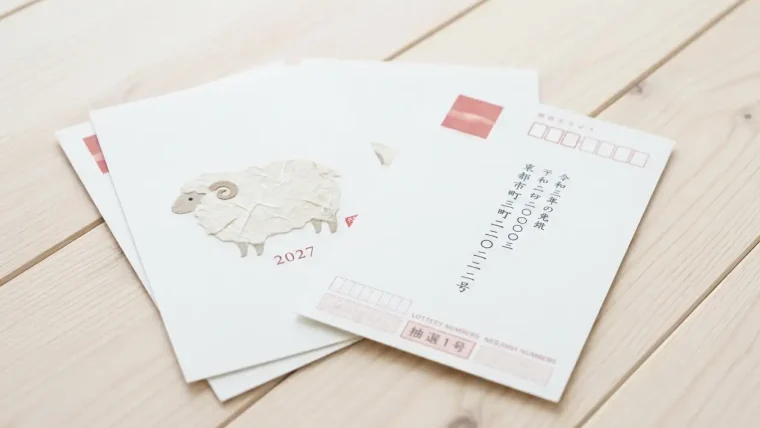
The same caution applies to postcards. How the Year’s Animal Gets on Every Card explains the relationship among seasonal designs, lottery-bearing cards and optional animal imagery. The animal is common, not compulsory.
At New Year sales: 福袋
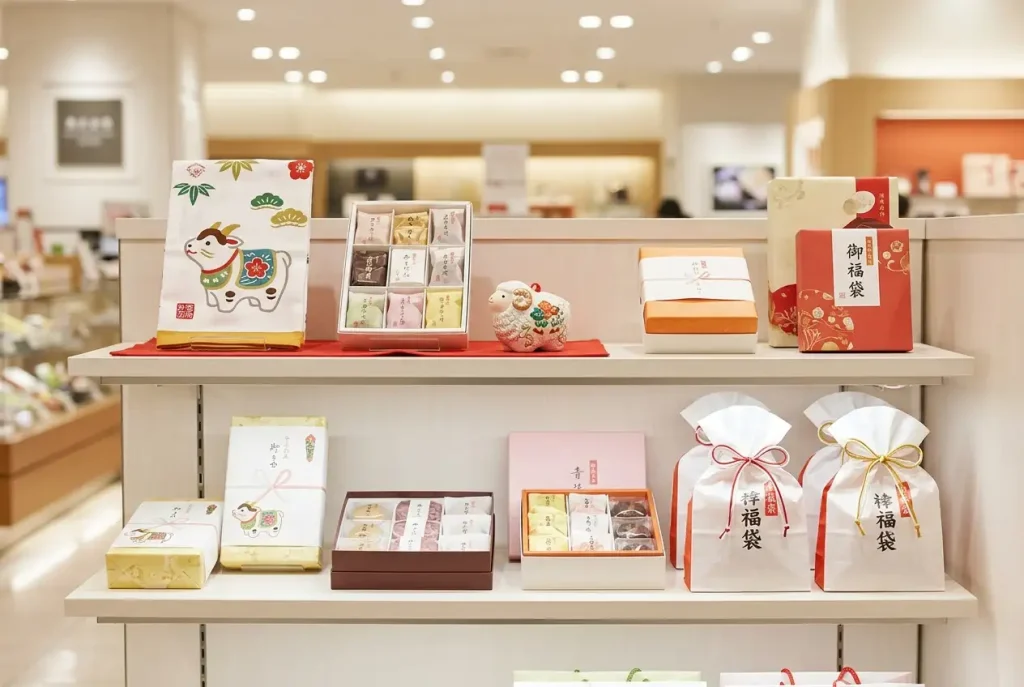
福袋, fukubukuro, literally “fortune bag,” is usually translated as “lucky bag.” Traditionally, it is a bundled sale in which the contents may be partly or completely concealed. Retailers use it to create a New Year event and move grouped merchandise.
“Lucky” does not mean that chance guarantees a bargain. Modern bags may reveal every item in advance, require reservations or exist only as a fixed gift set. The English translation makes the bag sound more mysterious than many current versions actually are.
A zodiac-themed bag may contain towels, stationery, snacks or small ornaments. Judge the contents rather than the claimed total value. A bag full of objects you would not have bought separately is not economical simply because the receipt shows a discount.
Lucky bags Japan searches also produce premium experiences, electronics and restaurant packages. Those are part of the same marketing season, but they are not evidence of a local animal craft tradition.
Handmade, commissioned or disposable?
The useful distinction is not shrine versus store. It is whether the object has a traceable maker, material and place.
| Type | Evidence to look for | What you are paying for | Judgment |
|---|---|---|---|
| Shrine dorei | Shrine name, stated producer, annual design | Place, occasion and commissioned object | Worth buying when the visit matters |
| Regional folk toy | Maker, locality, material, production explanation | Continuing regional practice | Strongest cultural purchase |
| Studio ornament | Artist or kiln attribution | Design and skilled production | Good if you genuinely like the object |
| Department-store seasonal item | Brand, material and country of origin | Finish, packaging and convenience | Judge item by item |
| Food with animal-year label | Clear statement about contents | Consumable product and temporary design | Sensible if you want the food |
| Generic resin trinket | No maker or origin beyond a distributor | Cheap seasonal novelty | Usually leave it |
| Mystery lucky bag | Contents, return rules and actual use | Bundle discount and event value | Buy only if most contents are useful |
The harsh phrase “airport landfill” is not fair to every inexpensive souvenir, but it identifies a real problem. A molded animal carrying only a printed year has almost no story after the season ends. Once it has crossed the ocean, its low purchase price does not make it less wasteful.
A small piece of regional Japanese crafts can also be mass-produced within a workshop system. Handcrafted does not require one artist to make every stage alone. Traceability is more useful than romantic claims about uniqueness.
The November-to-January window has exceptions
Year-end goods begin appearing during November because calendars, postcards, ornaments and gift packaging must be ready before New Year. December is the safest month for the widest selection. Shrines may release their annual objects closer to the New Year visit period, while department stores and online shops can sell out earlier.
Early January is the second useful moment. Shrines are active during 初詣, hatsumōde, “first shrine visit,” and stores run New Year promotions. The trade-off is stock: the most distinctive colors or small-production crafts may already be gone.
By roughly mid-January, general retailers need the display space for the next commercial season. Remaining goods may be discounted, returned to storage or removed from sale. That pattern does not mean every shrine stops distributing a dorei on the same date.
Some exceptions last much longer:
- Craft producers may sell their animal series year-round.
- Complete twelve-animal sets are not tied to one January.
- Museums and regional shops may retain older animals.
- Unsold online inventory can remain searchable after physical displays vanish.
- Shrine objects may continue until stock runs out.
The claim that “all of it disappears” is therefore too absolute. What disappears is the dense, convenient concentration of animal-year goods across ordinary stores.
The three words worth memorizing
Remember 干支, eto, for the animal-year display; 土鈴, dorei, for the clay bell; and 郷土玩具, kyōdo gangu, for the regional object with a local history. Those three terms lead you toward the useful shelves and away from generic seasonal clutter.
Keep 十二支, jūnishi, 縁起物, engimono, 置物, okimono, 授与品, juyohin, 初穂料, hatsuho-ryō, 手ぬぐい, tenugui, 限定, gentei, and 福袋, fukubukuro, at recognition level. You need to identify them on labels, not deliver a vocabulary recital at the register.
If you plan to mail the design rather than carry it home, A Foreigner’s New Year Card Protocol covers dates, mourning etiquette and wording. For shopping, the rule is shorter: buy the maker and place, not merely the animal.
Short FAQ
Are shrine clay bells handmade?
Some are hand-formed or hand-painted; others are commissioned in larger workshop runs. Check the producer and origin rather than assuming every shrine item was made on the grounds.
Can you buy the previous year’s animal in January?
Sometimes, especially online or at a specialist producer. Ordinary retail displays usually move quickly to other seasonal merchandise after the New Year period.
Is eto the same as a Western zodiac sign?
No. In a shopping context, eto usually points to the animal associated with the coming calendar year, not a monthly star sign or horoscope.
Are lucky bags always secret?
No. Many modern retailers publish the contents, accept reservations or sell a predetermined set. Check the store’s description before paying.
What is the best small souvenir?
A labeled regional clay bell or a tenugui from a named maker travels well. The bell offers a stronger local story; the cloth is lighter and more practical.