Japanese Phrases
The Word You Will Use Fifty Times a Day
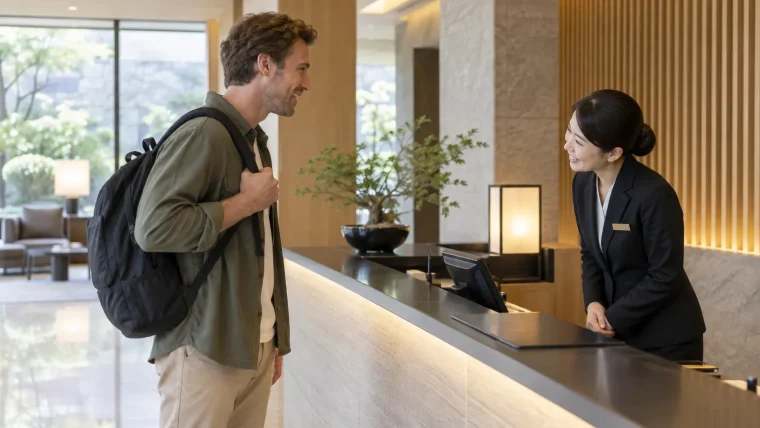
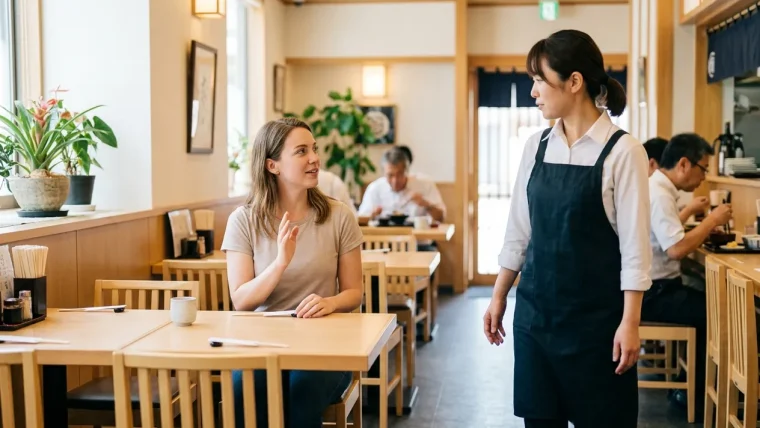
Sumimasen calls a waiter, apologizes, thanks, squeezes past, opens a question and softens a request. Which job the tone and the situation assign.

Japan Know How archive
Everyday Japanese sorted by the situation you need it in: arriving, ordering, shopping, trains, trouble. Every phrase carries its politeness level, because the same thought said three ways can be warm, correct or rude depending on who you are talking to.
Japanese Phrases
Sumimasen calls a waiter, apologizes, thanks, squeezes past, opens a question and softens a request. Which job the tone and the situation assign.
Japanese Phrases
Arigatou comes from arigatashi, hard to exist. Japanese thanks marks a rare favor, which is why the polite forms feel formal to English speakers.
Japanese Phrases
Japanese politeness runs on apology, hedging, timing and silence long before it reaches honorific verbs. Seven habits that work with plain forms.
Japanese Phrases
Three numbers, four situations and a handful of sentences you will hopefully never use. Checked against the national tourism organisation's own page.
Japanese Phrases
One phrase, one card and about eight kanji cover the world's best rail network. Plus train types, the exit that matters, and the luggage rule people miss.
Japanese Phrases
The six-step script that works from a ramen counter to a department store, plus the two conventions that surprise Americans and the allergy phrases worth screenshotting.
Japanese Phrases
Casual, polite and formal are built into the verb, not added with tone. What each level sounds like, what keigo actually is, and why visitors should live in the middle.
Japanese Phrases
Ten phrases, and three of them do most of the work. What to say, how to pronounce it, and the one thing phrasebooks leave out: which register to use with whom.