On April 2, 2004, Shōsetsuka ni Narō opened a route into publishing that did not begin with an editor’s slush pile. Writers could publish chapters online, readers could respond, and successful stories could build a visible record before a publisher spent money printing them. That change is central to answering why is there so much isekai: the genre grew inside a market that could measure demand before commissioning an anime.
The usual explanation is that viewers simply like reincarnation, game-style abilities and fantasy worlds. They clearly do. But preference alone does not explain why similar premises keep passing through the same sequence: web serialization, edited book, manga adaptation and animated series.
The stronger explanation is industrial. Shōsetsuka ni Narō, written 小説家になろう, Shōsetsuka ni Narō, literally “Let’s Become a Novelist,” turns reading behavior into public rankings. Publishers can inspect stories that already have readers, bookmarks and ratings. That reduces one kind of uncertainty—the question of whether anyone wants the premise—before the expensive stages begin.
It does not make an anime safe. It makes the source material easier to evaluate.
Before the Rankings Became a Scouting Desk
A Japanese novel or manga did not need a web following to become an anime. Publishers developed authors through contests, submissions, editorial meetings and magazine serialization. Producers could also start with manga, games, toys or an original proposal.
That system still exists. What changed was the amount of market evidence available before acquisition.
In the older route, an editor might judge a manuscript using craft, genre knowledge, comparable titles and an internal sales forecast. Readers encountered the work after the publisher had paid for editing, design, printing and distribution. A poor response arrived late.
A web platform reverses part of that sequence:
- The author publishes without a conventional book contract.
- Readers encounter the story chapter by chapter.
- Some readers bookmark or rate it.
- The work appears—or fails to appear—in visible rankings.
- An editor can examine both the manuscript and its existing response.
- A publisher may acquire and revise it as a commercial book.
The distinction matters. Japanese web novels are not merely cheaper light novels delivered through a browser. They are also live product tests, although imperfect ones.
For the wider financial structure after acquisition, The Money Behind a Single Episode explains who funds development and where an animation studio fits. The web ranking sits earlier in that chain.

The Platform Made Reader Demand Legible
Shōsetsuka ni Narō does not hide popularity inside a publisher’s private sales report. Its public pages separate rankings by period and category, including dedicated listings for 異世界転生/転移, isekai tensei/ten’i, “reincarnation or transfer to another world.”
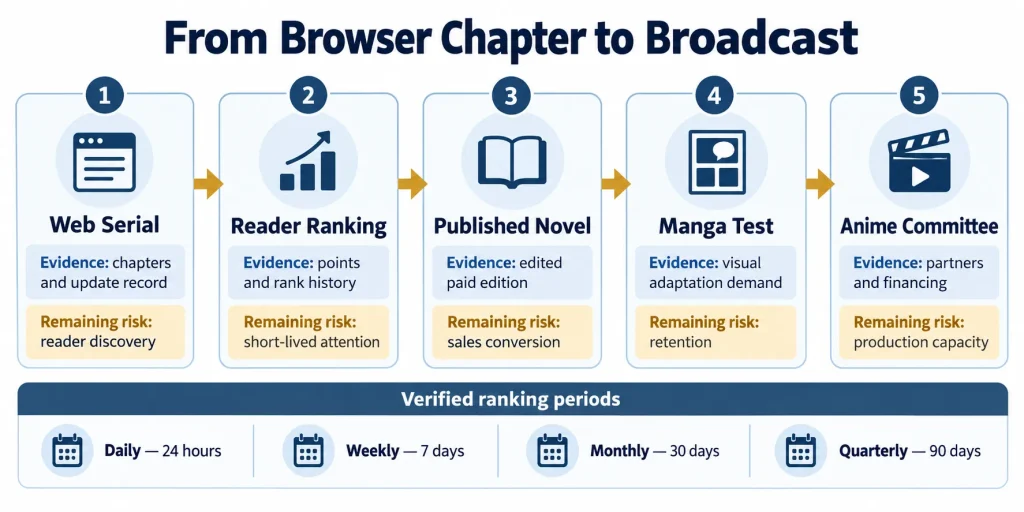
The site’s documented ranking periods include daily, weekly, monthly and quarterly windows. In its published ranking rules, the platform describes the daily period as the previous 24 hours, the weekly period as the previous 7 days, the monthly period as the previous 30 days and the quarterly period as the previous 90 days. Its ranking pages display point totals alongside titles.
That is not a scientific survey of everyone who watches anime. It is a measurement of the platform’s participating readers. Even so, it gives scouts information that an unread manuscript cannot provide:
- whether readers continue following a serial;
- whether they value it enough to rate or bookmark it;
- which premises compete successfully within a category;
- whether attention arrives as a brief spike or persists;
- how readers respond before packaging, casting or animation affects the result.
The uncomfortable part is that this feedback system can reward familiarity. A recognizable promise is easier to communicate quickly than an unfamiliar one. Reincarnation, exile, special abilities, noble families and game-like progression let a title tell the reader what kind of satisfaction it offers before the first chapter begins.
This helps explain why Shōsetsuka ni Narō rankings can produce clusters of similar stories without a committee ordering writers to copy one another. Authors see what readers select. Readers recognize conventions quickly. Editors see the same public winners. Every participant receives an incentive to work with concepts that have already proved understandable.
| Earlier editorial route | Web-platform route |
|---|---|
| Manuscript evaluated before public release | Chapters tested in public before acquisition |
| Demand estimated through editorial judgment | Reader ratings, bookmarks and rankings add observable evidence |
| Publisher pays before broad feedback arrives | Initial audience formation can occur before a book contract |
| Failure becomes visible after commercial release | Weak engagement may become visible during serialization |
| Discovery depends heavily on submissions and contests | Editors can scout public catalogs and contest entries |
Table basis: comparison of conventional manuscript acquisition with the documented publication, ranking and media-development functions of Shōsetsuka ni Narō; checked September 11, 2026.
Why Is There So Much Isekai in the Acquisition Pipeline?
The platform does not automatically send a high-ranking story to television. It supplies a candidate with evidence.
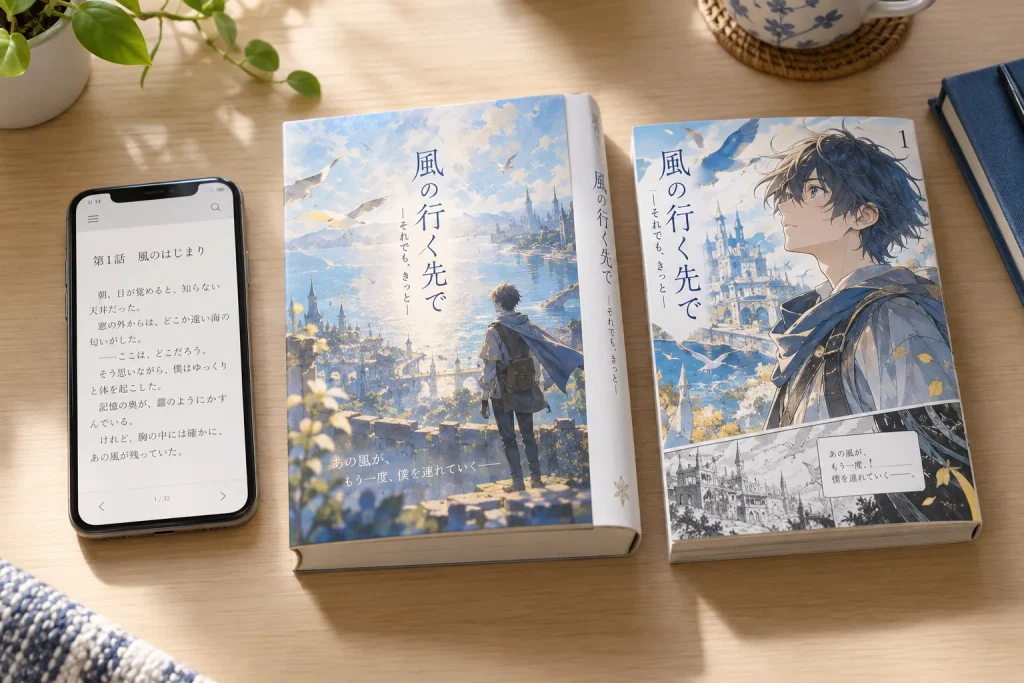
A publisher can then turn the serial into a light novel adaptation: edited prose, professional illustrations, a commercial imprint and distribution through bookstores and digital stores. The book creates new evidence—sales, reprints and reader retention—that is more directly connected to paying customers.
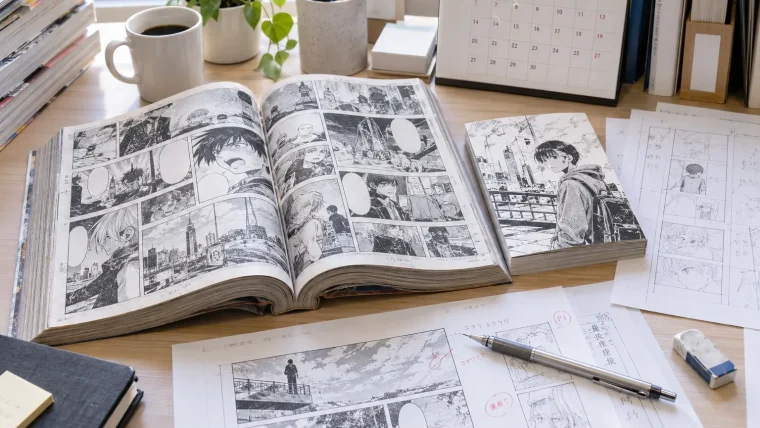
A manga version may add another test. It shows whether the premise works visually, whether the characters attract readers in illustrated form and whether the property can support another publishing line. Only later might companies organize an anime project.
The sequence therefore works less like a guaranteed escalator and more like a series of gates.
| Gate | Evidence available | Risk that remains |
|---|---|---|
| Free web serial | Ratings, bookmarks, comments and rank position | Platform popularity may not convert into purchases |
| Commercial novel | Sales, reprints and volume-to-volume retention | Readers may prefer prose to other formats |
| Manga adaptation | Visual appeal and manga readership | Serialization can stall or fail to broaden the audience |
| Anime proposal | Multiple existing products and a recognizable title | Financing, scheduling, execution and international demand remain uncertain |
| Broadcast or streaming | Actual viewing and merchandise response | A visible franchise can still underperform |
The phrase “the risk is already gone” is therefore too strong. The early audience reduces discovery risk. It does not eliminate production risk, scheduling risk or the possibility that fans of the original dislike the adaptation.
Those later decisions are usually made by several participating businesses. Why the Studio Rarely Owns the Show covers that ownership structure rather than repeating it here.
The Turning Point Was a Repeatable Route, Not One Hit
A single web success could have been dismissed as an exception. The market changed when publishers could repeat the route across imprints and genres.
By September 11, 2026, Shōsetsuka ni Narō’s own front page reported 1,329,237 posted works and 2,960,240 registered users. Its official site guide said that works originating there had produced more than 9,000 published books. It also stated that the number of anime titles based on Narō works passed 200 during 2026.
Those figures do not mean that every title is isekai. The same official page names adaptations ranging from fantasy series to The Apothecary Diaries and I Want to Eat Your Pancreas. Narō is a supply system for commercial fiction, not an isekai-only website.
Still, fantasy and other-world categories are highly visible in its navigation and rankings. When many stories from those categories pass through the acquisition gates, seasonal anime inherits the concentration.
The platform did not invent fantasy escapism. It made reader selection visible at industrial scale.
This is why the term Narō-kei, written なろう系, Narō-kei, literally “Narō type,” is useful but dangerous. It may describe a production lineage or a recognizable set of conventions. It does not prove that every similar anime began on Shōsetsuka ni Narō. Some came from other platforms, contests, manga, games or original proposals.
What the Supply Chain Changes for Viewers
For you, the result appears as repetition at the television end of a much longer process. By the time a series reaches a seasonal schedule, several companies may already know its hook, readership, cover design, character popularity and performance in another medium.
That encourages adaptations whose appeal can be summarized quickly:
- a protagonist begins again with retained knowledge;
- a familiar social position is reversed;
- an apparently weak ability turns out to be valuable;
- a rejected character builds a better life elsewhere;
- rules resembling a game make progress immediately visible.
These devices are not automatically lazy. They are efficient introductions. The problem comes when commercial proof is confused with artistic necessity: evidence that readers liked one execution can be interpreted as evidence that the market wants many close variants.
You can often recognize the pipeline in the credits or official description. Look for 原作, gensaku, “original work,” followed by an author, publisher and novel imprint. If a manga credit appears separately, the anime may still derive legally from the novel rather than from the manga version you first saw.
Character naming also travels through this export chain. If you need to check how an English name is normally represented in Japanese promotional material, the site’s name converter covers 898 checked names in katakana rather than generating an unchecked spelling.

A Proven Novel Still Has to Fit a Broadcast Slot
An existing readership does not create animation capacity. A project still needs participating companies, staff availability, rights agreements, distribution and a usable schedule.
This helps explain why a popular source may wait while a less famous one appears first. The decisive question is not simply “Which novel ranks highest?” It is “Which package can the participating companies assemble?”
The finished program must also fit television and streaming formats. Why So Many Shows Stop at Twelve explains cour structure and stopping points; a short adaptation should not automatically be read as proof that the source failed.
This stage can also reshape the book. Internal monologue may be shortened. Explanations can become diagrams, dialogue or visual action. Volumes may be compressed to reach a satisfying stopping point. Secondary characters may receive less time even when they ranked highly with novel readers.
Those changes are where the earlier proof stops helping. A popular text demonstrates demand for that text—not guaranteed approval for every adaptation decision.
What Has Not Changed—and What Has No Announced Change Date
Original anime has not disappeared. Manga remains a major source. Publishers still run contests, editors still develop unproven writers, and production committees can choose projects for reasons that a public ranking does not reveal.
Nor has Narō become a neutral census of Japanese taste. Its rankings record activity among people using that platform under its current rules. Visibility can feed more visibility: appearing in a ranking helps readers find a story, and those additional readers can generate further points. The measurement influences the market it measures.
The available primary sources checked on September 11, 2026 did not announce a future date on which the web-novel acquisition model would end or be replaced. The platform has changed ranking specifications before—the official operator documented a calculation change on November 29, 2016—so its mechanics should not be treated as permanent.
The practical reading is:
- isekai popularity is real, but platform rankings measure a selected audience;
- anime source material arrives through several routes, not only Narō;
- a high web rank is evidence, not a production order;
- a published book is another test, not a promise of animation;
- a successful source does not guarantee a successful series.
If dialogue conventions make these adaptations feel more interchangeable in translation than they do in Japanese, Anime Speech Styles, and What Subtitles Cannot Carry covers the linguistic layer rather than the financing pipeline.
What to Verify Before the Next Season Starts
Check the official credits for the source medium, the publisher’s page for the imprint and the platform page for the original serial. Do not assume that a fantasy premise, a long title or a reincarnated protagonist proves Narō origin.
Also check the ranking rules again before relying on specific point calculations. Platform features can change, and a scheduled anime can change dates after its first announcement. This article should be rechecked immediately before its planned October 5, 2026 publication and reviewed again whenever Shōsetsuka ni Narō revises its ranking documentation or annual media totals.
Frequently Asked Questions
Did Shōsetsuka ni Narō invent isekai?
No. Other-world stories existed long before the platform. Narō supplied a particularly effective way to publish, measure and scout them.
Does a top-ranked web novel automatically receive a book deal?
No. A ranking creates visibility and evidence of engagement. A publisher still decides whether to acquire the work, how to edit it and whether it fits an imprint.
Are all Narō adaptations isekai?
No. The platform’s official media list includes fantasy, mystery, romance and contemporary stories. “Narō origin” identifies a publication route, not one genre.
Is every isekai anime based on a Narō novel?
No. Similar works can originate on other novel platforms, in print competitions, as manga, in games or as original anime projects.
Why do so many titles explain the whole premise?
A descriptive title makes the promise easy to identify in a crowded public catalog. That can help a reader decide quickly whether to open the first chapter, although the platform does not require every author to use that style.
Do rankings remove financial risk?
No. They reduce uncertainty about initial reader interest. Book sales, manga performance, financing, animation quality, scheduling and viewer response remain separate risks.
Why do adaptations sometimes change a popular novel?
Television has different time, visual and structural demands. A production may compress narration, combine events or choose a stopping point that fits its planned cour.