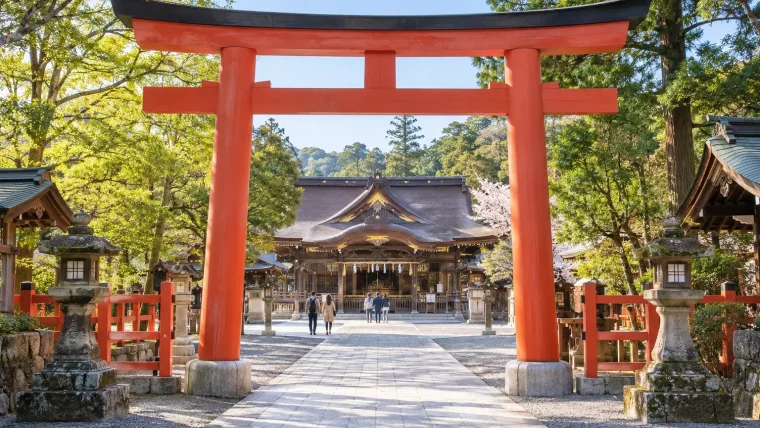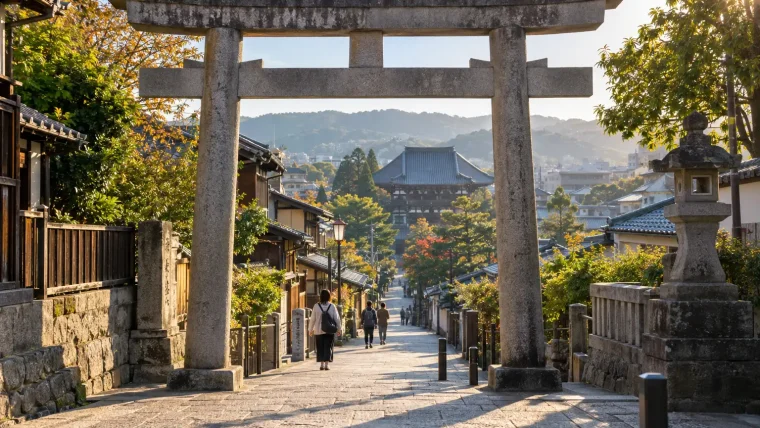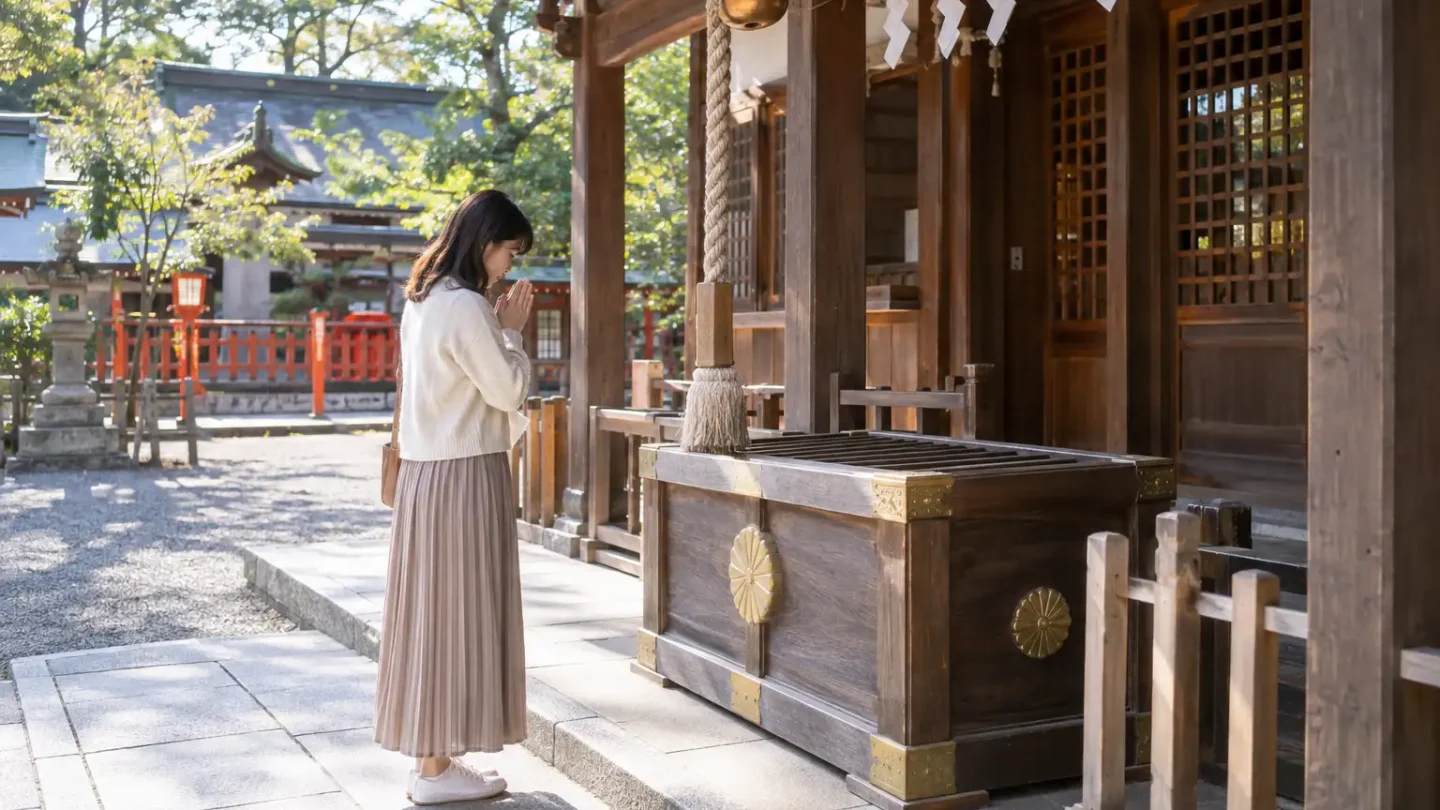
The most serious shrine mistake is walking past a rope, fence, closed gate, or staff instruction because you think the “real” prayer must happen closer to the sacred building. It does not. Learning how to pray at a shrine in Japan means recognizing where visitors are supposed to stop, usually at the worship hall or designated offering area. The rest depends on three visible signals: the route through the grounds, whether the water basin is operating, and any instructions that replace the usual sequence.
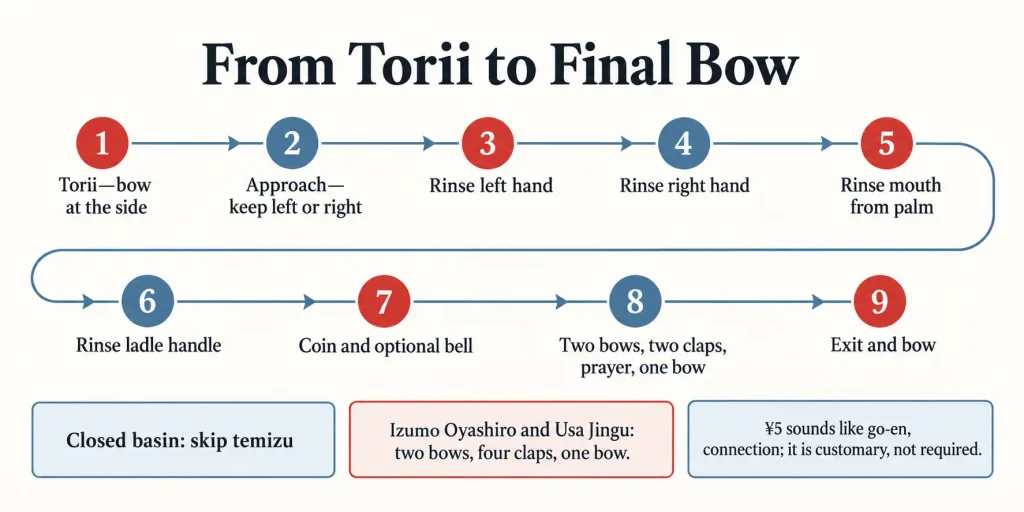
The standard pattern is easy to remember. Bow at the torii, keep to one side of the approach, rinse at the water basin, make a small offering, use the bell if one is provided, bow twice, clap twice, pray, and bow once. Yet each part has a half-informed version that can cause more trouble than simply admitting you do not know what to do.
The larger cultural context is in How Shinto and Buddhism Actually Show Up. That guide explains how the two traditions coexist in daily life; this article stays with the physical sequence of an ordinary shrine visit.
| Order | Place | Action | Visible exception to watch for |
|---|---|---|---|
| First | Torii entrance | Pause and make a small bow | Follow a separate entrance route if marked |
| Second | Approach | Walk to the left or right of the center | Follow crowd controls or directional signs |
| Third | Water basin | Left hand, right hand, mouth, ladle handle | Skip it if closed or marked unavailable |
| Fourth | Worship area | Place or gently toss an offering | An offering is optional |
| Fifth | Bell | Ring gently if a rope is provided | Many shrines have no visitor bell |
| Sixth | Before prayer | Bow twice | Check posted local instructions |
| Seventh | Prayer | Clap twice, then address the kami silently | Some shrines require four claps |
| Eighth | End | Bow once | Follow the shrine’s stated sequence |
| Ninth | Torii exit | Turn toward the shrine and bow | Do not obstruct the entrance |
Mistake 1: trying to reach the honden
Visitors see the most ornate building and assume that getting closer produces a more authentic experience. That reasoning can take them toward a closed gate or across a boundary that was not meant to be crossed.
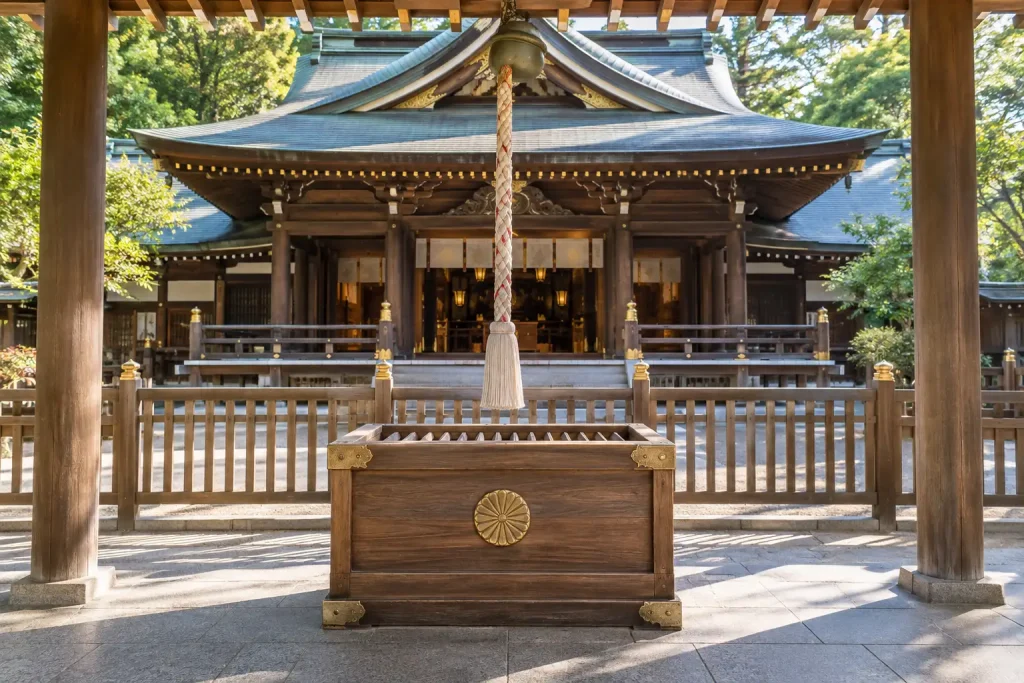
本殿, honden, literally “main sanctuary,” is the building associated with the enshrined 神, kami, a sacred presence or deity. It is not normally where an unaccompanied visitor walks in and performs an ordinary prayer. The public-facing space is often the 拝殿, haiden, literally “worship hall,” or an offering point positioned before it.
The distinction matters because the barrier protects a sacred and operational space. Crossing it is not the same category as clapping at the wrong moment. Staff may have to stop you, and ceremonies may be taking place beyond what you can see.
A rope, rail, gate, sign, or change in floor level is not decoration. If a formal prayer has been arranged, shrine staff will tell participants where to go. Otherwise, stop where the offering box and worship position tell you to stop.
What to do instead — Japanese shrine prayer: pray at the public worship point and never cross a barrier without an invitation.
Mistake 2: performing temple etiquette at a shrine
A visitor sees incense, old wooden buildings, or people praying and assumes every Japanese religious site uses the same procedure. This seems reasonable because shrines and Buddhist temples can stand close together, and both may have offering boxes.
The result is a confused ritual rather than a serious offense. Clapping is standard at many Shinto shrines but generally not part of ordinary Buddhist temple prayer. Architecture, terminology, and local instructions tell you which setting you have entered.
The fastest external clue is a 鳥居, torii, literally “bird perch,” marking the entrance to a Shinto shrine. A Buddhist temple may instead have a roofed gate, incense burner, statues, or other temple-specific structures. None of these clues should overrule a clear sign at the site.
Jinja vs Otera: The Five-Second Test covers the architectural distinction rather than repeating it here. Once you know it is a shrine, you can use the shrine sequence.
What to do instead — Shinto shrine etiquette: identify the site before copying a ritual from memory.
Mistake 3: walking straight up the middle
Some researched visitors know that the center of the approach is associated with the kami, but they apply the rule only while passing under the torii. They step to the side at the entrance and drift back into the middle immediately afterward.
The official Japan National Tourism Organization visitor guide advises walking on the left or right because the center is reserved for the kami. This applies to the 参道, sandō, literally “visiting path,” rather than to one painted line beneath the gate.
The practical consequence is usually small. Nobody expects a busy shrine entrance to function like a ceremonial parade ground. The error becomes more noticeable when you stop in the middle for photographs, block the direct approach, or ignore a marked pedestrian flow.
At crowded events, safety instructions outrank the symbolic convention. Barriers may place everyone in a central lane or create a one-way route. Follow the route the shrine has established instead of forcing an etiquette rule against crowd control.
Leaving the center open is a direction of travel, not a balancing exercise on the edge of the paving stones.
What to do instead — shrine visit rules: use either side of the approach unless signs or staff direct the crowd elsewhere.
Mistake 4: turning temizu into handwashing
The water basin resembles a public fountain, so visitors may scrub, drink directly from the ladle, touch the ladle to their mouth, or keep taking fresh scoops. Others memorize “left, right, mouth” but forget the handle at the end.
手水, temizu, literally “hand water,” is a brief symbolic purification before you approach the worship area. Meiji Jingu describes it as purification with water before visiting the main sanctuary. Its English guide condenses the action into washing the hands, rinsing the mouth from cupped hands, and washing the hands again.
A fuller working sequence uses four movements:
- Hold the ladle in your right hand and pour water over your left hand.
- Transfer the ladle to your left hand and pour water over your right hand.
- Return it to your right hand, pour water into your left palm, and bring that water to your lips without touching the ladle.
- Tip the ladle upright so the remaining water runs down and rinses the handle.
Do not swallow the water unless the site explicitly identifies it as drinking water. Do not return used water to the clean basin. Let it fall into the drainage area around the basin.
Some shrines remove their ladles, close the basin, or provide flowing water without a scoop. An empty or closed basin is not a test. Continue toward the worship area and follow the setup that exists.
“Please purify yourself by water before going to the main sanctuary.” — Meiji Jingu visitor guidance
What to do instead — temizu ritual: rinse the left hand, right hand, mouth from your palm, and finally the ladle handle.
Mistake 5: treating ¥5 as an admission fee
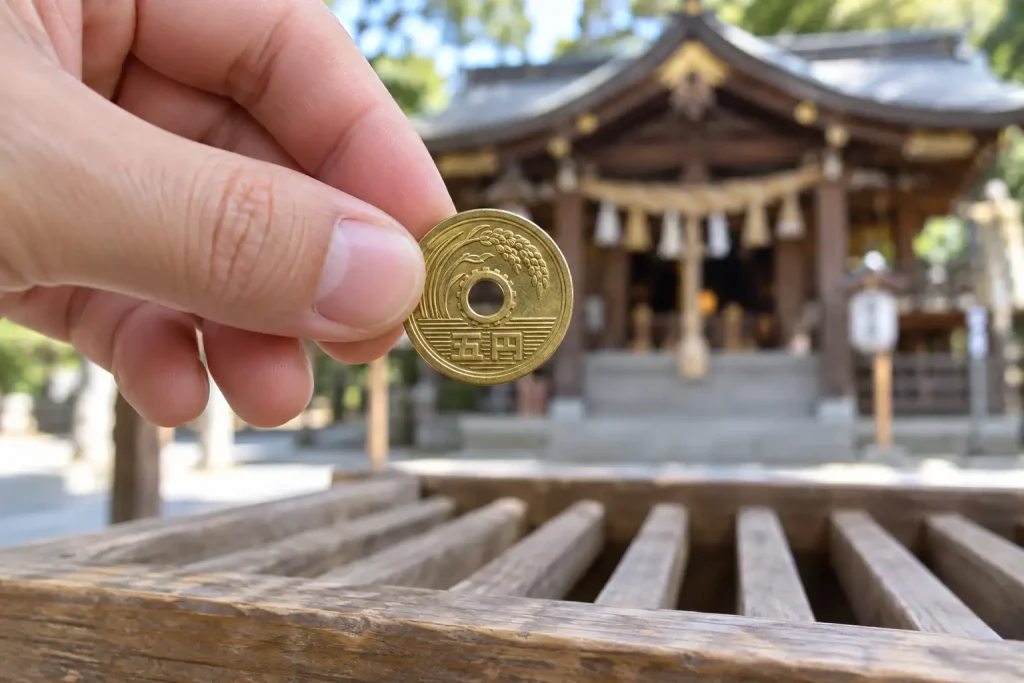
The phrase “use a five-yen coin” often reaches travelers without its explanation. They begin saving every coin with a hole, worry that the prayer will not count without one, or delay everyone while searching through a wallet.
五円, go-en, means “five yen.” It sounds like ご縁, go-en, meaning a connection, relationship, or fortunate bond. That wordplay makes the coin a popular offering. It does not set a required price for approaching a shrine.
The official Meiji Jingu instructions say that visitors “may” place coins in the offering box. The wording matters: the offering is voluntary. JNTO likewise notes that other denominations work even though ¥5 is commonly chosen for the pun.
At the Federal Reserve reference rate of ¥153.71 per US dollar on September 11, 2026, ¥5 was worth about $0.03. The point is clearly symbolic rather than financial. A larger coin does not buy a stronger response, and you do not need to make change at the front of a line.
賽銭, saisen, literally “offering money,” should be placed or tossed gently into the 賽銭箱, saisen-bako, the offering box. Throwing it hard adds noise without adding respect.
What to do instead — five yen shrine offering: use ¥5 if you have it, use another amount if you do not, and remember that no fixed payment is required.
Mistake 6: ringing a bell that is not there
Travel guides often compress the visit into “coin, bell, bows, claps.” A visitor who has memorized that order may start looking for a rope, reaching toward ceremonial equipment, or assuming the setup is incomplete.
Some worship areas provide a 鈴, suzu, a bell, suspended above the offering box with a rope. Others do not. Equipment can also be removed, restricted, or reserved for formal rites. The bell is therefore conditional, not a mandatory missing step.
If a visitor bell is clearly available, ring it gently after making the offering and before the bows. One controlled movement is enough. Do not swing the rope violently, keep ringing to attract attention, or reach across a barrier toward a bell used by shrine staff.
The visible setup is more reliable than a memorized internet diagram. A shrine without a bell still offers a complete place to pray.
What to do instead — shrine bell etiquette: ring the provided visitor bell gently, and omit the step when no bell is available.
Mistake 7: rushing the two-two-one sequence
People remember the numbers but lose the order. They clap first, bow while clapping, make the request during the opening bows, or leave as soon as their hands meet.
The standard form is 二礼二拍手一礼, ni-rei ni-hakushu ichi-rei, literally “two bows, two claps, one bow.” Meiji Jingu, Ise Jingu, and Jinja Honcho all publish this as the ordinary pattern. The movements frame the quiet part in the middle.
Use this order:
- Make the offering.
- Ring the visitor bell if one is provided.
- Bow deeply twice.
- Bring your hands together and clap twice.
- Keep your hands together while offering thanks or making your prayer silently.
- Lower your hands and bow once.
You do not need a rehearsed Japanese speech. Visitors commonly give their name or address mentally, express thanks, or state a request, but official public guidance focuses on the physical sequence rather than prescribing one compulsory script.
For bow depth in other situations, the separate guide to the three angles used when bowing in Japan handles business and social bows. At the shrine, follow the published worship sequence instead of trying to calculate an exact angle.
What to do instead — two bows two claps one bow: bow twice, clap twice, pause for the prayer, and finish with one bow.
Mistake 8: assuming the standard sequence has no exceptions
This is the classic half-informed error. A visitor researches the ordinary pattern, learns it accurately, and then corrects another visitor—or ignores instructions—at a shrine with its own established form.
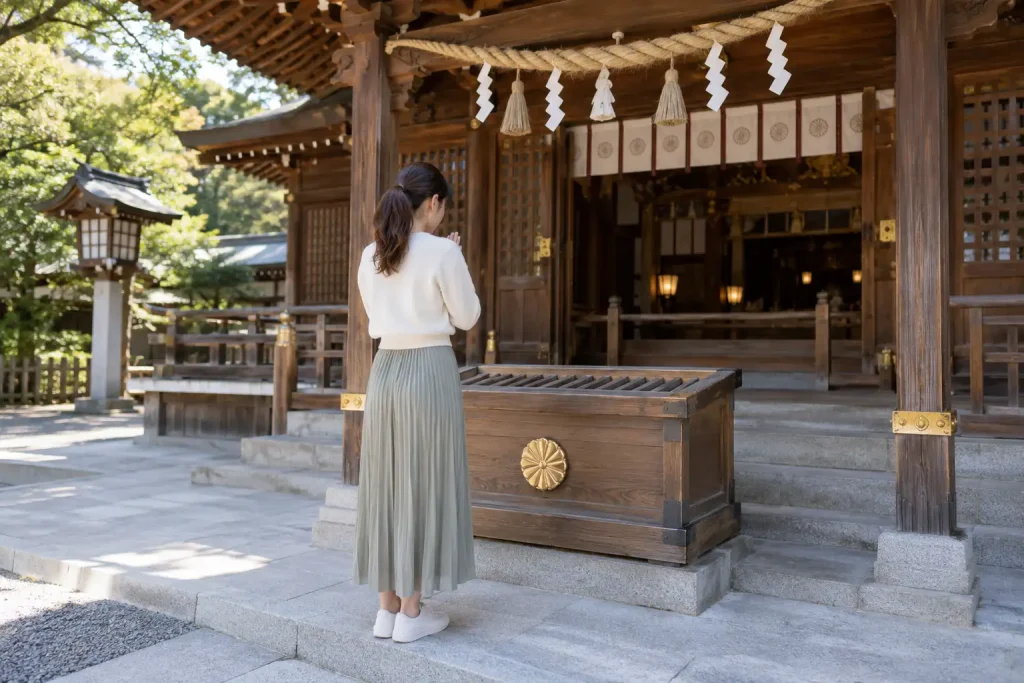
Izumo Oyashiro, widely known as Izumo Taisha, officially instructs visitors to bow twice, clap four times, and bow once. Its English visitor information explicitly notes that this is twice the number of claps used at most other shrines. Usa Jingu also publishes a four-clap form for ordinary worship.
The standard sequence remains useful because it works at many shrines. The mistake is turning a default into an unbreakable national law. A notice beside the offering box is local evidence and outranks a general travel article.
This matters most at famous shrines, where staff have provided instructions precisely because the local form differs. Copying the people ahead of you is useful, but reading the sign is better: the person ahead may be another tourist copying you.
| Shrine or situation | Published clap pattern | Best visitor response |
|---|---|---|
| Meiji Jingu | Two bows, two claps, one bow | Use the standard sequence |
| Ise Jingu | Two bows, two claps, one bow | Use the standard sequence |
| Izumo Oyashiro | Two bows, four claps, one bow | Follow the local four-clap form |
| Usa Jingu | Two bows, four claps, one bow | Follow the local four-clap form |
| Temporary crowd arrangement | Follow posted directions | Let staff instructions override the default |
| No readable instructions | Use the standard sequence | Watch respectfully and avoid correcting others |
What to do instead — how to pray at a Japanese shrine correctly: use the standard pattern only after checking for local instructions.
Mistake 9: finishing the prayer but blocking the shrine
After the final bow, visitors often stop directly in front of the offering box to check photographs, reorganize a bag, explain the ritual to companions, or decide where to go next. The prayer is over, but the physical space is still in use.
This seems harmless because there may be no painted queue. In practice, the next worshipper needs the same central position. During a busy visit, one person pausing there can interrupt the movement behind them.
Step away to the side as soon as you finish. If you want to visit the shrine office, view the architecture, or meet companions, move clear of the worship line first. Japanese Etiquette for Visitors: What Actually Matters explains the broader difference between harmless errors of form and mistakes that cross a practical boundary.
If you receive a 御朱印, goshuin, literally “honorable vermilion seal,” its written date may use Japan’s era system. The Japanese era converter covering every year from 1868 through 2050 and all five eras handles that conversion; there is no need to reproduce the tool in a shrine-etiquette guide.
What to do instead — Japanese shrine etiquette for tourists: complete the final bow, step aside promptly, and leave the worship position open.
The habit that prevents nearly every mistake
Pause before copying a remembered sequence. Look for a torii, visitor boundary, open water basin, directional arrows, offering box, bell rope, and posted prayer instructions. Those visible elements tell you which parts of the standard routine apply.
This habit is especially useful during shrine festivals, when barriers and crowd routes can change normal movement through the grounds. Japanese Festivals by Season: A Year-Round Guide explains when major shrine events occur and what they change for a visitor.
The full ordinary sequence can be reduced to one line:
Bow at the entrance, keep off the center, purify your hands and mouth, offer gently, use the bell if present, bow twice, clap twice, pray, and bow once.
At a shrine with posted local rules, however, the sign wins. Respect is not proving that you memorized the national default. It is noticing how the place in front of you actually works.
FAQ
Do you bow before entering a Shinto shrine?
A small bow at the torii is customary. Stand to one side so you do not block the entrance, face the shrine, bow, and then continue along the approach.
Why should you avoid the center of a shrine path?
The center of the approach is traditionally treated as the route of the kami. Walk on the left or right when practical, but follow marked lanes and staff directions during crowded events.
What is the correct temizu order?
Hold the ladle in your right hand and rinse the left hand. Transfer it and rinse the right hand. Pour water into your left palm to rinse your mouth without touching the ladle, then tip the remaining water down the handle.
Can you skip temizu if the water basin is closed?
Yes. Do not operate a closed fixture or search for another water source. Continue toward the worship area and use the arrangement the shrine currently provides.
How much money should you offer at a shrine?
There is no fixed amount for an ordinary visit. ¥5 is popular because go-en, “five yen,” sounds like go-en, “connection,” but another denomination or no offering is acceptable.
Should you throw the coin into the offering box?
A gentle drop or short toss is sufficient. Do not throw the coin hard or turn the offering into a performance.
Do you ring the shrine bell before or after offering the coin?
Where a visitor bell is provided, the usual order is offering first and bell second. If there is no bell or access is restricted, omit the step.
When do you make your wish at a Japanese shrine?
Bow twice and clap twice, then keep your hands together while you give thanks or state your prayer silently. Finish with one bow.
Do all Shinto shrines use two bows and two claps?
No. It is the widely published standard, but some shrines use a local form. Izumo Oyashiro and Usa Jingu instruct ordinary worshippers to clap four times.
Is praying at a shrine the same as praying at a Buddhist temple?
No. Clapping is associated with ordinary Shinto shrine worship and is generally omitted at Buddhist temples. Identify the site and follow its posted instructions.
Can tourists pray at Shinto shrines?
Yes, unless access to a particular area or ceremony is restricted. Stay within the public worship area, follow signs, and avoid obstructing other visitors.
Where do you pray—the honden or haiden?
Ordinary visitors pray at the worship hall or designated public offering point. The honden is the inner sanctuary associated with the enshrined kami and is not normally entered without authorization.