Politeness Is a System, Not a List of Words
How to be polite in japanese starts with understanding that polite communication is built through timing, apology, hesitation, and social awareness before it appears in formal vocabulary. Japanese speakers often adjust the relationship between people first and choose words second.
A visitor may memorize respectful phrases and still miss the deeper pattern. A request can become more natural because it begins with すみません sumimasen (excuse me / I am sorry), a refusal can become softer because the sentence remains unfinished, and a pause can show consideration instead of uncertainty.
Japanese politeness is not a separate language layer added on top of ordinary speech. It is a system that shapes how ordinary speech is delivered.
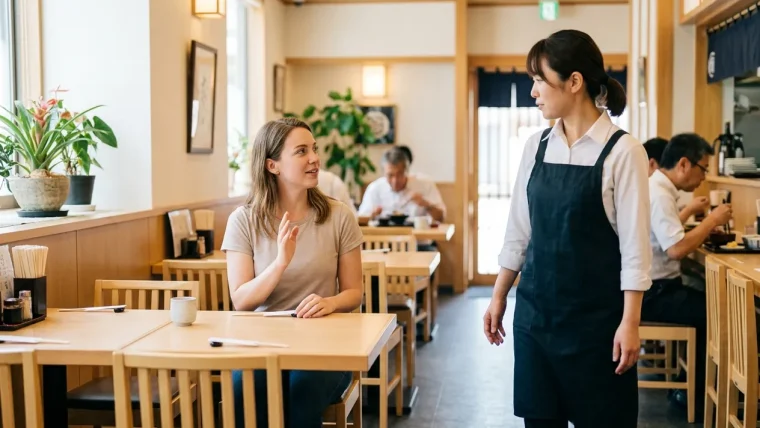
Keigo, the formal honorific system, receives most attention in Japanese language learning. It matters in workplaces, customer service, and formal situations, but daily communication depends on smaller habits that appear everywhere: at a restaurant counter, during a conversation with neighbors, or when asking someone for assistance.
The Essential Japanese Phrases for Travelers article focuses on useful expressions for common travel situations. This guide explains why those expressions sound polite and how the surrounding communication changes their meaning.
“The most polite sentence is often the one that makes the other person feel the least pressure.”
The hidden structure behind Japanese politeness
Japanese politeness works by managing social distance. The speaker considers the other person’s position, effort, time, and ability to respond.
This does not mean every sentence must be indirect or formal. A close friend, family member, coworker, and customer will not receive the same style of communication. The system changes depending on the relationship.
The main difference from many English-speaking situations is that Japanese often places attention on the interaction itself. Instead of focusing only on the information being exchanged, speakers also manage how the message arrives.
For example, a direct request such as “Please help me” may be grammatically correct but socially strong. Adding a small acknowledgment of inconvenience can change the feeling of the exchange.
The same principle explains why Japanese speakers may:
- apologize before asking a favor;
- pause before giving an answer;
- avoid finishing a refusal directly;
- use softer words instead of absolute statements;
- show attention through short responses.
Politeness often appears in the space around the sentence, not only inside the sentence.

Apology is sometimes a form of gratitude
One of the most surprising parts of Japanese communication is that apology language can express appreciation.
The phrase すみません sumimasen (excuse me / I am sorry) does not always indicate that someone caused a problem. It can recognize that another person gave time, effort, or assistance.
A traveler asking for directions may begin with すみません. A customer receiving help in a store may use the same expression. The speaker is not necessarily accepting blame; the speaker is acknowledging the social effort involved.
This difference is important because translating every phrase word-for-word can create confusion.
| Expression | Literal meaning | Communication purpose |
|---|---|---|
| すみません sumimasen | Excuse me / I am sorry | Recognizes another person’s effort |
| ありがとう arigatō | Thank you | Expresses appreciation |
| お願いします onegaishimasu | Please | Makes a respectful request |
The common mistake is thinking that apology automatically means regret. In many everyday situations, it works as a sign of consideration.
Pauses communicate attention
Japanese conversations often include short pauses before important responses. These pauses can show that the speaker is thinking carefully rather than ignoring the other person.
The expression えっと etto (well / let me think) creates a small amount of time to organize thoughts. It tells the listener that a response is coming.
English speakers sometimes associate hesitation with insecurity. In Japanese conversation, a pause may communicate responsibility because the speaker avoids giving a careless answer.
“A moment of silence can show that the other person’s words were received.”
The purpose is not to slow down every conversation. Natural speech still varies by personality and situation. However, removing all pauses can make communication feel more mechanical.
Unfinished sentences allow cooperation
Japanese speakers frequently leave sentences incomplete when the meaning can be understood from context.
The ending けど kedo (but / though) is often used this way. Someone may say ちょっと難しいんですけど chotto muzukashii n desu kedo (it is a little difficult, but…) without completing the sentence.
The listener understands the implied message and can respond without forcing a direct refusal.
This style does not mean the speaker lacks confidence. The unfinished sentence creates space for both people to participate in completing the meaning.
| Style | Example effect |
|---|---|
| Direct refusal | Clear but stronger emotional impact |
| Soft unfinished phrase | Allows adjustment |
| Indirect suggestion | Protects cooperation |
A common learner mistake is trying to complete every Japanese sentence according to English expectations. In many cases, the missing words are part of the communication.
Softening words reduce pressure
Japanese communication etiquette depends heavily on expressions that reduce the force of statements.
Words such as 少し sukoshi (a little), もし moshi (if), and たぶん tabun (probably) allow speakers to express opinions without making them feel final or aggressive.
A person may use these expressions even when their own opinion is clear. The purpose is not always uncertainty. It is often to create a smoother interaction.
Common softening patterns include:
- Presenting a situation before making a request.
- Avoiding extreme wording.
- Leaving room for another person’s response.
Soft language can show social awareness rather than a lack of confidence.
The Japanese Politeness Levels, and Which One to Use article explains formal speech levels, while this article focuses on the everyday mechanisms that influence even simple conversations.

Indirect disagreement keeps conversations balanced
Japanese disagreement often begins with acknowledgment. A speaker may show that another opinion has been heard before introducing a different perspective.
The phrase そうですね sō desu ne (that is so / I see) is a good example. It can show recognition without always meaning complete agreement.
The listener hears two separate messages:
- “I understand what you said.”
- “I may have another view.”
This distinction matters in workplaces and group conversations. A polite response is not always a sign that everyone agrees.
“Recognition and agreement are different steps in a conversation.”
The mistake is interpreting polite expressions as automatic approval.
Listening signals keep communication active
Japanese conversation includes short responses called 相づち aizuchi (backchannel responses). These small signals show that the listener is following.
Examples include:
- はい hai (yes);
- そうですか sō desu ka (is that so);
- なるほど naruhodo (I see).
These expressions help maintain conversation flow. They do not always mean acceptance of the speaker’s opinion.
| Response | Literal meaning | Role in conversation |
|---|---|---|
| はい hai | Yes | Shows attention |
| そうですか sō desu ka | Is that so | Shows reception |
| なるほど naruhodo | I understand | Shows recognition |
Listening itself becomes a visible part of politeness.
Seven habits that change how Japanese sounds
Understanding these mechanisms changes the way common phrases are interpreted.
A sentence that appears simple may contain several layers:
- the literal meaning;
- the speaker’s relationship with the listener;
- the amount of pressure created;
- the invitation for a response.
These habits explain why direct translations often fail. The vocabulary may be correct, but the social function may disappear.
The phrasebook with 337 Japanese phrases in 25 situations works as a practical reference because phrases are grouped by context rather than isolated vocabulary.
Why textbook Japanese can feel different from real conversations
Textbooks usually present clean examples. Real conversations contain interruptions, pauses, shortened phrases, and personal communication styles.
A learner may expect a fixed formula for every situation, but Japanese politeness changes depending on:
- age difference;
- workplace hierarchy;
- relationship closeness;
- regional habits;
- the seriousness of the situation.
A restaurant interaction, a business meeting, and a conversation between friends follow different expectations.
This is why memorizing only formal phrases can create unnatural speech. Understanding the mechanism behind the phrase gives more flexibility.
When Japanese politeness becomes more direct
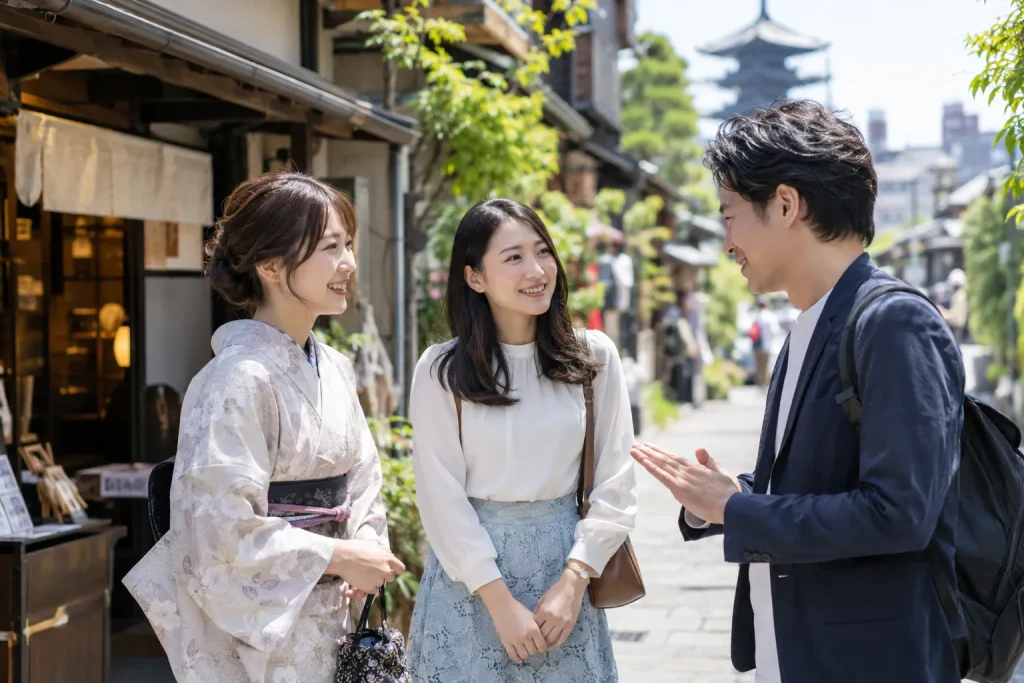
The system has limits. Japanese speakers are not indirect in every situation.
Emergency communication requires clarity. Safety instructions, urgent warnings, and professional decisions often prioritize direct information.
Younger speakers may also use more relaxed styles with friends or online. Regional differences influence vocabulary and conversational rhythm.
Some foreign learners expect every interaction to follow traditional ideas of Japanese politeness. Daily communication is more varied.
The goal is not to avoid direct language completely. The goal is choosing the level of directness that matches the relationship and situation.
The Japanese Politeness System
| Communication mechanism | Japanese example | Main effect |
|---|---|---|
| Apology | すみません sumimasen | Recognizes effort |
| Pause | えっと etto | Creates thinking space |
| Soft ending | けど kedo | Reduces pressure |
| Listening signal | 相づち aizuchi | Shows attention |
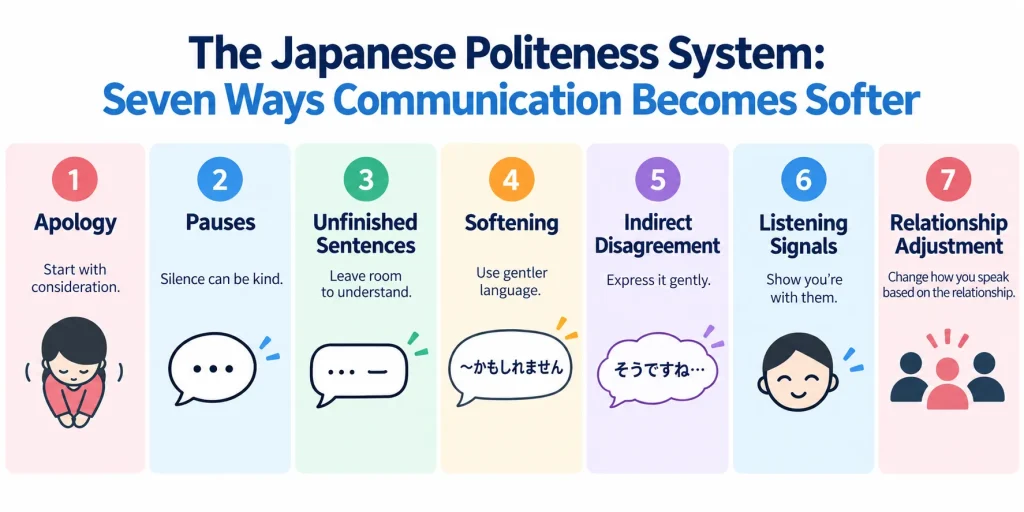
Seven communication habits behind natural politeness
| Habit | What it helps achieve |
|---|---|
| Apologizing before requests | Reduces social pressure |
| Using pauses | Shows careful consideration |
| Leaving sentences unfinished | Allows shared understanding |
| Softening expressions | Makes messages easier to receive |
| Indirect disagreement | Protects cooperation |
| Listening signals | Maintains conversation flow |
| Adjusting directness | Matches the relationship |
Mini-FAQ
What is the best way to be polite in Japanese?
Learn basic phrases, but also pay attention to timing, tone, and how much pressure your sentence creates.
Is keigo required for polite Japanese?
No. Keigo is important in formal situations, but everyday politeness also depends on communication habits.
Why do Japanese people apologize when thanking someone?
Expressions like すみません sumimasen can recognize another person’s effort, which may carry a sense of appreciation.
Are unfinished sentences common in Japanese?
Yes. In many situations, unfinished endings allow the listener to understand the meaning without a direct refusal.
Does indirect communication mean Japanese speakers avoid honesty?
No. Directness changes depending on the relationship, situation, and purpose of the conversation.