A ryokan stay runs on a loop that repeats every night you’re there: check in, bathe, eat, sleep on a futon someone else laid out for you, bathe again, eat again, leave. The ryokan phrases for guests that actually matter aren’t complicated grammar — they’re answers to a handful of timing questions the staff will ask you almost the moment you arrive, and if you don’t answer, they’ll simply pick a default and move on.
The Check-In Window
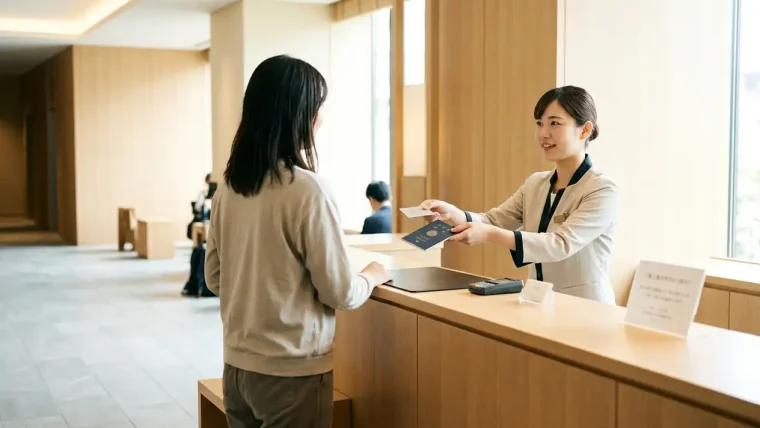
Check-in commonly opens around 3:00 or 4:00 p.m., according to Japan’s own Tourism Agency — not because of an arbitrary rule, but because that’s roughly when the room, the bath schedule, and the kitchen’s prep work all come together at once. Arrive earlier and the ryokan will usually hold your bags at the front desk rather than rush the room.
This is also where the first real exchange with staff happens, and it sets the tone for everything else. What Front Desk Staff Ask, and How to Answer covers this conversation in more depth than this piece needs to — a ryokan’s version follows the same shape as The Front Desk Exchange, Line by Line at a regular hotel, just with two extra questions added: what time do you want dinner, and what time do you want breakfast.
Dinner Time — the Question That Sets Everything Else
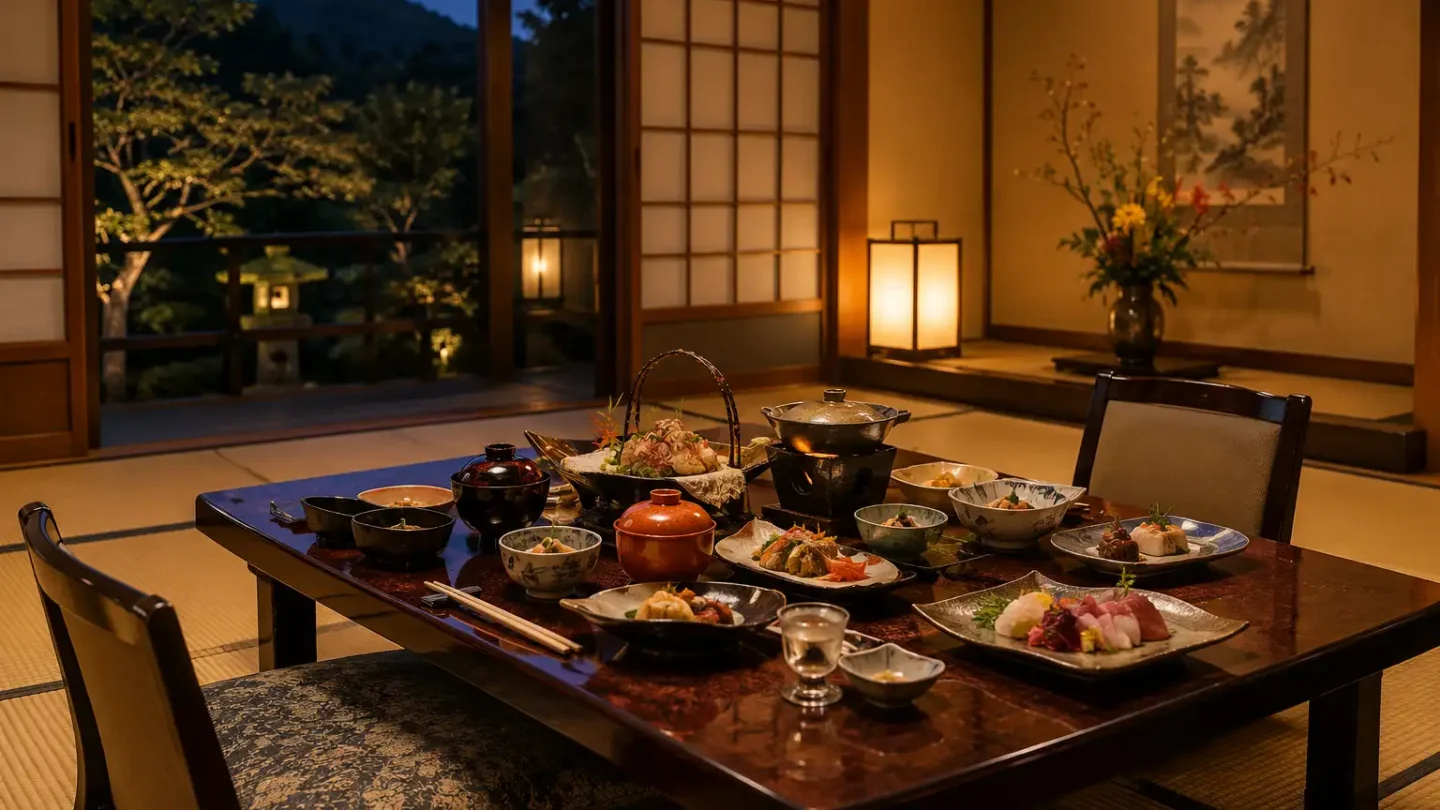
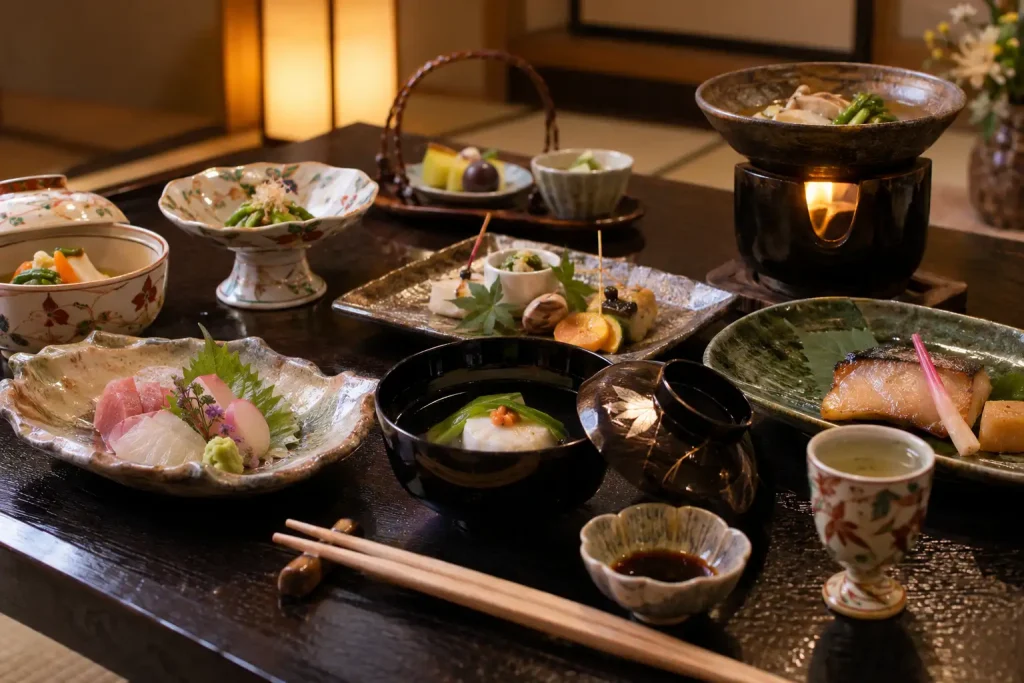
Dinner usually runs sometime between 6:00 and 8:00 p.m., and staff will ask which time within that window works for you — this single answer is the hinge the rest of your evening swings on. Most ryokan operate on what’s called 一泊二食 (ippaku nishoku, “one night, two meals”), meaning both dinner and breakfast are already part of your room rate, cooked and served on a schedule, not ordered whenever you feel like it.
The reason dinner runs early and on a fixed time isn’t the inn cutting corners — it comes down to how the kitchen and staff actually work. Many ryokan rely on 仲居 (nakai, “female ryokan attendant”) who work a split shift called 中抜け (naka-nuke, “middle exit”): mornings for breakfast service, a long break in the afternoon, then back in the evening to serve dinner. A kaiseki dinner — ten to fifteen small seasonal courses, several served hot — only works if the kitchen knows exactly when to start cooking, and that means locking in a start time in advance, for you and often for several other rooms at once.
If your dinner time isn’t a good fit, saying so before checking in is the difference between rescheduling comfortably and asking a kitchen mid-prep to move. If plans do go sideways at the last minute, What to Say in Japan When Something Goes Wrong has the phrases for exactly that kind of situation.
While You’re at the Table, Your Room Changes
Somewhere between when you sit down for dinner and when you finish, a staff member enters your room, clears away the low table, and lays out the futon and bedding for the night — you generally won’t see it happen, and you’re not expected to ask permission for it. It’s a standard part of the service, not an intrusion, and it’s exactly why staff needed your dinner time in the first place: they’re timing the room change around your absence.
- You leave for the bath or dinner with the room still set up as a sitting area.
- Staff enter while you’re out and clear the table.
- The futon, pillow, and duvet go down directly on the tatami.
- You come back to a room that’s already been turned into a bedroom.
The one thing worth knowing in advance: you don’t need to ask for this, and you don’t need to tip for it. It happens on the schedule you already set by picking a dinner time.
The Evening Bath, Late and Quiet
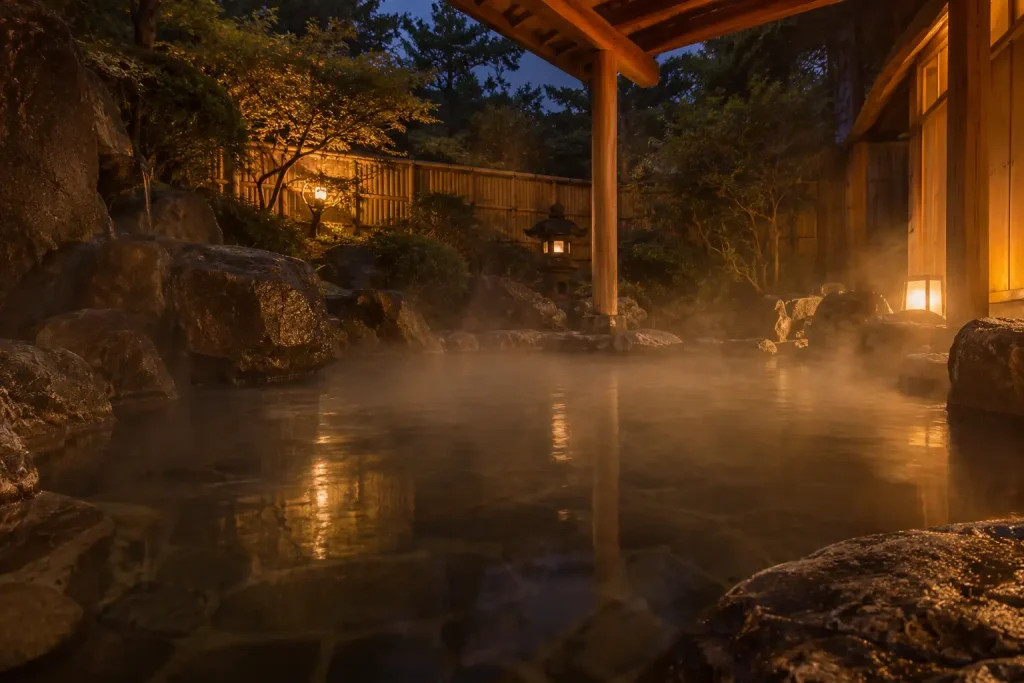
Communal baths at most ryokan stay open late — commonly until 11:00 p.m. or midnight, and some run around the clock. A second soak after dinner, once the earlier crowd has thinned out, is one of the better-known perks of a ryokan stay, and it’s built into the evening on purpose rather than squeezed in.
One guide summed up the underlying logic this way:
“Punctuality is a sign of respect that enables this anticipatory service.”
— Ryokan schedule guide, japanmediareview.org
The bath schedule is also the quietest evidence that a ryokan is planning your night for you: staff know roughly when you’ll bathe because they know when your futon needs to be ready by, and both trace back to the dinner time you picked at check-in.
Breakfast — the Same Question, Reversed
Breakfast typically runs between 7:30 and 9:00 a.m., and once again staff will ask for your preferred time, usually the night before or at check-in — the same logic as dinner, just running the other direction. A traditional Japanese breakfast can run twelve to fifteen small dishes: grilled fish, rice, miso soup, pickles, rolled omelet, and a scattering of vegetable sides. It’s worth budgeting 45 minutes to an hour rather than treating it like a quick continental spread.
While you’re eating, the process from dinner reverses too: staff put the futon away and turn the room back into a sitting space, ready for you to pack before checkout.
Checkout, Earlier Than a Hotel
Checkout typically falls at 10:00 or 11:00 a.m. — noticeably earlier than the 11 a.m.–noon norm at most city hotels, and another reminder that a ryokan runs on its own internal clock rather than a generic hospitality-industry default. Some inns hand you a small parting gift at the door, seasonal sweets or local tea, as a last, quiet gesture before you leave.
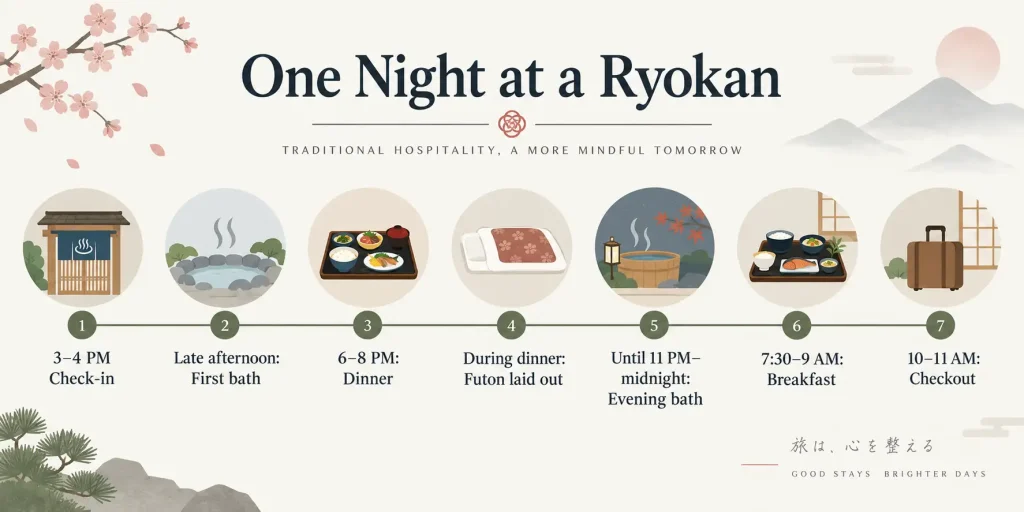
| Time | What happens | What staff typically ask |
|---|---|---|
| 3:00–4:00 p.m. | Check-in opens | Dinner time preference |
| Late afternoon | Optional first bath | — |
| 6:00–8:00 p.m. | Dinner served (kaiseki) | (Set from check-in) |
| During dinner | Futon laid out, room reset | — |
| After dinner–11 p.m./midnight | Evening bath open | — |
| 7:30–9:00 a.m. | Breakfast served | Breakfast time preference |
| 10:00–11:00 a.m. | Checkout | — |
The Quiet Stretch
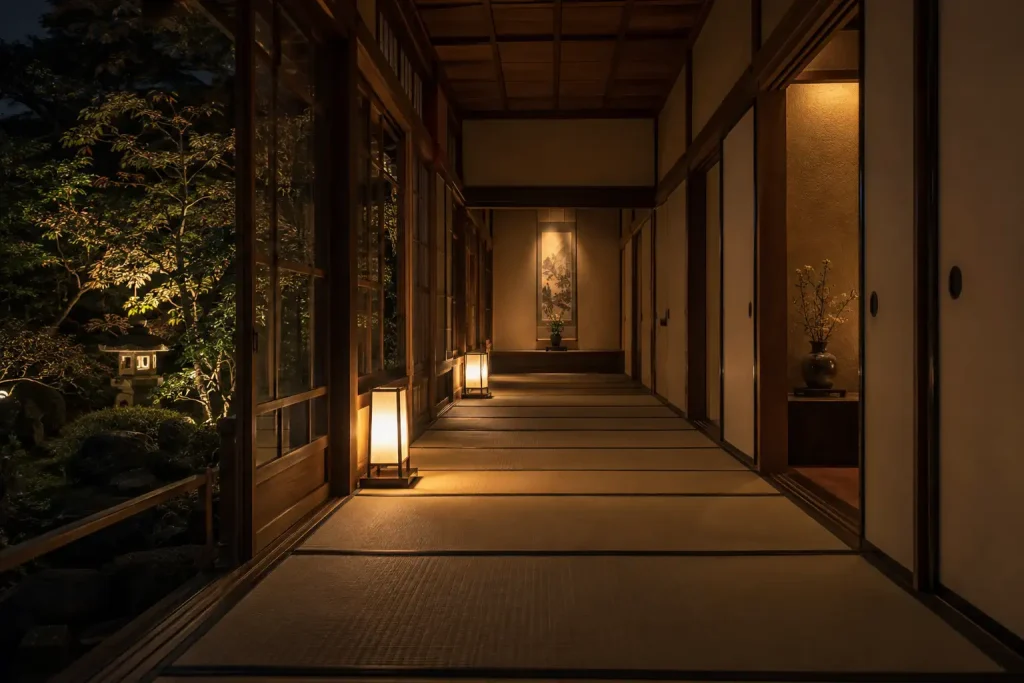
Not every hour of a ryokan stay is scheduled, and it’s worth saying plainly where the gaps are rather than implying constant activity. The stretch between checking in and your dinner slot — often an hour or two — is genuinely unstructured time meant for a first bath, a short walk, or simply sitting in the room. Late at night, after the bath closes and before breakfast, there’s nothing built into the schedule at all; many ryokan sit in rural or hot-spring towns with little open past 10 p.m., so this stretch is meant for sleep, not activity, and treating it that way avoids disturbing other guests through famously thin walls.
What Actually Shifts from One Ryokan to the Next
There isn’t a fixed calendar of dates that moves this schedule around the way a holiday or a moon-based festival would — a ryokan’s daily loop doesn’t run on a yearly cycle, it resets every single night. What does vary, inn to inn, is narrower than that: some ryokan run dinner in two seatings rather than one flexible window (an earlier and a later sitting, both fixed), and bath hours can run shorter in winter at some properties than in summer. None of this is something this article can pin to a single confirmed date or rule across all ryokan — it varies enough by property that the honest answer is to ask your specific inn directly rather than assume a nationwide standard.
The Two Worth Planning Around, and the One to Skip
If a schedule this rigid appeals to you, plan around the dinner and evening-bath stretch — it’s genuinely the best part of a ryokan stay, and arriving with enough buffer before your set dinner time to bathe first is worth the effort. The one stretch worth planning around, not into, is a very late arrival: showing up after your dinner window with no warning either strands you without a meal or forces the kitchen to scramble, and neither makes for a good first evening. Call ahead the moment you know you’ll be late — staff would rather adjust in advance than improvise on the spot.
A Couple of Quick Questions
What if I don’t answer when staff ask about dinner time?
They’ll apply a default, usually the ryokan’s standard or most common slot, rather than leave it unset — so answering isn’t required, but it does mean less control over your own evening.
Do I need formal Japanese to answer these questions?
No — a time, a number, or even a gesture toward a printed schedule works fine. Japanese Politeness Levels, and Which One to Use covers how much formality actually matters in these short exchanges, which is less than most first-time visitors assume.
For a wider set of ready-made lines beyond timing questions — greetings, thanks, basic requests — the site’s phrasebook has 337 phrases sorted across 25 situations, accommodation include